
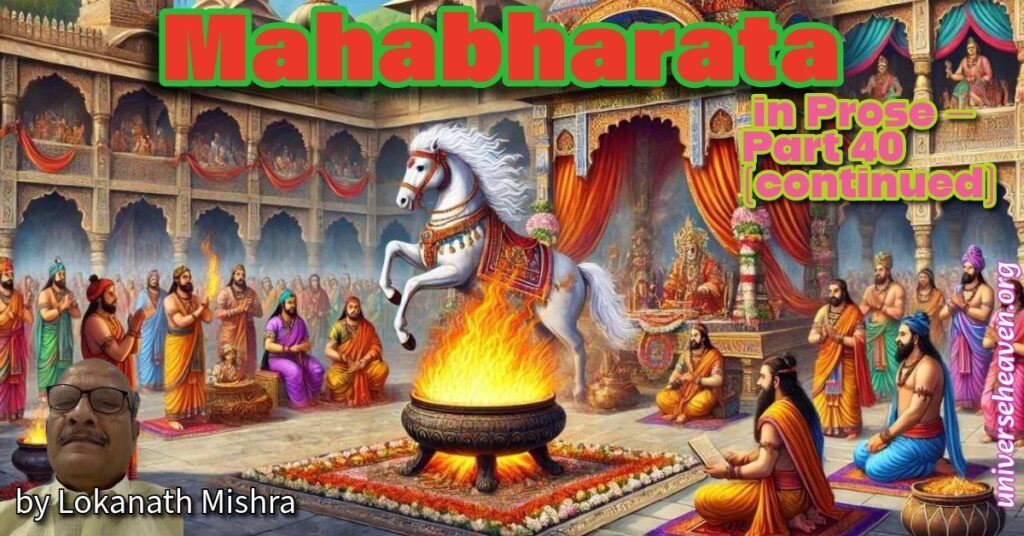
Mahabharata in Prose- Part 40 (continued)
(A story of Dvapar Yuga based on the Odiya Sarala Mahabharata ) by Lokanath Mishra, IRS ( rtd) , Jenamath Lane, Puri
The fall of Jarasandha echoed across Aryavarta like the sound of a great पर्वत breaking apart. The chains that had bound many kings were shattered, and their gratitude flowed toward Krishna, Bhima, and Arjuna like a sacred river returning to the ocean.
When they returned to Indraprastha, Yudhishthira received them with deep emotion. Though he rejoiced at their success, his heart remained anchored in dharma. He saw not merely victory, but the restoration of justice.
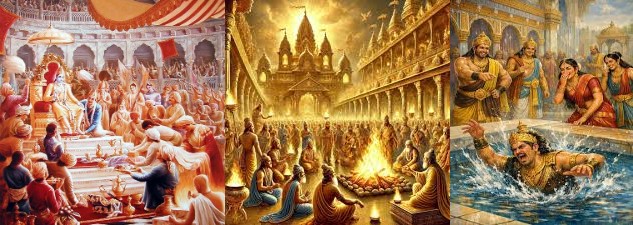
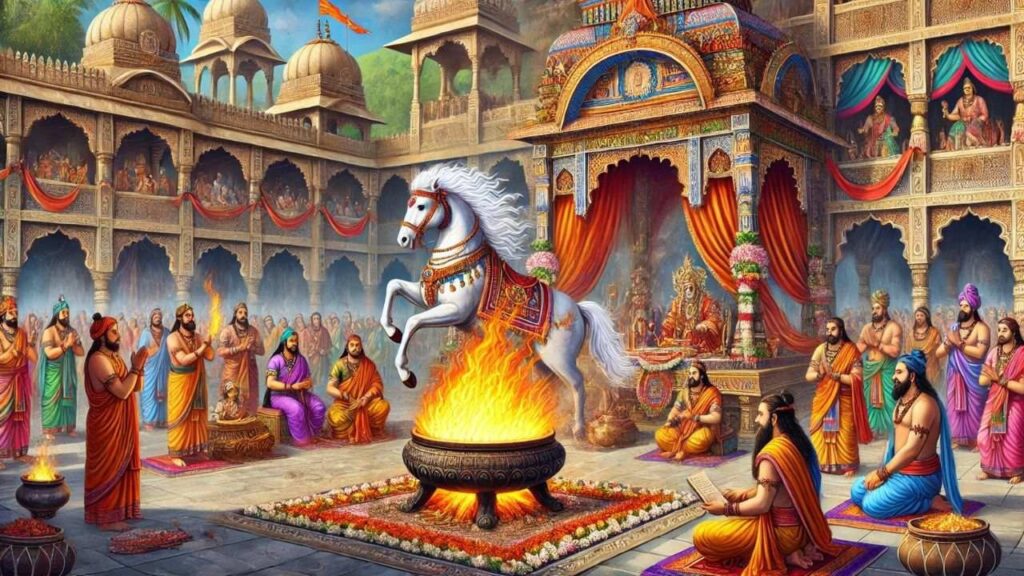
Soon after, preparations for the Rajasuya Yajna began in full grandeur. Sacred altars were constructed with precision, and the finest sages from across the land were invited. The air of Indraprastha became filled with Vedic chants, the fragrance of offerings, and the hum of anticipation.
Kings from distant regions began to arrive, bearing gifts and pledging allegiance. Among them came rulers once imprisoned by Jarasandha, now free and eager to honor Yudhishthira’s sovereignty. The सभा shone like a constellation of power and wisdom gathered in one place.
At the heart of all arrangements stood Krishna, guiding every step with quiet authority. His presence ensured that every ritual was performed with purity and purpose.
As the yajna progressed, the moment came for the Agra-Puja—the foremost honor to be bestowed upon the most worthy among those assembled. This decision carried great significance, for it reflected not only respect but recognition of supreme virtue.
After careful thought, Yudhishthira rose and spoke,
“In this august assembly, there is one whose wisdom, valor, and divinity surpass all others. It is only fitting that the first honor be given to Krishna of Dwaraka.”
A murmur of agreement spread across the सभा. Many nodded in reverence, acknowledging Krishna’s unmatched stature.
But not all hearts were in harmony.
From among the gathered kings rose Shishupala, his face burning with anger. His voice cut through the सभा like a sharp blade.
“Is this justice?” he cried. “Among so many महान kings and elders, you choose a cowherd as the foremost? This is an insult to all who stand here!”
His words filled the hall with tension. Yet Krishna remained calm, his expression unchanged.
Shishupala’s anger did not cease. Bound by old enmity, he began to hurl insult after insult at Krishna, each harsher than the last. The सभा grew restless, some lowering their heads, others glancing anxiously at Krishna.
Long ago, Krishna had promised Shishupala’s mother that he would forgive a hundred of her son’s offenses. And so he counted silently, allowing each insult to pass without reaction.
But when the सीमा was crossed, when the final offense fell from Shishupala’s lips, the moment of reckoning arrived.
In an instant, Krishna summoned his Sudarshana Chakra. The divine discus flashed through the air like a streak of lightning. Before anyone could move or speak, it struck Shishupala and severed his head.
A stunned silence followed.
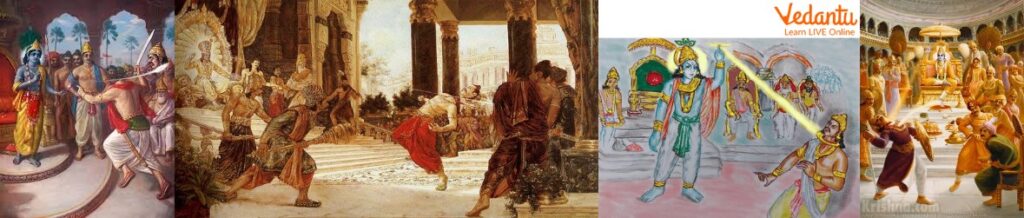
Yet in that silence, something extraordinary occurred. From the fallen body of Shishupala arose a radiant light, which moved toward Krishna and merged into him. Those who witnessed it understood that even in enmity, Shishupala’s soul had found liberation.
The yajna continued, its sanctity restored. Yudhishthira’s sovereignty was established, and his fame spread far and wide. Indraprastha became the center of power and righteousness in Aryavarta.
But in the सभा, one man watched all this with a heart filled not with admiration, but with burning envy—Duryodhana.
As he walked through the magnificent halls of the palace, crafted with illusion and wonder, he marveled at its beauty. Yet admiration soon turned into humiliation when, deceived by the magical design, he mistook solid ground for water and water for solid ground, stumbling before all.
Laughter echoed in the halls. Though unintended, it pierced Duryodhana’s pride like an arrow.
His face darkened. In that moment, envy transformed into resolve.
“This glory,” he thought, “must be brought to an end.”
Thus, even as the Rajasuya Yajna concluded in triumph and righteousness, the seeds of a darker future were quietly sown—seeds that would soon grow into deceit, conflict, and the महान war that destiny had long awaited.
(Continued in Part 41…)