
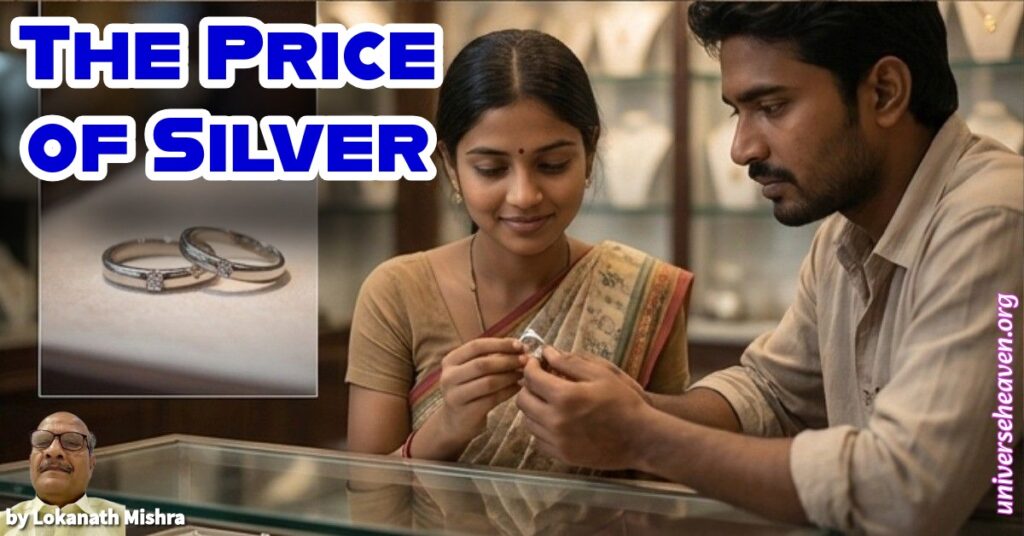
The Price of Silver
By Lokanath Mishra
Sita and Arjun had known hunger before they knew love.
They were born in the same small village where the earth cracked in summer and the crops often failed before they could feed the people who grew them. Their houses stood at opposite ends of a narrow dusty path, roofs patched with tin sheets and hope. Poverty was not a phase in their lives—it was the ground they walked on every day.
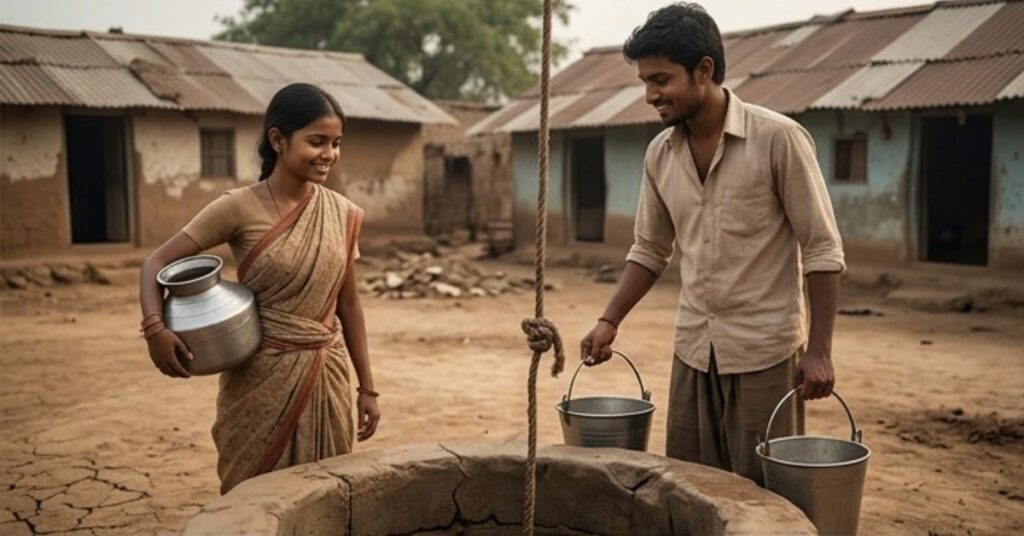
As children, they met at the village well.
Sita would come balancing a metal pot on her hip, her thin wrists marked by years of labor. Arjun would already be there, drawing water slowly, carefully, as if the rope might snap if he pulled too hard.
“You take first,” he would say, stepping aside.
“And let you carry empty buckets home?” she would reply.
They would argue like that, quietly, stubbornly—until they ended up laughing, sharing the work.
It began with small kindnesses.
A half roti saved and passed without a word. A mango picked from a tree and divided unevenly—he always made sure her piece was bigger. Sitting side by side during village festivals, not because there was space, but because they wanted to be close.
Love did not arrive with declarations. It grew like a seed in dry soil—slow, unnoticed, but strong.
By the time they were older, they both understood what they felt, even if they never said it aloud.
But love, in their world, was not enough.
There were days when Sita’s family had only one meal to share. There were nights when Arjun’s mother pretended she wasn’t hungry so her children could eat. Dreams were a luxury they couldn’t afford.
One evening, sitting under the old banyan tree at the edge of the village, Sita spoke what both of them had been thinking.
“We can’t stay here,” she said.
Arjun looked at her, his expression heavy. “Where will we go?”
“To the city. People say there is work there. Even small work is still work.”
He hesitated. Leaving the village meant leaving everything familiar—their families, their roots, their fragile sense of belonging.
But staying meant something worse.
“Together?” he asked.
Sita nodded. “Together.”
And so they left.
The city did not welcome them with open arms.
It was loud, crowded, and indifferent. Buildings stood taller than anything they had ever seen, but they felt smaller than ever walking among them.
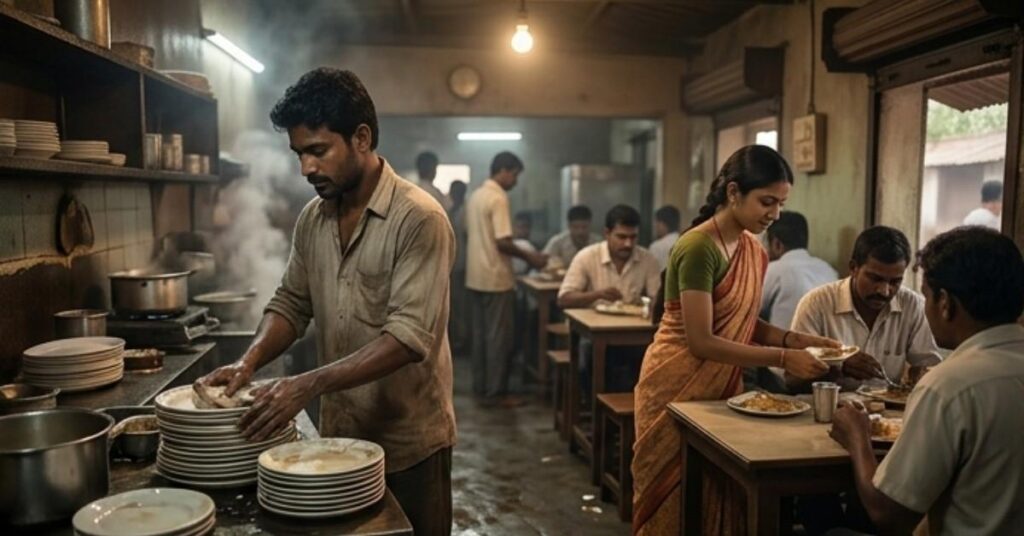
After days of searching, they found work at a small roadside restaurant.
It was nothing glamorous. Greasy floors, long hours, and a kitchen that never seemed to cool down. Arjun washed dishes until his hands cracked from soap and water. Sita served customers, moving quickly between tables, learning to smile even when she was exhausted.
Their salary was barely enough.
But for the first time in their lives, they could eat twice a day.
And that felt like a kind of wealth.
At night, they returned to a tiny rented room with peeling paint and a single dim bulb. They shared stories, laughter, and sometimes silence. There were days when they argued—over money, over stress, over things that didn’t matter but felt heavy in the moment.
Yet, no matter what, they always came back to each other.
Two years passed like that.
Two years of survival.
Two years of love growing stronger in the spaces where comfort was absent.
One evening, after closing the restaurant, Arjun spoke quietly.
“How long will we wait?” he asked.
Sita looked up from the small stove where she was heating their dinner. “Wait for what?”
“For everything to be perfect,” he said. “For money. For a proper wedding. For… more.”
Sita smiled faintly. “That might take a lifetime.”
He nodded. “I know.”
There was a pause.
“Then let’s not wait anymore,” he said.
She turned to him, her heart steady, certain.
“Yes,” she replied. “Let’s not.”
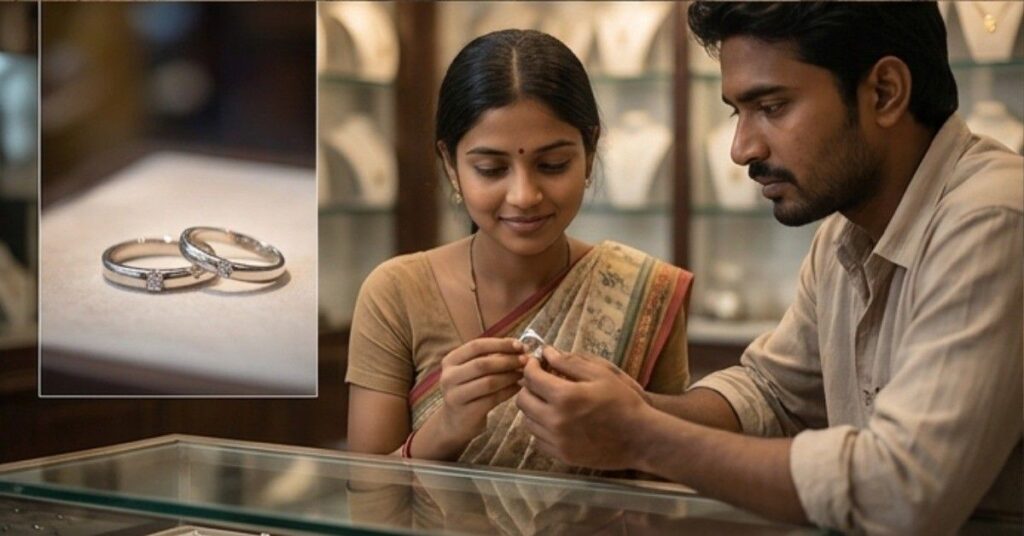
The next day, they went to a small jewelry store.
Sita hadn’t thought about rings in a long time. Once, she had dreamed of diamonds and delicate designs. Now, she only wanted one thing—to marry the man who had stood beside her through every hardship.
Arjun, however, insisted.
“I want you to have something,” he said.
After careful counting, after months of saving small amounts, he had just enough.
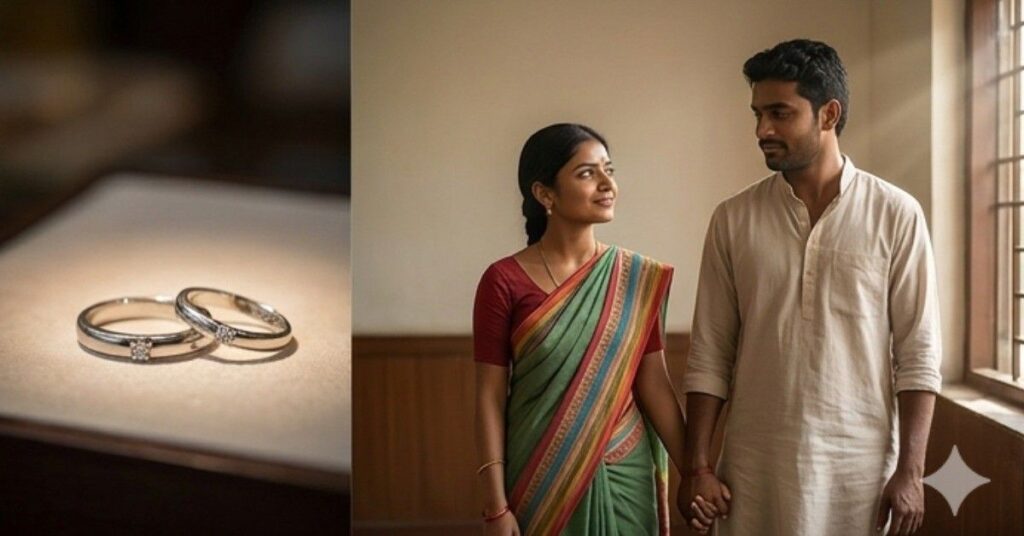
Inside the glass case lay the rings—simple, silver, with small stones that shimmered softly under the light.
“They match,” he said, almost apologetically.
Sita’s eyes softened. “They’re beautiful.”
Then came the voice that tried to break the moment.
“Can you believe some men use these as engagement rings? How sad.”
The words struck harder than they should have.
Sita saw Arjun’s face fall. She saw the doubt creep in, the quiet shame the world had taught him to carry.
“Are you sure you’ll be happy?” he asked.
She didn’t hesitate.
“It’s not the ring that matters,” she said. “It’s the love behind it.”
And in that moment, she meant every word.
They bought the rings.
That night, in their small room, Sita placed the ring on her finger and looked at it as if it were the most precious thing in the world.
“Let’s get married tomorrow,” she said.
Arjun blinked. “Tomorrow?”
“Yes. Why wait for things we may never have?”
He searched her face, looking for doubt.
He found none.
The courthouse was quiet.
No red sari. No gold jewelry. No family. No celebration.
Just two people, standing side by side, choosing each other.
When it was done, Arjun looked at her with disbelief.
“You’re really happy?” he asked.
Sita raised her hand, the silver ring catching the sunlight.
“I’ve never been happier.”

Life did not suddenly become easy after that.
They still worked long hours. They still counted money before spending it. There were still days when the future felt uncertain.
But something had changed.
They were no longer just surviving.
They were building a life—together.
Years later, things slowly improved. Arjun became a cook. Sita managed the front of the restaurant. They moved into a slightly bigger room, then eventually a small home.
People sometimes noticed her ring.
“It’s simple,” they would say.
Sita would smile.
“It cost 100 rupees,” she would reply.
But what she never explained was this:
That ring carried the weight of empty stomachs and shared meals, of long journeys and small victories, of love that refused to break under pressure.
It carried a promise made not in wealth, but in truth.
And to Sita, it was worth more than gold, more than diamonds, more than anything the world could measure.
Because in the end, she had learned something few people truly understood—
Love is not proven by what you spend.
It is proven by what you choose to hold on to… even when you have nothing else.
Pingback: Laughter Misplaced - UniverseHeaven