
Ashes of Illusion – Part IV: What Remains
By Lokanath Mishra
The river Ananya had mentioned was not extraordinary.
That was precisely why Rajesh liked it.
No crowd, no noise, no vendors calling out. Just a long stretch of quiet water moving at its own pace, reflecting the pale gold of the evening sky. It wasn’t a place people came to be seen—it was a place people came to disappear into their thoughts.
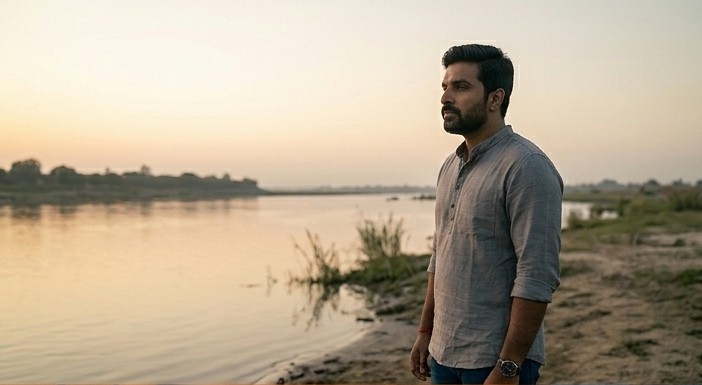
Rajesh arrived a few minutes early.
He stood near the edge, watching the water. Once, he used to search for meaning in everything—in conversations, in relationships, in outcomes. Now, he found meaning in stillness.
“Not bad,” Ananya’s voice came from behind him. “You chose a good spot to overthink.”
Rajesh turned slightly, a faint smile forming. “I’ve reduced that habit.”
“Reduced,” she repeated, raising an eyebrow. “Not eliminated.”
“I’m a philosopher,” he said. “We negotiate with our flaws, not eliminate them.”
They began walking along the riverbank, slowly, without a clear direction.
Their conversations had changed over time.
Earlier, they spoke about ideas—abstract, distant, intellectual. Now, their discussions had become more grounded, more personal, though still careful.
Ananya was not someone who revealed herself easily. There were pauses in her sentences, spaces she never filled. But those spaces did not feel empty—they felt intentional.
“Do you ever feel,” she asked after a while, “that peace becomes a habit… and then you start fearing anything that might disturb it?”
Rajesh nodded.
“Yes. That’s the paradox. You work so hard to find stability… and then you become afraid of change.”
She looked at the river.
“And yet, without change… nothing meaningful begins.”
Days turned into months.
Their meetings remained simple—walks, conversations, occasional tea at quiet places. There were no dramatic confessions, no emotional rush.
But something undeniable was growing.
Trust.
Not the blind kind Rajesh had once known.
A quiet, tested kind.
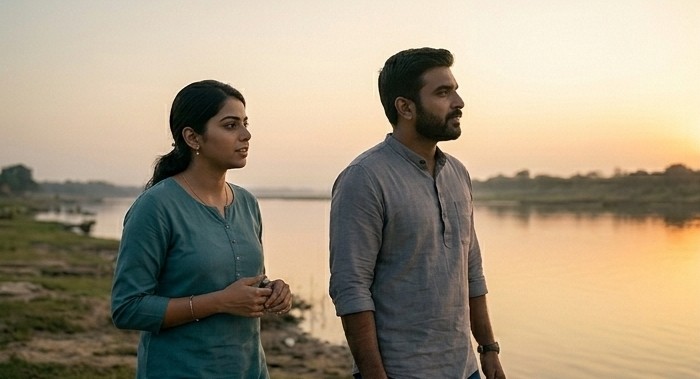
One evening, Ananya finally spoke about her own past.
“I was engaged once,” she said, without preface.
Rajesh didn’t interrupt.
“It didn’t end badly,” she continued. “It just… didn’t feel right. And I realized that staying in something uncertain is more dangerous than ending something stable.”
Rajesh listened carefully.
“That takes courage,” he said.
She shook her head slightly. “No. It takes clarity. Courage is what comes after.”
That word stayed with Rajesh.
Clarity.
It had taken him years to reach it.
And even now, he wasn’t sure if he fully trusted it.
Meanwhile, his professional life had begun to shift in unexpected ways.
His lectures were being recorded and shared widely. Invitations to speak at universities, conferences, and public forums increased. People resonated with his words—not because they were complex, but because they were honest.
He did not present himself as someone who had all the answers.
He spoke as someone who had asked the right questions.
One particular lecture brought everything into focus.
The topic was “Illusion vs Reality in Modern Life.”
Standing before a packed auditorium, Rajesh spoke slowly:
“We often think illusion is something false. But illusion is not always false—it is incomplete truth. And the danger is not in believing something untrue… but in believing something partially true as if it were whole.”
The audience was silent.
“In relationships,” he continued, “we don’t just fall in love with a person. We fall in love with our idea of that person. And when reality reveals itself, we call it betrayal… when in fact, it is correction.”
After the lecture, Ananya met him outside.
“You don’t hold back anymore,” she said.
Rajesh exhaled lightly. “There’s nothing left to protect.”
She looked at him carefully.
“Not even your peace?”
He met her gaze.
“Peace that depends on avoidance isn’t real.”
That night marked a quiet shift.
Not in words.
But in acceptance.
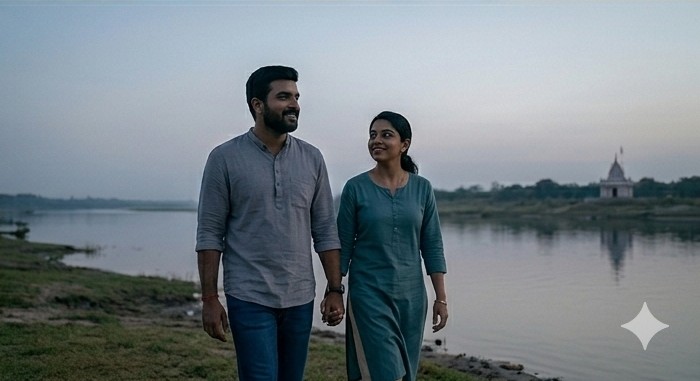
Weeks later, during another visit to the river, Rajesh spoke first.
“I don’t want to repeat my past,” he said plainly.
Ananya didn’t react immediately.
“Nor do I,” she replied.
There was no tension.
Only honesty.
“I don’t know what this is,” Rajesh continued. “And I don’t want to rush to define it. But I also don’t want to ignore it.”
Ananya nodded slowly.
“Then don’t define it,” she said. “Just don’t be unclear about it.”
Rajesh smiled faintly. “You always bring it back to clarity.”
“Because confusion,” she said, “is where most damage begins.”
Life didn’t suddenly become romantic.
There were still hesitations, still silences, still moments where Rajesh questioned whether he was ready to let someone into his life again.
But this time, he didn’t suppress those doubts.
He shared them.
And Ananya didn’t try to fix them.
She simply understood them.
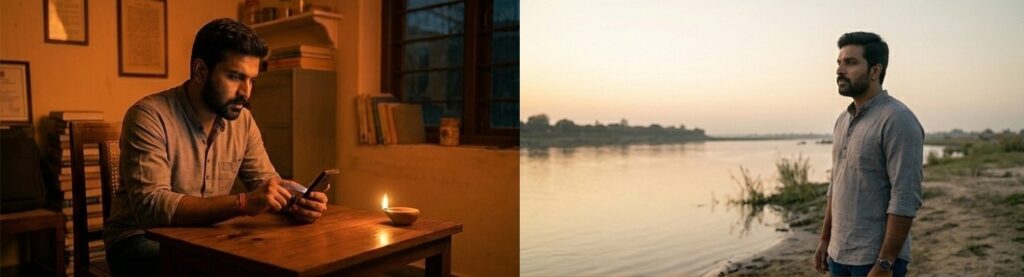
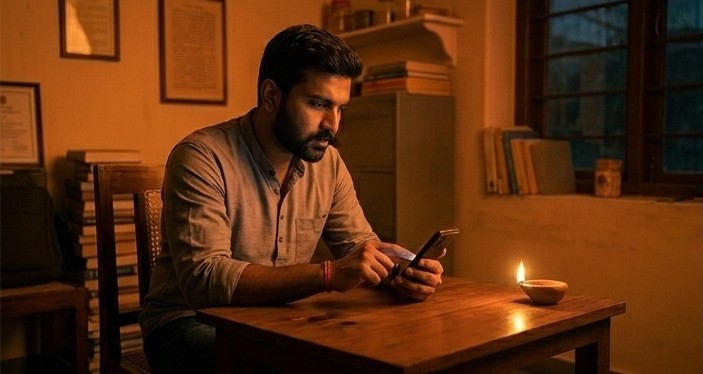
One morning, Rajesh received a message from an unknown number.
It was brief.
“I hope you are well.”
He knew who it was.
For a long moment, he stared at the message.
Years ago, such a message would have unsettled him, pulled him back into a storm of emotion.
Now, it felt distant.
He typed a reply.
Then paused.
Then deleted it.
And put the phone away.
When he met Ananya that evening, he mentioned it.
She listened quietly.
“Do you want to respond?” she asked.
Rajesh shook his head.
“No. Not because I’m angry… but because there’s nothing left to say.”
Ananya nodded.
“That’s closure,” she said.
As the sun set, the river turned a deep shade of orange, then slowly into grey.
Rajesh stood there, watching the light fade.
For years, he had thought closure meant answers, explanations, justice.
Now he understood—
Closure is not something you receive.
It is something you decide.
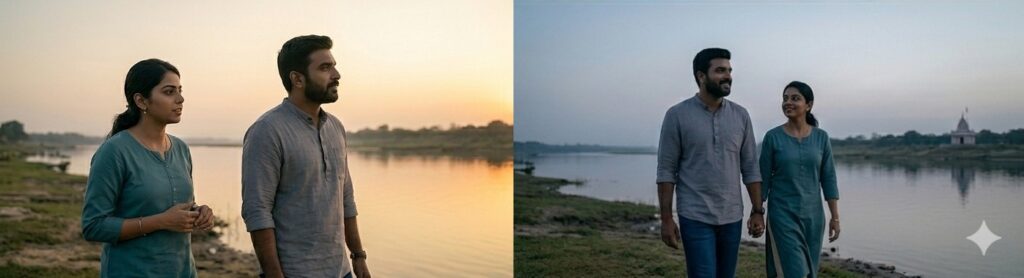
He turned to Ananya.
“Would you like to continue walking?” he asked.
She smiled slightly.
“Yes.”
And as they walked forward—
It was not a beginning.
Not exactly.
But it was no longer an ending either.
It was something far more rare.
A life…
chosen consciously.
To be continued in final Part V .