
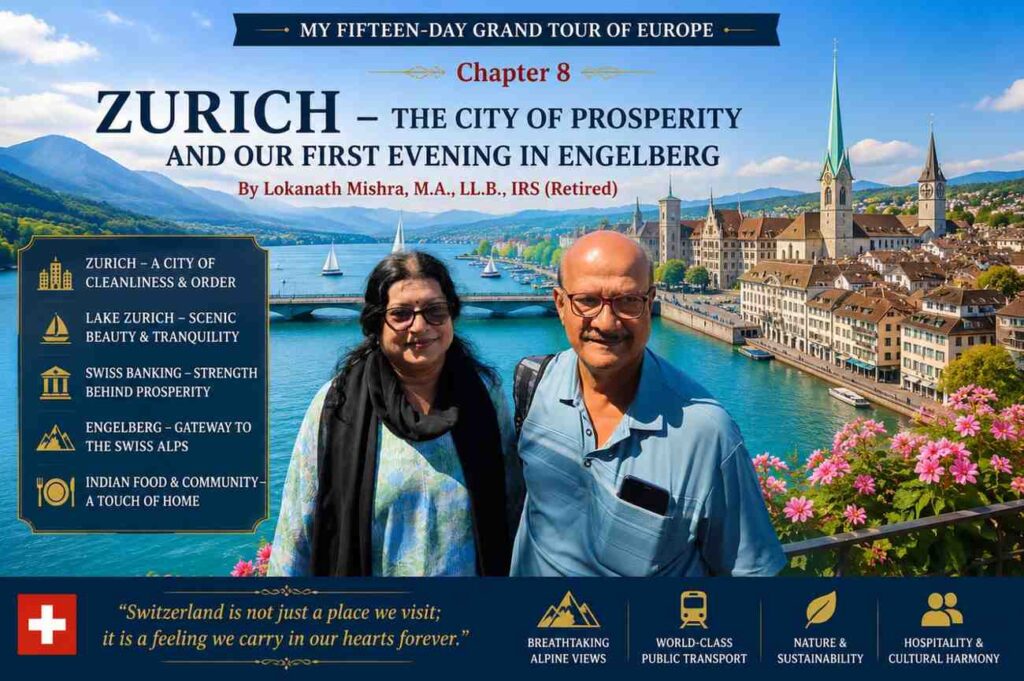
My Fifteen-Day Grand Tour of Europe
Chapter 8: Zurich – The City of Prosperity and Our First Evening in Engelberg
By Lokanath Mishra, M.A., LL.B., IRS (Retired)
After enjoying the magnificent scenery of Lake Lucerne and exploring the historic city of Zurich, our coach continued its journey towards the beautiful Alpine village of Engelberg, where we were to spend the night. Before describing our stay at Engelberg, it is worthwhile to reflect upon the remarkable city of Zurich, which left a lasting impression on all four of us.
Zurich is not only the largest city in Switzerland but also one of the world’s most prosperous, orderly and efficiently managed cities. Situated on the northern shore of Lake Zurich, it combines ancient history with modern development in a unique and harmonious manner. The city is home to approximately half a million residents, yet it possesses all the characteristics of a major international financial and cultural centre.
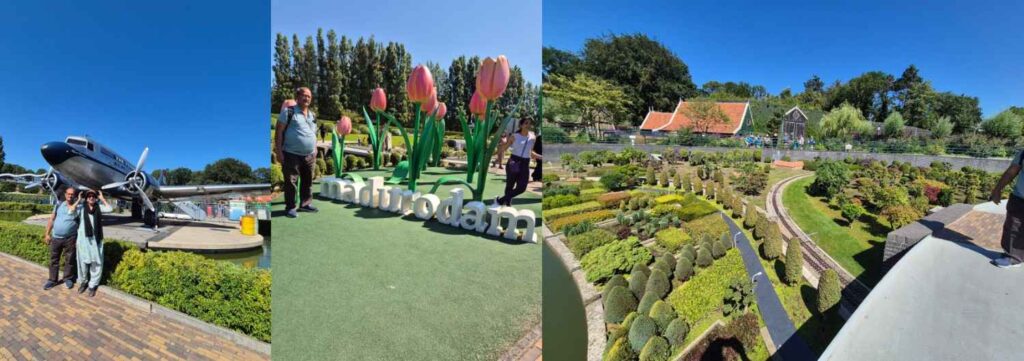
One of the first things that attracted our attention was the extraordinary cleanliness of the city. Every road, footpath, public park and lakeside promenade appeared perfectly maintained. There was hardly any litter, traffic congestion or noise pollution. The discipline of the citizens, together with strict municipal administration, has made Zurich one of the cleanest cities in the world.
The city’s architecture is equally impressive. Unlike many modern cities where high-rise buildings dominate the skyline, Zurich has carefully preserved its historical identity. Medieval churches, traditional Swiss houses, elegant commercial buildings and modern offices have been integrated with thoughtful urban planning. Construction regulations are strict, ensuring that new buildings complement the city’s natural beauty rather than spoil it.
Extensive green spaces, flowering gardens, cycling tracks, pedestrian walkways and efficient public transport make Zurich an excellent example of sustainable urban planning. Every aspect of development appears to have been carefully planned for the benefit of both residents and visitors.
Why Are Goods Expensive in Switzerland?
During our visit, we noticed that almost every commodity—food, clothing, transportation and daily necessities—was considerably more expensive than in many other European countries.
There are several reasons for this.
Firstly, Switzerland enjoys one of the highest standards of living in the world. Workers receive comparatively high salaries, and naturally, the cost of production and services is also higher.
Secondly, Swiss industries maintain exceptionally high standards of quality. Whether it is a watch, pharmaceutical product, machine tool or chocolate, Swiss manufacturers emphasize precision, durability and reliability rather than mass production.
Thirdly, the Swiss currency, the Swiss Franc, has long been regarded as one of the world’s strongest and most stable currencies. This increases purchasing power within the country but also makes goods appear expensive to foreign tourists.
Strict labour laws, environmental regulations and quality control measures also increase production costs. However, consumers receive products and services of outstanding quality in return.
Thus, although prices are high, they generally reflect the country’s high wages, excellent infrastructure, superior quality standards and overall economic prosperity.
Swiss Banking and National Development
Switzerland has long been recognised as one of the world’s leading financial centres.
For many decades, Swiss banks attracted deposits from around the world because of political stability, professional banking services and strong legal protections. While older banking secrecy laws created an image of Switzerland as a destination for hidden wealth, modern regulations now require much greater transparency and international cooperation against tax evasion and financial crime.
The prosperity of Switzerland should not be attributed solely to banking. The country’s wealth has also been created through hard work, education, scientific research, advanced manufacturing, pharmaceuticals, engineering, tourism and international trade.
The banking sector contributes to economic growth by financing businesses, supporting industries, encouraging innovation and facilitating international commerce. At the same time, tax revenues generated by a prosperous economy help maintain excellent roads, railways, hospitals, schools and public services.
Lake Zurich and Its Harbour
One of the greatest attractions of Zurich is the beautiful Lake Zurich.
The lake stretches for about 40 kilometres, extending southward into the Swiss countryside. Its crystal-clear water is fed by rivers originating in the Alps and eventually flows into the River Limmat, which passes through the heart of Zurich.
The lake is surrounded by gardens, parks, elegant residences and scenic promenades. During summer, visitors enjoy boating, sailing, swimming and lakeside walks, while in winter the surrounding mountains create a spectacular backdrop.
The harbour and boat terminals are exceptionally well organised. Modern passenger boats operate regular services connecting Zurich with several picturesque lakeside towns and villages. The piers are neat, efficient and integrated with the city’s tram and railway network, allowing passengers to transfer conveniently between different modes of transport.
Watching the boats move gracefully across the calm waters while swans floated peacefully near the shore created one of the most memorable scenes of our Swiss journey.
The lake is not merely a tourist attraction; it also serves as a source of drinking water, recreation and environmental balance. The remarkable purity of its water reflects Switzerland’s commitment to protecting its natural resources.
Journey to Engelberg
As evening approached on 16th July 2026, our coach left Zurich and proceeded towards the Alpine resort town of Engelberg, situated at an elevation of over one thousand metres above sea level.
The drive itself was enchanting. The roads passed through green valleys, charming villages and gently rising mountains. Wooden chalets decorated with colourful flowers dotted the landscape, while grazing cows wearing traditional bells completed the classic Swiss scenery.
By nightfall, we arrived at our accommodation, Hotel Central, located in the heart of Engelberg.
Hotel Central – A Traveller’s Impression
Hotel Central presented a warm and welcoming atmosphere. Though not extravagant, it offered comfortable accommodation with clean rooms, courteous staff and excellent facilities.
From the windows of the hotel, we could admire the surrounding mountains, whose snow-covered peaks were still visible in the fading evening light. The fresh Alpine air, complete silence and peaceful surroundings created an atmosphere of complete relaxation after a long day of sightseeing.
The hospitality extended by the hotel staff reflected the Swiss tradition of professionalism, punctuality and courtesy. Every arrangement had been carefully made for the comfort of guests.
For us, staying in Engelberg was not merely an overnight halt but an opportunity to experience life in a traditional Swiss mountain town.
Availability of Indian Food in Switzerland
One pleasant surprise throughout our European tour was the easy availability of Indian food, including in Switzerland.
Indian restaurants can now be found in almost every major Swiss city, especially in Zurich, Geneva, Basel, Lucerne and popular tourist destinations. They serve a wide variety of dishes such as rice, dal, chapatis, curries, paneer, biryani and South Indian specialties.
The growing popularity of Indian cuisine reflects both the increasing number of Indian residents and the appreciation of Indian food by Swiss people and international tourists.
The Indian Community in Switzerland
The Indian community in Switzerland has steadily grown over the past several decades.
Many Indians came to Switzerland as highly qualified professionals working in information technology, pharmaceuticals, engineering, banking, finance, scientific research and higher education. Others established businesses, restaurants and trading enterprises. Swiss universities and research institutions also attract Indian students pursuing advanced studies.
The strong economic relationship between India and Switzerland has further encouraged business professionals and multinational companies to establish a presence in both countries.
Today, the Indian community contributes significantly to Swiss society while preserving its own cultural traditions through festivals, temples, cultural associations and educational activities. Indian cuisine, music, dance and yoga have become familiar and respected parts of Switzerland’s multicultural landscape.
For Indian travellers like us, the presence of Indian restaurants and communities provided a comforting reminder of home even while enjoying the beauty of the Swiss Alps.
Reflections
Our first evening in Switzerland ended peacefully in the charming mountain town of Engelberg. The elegance of Zurich, the serenity of Lake Zurich and the warm hospitality of Hotel Central together created an unforgettable experience.
As I reflected upon the day’s journey, I realised that Switzerland’s greatness lies not merely in its wealth but in its careful planning, disciplined society, respect for nature, commitment to quality and harmonious balance between tradition and modernity.
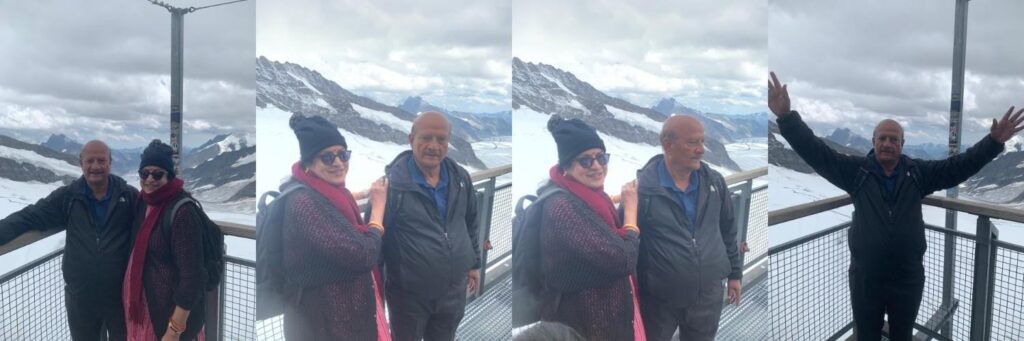
We retired for the night with great anticipation, knowing that the next morning would take us to one of Switzerland’s greatest natural wonders—the magnificent snow-clad mountains of the Alps.
(To be continued in Chapter 9…)