
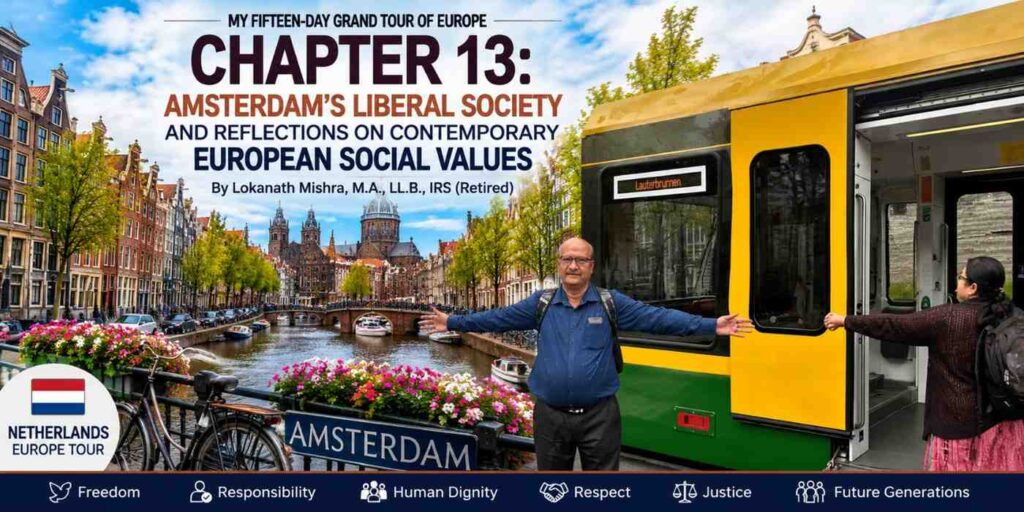
My Fifteen-Day Grand Tour of Europe
Chapter 13: Amsterdam’s Liberal Society and Reflections on Contemporary European Social Values
By Lokanath Mishra, M.A., LL.B., IRS (Retired)
During our European tour, one of the cities that attracted worldwide attention was Amsterdam, the capital of the Netherlands. While Amsterdam is celebrated for its canals, museums, historic architecture, art, and liberal traditions, it is also internationally known for its distinctive social policies concerning prostitution, cannabis regulation, and personal freedoms. These policies often generate discussion among visitors from different cultural backgrounds.
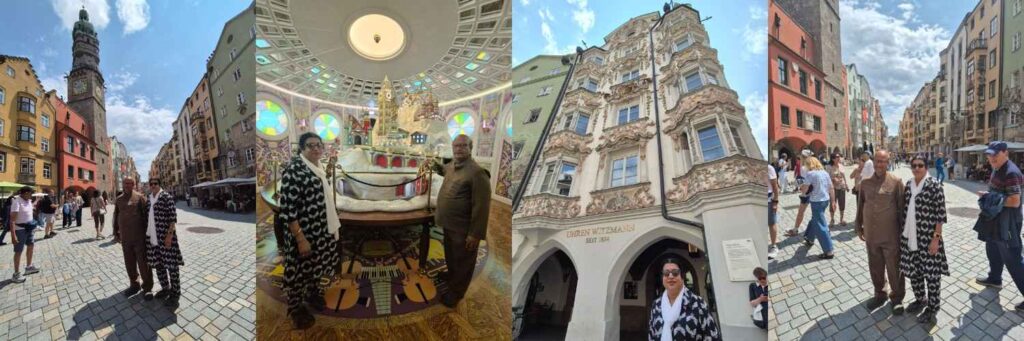
As tourists, we observed these aspects with curiosity, but also with a desire to understand the historical, legal and social circumstances that shaped them.
Amsterdam – A City of Freedom and Responsibility
Amsterdam has long been regarded as one of Europe’s most liberal cities. The Dutch people have traditionally placed great importance on individual liberty, human rights, freedom of expression, and personal responsibility.
Over many decades, Dutch lawmakers have attempted to regulate certain activities that exist in society rather than simply prohibit them. Their approach has generally been that regulation may reduce crime, improve public health and provide greater protection for vulnerable people. At the same time, these policies continue to be debated within Dutch society itself.
The Red Light District
One of Amsterdam’s most well-known areas is the De Wallen district, commonly called the Red Light District.
The area dates back several centuries, when Amsterdam was one of Europe’s busiest ports. Sailors arriving from long sea voyages created demand for entertainment and lodging. Over time, prostitution became concentrated in this neighbourhood.
Today, sex work is legal under Dutch law if carried out within the country’s regulatory framework. Licensed businesses are subject to rules intended to improve working conditions, reduce exploitation and allow health and safety oversight. Nevertheless, the authorities continue to combat illegal prostitution, human trafficking and coercion, which remain serious concerns.
Visitors from around the world come to see the district because of its unique history and legal status, although many also come to experience Amsterdam’s historic canals, museums and cultural attractions.
Sex Work in Other European Countries
The legal position of sex work differs considerably across Europe.
Some countries, such as Germany, have legal frameworks that regulate certain forms of sex work. Others, such as Sweden, Norway and France, have adopted different models, including laws that penalise the purchase of sexual services while seeking to support individuals who wish to leave prostitution.
In several countries, prostitution remains illegal or is subject to strict restrictions.
These different approaches reflect varying historical experiences, cultural values and public policy priorities. There is no single European model, and governments continue to debate how best to reduce exploitation while protecting human rights.
Alcohol and Smoking
Alcohol has been part of European social life for centuries. Wine-producing countries such as France, Italy and Spain have long traditions associated with moderate wine consumption, while beer is widely consumed in countries such as Germany, Belgium and the Netherlands.
Smoking rates have declined significantly in many European countries over recent decades due to increased public awareness and stronger public health measures. Governments have introduced restrictions on smoking in public places, increased tobacco taxes, required health warnings and promoted programmes to help people stop smoking.
These measures have contributed to a gradual reduction in tobacco use, although smoking remains an important public health concern.
Social Challenges
Like many societies around the world, European countries face complex social issues, including:
- Human trafficking.
- Drug abuse.
- Alcohol dependence.
- Tobacco-related diseases.
- Mental health challenges.
- Social isolation.
- Family instability in some communities.
Governments, civil society organisations and religious institutions continue to work together to address these challenges through education, healthcare, law enforcement and social welfare programmes.
It is important to recognise that these issues are not unique to Europe; they exist in varying forms across many parts of the world.
Lessons for Society
During our visit, I reflected that every civilisation develops according to its own history, culture and legal traditions. Travellers should seek to understand these differences with an open mind while remaining guided by their own values and principles.
In my view, lasting social well-being depends upon:
- Strong family relationships.
- Respect for human dignity.
- Equal educational opportunities.
- Economic security and employment.
- Good healthcare, including mental health support.
- Protection of women, children and vulnerable people from exploitation.
- Effective law enforcement against human trafficking and organised crime.
- Public awareness regarding the harmful effects of substance abuse.
- Ethical values based on compassion, honesty and mutual respect.
Preventing Exploitation
The exploitation of vulnerable people cannot be eliminated by legislation alone. Long-term progress requires a comprehensive approach that includes:
- Better education, particularly for girls and disadvantaged communities.
- Employment opportunities that reduce economic vulnerability.
- Strong action against trafficking networks and organised crime.
- Social services for people seeking to leave prostitution.
- Accessible healthcare and counselling.
- International cooperation to combat cross-border exploitation.
- Public education that promotes respect, consent and human dignity.
Countries around the world continue to explore different approaches, and informed public discussion remains essential.
Reflections
Amsterdam is far more than the Red Light District. It is a city of remarkable history, artistic achievement, scientific innovation and architectural beauty. Its museums, canals, universities and rich cultural heritage make it one of Europe’s most fascinating destinations.
Our visit reminded us that every nation faces difficult social questions and seeks solutions according to its own democratic traditions and cultural values.
As travellers from India, we returned with a deeper understanding of both the achievements and the challenges of modern European society. We also appreciated the importance of preserving those universal values that unite humanity—respect for human dignity, compassion, responsibility, justice and the well-being of future generations.
(To be continued in Chapter 14…)