
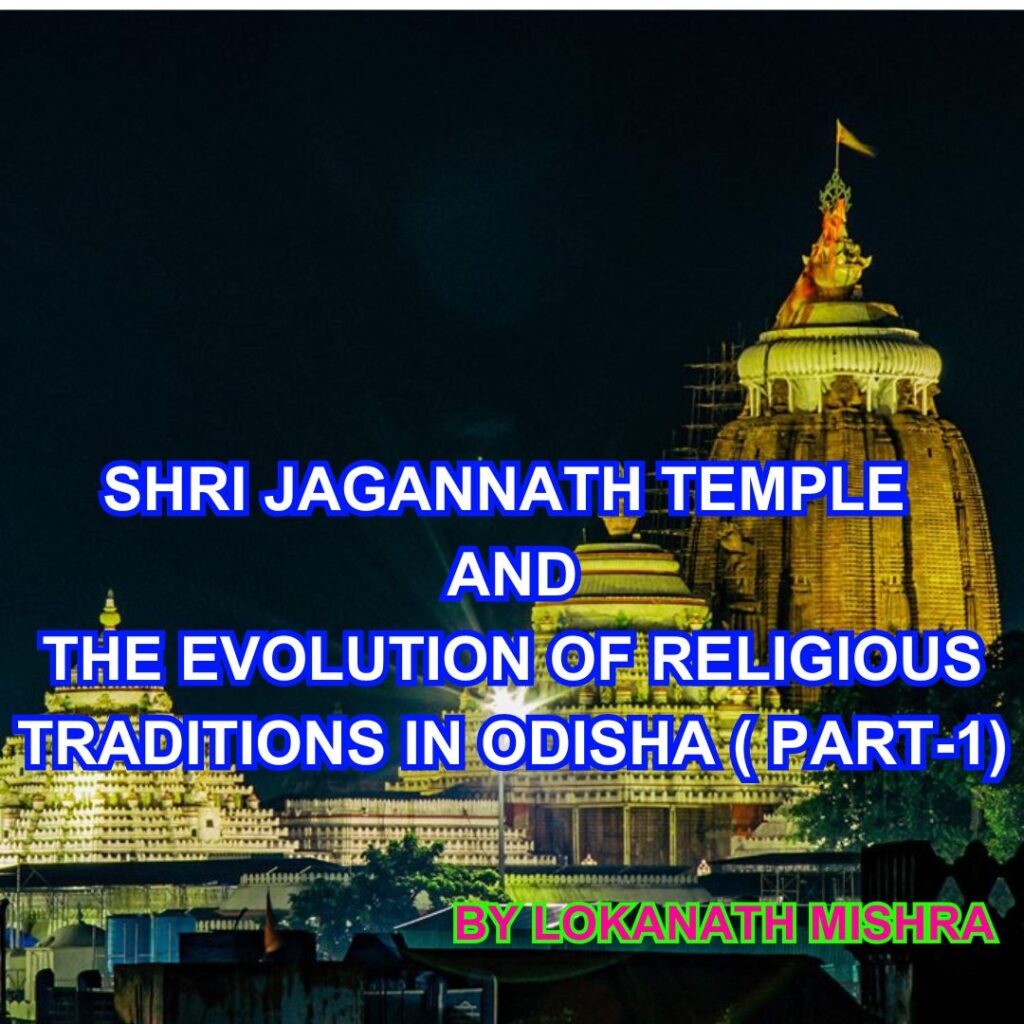
Shri Jagannath Temple and the Evolution of Religious Traditions in Odisha ( part-1)
By Lokanath Mishra
The First Recorded Attack : Raktabahu’s Invasion
The earliest recorded attack on the sacred Shri Jagannath Temple at Puri is preserved in the Madala Panji, the temple’s ancient chronicle. It mentions that during the reign of King Shobhanadeva (Sobhana Dev), an invader named Raktabahu attacked Puri. While the exact date is not recorded, historians tentatively place this event during 7th century.

This invasion is significant as it is considered the first recorded assault on the temple. However, the identity of Raktabahu remains debated. Some scholars equate him with Govinda III of the Rashtrakuta dynasty, who is believed to have invaded Odisha during the time of Subhakaradeva of the Bhaumakara dynasty. Following this attack, the deities of Jagannath, Balabhadra, and Subhadra were secretly transported to Patali Sonepur (modern-day Subarnapur) for protection, where they remained hidden for nearly 144 years.
It was only during the reign of Jajati Keshari of the Somavamsi dynasty that the deities were brought back to Puri. Jajati renovated the dilapidated shrine and reinstalled the idols on the Ratna Singhasana (jeweled throne). According to tradition, this reconstruction followed the advice of Adi Shankaracharya. The rebuilt temple, around 38 feet high, symbolized not only the revival of Jagannath worship but also the resilience of Odisha’s spiritual heritage.
Religious Landscape of Ancient Odisha

Odisha in antiquity was a fertile ground for diverse faiths—Buddhism, Jainism, Shaivism, Shaktism, and later Vaishnavism.
• Buddhism and Jainism: By the early centuries of the Common Era, Odisha was an important center of Buddhism and Jainism. The Bhaumakaras and other dynasties promoted these faiths alongside Hindu traditions.
• Shaivism and Shaktism: Rooted in pre-Vedic practices, Shaivism and Shaktism gained momentum during the Gupta Age (c. 320–700 CE). The Shailodbhava dynasty (6th–8th centuries) were ardent Shaivites, constructing temples such as the Parashurameshvara at Bhubaneswar in the 7th century. King Madhavaraja II’s inscriptions claim Ashvamedha sacrifices, underscoring the assertion of independence and ritual orthodoxy.
• The Kesari Dynasty: The Kesaris (9th–12th centuries) further strengthened Hindu traditions. Their architectural contributions, including the Lingaraj, Mukteshvara, and Rajarani temples, created a distinctive Odishan style. This period also marked the consolidation of Shaivism and Shaktism while paving the way for Jagannath Vaishnavism.
The Role of Adi Shankaracharya

When Adi Shankaracharya visited Puri in the 8th century CE, he encountered a region where Buddhism, Jainism, Shaivism, and Shaktism flourished. The old Jagannath shrine, established by King Indradyumna in Satya Yuga according to tradition, lay in ruins, and the deities were still in Subarnapur.
Recognizing the spiritual vacuum, Shankaracharya advised King Jajati Keshari to retrieve the deities and reconstruct a new temple at Puri. However, pure Vaishnavism was not widely accepted by the people of Odisha, who were deeply attached to their Shaiva, Shakta, Buddhist, and tribal traditions. Shankaracharya thus initiated a remarkable synthesis—blending Vaishnavism with Shaivism, Shaktism, Buddhism, Jainism, and local tribal practices. This fusion became the foundation of the Jagannath cult, a truly inclusive spiritual tradition that transcended sectarian divides.
Migration and Settlement of Brahmins

The restoration of the Jagannath temple also required a reorganization of priestly services. Records indicate that during the 10th century, Yayati Keshari invited 10,000 Brahmins from Kannauj to Odisha for the Ashvamedha ceremony. Some of these Brahmins settled permanently near Puri, establishing Brahmin Sashanas (settlement villages).
Further migration occurred in the 12th century. Between 1151–1152 A.D., another 6,000 Brahmins were brought from Kannauj to strengthen the ritualistic framework of the Jagannath temple. Earlier, Subhakaradeva of the Bhaumakara dynasty had also recorded the settlement of around 200 Brahmins in his Neulpur grant (c. 795 A.D.). These migrations created a learned Brahminical base in Odisha, linking temple rituals with broader pan-Indian Vedic traditions while allowing local customs to thrive.
Shaivism, Shaktism, and the Bhakti Movement

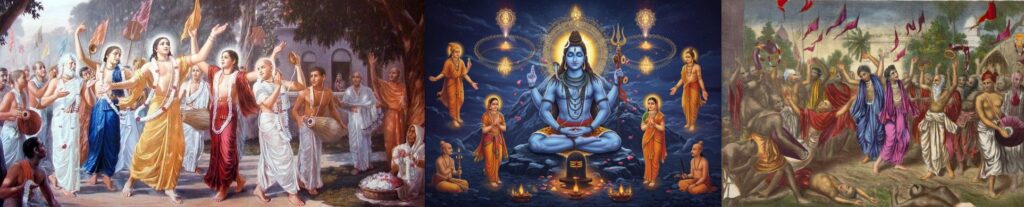
From prehistoric goddess worship to Vedic hymns and later Puranic traditions, Shaivism and Shaktism remained deeply embedded in Odisha’s culture. The Bhakti movement, spreading from the 4th century onward, intensified devotional practices and brought Shaivism and Shaktism closer to the common people. Tantric traditions like Kaula and Srikula also shaped Odisha’s spiritual identity, particularly from the 7th century onward.
The Jagannath tradition absorbed these strands, making it a living embodiment of Odisha’s pluralistic heritage. By harmonizing Shaiva, Shakta, Vaishnava, Buddhist, Jain, and tribal practices, Jagannath worship became both unique and universal.
Conclusion
The history of the Shri Jagannath Temple is not merely about invasions and reconstructions but about cultural resilience and religious synthesis. From the Raktabahu attack and the hiding of deities in Subarnapur, to their reinstatement by Jajati Keshari, from the Shailodbhava and Kesari architectural marvels to the philosophical intervention of Adi Shankaracharya, every chapter shaped Jagannath culture.
Equally crucial was the migration of Brahmins from Kannauj, which institutionalized Vedic rituals while allowing Odisha’s indigenous traditions to flourish. The Jagannath cult that emerged is therefore a harmonious blend of multiple faiths—a spiritual confluence symbolizing inclusivity, resilience, and universality.
( to be continued)
A Story of Dwapar Yuga in Prose: ( part-14)
A Story of Dvapar Yuga in Prose ( Part- 12 A)
A Story of Dvapar Yuga in Prose ( Part- 11 D)
Pingback: Shri Jagannath Temple and the Evolution of Religious Traditions in Odisha( part-2) - UniverseHeaven