
A Story of Dvapar Yuga in Prose ( part 25-A)
By Lokanath Mishra
Balarama saw Shri Krishna depart after mounting his chariot.
“Without informing anyone, in such haste and agitation, where has Kanhā gone?” Sankarshana asked again and again.
Upon inquiry it was learned that a short while earlier, the royal priest of Vidarbha had met Krishna. Balarama asked Akrura about the current situation in Vidarbha. The spies reported that Jarasandha, Shalva, and Dantavakra, accompanied by their armies, were traveling to Kundinagara to attend Shishupala’s wedding.

Balarama became disturbed.
“How could Kanhā leave alone without telling anyone? Surely he has gone to Kundinagara. And if Jarasandha is there, something untoward is bound to happen.”
He ordered Akrura to prepare the Yadava army. The command was carried out immediately. With a powerful force, Balarama set out toward the capital of Vidarbha.
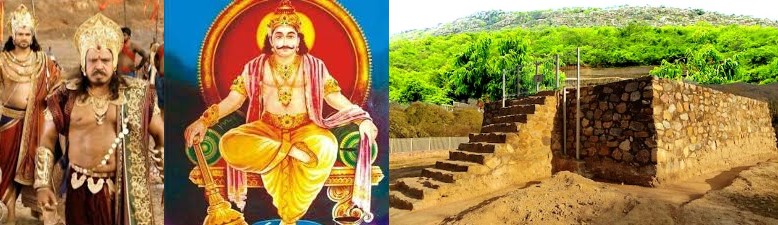
The entire city of Kundinapura was decorated like Amaravati. What could be lacking in the kingdom whose princess was none other than Mahalakshmi herself? For the marriage of his only daughter, Bhishmaka spared no extravagance in arrangements. Only because of Rukmini’s unwillingness were her parents not at peace of mind. Still, compelled by circumstance, they left no shortcoming in honoring the groom Shishupala and the wedding guests.
Arrangements were made for the stay of all visiting kings and their armies. Delighted by divine feasts and magnificent hospitality, the wedding party rejoiced. The wedding was to take place the next morning. The sounds of musical instruments, auspicious songs, and the dancers’ performances filled the atmosphere with festivity.
Morning arrived. The land of Vidarbha’s capital stood adorned. The sweet sounds of drums, trumpets, conches, and pipes proclaimed the wedding of Mahalakshmi. The gods stood witness in the sky, expecting some miracle to unfold.
The royal couple welcomed Shishupala and led him into the palace. Along with him entered Dantavakra, Paundraka, Shalva, and Jarasandha. They were seated on gem-studded thrones beneath ornate canopies. Their hearts were cheerful; friends teased Shishupala, enhancing his joy.

Rukmini, daughter of Bhishmaka, passed a sleepless night. No news had come from Dwarka. Each moment passed between hope and fear. Repeatedly she climbed to the palace terraces, gazing toward Dwarka, only to return disappointed. Many times she searched the royal road for the Brahmin messenger, again in vain.
Morning came. After her ceremonial bath, the princess was adorned with beautiful garments and ornaments. According to custom, she was to go to the temple of the family deity. The queen prepared to accompany her, but the companions said,
“Queen Mother, there is no need. We are here. You attend to the guests; we will take her for worship.”
Rukmini worshiped the goddess with perfumes, flowers, incense, lamps, sacred rice, and offerings. Kneeling before Mother Ambika, she prayed,
“O Mother, how could the wish of a daughter born of a mother like you remain unfulfilled? Until I receive your blessing, I shall not rise from here.”
The lotus flower slipped from Girija’s hand and fell into Rukmini’s hands.
The royal priest had arrived early but could not meet the princess. Hearing she had gone to the temple, he obtained the queen’s permission and followed. Seeing the Brahmin, Rukmini was overjoyed. By a mere gesture, the acharya conveyed that help from the heavens would soon arrive. He then returned to the palace.
Soon the news spread that Vasudeva Krishna had entered Kundinagara. Within moments, the men and women of the city rushed madly to behold him. The news reached Rukmi and Shishupala; Jarasandha also heard. Immediately, specially trained guards were appointed for the princess’s protection.
When those guards reached her, they beheld a wondrous sight. A chariot descended from the sky. From it, Vasudeva Krishna extended his hand. Surrounded by her companions, Princess Rukmini raised her hand upward.
In a moment—amid the companions’ feigned cries, the guards’ futile efforts, and the gods’ joyous shower of flowers—the princess of Vidarbha was abducted.
The uproar caused by the abduction reached the wedding altar only after some delay. Shishupala, dressed as the groom, had already arrived there. A maid rushed in and announced that Krishna of Dwarka had abducted the princess in his chariot.
Nearby sat Jarasandha, Dantavakra, and other warriors—but they were unarmed. Shishupala’s allies quickly gathered weapons and pursued Krishna with their armies. Halfway, however, Balarama blocked their path with the Yadava forces.
A fierce battle ensued. The Yadavas were fully prepared for war, while Shishupala’s companions had come only for a wedding. Balarama struck Jarasandha with his mace and knocked him unconscious. The Yadava warriors defeated all enemy forces with great valor. The defeated kings fled back to their own lands.
Shishupala’s face burned with shame, humiliation, and rage. Rebuking Rukmi, he said:
“I thought you were my friend. Yet because of you, today I bear the greatest humiliation of my life. I have come to marry—and returned having lost the bride to another. This tale will be mocked for ages. People will ridicule me, saying, ‘Look, this is Shishupala!’ Such a life is worse than death. Yet I will live—only to avenge this insult. From this day on, Krishna is my greatest enemy.”
Rukmi replied,
“Friend, hear my vow too. I shall pursue Krishna with a thousand soldiers. If I cannot kill him and bring my sister back to you, I shall never show my face in Kundinapura again.”
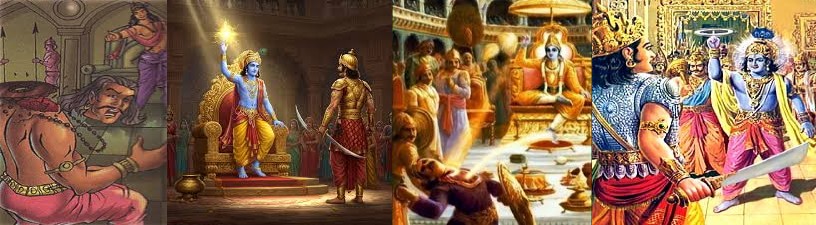
With swift cavalry, Rukmi chased Krishna and soon confronted him. Arrows rained upon Krishna’s chariot. Rukmi himself shot incessantly. Fearing that Rukmini might be harmed, Krishna commanded Sudarshana to neutralize all arrows. When all were exhausted and their quivers emptied, Rukmi seized a mace and charged.
Krishna countered with his Kaumodaki mace, struck Rukmi down, and raised his sword to behead him. Rukmini, in tears, clasped Krishna’s feet and begged for her brother’s life. Krishna bound Rukmi, seated him in the chariot, and shaved half his head as punishment.
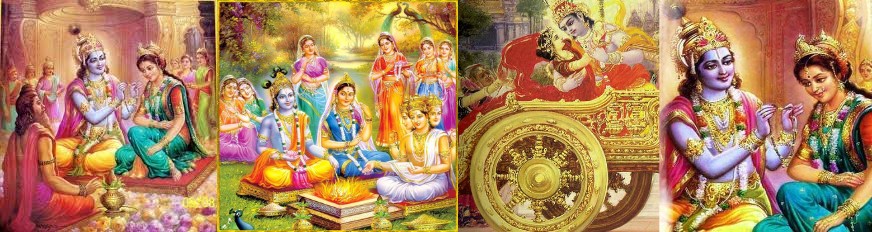
Balarama, returning victorious, learned that Rukmi was Rukmini’s brother and released him. Gently rebuking Krishna, he said,
“After all, he is to become our close relative. Will such treatment not pain his sister’s heart?”
Turning to Rukmini, he consoled her, assuring that harmony would soon prevail and that Dwarka awaited her wedding rites according to Vedic tradition.
Rukmi, however, fled at the first opportunity. True to his vow, he never returned to Kundinapura. Instead, he founded another capital named Bhojakat and lived there.
⸻( to be continued)