
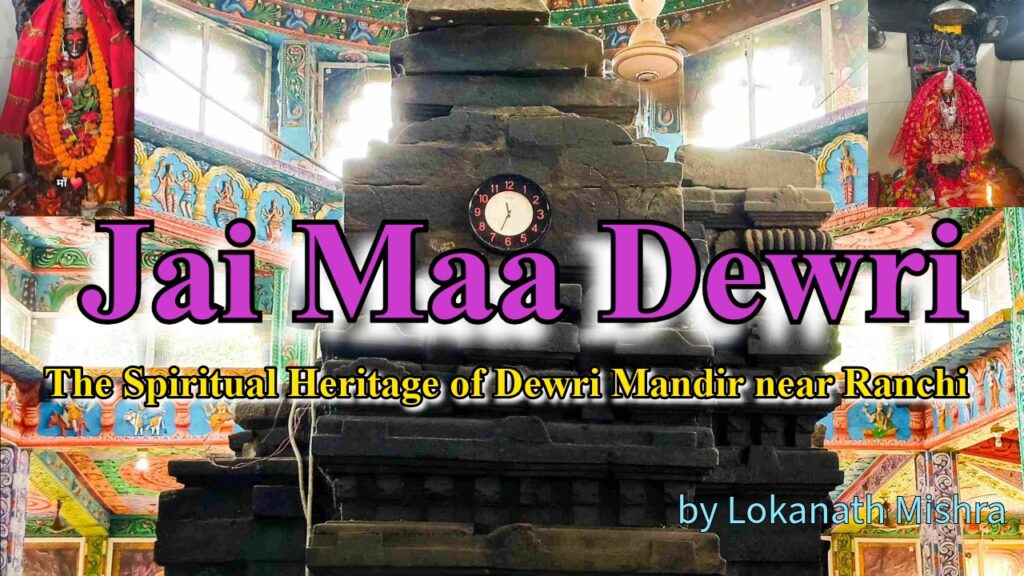
Jai Maa Dewri: The Spiritual Heritage of Dewri Mandir near Ranchi
By Lokanath Mishra
Introduction
India is a land where spirituality breathes through its ancient temples, sacred traditions, and the unwavering faith of millions of devotees. Among such revered shrines is the Dewri Mandir, located near Ranchi in the state of Jharkhand. Dedicated to Maa Dewri, a powerful manifestation of Goddess Durga, this temple is not only a center of devotion but also a remarkable symbol of ancient architectural wisdom and tribal spiritual heritage.

The temple holds a unique position among Shakti shrines because the presiding deity is worshipped as Solah Bhuji Maa Dewri—the sixteen-armed form of the Goddess, which is rarely found in other Durga temples. For centuries, devotees have believed that sincere prayers offered here bring strength, protection, and divine blessings.
The Unique Form of the Goddess
The most striking feature of Dewri Mandir is the idol of Maa Dewri with sixteen hands. Traditionally, Goddess Durga is depicted with eight or ten arms, each representing divine powers used to defeat evil forces. However, in this temple the deity appears with sixteen arms (Solah Bhuja), symbolizing the Goddess’s supreme cosmic power and her ability to protect devotees from all directions.
Each hand of the deity is believed to hold divine weapons or symbolic objects that represent courage, protection, wisdom, and justice. This rare iconography makes Dewri Mandir spiritually distinctive and attracts devotees, pilgrims, and researchers interested in Shakta traditions.
According to local belief, Maa Dewri is considered an avatar of Goddess Durga, embodying both motherly compassion and the fierce power that destroys negativity and injustice.
Ancient Architecture and Historical Significance
Dewri Mandir is believed to be over 700 years old, making it one of the historically significant temples in the region. The original temple structure was built using interlocking stones without the use of lime, chalk, or binding materials, a technique often seen in ancient Indian temple architecture.
This construction method demonstrates the remarkable engineering knowledge possessed by craftsmen of that era. Despite centuries of weather and environmental changes, the temple has stood strong, reflecting both spiritual and architectural resilience.
In recent years, the temple has undergone renovation to preserve its sacred structure and to accommodate the growing number of pilgrims visiting the shrine.

Tribal Heritage and Cultural Identity
Another remarkable aspect of Dewri Mandir is its deep connection with the tribal communities of Jharkhand. In the Bhumij and Munda tribal languages, the temple is affectionately known as “Mata Dewri Diri.”
The temple therefore represents not only a Hindu Shakti shrine but also a shared spiritual space where tribal traditions and mainstream devotional practices coexist harmoniously. For generations, local communities have served the temple and preserved its rituals, making it a living example of cultural continuity.
This blending of tribal devotion with classical Durga worship reflects the inclusive nature of Indian spirituality, where faith evolves through the contributions of diverse communities.
A Growing Pilgrimage Destination
Today, Dewri Mandir attracts devotees from across India who come to seek the blessings of Maa Dewri. The temple becomes especially vibrant during Navratri, when thousands gather to worship the Goddess and celebrate her divine power.
Recognizing the growing importance of the shrine, the Maa Dewri Trust launched an official website in October 2022 to provide authentic information about the temple, its rituals, and facilities for pilgrims. The initiative aims to preserve the temple’s heritage while helping devotees plan their visit with greater ease and comfort.
The website serves as a platform to share historical knowledge, spiritual teachings, and updates related to temple activities, ensuring that the legacy of Maa Dewri continues to reach devotees everywhere.
Spiritual Significance
For devotees, visiting Dewri Mandir is more than a pilgrimage—it is a moment of spiritual surrender before the Divine Mother. Maa Dewri symbolizes strength, protection, and compassion, reminding worshippers that the divine feminine energy guides and protects the universe.
The sixteen-armed form of the Goddess teaches a profound spiritual message: that divine power manifests in many forms to sustain righteousness and protect the faithful.
With folded hands and hearts filled with devotion, pilgrims chant with reverence:
“Jai Maa Dewri!”
⸻
References
1. Government of Jharkhand Tourism Department. Religious Tourism Sites in Jharkhand – Dewri Mandir, Ranchi.
2. Maa Dewri Mandir Trust. Official Temple Information Portal, launched October 2022.
3. Eck, Diana L. India: A Sacred Geography. Harmony Books, 2012.
4. Kinsley, David. Hindu Goddesses: Visions of the Divine Feminine in the Hindu Religious Tradition. University of California Press, 1986.
5. Local historical records and regional studies on tribal religious traditions of Jharkhand.