
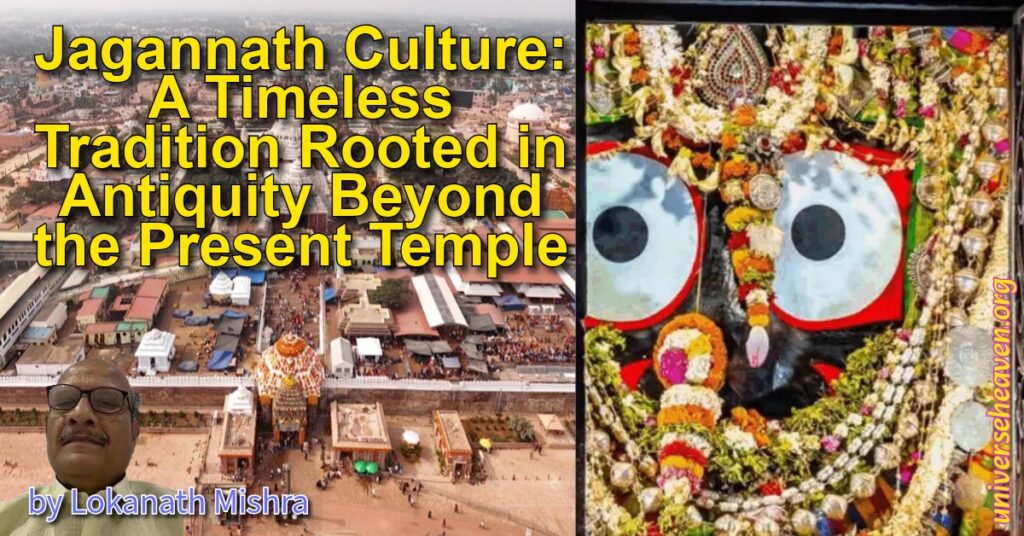
Jagannath Culture: A Timeless Tradition Rooted in Antiquity Beyond the Present Temple:
By Lokanath Mishra:
The recent Ground Penetrating Radar (GPR) survey in Puri has provided scientific affirmation to a belief long held by devotees, historians, and scholars alike—that the Jagannath culture is far older than the present 12th-century temple. While the grand temple built under the Ganga dynasty stands today as the visible center of worship, emerging archaeological, textual, and cultural evidence reveals that the spiritual tradition of Lord Jagannath is rooted in a much deeper antiquity.
Archaeological Foundations: A City Beneath the Sacred City
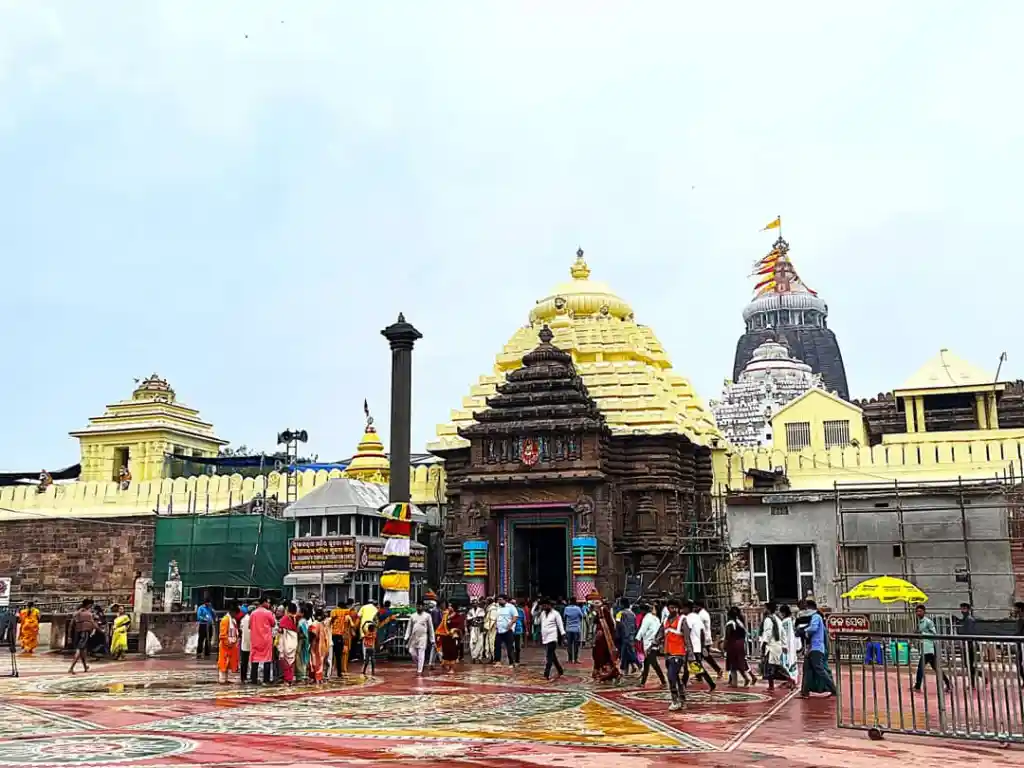
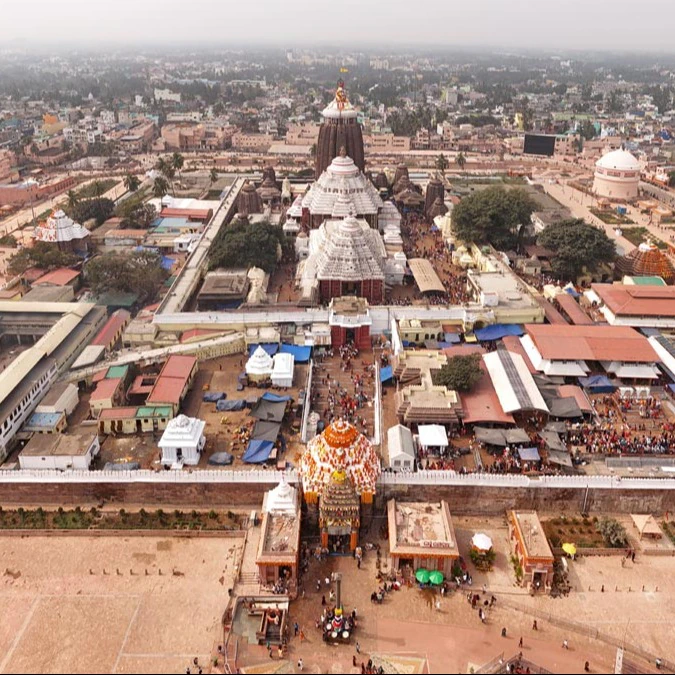
The GPR survey conducted during the Srimandir Parikrama project has revealed extensive subsurface structural remains beneath Puri, suggesting the existence of a well-planned ancient settlement.
In “Area-H,” which includes Emar Math, Nrusingha Temple, and Budhi Ma Temple, at least 43 potential heritage locations have been identified. Findings such as clay and metal vessels, structural formations, a 30-foot-long wall, and chambers indicate organized habitation and cultural activity predating the current temple complex.
These discoveries are not isolated—they collectively point to a continuous civilizational presence. The implication is profound: Puri was already a thriving cultural and possibly sacred center long before the construction of the present Jagannath Temple.
Temple as Continuity, Not Origin
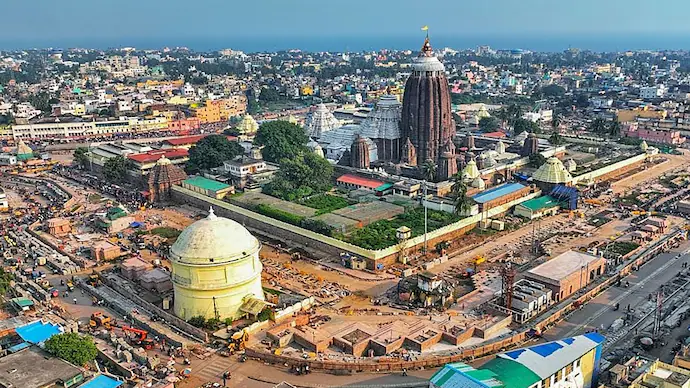
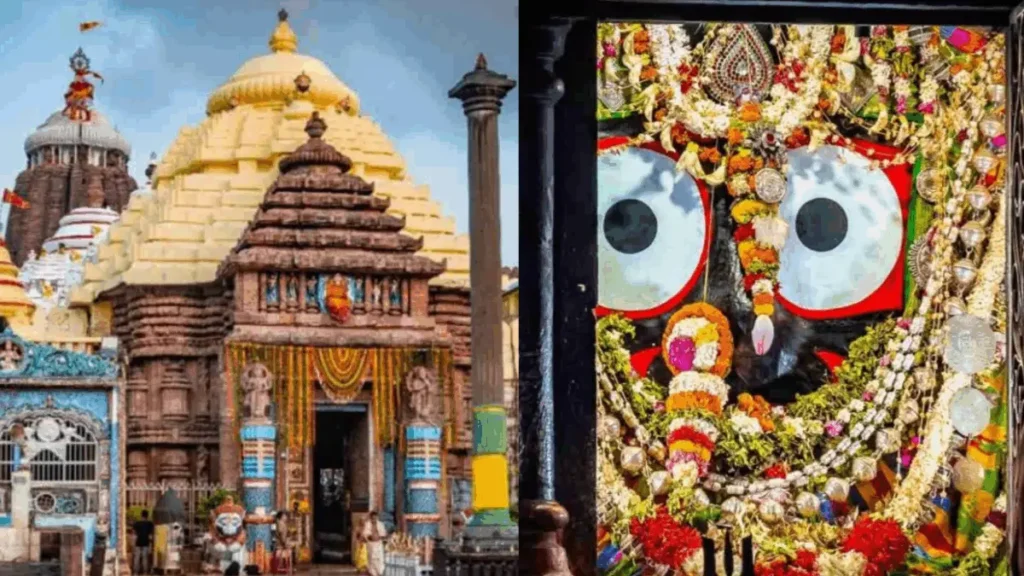
The present Jagannath Temple, constructed in the 12th century under the East Ganga dynasty, should not be viewed as the starting point of Jagannath worship. Rather, it represents a monumental phase in an already evolving tradition.
The discovery of Ganga-era relics such as lion statues reinforces this continuity. Across India, it is a well-established pattern that major temples are often built over older sacred sites. This ensures continuity of worship while formalizing it under royal patronage.
Thus, the temple is an architectural culmination—not the cultural beginning—of Jagannath tradition.
Nilamadhava and Tribal Roots: The Earliest Layer of Worship
The origins of Jagannath worship can be traced to the legend of Nilamadhava, described in texts like the Skanda Purana. According to tradition, Nilamadhava was worshipped in a forest by a tribal chief, Visvavasu, long before the establishment of the temple.
This indicates that Jagannath culture has deep roots in indigenous, tribal traditions—particularly those of the Sabara community. Even today, remnants of this origin are preserved in temple rituals, where tribal descendants (Daitapati servitors) play a crucial role during ceremonies like the Nabakalebara.
Unlike classical stone idols, the wooden form of Jagannath is itself a powerful indicator of antiquity. Wooden deity worship is often associated with pre-classical, folk, and tribal traditions, suggesting that Jagannath represents a synthesis of early indigenous spirituality with later Brahmanical practices.
Scriptural References and Sacred Geography
Ancient texts such as the Skanda Purana, Brahma Purana, and Padma Purana mention Purushottama Kshetra (the sacred region of Puri) as a revered site long before the current temple structure existed.
These references describe the land itself as sacred—not merely the temple. This aligns remarkably with the recent archaeological findings, which show that the sanctity of Puri is embedded in its geography and layered history.
The possible discovery of a subterranean passage linking the temple to the sea further strengthens this idea. Whether used as a secret route or a drainage system, such features indicate advanced planning in an earlier settlement, reinforcing the presence of a developed civilization tied to ritual and sacred space.
Living Traditions as Evidence of Antiquity:
One of the strongest arguments for the antiquity of Jagannath culture lies in its living traditions—many of which defy later orthodox norms and point toward ancient origins:
• Rath Yatra (Chariot Festival): A public, inclusive ritual where the deity comes out to the people—unlike typical temple practices.
• Mahaprasad System: Cooked in earthen pots over firewood, reflecting ancient culinary traditions.
• Nabakalebara Ritual: Periodic renewal of wooden idols, symbolizing a cyclical and organic concept of divinity.
• Inclusivity: Participation of tribal servitors alongside Brahmin priests reflects a layered cultural synthesis.
These practices are not innovations of the medieval period; rather, they preserve elements of a much older, community-based form of worship.
Emar Math and Historical Memory
The significance of Emar Math, highlighted in the GPR findings, adds another dimension to this narrative. Historical accounts suggest visits by philosophers like Ramanuja, and discoveries of gold and silver bricks point to long-standing religious importance.
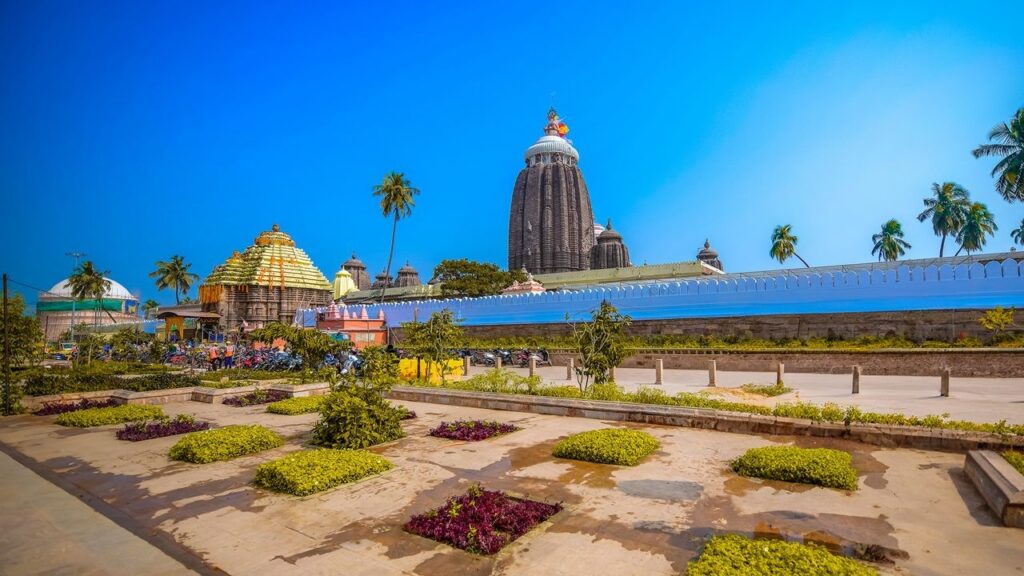
Such institutions often develop around already sacred centers, further supporting the idea that Puri’s spiritual prominence predates the current temple.
Conclusion: A Civilization of Faith Across Time
The convergence of archaeological discoveries, scriptural references, tribal traditions, and living rituals leads to a compelling conclusion: the Jagannath culture is not confined to the 12th-century temple—it is the product of a much older, continuous civilizational process.
The modern city of Puri, now revealed to rest upon ancient structural remains, stands as a testament to this continuity. Beneath its surface lies not just an old settlement, but the foundations of a timeless spiritual tradition.
The Jagannath Temple, therefore, is not the origin of the culture—it is its grand expression. The true essence of Jagannath lies in an unbroken chain of devotion that stretches from tribal forests and ancient settlements to the present day.
As further archaeological work unfolds, it may reveal even deeper layers of this history. But even now, one truth stands clear: Jagannath culture is not merely medieval—it is profoundly ancient, rooted in the very soil of time itself.