
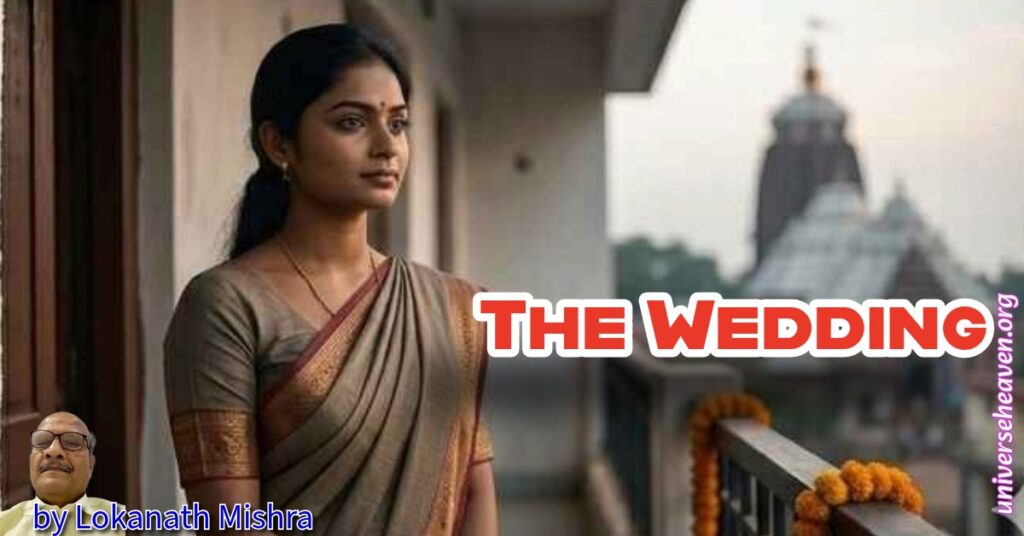
The Wedding
By Lokanath Mishra
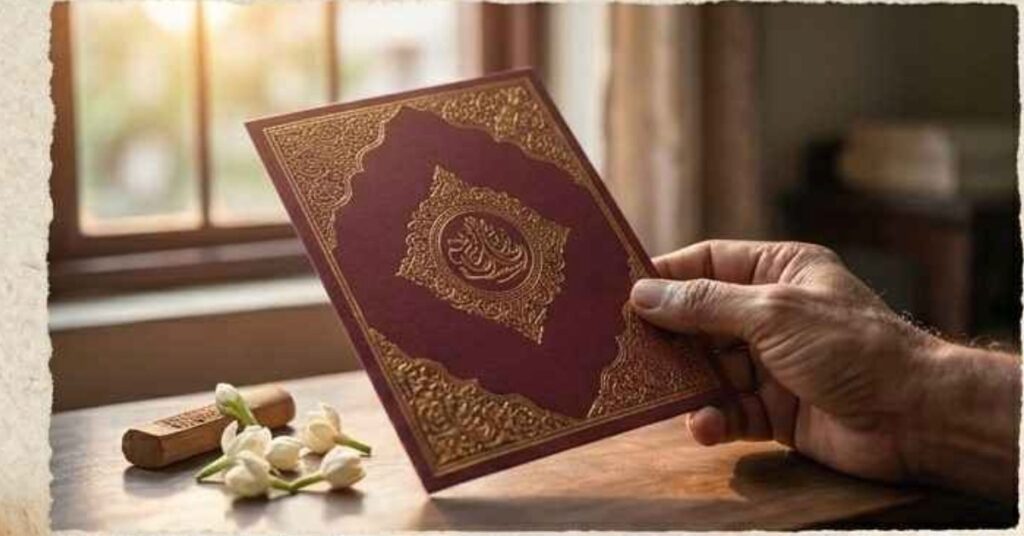
The wedding cards were unlike the usual ones that passed through our government quarters. Printed in deep maroon with embossed gold borders, they shimmered softly when held against light—as if they carried not just an invitation, but a quiet blessing. When I first opened one, a faint fragrance of fresh ink and sandal lingered, almost sacred.
Everyone in the office had received it.
Even those who barely interacted with Rita in the Central GST division were invited. That was her way—transparent, inclusive, untouched by the invisible hierarchies that governed our professional lives.
Rita lived just three houses away from my quarters. In the colony, she was a presence people noticed but never quite understood. She woke early, went to the gym, returned with an energy that seemed almost defiant. She dressed as she pleased, spoke directly, and laughed freely—without scanning the room for approval.
In office, however, she was a different force altogether—disciplined, honest, and unyieldingly sincere. Files moved faster under her watch. Corruption feared her silence more than confrontation.
Perhaps that was why people watched her so closely.
And when the news spread that she was marrying a police officer, the air thickened with curiosity.
“A bold choice,” some said with a smile that concealed more than it revealed.
“Dangerous,” others whispered.
Yet, preparations continued.
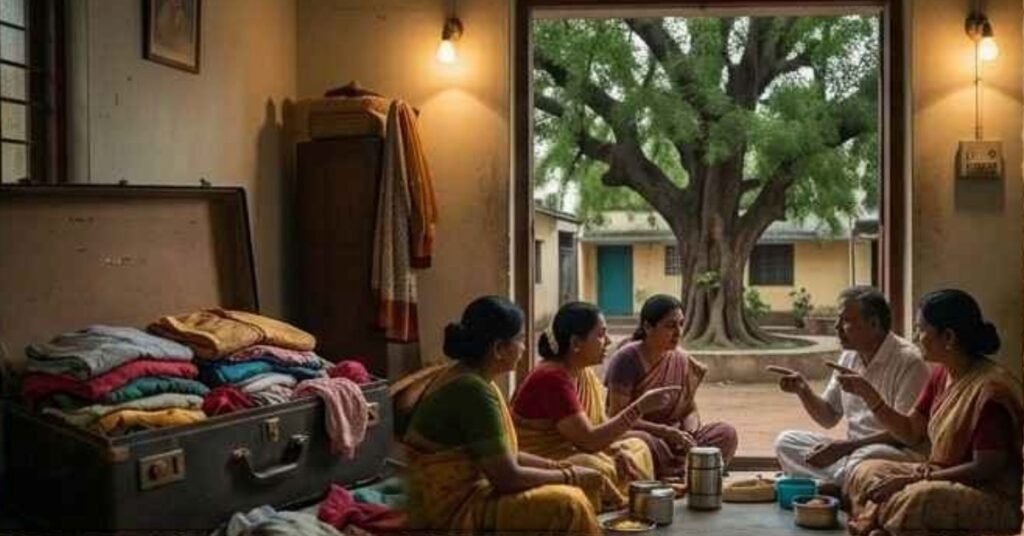
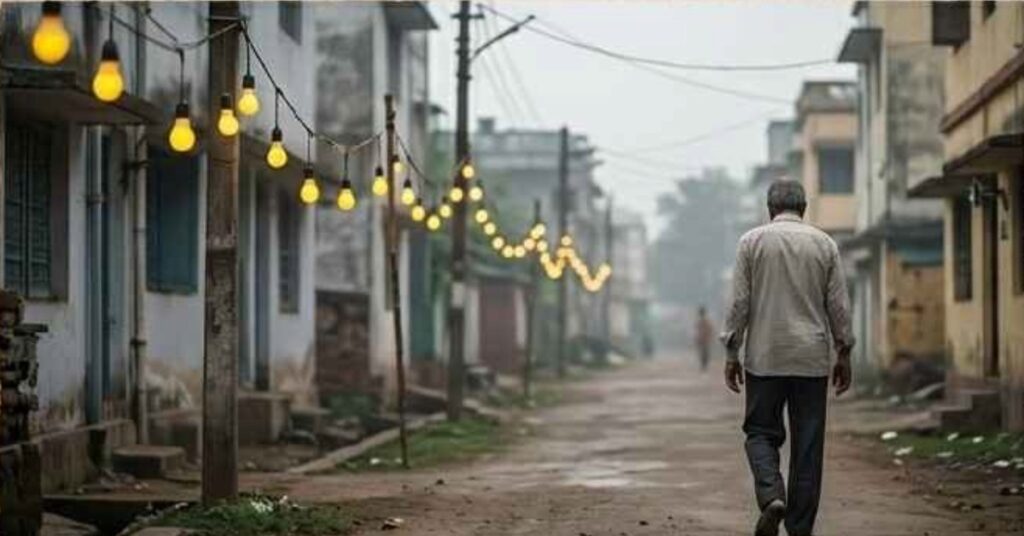
The colony transformed. Strings of yellow bulbs glowed like constellations trapped on earth. The rhythmic thud of dholaks filled the evenings. Tailors stitched late into the night. Boxes of sweets arrived in stacks, and laughter—genuine, unguarded—echoed through the lanes.
For a brief moment, judgment slept.
Until the morning of the wedding.
That day, something felt wrong even before anything was said.
The sky was unusually pale. The birds, restless.
I saw Rita’s father walking down the road. His steps were uneven, his face drained of color, his eyes distant—as though he had seen something he could neither accept nor explain.
I stepped forward.
“Is everything alright?” I asked gently.
He paused, looked at me, and for a fleeting second, it seemed as if he wanted to speak—but words resisted him.
Finally, in a voice that did not belong to him, he said,
“The wedding… has been called off. The groom’s grandfather passed away last night.”
The words hung in the air.
But something about them felt incomplete.
Not false—just… unfinished.
I nodded, though my mind was unsettled. He refused help and walked away, carrying a silence heavier than grief.
By afternoon, the lights were turned off.
The decorations remained—but now they felt like abandoned prayers.
The next day, the real ceremony began—not of marriage, but of judgment.
Under the old neem tree of a park near our office, a familiar gathering took place during lunch hour. Steel tiffins opened, sarees adjusted, and conversations—sharp as blades—began to unfold.
“So sudden, no?” one voice said.
“Or too sudden?” another replied, eyes narrowing.
I sat quietly, but something inside me was already resisting.
“Girls like her…” a third began, “they don’t believe in limits.”
“Awaara,” someone murmured.
“Loose character,” came another voice—quicker, harsher.
I looked at them.
They spoke with certainty, as though truth was something they owned.
“Who knows if anyone really died?” someone added. “These things are often excuses.”
“Maybe the groom discovered something,” another suggested, almost eagerly.
Then came the most piercing remark—from someone who claimed closeness.
“I have seen her for three years,” she said. “The way she dresses… behaves… such things don’t end well. Upbringing decides everything.”
Upbringing.
The word struck like a verdict passed without trial.
I felt a deep unease—not just at their words, but at the strange satisfaction behind them.
This was not concern.
This was consumption.
Human pain had become their entertainment.
Their voices rose and fell like scripted drama, eerily resembling the antagonists of television serials. But here, there was no fiction—only consequences.
I wanted to interrupt.
To ask: What if you are wrong?
But I remained silent.
Because sometimes, silence reveals more than argument.
I walked away.
That evening, I saw Rita.
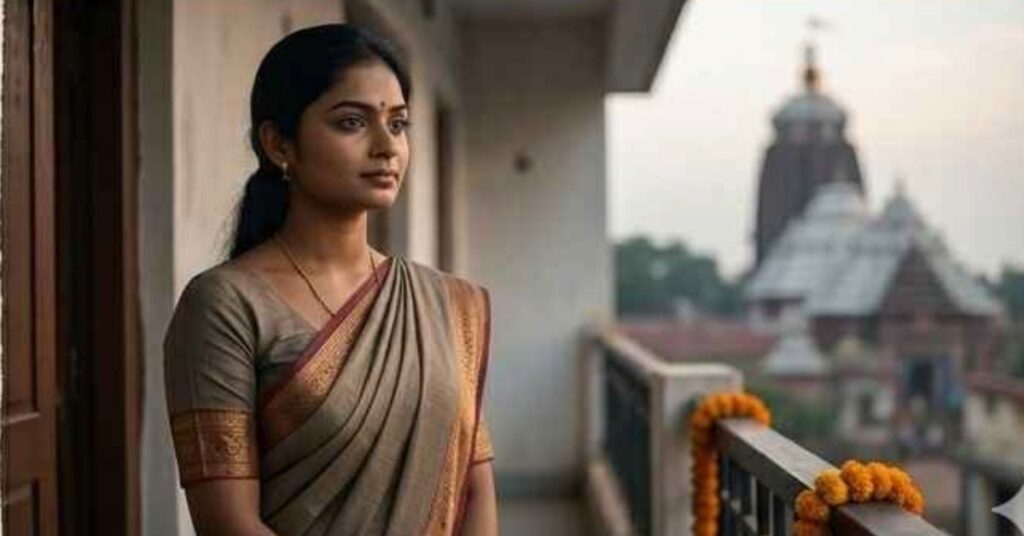
She stood alone on her balcony.
No tears. No anger.
Just stillness.
A stillness so deep, it felt unnatural—like the calm surface of a river hiding a violent current beneath.
For a moment, our eyes met.
And I felt something I could not explain—an unspoken strength, almost spiritual in nature. As if she knew something the rest of us did not.
That night, sleep did not come easily.
Questions lingered.
Why did everything feel… orchestrated?
Why did the explanation seem real, yet incomplete?
And why, above all, did Rita not appear broken?
Time passed.
The colony moved on. The office found new topics. The same voices that once dissected her life now discussed others with equal enthusiasm.
But something within me refused to forget.
Nearly a year later, news arrived—quietly, almost as if it did not wish to be noticed.
After the annual shraddha of the groom’s grandfather, the marriage had taken place.
Simple.
Sacred.
In side the temple of Jagannath Temple located near the colony.
No office staff invited.
No colony members present.
Only close family—and perhaps, something divine.
I learned that the groom was now serving as a police sub-inspector. The ceremony was minimal, devoid of display, yet filled with something far more profound—peace.
It was only then that understanding began to dawn.
In our traditions, death is not merely an end—it is a transition. Certain unions are paused, not denied. Time is allowed to purify what impatience might contaminate.
What we saw as disruption… may have been protection.
What we called misfortune… may have been alignment.
And what people mocked… was perhaps guided by something beyond their comprehension.
Rita had not reacted because she trusted something deeper than circumstance.
Faith.
Not the loud, performative kind—but the quiet endurance that waits without bitterness.
I often pass by that same neem tree.
The same people still gather.
The same patterns repeat.
But now, I see things differently.
Human judgment is quick, restless, and often cruel.
But truth—like the divine—moves slowly, silently, and with purpose.
The wedding was never truly broken.
It was only… postponed.
Not by fate’s cruelty,
but by its wisdom.

Never Judge a person or situation.
Non Knows what kind of trauma the person or the family going through in the hard times.