
A Story of Dvapar Yuga in Prose : ( part-11)
By Lokanath Mishra
After showing Yashoda the Vishwaroopam, Lord Krishna used Sneh Mayi Maya (a loving, magical illusion) to make her forget the vision, allowing her to embrace him again with overwhelming love and affection. Yashoda then picked him up, and the profound experience of the universal form faded, replaced by her deep maternal love as she held her son on her lap once more.
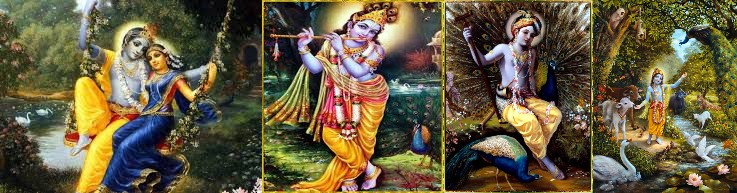
The divine revelation then led to a deeper love and bond for her son, as she continued to cherish Krishna showed the Vishwaroopam to demonstrate his divinity to Yashoda, who was so deeply engrossed in her maternal love that she had missed his divine nature amidst his many childish antics.
The village that Krishna lived in, Gokula, was a land of ‘Gopalas’ or cattle herders. So, there was an abundance of milk, curds, and butter in the village. Krishna was very fond of butter and would make use of every opportunity to steal a pot of butter from his mother or from any of the mothers in the village. All the mothers, or ‘Gopis’ as they were called, started tying pots of butter to the ceiling so that Krishna or his friends couldn’t reach them.
Krishna would team up with his friends to reach these pots tied high up to the ceiling too. The would climb up to the roof and move the ceiling tiles to get the pot of butter or climb on each other’s shoulders to create a human ladder and steal the butter. If none of the tricks worked, they would hurl a pebble at the pot and take turns to catch the butter with their open mouths.
The Gopis found out that Krishna was the prime culprit for stealing the butter and hence complained to his mother, Yashoda. Yashoda apologised to the women and promised to discipline Krishna. Mischievous little Krishna decided to play a prank on the Gopis. When the women had all gone to the river to bathe, he went and stole all their clothes from the bank of the river. He said he would return their clothes only if they promised that they would stop complaining to his mother.
Yashoda heard about this and unable to discipline Krishna, tied him up to a heavy staff. Krishna couldn’t release himself so he decided to go by the river where his friends would help him. He started walking through the forest when he got stuck between two trees that were growing very close to one another.
Krishna simply tugged hard enough to move and ended up uprooting the trees. Yashoda ran to the site to see if her little boy was hurt but saw how he had felled two trees so easily. This incident made her realise more about Krishna’s extraordinary powers. Once Yashoda had taken him to a village festival. After everyone had their afternoon meal, Yashoda left Krishna to sleep under a bullock cart. After a while, Krishna woke up to the noise of music. All the villagers were dancing and so Krishna also started dancing to the beats. He then accidentally hit the wheel of the bullock cart which made the cart crash to the ground.
People darted towards the cart expecting the worst to have happened to the little boy. Astonishingly, they found the little boy still happily dancing to the tunes.
Before leaving Vrindavan for Mathura to accept Kansa’s invitation, Lord Krishna and his brother Balarama spent eleven years in Vrindavan, engaging in numerous divine plays (leelas), such as playfully defeating demons like Vatsasura and Kaliya, stealing butter, dancing the Raslila with the gopis, and enjoying the idyllic life by the Yamuna river. His childhood in Vrindavan is marked by these memorable divine activities and his famous interactions with Radha and the gopis, which are central to Hindu mythology. Once Krishna and Balarama were playing when the demon Vatsasura, disguised as a calf, tried to kill them, but Krishna swiftly defeated and killed the demon.
Once while playing, their ball fell into the river, and Krishna went to retrieve it, encountering the venomous, ten-headed serpent Kaliya. Krishna defeated the serpent by dancing on its heads, forcing it to leave Vrindavan and never poison the Yamuna river again.
Krishna famously played his flute one night, which called the gopis from their homes to dance with him in a supernatural, extended dance of devotion called the Raslila.
Krishna’s childhood in Vrindavan is also characterized by his numerous interactions and his divine love with Radha and the gopis, leaving an indelible mark on Hindu mythology.
‘Madhuvan Main Jo Kanhaiya Kisi Gopi Se Mile Kabhi Muskaaye Kabhee Chhede Kabhee Baat Kare Radha Kaise Na Jale, Radha Kaise Na Jale Aag Tan Man Me Lage Radha Kaise Na Jale, Radha Kaise Na Jale.’
The decorated flute plays tunes of love, the peacock wing sways hither & thither, the surroundings are filled with a milieu of sounds – the sound of anklets, the clanking of bangles, the tunes of Prem Raag, the taps of dancing feet – it’s the dance of love and passion & it’s the famous – Krishna Raas Leela.
The Radha-Krishna Leela in Vrindavan refers to the divine pastimes, particularly the Raas Leela, where Lord Krishna dances with Radha and the gopis (cowherd women) in the mystical forests of Nidhivan. This celestial dance is a symbol of pure, divine love and the deep connection between the soul and the divine. Devotees believe Krishna and Radha still perform this dance nightly, evidenced by the used appearance of belongings left by priests in Nidhivan, which are found disarranged in the morning, and the sounds of divine music and anklets heard during the night.
Lord Krishna’s divine flute playing on full moon nights in Vrindavan attracts the gopis, who leave their homes and families to be with him.
The Dance of Divine Love: Krishna, with Radha and the gopis, engages in the Raas Leela, a mystical dance of pure joy, bliss, and spiritual union, losing all sense of time and self. The Raas Leela is the ultimate expression of love and surrender to the divine, a spiritual connection that transcends worldly relationships.
Nidhivan is the most sacred location for Krishna’s Raas Leela, where it’s believed Krishna and his divine energies come to perform the dance every night.
Devotees claim that the beds in the temples appear to have been slept in, ornaments are found scattered, and sweets and betel leaves are partially eaten, suggesting divine presence after the temple is closed at sunset.
No one is allowed inside Nidhivan after sunset, as it is believed that anyone who tries to trespass to see the divine dance will either die or lose their sanity.
The Radha-Krishna Leela symbolizes the profound and eternal love between the individual soul (Radha) and the Supreme Being (Krishna), representing the pinnacle of devotion.
The stories of the leelas teach profound spiritual lessons about the depth of divine love, the surrender of the ego, and the path to spiritual bliss and connection with the divine.
In Vrindavan, Radha Rani is known as Lord Krishna’s eternal beloved and spiritual consort, representing the highest form of devotion (bhakti) and the feminine aspect of the Divine. She is often seen as the embodiment of God’s creative and energetic power, and for many devotees, the path to Krishna leads through her. She is also considered the queen of the sacred land of Braj, including Vrindavan.
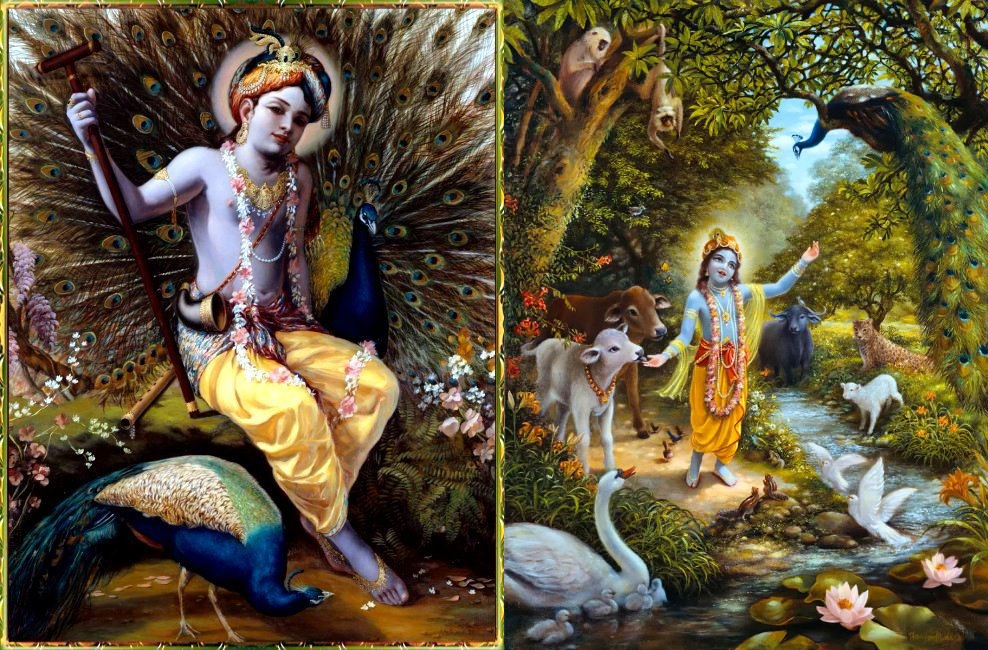
Radha is famously known as the beloved of Krishna, representing an eternal and pure form of love that transcends typical relationships. In Gaudiya Vaishnava theology, she is the personification of bhakti (devotional love), whose devotion to Krishna is considered the most exalted. While her origin as a milkmaid is prominent, she is also revered as the supreme goddess, the origin of all goddesses, and the mother of the universe.
She is described as Krishna’s “energetic and creative power” and the one who controls Him.
Her existence in Vrindavan signifies the ultimate surrender and deep connection between a devotee and the Divine, making the name “Radhe-Krishna” sacred to many. She is considered the queen of Goloka and Braj, which includes the holy land of Vrindavan. Many devotees believe that to approach Lord Krishna, one must first connect with Radha Rani. Her presence in Vrindavan provides a focal point for devotion and spiritual understanding of divine love. Her story has inspired various art forms, literature, and dance, such as the Raslila.
In essence, Radha Rani’s presence in Vrindavan is not just that of a historical figure but a living spiritual power central to the understanding of divine love and devotion within the Hindu tradition. ( to be continued)
Dakshinkali Temple: The Sacred Abode of Mother Kali in Nepal