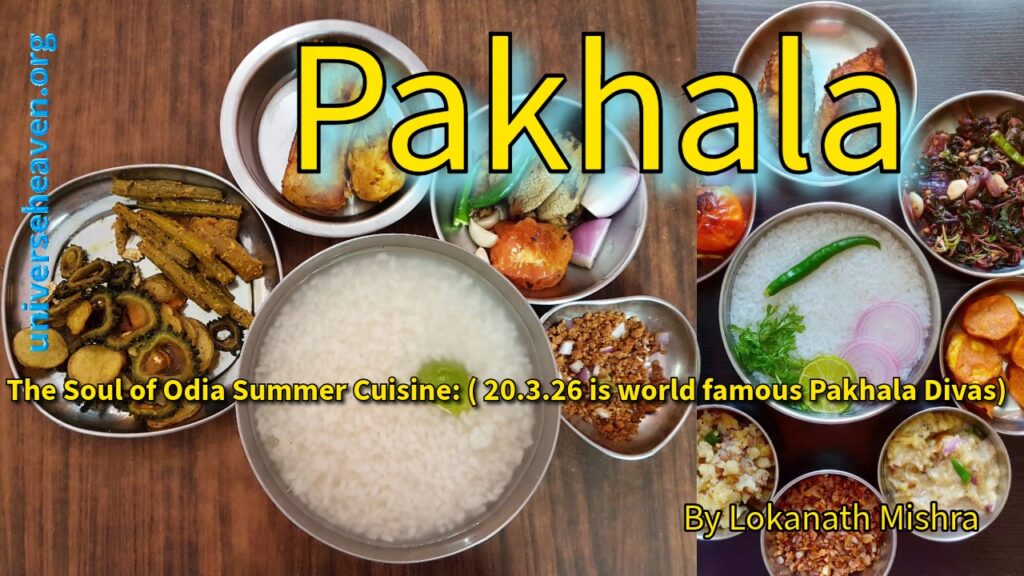
Pakhala: The Soul of Odia Summer Cuisine: ( 20.3.26 is world famous Pakhala Divas)
By Lokanath Mishra:
Pakhala, often lovingly called “water rice,” is far more than just a dish in Odisha—it is an emotion, a tradition, and a way of life deeply rooted in the region’s culture and climate. Simple in preparation yet profound in significance, Pakhala has nourished generations and continues to be a staple, especially during the scorching summer months.

History and Cultural Roots
The origin of Pakhala dates back centuries, emerging as a practical and sustainable food choice in the humid and tropical climate of eastern India. Before refrigeration existed, soaking cooked rice in water overnight allowed natural fermentation, preventing spoilage while enhancing its nutritional value.
Historical references suggest that similar fermented rice dishes were consumed across eastern and northeastern regions of India, and even in neighboring countries like Vietnam and Myanmar. However, Odisha embraced and refined it into a culinary identity of its own.
Pakhala is so culturally significant that it is celebrated annually on Pakhala Divas (March 20), when people across Odisha and Odia communities worldwide relish this humble dish with pride.
Preparation and Varieties
Pakhala is traditionally prepared in two main ways:
- Basi Pakhala (Fermented Pakhala)

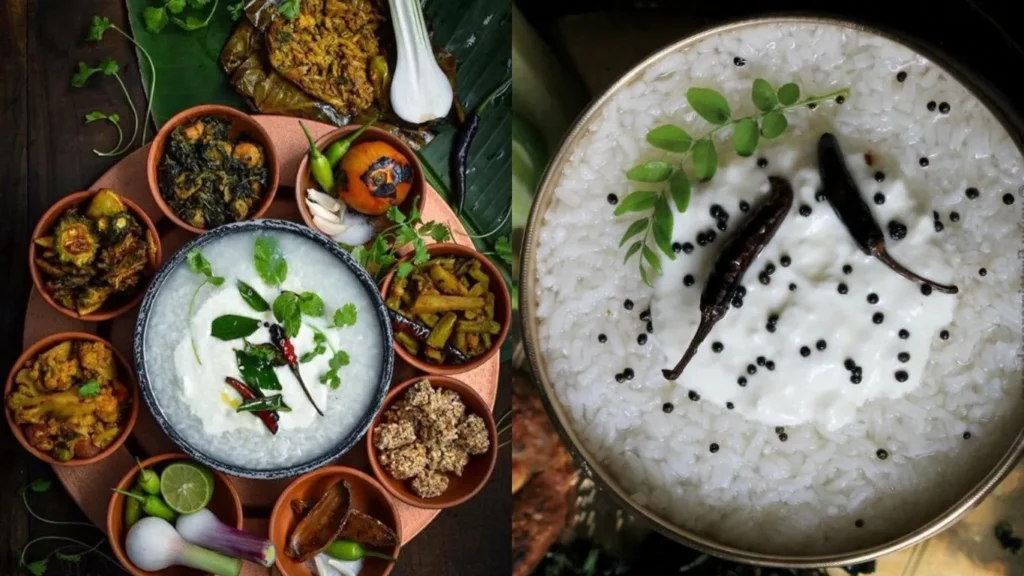
Cooked rice is soaked in water and left overnight to ferment naturally. This process enhances its probiotic properties and gives it a slightly tangy flavor.
- Dahi Pakhala (Curd Pakhala)
Freshly cooked rice is cooled and mixed with water and curd, offering a milder taste and creamy texture.
The dish is typically tempered with:
• Mustard seeds
• Curry leaves
• Green chilies
• Lemon juice
• Salt
The watery portion, known as “Torani,” is considered especially refreshing and nutritious.
Accompaniments: The Complete Pakhala Platter
Pakhala truly comes alive when paired with a wide variety of traditional side dishes. These accompaniments enhance its taste, texture, and nutritional balance.
Vegetarian Delicacies
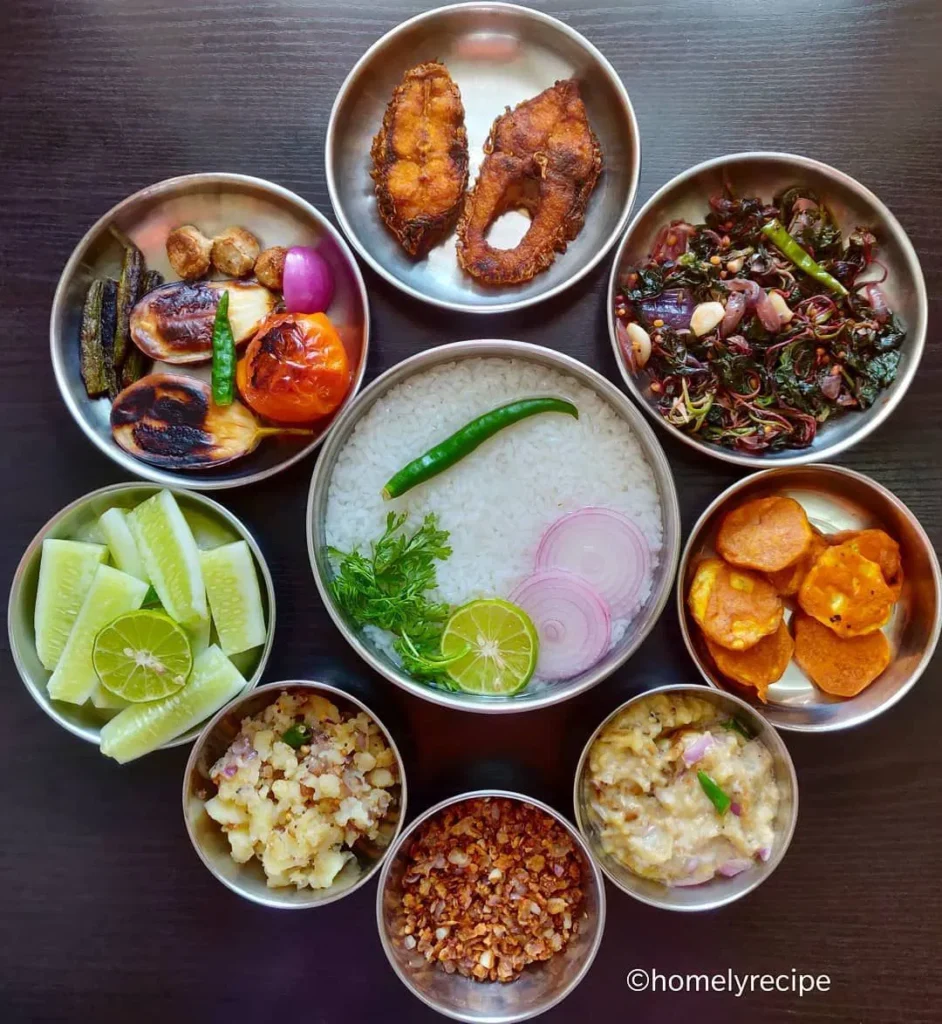
• Saga particularly Sunsunia Saga (Saag): Boiled or lightly sautéed greens, rich in iron and fiber
• Pumpkin Flower Cake: Crispy fritters made from pumpkin blossoms
• Badi Chura: Crushed dried lentil dumplings mixed with onion, garlic, mustard oil, and spices
• Nima Flower Cake: A slightly bitter preparation made from neem flowers, valued for its medicinal properties
• Bitter Gourd Fry: Fried bitter gourd slices that add a sharp, contrasting flavor
• Bhaja: Deep-fried vegetables like potato, brinjal, drumsticks, curly flowers etc.
• Aloo bharata: Mashed potatoes seasoned with cumin, onion, mustard oil, and green chilies
• Roasted Vegetables: Such ladyfinger, bins, potatoes etc.
• Patalghanta Chutchutaa: A traditional Sambalpuri tomato-based mashed dish sautéed with cumin.
Tomato chutney.
Mushroom masala.
Non-Vegetarian Specialties
• Mutton Kasa: Spicy, slow-cooked mutton curry
• Crab Masala: Rich and flavorful crab preparation
• Prawn Masala: Aromatic prawn curry cooked with traditional spices
• Chuna Machha Poda: Roasted small fish, smoky and deeply flavorful
• Fried Fish and Prawns: A classic and widely loved pairing
These dishes together create a wholesome and indulgent meal that balances simplicity with richness.
Medical and Nutritional Value
Pakhala is not just delicious—it is also highly beneficial for health:
• Natural Coolant: Helps regulate body temperature during extreme heat
• Prevents Dehydration: High water content keeps the body hydrated
• Rich in Probiotics: Fermented Pakhala improves gut health
• Aids Digestion: Light and easy to digest
• Vitamin-Rich: Contains essential B vitamins
• Helps in Digestive Disorders: Traditionally believed to soothe ulcers and acidity
The inclusion of items like neem flowers and bitter gourd further enhances its medicinal value by aiding detoxification and improving metabolism.
Social and Cultural Importance
Pakhala is deeply embedded in Odia identity and community life. Traditionally associated with simplicity and sustainability, it has now become a symbol of cultural pride.
The Rise of “Pakhala Parties”
Among Odia communities, especially in the UK, Australia, Canada, UAE , United States etc, a unique trend known as the “Pakhala Party” has gained popularity. Families of odiya origin gather, each contributing one or two dishes, and enjoy a grand communal feast centered around Pakhala.
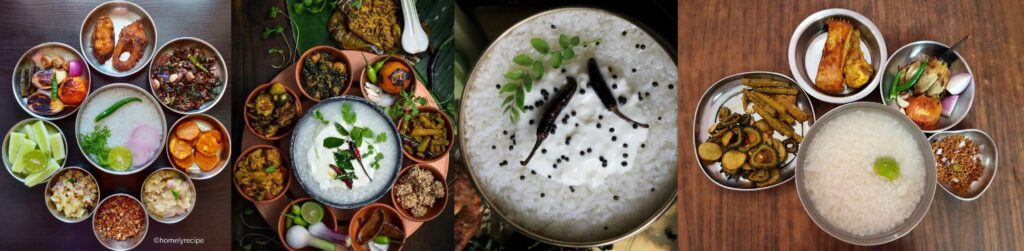
This concept has led to:
• Revival of forgotten traditional recipes
• Strengthening of community bonds
• Cultural exposure for younger generations
• Shared cooking responsibilities
• Renewed interest in Odia cuisine
Even rare dishes like Patalghanta Chutchutaa or preparations using hendua (dried bamboo shoots) have found new life through these gatherings.
A Symbol of Identity and Simplicity
Despite modernization, Pakhala continues to hold a special place in Odia households. It represents:
• Climatic adaptation
• Nutritional wisdom
• Cultural continuity
• Community bonding
From village homes to global diaspora gatherings, Pakhala remains a timeless connection to Odisha.
Conclusion
Pakhala is not merely food—it is heritage served in a bowl. Its simplicity carries deep nutritional benefits, cultural richness, and emotional warmth. Whether paired with humble greens or elaborate seafood and meat dishes, Pakhala stands as a shining example of how traditional food can be both nourishing and meaningful.
In every spoonful of Pakhala lies the taste of Odisha—cooling the body, comforting the soul, and preserving a legacy that continues to thrive across generations.