
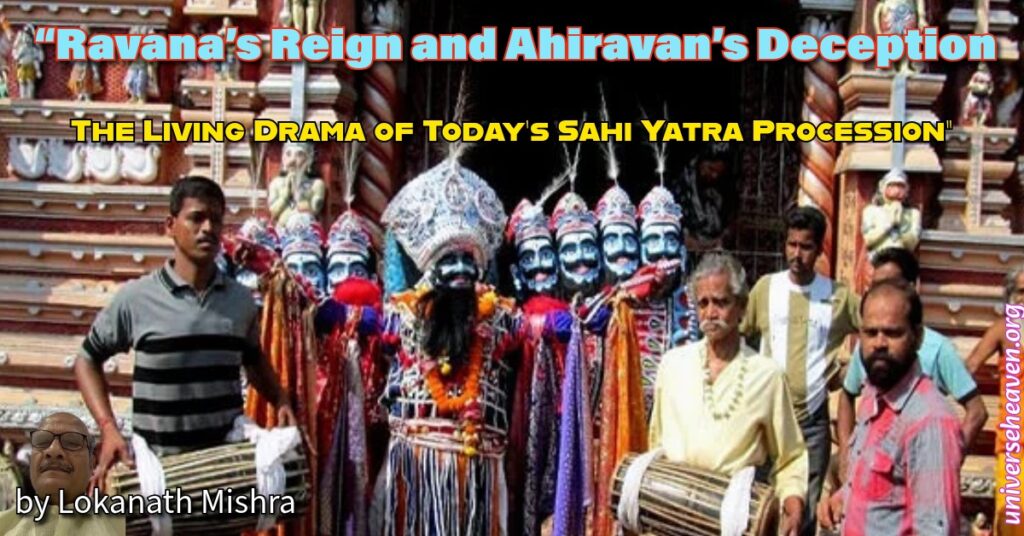
“Ravana’s Reign and Ahiravan’s Deception: The Living Drama of Today’s Sahi Yatra Procession”
By Lokanath Mishra, Jenamath Lane, Puri
Today’s Sahi Yatra procession carries a special cultural and emotional significance as the vibrant characters of Kundheibenta Sahi move ceremonially toward Dola Mandap Sahi, transforming the streets into a living stage of devotion, drama, and martial heritage. From your own house, the powerful figure of Parashuram joins this sacred movement, adding yet another layer of mythological depth to the unfolding spectacle. Yet, at the heart of this grand tradition stand two towering dramatic forces—Ravana and Ahiravan—whose roles elevate the Sahi Jatra beyond a simple retelling of the Ramayana into a dynamic, community-driven theatre of शक्ति (power), बुद्धि (intellect), and लीला (divine play).
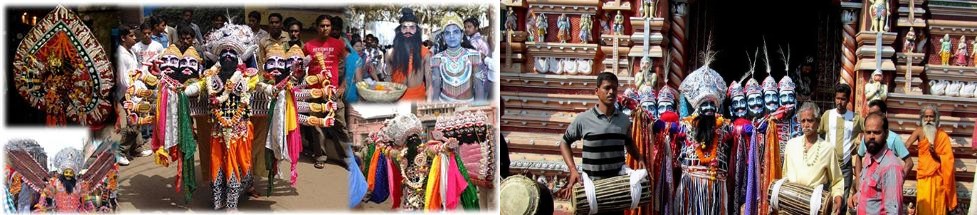
The Living Procession: From Kundheibenta to Dola Mandap:
As the procession advances from Kundheibenta Sahi to Dola Mandap Sahi, the narrow lanes of Puri echo with the beats of mardala, telingi baja, and the rhythmic footsteps of performers. The movement is not merely geographical—it symbolizes the progression of the Ramayana narrative through different phases of conflict and revelation.
The participation of figures like Parashuram, emerging from local homes, reinforces how deeply embedded this tradition is within the community. Every household, every lane, becomes a participant, not just a spectator.
Ravana: The King of the Sahi Jatra:
In the Sahi Jatra, Ravana is not merely a villain—he is the central protagonist of performance.
• The Axis of Drama: The entire theatrical energy revolves around Ravana. His presence commands attention, making him the “king” of the performance tradition.
• Multiple Forms Across Sahis: Different neighborhoods portray different aspects of Ravana—
• Maya/Chadmabesi Ravana (the master of disguise)
• Lankapodi Ravana (during the burning of Lanka)
• Yuddha Ravana (the warrior in battle)
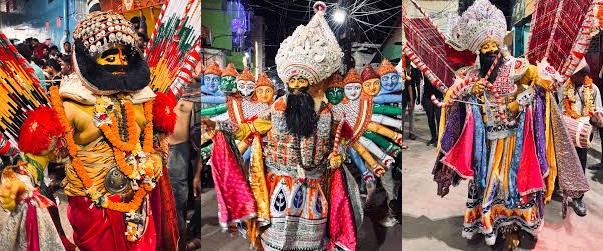
• Grand Visual Spectacle: His विशाल (grand) appearance—ten heads crafted from papier-mâché, massive taati (wooden structures), and traditional weaponry—creates an awe-inspiring sight.
• Bachanika (Dialogues): Ravana engages directly with the audience through powerful dialogues blending Odia and Sanskrit, filled with pride, वीर रस (heroic emotion), and dramatic flair.
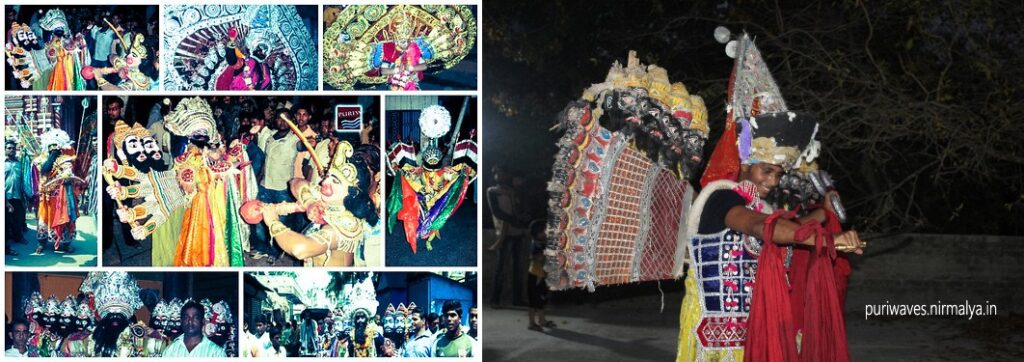
Ravana, therefore, becomes a symbol not just of evil, but of strength, intellect, and theatrical brilliance.
Ahiravan: The Master of Deception and the Turning Point:
If Ravana represents open war, Ahiravan introduces the dimension of deception and crisis.
• The Hidden Threat: As the ruler of Pataal Lok, Ahiravan embodies dark powers, illusion, and strategic cunning.
• The Great Crisis: His abduction of Ram and Lakshman marks a निर्णायक मोड़ (critical turning point), where conventional warfare fails.
• Revelation of Panchmukhi Hanuman: Ahiravan’s presence is essential because it leads to the ظهور (manifestation) of Hanuman’s five-faced form—an extraordinary symbol of divine शक्ति.
• Climactic Battle: The defeat of Ahiravan represents the विजय (victory) of devotion and righteousness over hidden evil and black magic.
Thus, Ahiravan’s role intensifies the drama, ensuring that the narrative reaches a spiritual and emotional peak.
Why Ravana and Ahiravan Are Central to Sahi Jatra
The importance of these characters goes far beyond mythology:
• Martial Tradition: The Sahi Jatra is deeply linked to the Akhada culture of Puri. Performers portraying Ravana display sword fighting, physical agility, and combat techniques rooted in historical temple defense traditions.
• Street as Stage: With no formal मंच (stage), the entire locality becomes a theatre. Ravana’s imposing figure moving through tight lanes creates an immersive, almost cinematic experience.
• Collective Participation: Each Sahi contributes its identity through characters and performances, making it a true community festival.
• Dramatic Contrast: Ravana’s open शक्ति and Ahiravan’s hidden छल (deceit) together present a complete spectrum of evil—making the eventual victory of Lord Ram profoundly meaningful.
A Festival Beyond Performance
Today’s procession—from Kundheibenta Sahi to Dola Mandap Sahi, with Parashuram stepping out from your own home—beautifully illustrates how Sahi Jatra is not just observed, but lived. It is where mythology walks through real streets, where neighbors become warriors and kings, and where ancient narratives breathe through modern communities.
Ravana and Ahiravan, far from being mere antagonists, are the engines of drama, devotion, and cultural continuity. Through them, Sahi Jatra preserves a unique blend of theatre, spirituality, and martial heritage—making it one of the most extraordinary living traditions of Odisha.