
Shakti Pithas in Ujjain and Indore
By Lokanath Mishra:
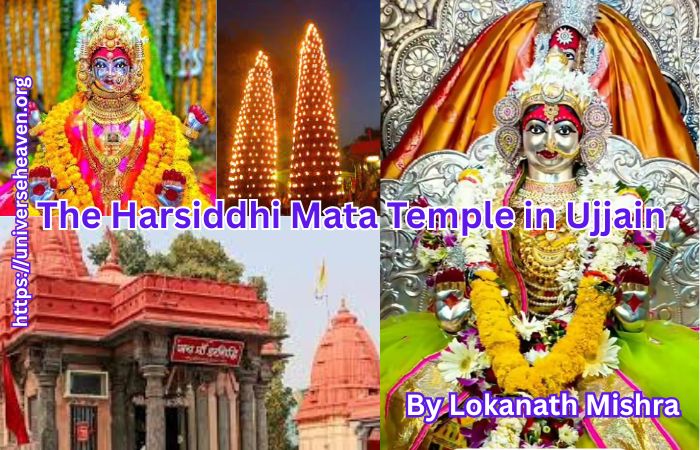
The Harsiddhi Mata Temple in Ujjain is regarded as one of the sacred 51 Shakti Pīthas. According to legend, it is the site where the elbow (bahu) of Sati fell, when Shiva carried her body and the parts of her form were scattered by the weapon of Vishnu to calm his devastation. 
It is deeply associated with the feminine divine, Shakti, and draws devotees seeking her blessings for strength, protection, success and spiritual upliftment. 
Historically the temple site also connects to legends of kings such as Vikramaditya and the famous poet-scholar Kalidasa. 
Architecture & Features
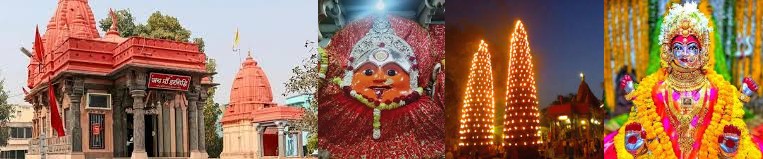
Architecturally, the temple blends ancient styles with Maratha era influences. It has four entrances, and is noted for its twin deep‐stambhs (lamp-pillars) which are lit during festivals (especially Navratri) with hundreds of oil lamps, creating a dramatic visual and devotional effect. 
Inside, there is a Sri Yantra installed, and the sanctum is surrounded by smaller shrines for deities like Annapurna, Mahalakshmi and Mahasaraswati. 
Visiting & Context
• Location: The temple lies in Ujjain, just a short walk (approx. 500–600m) from the famous Mahakaleshwar Temple (a Jyotirlinga). 
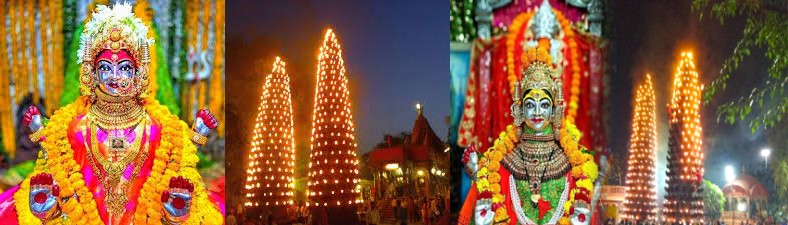
The Harsiddhi Temple is not just another pilgrim spot, but represents a convergence of Shiva and Shakti traditions (since the Jyotirlinga of Mahakaleshwar and the Shakti Pītha stand close by), rich royal & literary association, plus strong ritual and devotional practices. It is thus a must-visit for those exploring the feminine divine in central India.
Gadkalika Mata Temple (Ujjain)
Significance & Legend
The Gadkalika Mata Temple, located in Ujjain, is revered as one of the 18 Maha Shakti Pīthas — i.e., a more exalted class of the Shakti Pītha network. It is believed to mark the spot where the lips (orns) of Sati fell. 
Another celebrated legend connects this site to the great Sanskrit poet Kalidasa: it is said that he performed penance here before being endowed with his famous poetic genius through the blessings of Goddess Kalika. 
Architecture & Features
The temple is situated near Bhairav Parvat (hill) and the banks of the River Shipra in Ujjain. The sanctum features the idol of Goddess Kalika, flanked by deities of Saraswati and Mahalakshmi in some accounts. 
Gadkalika Mata Temple offers a crucial complement to the Harsiddhi site — while Harsiddhi marks the fall of Sati’s elbow, here is the spot for the lips; together they accentuate the wider web of goddess-power in this region. For devotees of Shakti, it is a profound site of right-hand feminine energy, wisdom and poetic inspiration.
Divya Shakti Peeth (Indore)
Significance & Overview
In Indore, the Divya Shakti Peeth is advertised as a temple dedicated to the goddess energy of Maa Jwala, and claims to be among the 51 Shakti Pīthas. 
The temple hosts an “eternal flame (Akhand Jyot)” brought from the famous Jwala Devi temple in Himachal Pradesh, symbolising unceasing Shakti power. 

Architecture & Features
Located in Pushp Vihar Colony, Indore , this temple is modern in style and has been established to serve devotees in a city context. 
It functions both as a temple site and as a space for spiritual activities, outreach, and organised devotional events. 
Visiting & Context
While not as old or mythologically cited in the same way as the Ujjain Peethas, it provides an accessible site in Indore city for devotion to Shakti, especially for those with limited time or seeking a city-based temple of the Divine.
Why it matters
For devotees staying in Indore or using it as a base, the Divya Shakti Peeth offers a convenient site of Shakti worship without having to travel out to hill-temples or pilgrimage routes. It complements the other two shrines nicely by offering a modern, city-temple experience.
Bhawani Mata Mandir, Maheshwar (also called Swaha Devi Siddha-Pith)
Location & Context
• The temple is in the town of Maheshwar (Madhya Pradesh), address: Bus Stand, Bhawani Mata Chowk, Maheshwar.
Spiritual Significance
• It is identified as a Siddha-Pith (a sacred seat of the Divine Feminine) — sometimes referred to as “Swaha Devi Shaktipeeth Siddhapeeth”. 
• The temple is said (according to local texts) to be one of the 108 Siddha pithas dedicated to Goddess Bhagwati. 
• While I did not find a clear assertion in major sources that this temple is one of the canonical 51 (or 18) Shakti Peethas with a specified body-part of Sati having fallen, it is mentioned as a highly venerated Shakti seat.
Architectural / Cultural Features
• Built in the style of the Parmar period, the temple boasts black-stone carvings, showing the region’s medieval craftsmanship. 
• Being centrally located in the town, near the bus stand, it is accessible for pilgrims and casual visitors alike. 
Why Visit
• If you are visiting Maheshwar for its cultural and textile heritage (e.g., the Maheshwari sarees), this temple adds a spiritual dimension right in town.
• Especially during festivals such as Chaitra and Sharadiya Navratri, the temple ambiance is heightened. 
• Offers a more relaxed pilgrimage option compared to the busy major Shakti Peeths — suitable if you are combining craft tourism + spiritual visit.
Bhairavparvat Shakti Peeth, Ujjain (also called Avantika/Shakti Peeth of Ujjain)
Location & Context
• Located near Ujjain, in the region of the holy city on the banks of the river Shipra. 
Spiritual Significance
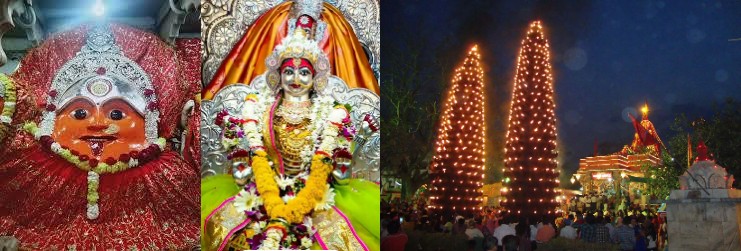
• According to some sources the upper lip of Goddess Sati is believed to have fallen here (on Bhairav Parvat / Avantika). 
• The site is identified as a true Shakti Peeth (“one of the 51”) in certain listings. 
• The deity worshiped is often considered as Mata Avantika (an incarnation of Durga/Shakti) at this site. 
Features & Rituals
• The shrine may be less elaborate than some large pilgrim-temples, but the spiritual power and significance are claimed to be high. 
• Because of its location near Ujjain, which is already a major pilgrimage and religious hub (e.g., with the Jyotirlinga of Mahakaleshwar), this site can be combined with other visits.
Why Visit
• If you are interested in major Shakti Peethas (i.e., those with specified body-parts of Sati fallen), this site offers one such claim.
• Offers a deeper spiritual dimension if you are already exploring the river-city of Ujjain, its ghats, temples, and traditions.
• Especially meaningful for devotees of Shakti/Durga traditions.