
Elections in April 2026: A Detailed Analysis of West Bengal, Assam, Kerala, and Tamil Nadu
By Lokanath Mishra
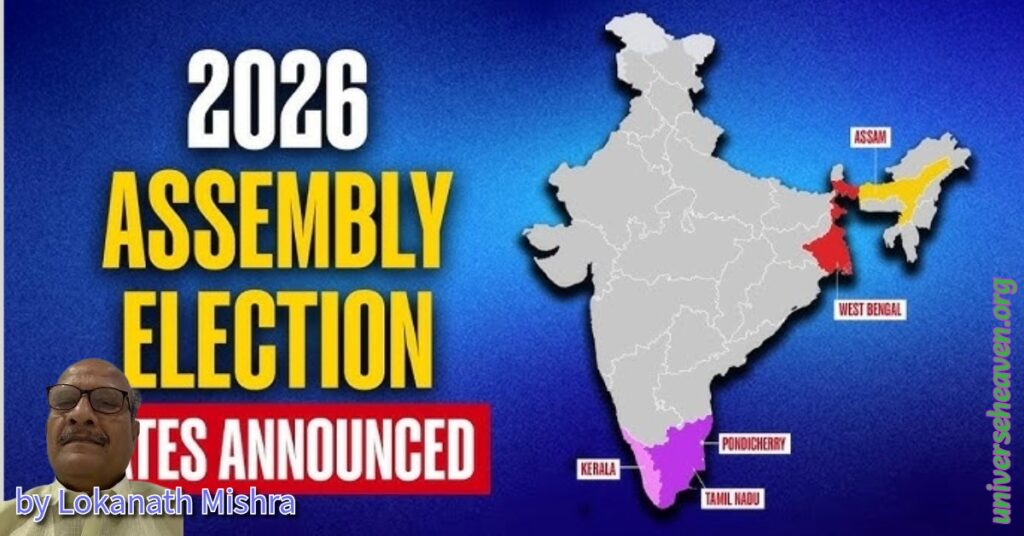
The April 2026 Assembly Elections represent a major democratic exercise across four politically significant states—West Bengal, Assam, Kerala, and Tamil Nadu. Conducted under the supervision of the Election Commission of India, these elections reflect diverse political cultures, regional priorities, and shifting voter sentiments.
- Election Schedule Overview
• Assam: 9 April 2026
• Kerala: 9 April 2026
• Tamil Nadu: 23 April 2026
• West Bengal: 23 April & 29 April 2026 (Two Phases)
• Counting (All States): 4 May 2026
👉 The staggered schedule ensures efficient deployment of security forces and administrative resources across states.
- West Bengal: The Most Watched Electoral Contest:
Political Landscape
• Total Seats: 294
• Majority Mark: 148
• Main Contest: TMC vs BJP
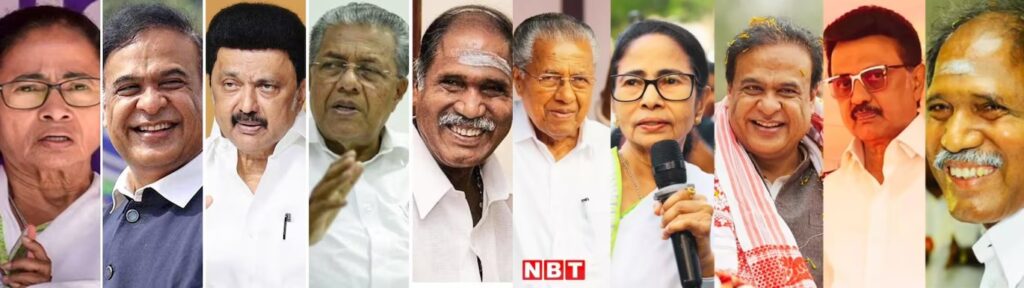
The ruling Trinamool Congress (TMC) led by Mamata Banerjee faces a strong challenge from the BJP, which has expanded rapidly in the state over the last decade.
Key Issues
• Governance and corruption allegations
• Welfare schemes vs development narrative
• Identity politics (regional vs national)
• Border and citizenship concerns
Ground Reality
Despite BJP’s aggressive campaign and growth, TMC retains:
• Strong grassroots cadre
• Women voter support through welfare schemes
• Regional identity advantage
👉 Conclusion: The contest is tight and unpredictable, not a clear victory for any one party.
- Assam: Stability vs Opposition Consolidation:
Political Landscape
• Ruling Party: BJP-led NDA
• Leader: Himanta Biswa Sarma
Key Issues
• Citizenship Amendment Act (CAA)
• Flood control and infrastructure
• Ethnic and regional balance
• Economic development
Ground Reality
The BJP enjoys:
• Strong leadership and organizational network
• Development-focused narrative
However:
• Opposition alliances may consolidate votes
• Regional identity politics remains sensitive
👉 Conclusion: Assam shows a slight advantage for the incumbent, but not a guaranteed win.
- Kerala: Ideology vs Governance:
Political Landscape
• LDF led by Pinarayi Vijayan
• UDF led by Congress
Key Issues
• Welfare and social development
• Employment and migration
• Education and healthcare
• Secular politics
Ground Reality
Kerala traditionally alternates governments, but LDF broke the trend in 2021.
• LDF banks on governance continuity
• UDF relies on anti-incumbency
👉 BJP remains a minor force here.
👉 Conclusion: Kerala is a finely balanced bipolar contest, where even small vote swings matter.
- Tamil Nadu: The Battle of Dravidian Dominance:
Political Landscape
• Total Seats: 234
• Majority Mark: 118
• Main Contest: DMK vs AIADMK-led NDA
The ruling DMK, led by M. K. Stalin, faces opposition from an alliance led by AIADMK and supported by BJP.
Key Issues
• Dravidian identity and regional pride
• Welfare schemes and governance
• Industrial growth and employment
• Centre–state relations
Ground Reality
Tamil Nadu politics is structurally different from most states:
• Strong Dravidian ideology dominates
• National parties like BJP have limited independent influence
• Alliances play a decisive role
Can NDA Get Full Majority? (Critical View)
The claim that NDA will secure a full majority is highly uncertain due to:
• BJP’s relatively low standalone vote share
• AIADMK’s internal challenges after leadership changes
• DMK’s strong incumbency and welfare-driven support
👉 While NDA may improve performance, a clear majority is not strongly supported by ground realities.
👉 Conclusion: Tamil Nadu remains tilted toward DMK, though alliances could make the contest competitive.
- Final Conclusion
The April 2026 elections highlight the complexity of Indian democracy:
• No single national trend dominates all states
• Regional parties continue to play decisive roles
• Leadership, identity, and welfare politics shape outcomes
Reality Check
• BJP forming government in West Bengal → Possible but not certain
• NDA sweeping Tamil Nadu → Unlikely without major shifts
• Assam → Relatively stable for incumbent
• Kerala → Too close to call
Closing Insight
These elections are not just about forming governments—they are a test of political narratives across India:
• West Bengal: Identity vs expansion
• Assam: Stability vs coalition politics
• Kerala: Ideology vs alternation
• Tamil Nadu: Regional pride vs alliance arithmetic
The results on 4 May 2026 will offer a clear picture of India’s evolving political direction.