
8th Pay Commission: A Step Toward Economic Balance and Pensioner Welfare
By Lokanath Mishra, The Chief Adviser, The All India Pensioners Association of CBIC
In a significant development, the Union Cabinet chaired by Prime Minister Narendra Modi has approved the Terms of Reference (ToR) for the 8th Central Pay Commission (CPC). This decision has brought renewed hope to nearly 48 lakh central government employees and over 68 lakh pensioners across the country.
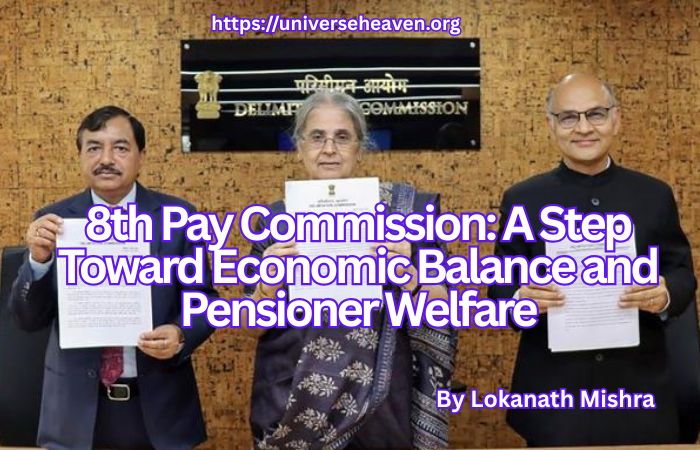
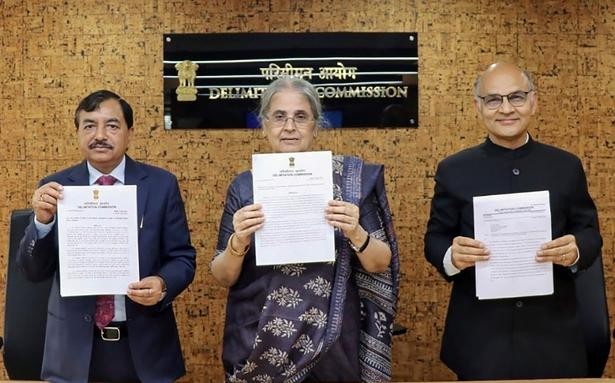
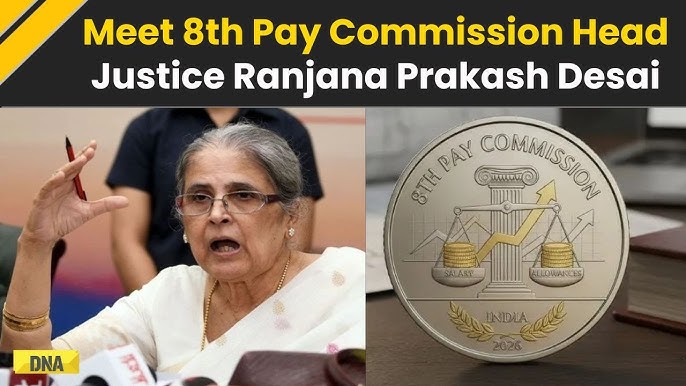
The 8th CPC, to be chaired by former Supreme Court judge Justice Ranjana Prakash Desai, will also include Professor Pulak Ghosh of IIM Bangalore as a part-time member and Petroleum Secretary Pankaj Jain as Member-Secretary. The commission has been tasked with submitting its final report within 18 months, with the option of providing interim reports on specific recommendations. If timelines follow precedent, the new pay structure could come into effect from January 1, 2026.
Balancing Fiscal Prudence with Employee Welfare
Unlike its predecessors, the 8th Pay Commission’s ToR explicitly emphasize the need for fiscal prudence and the economic context in which recommendations will be made. The commission must strike a delicate balance between public expenditure control and the rising cost of living.
Given the current economic circumstances — marked by post-pandemic recovery, moderate inflation, and the government’s focus on capital expenditure — the commission’s challenge will be to enhance employee and pensioner welfare without straining fiscal stability.
A New Focus on Pension Sustainability
A particularly important aspect of the 8th CPC’s mandate is its attention to the “unfunded cost of non-contributory pension schemes.” This refers to the old pension system (OPS), where the government bears the entire pension liability without employee contributions.
The explicit mention of this factor in the ToR indicates a shift toward long-term pension sustainability. While this might signal caution in fiscal terms, it also opens the door for reforms aimed at improving pension adequacy, especially for retired employees facing inflationary pressures.
For pensioners, this could mean:
• Revised dearness relief (DR) structures that better reflect market inflation.
• Rationalized pension fixation to ensure parity between current and past retirees.
• Potential integration of digital pension management and timely revision mechanisms.
Given rising healthcare costs and longevity, pensioners are likely to benefit from measures ensuring dignified post-retirement living and stable purchasing power.
Key New Elements in the 8th CPC Terms of Reference
The 8th Pay Commission’s ToR contain several noteworthy updates that distinguish it from earlier commissions:
1. Temporary, Compact Structure:
The commission will function as a temporary, lean body with only three members, aiming for faster decision-making and lower administrative cost.
2. Interim Report Provision:
The inclusion of interim reports allows the government to implement certain recommendations early, a flexibility not always emphasized in previous CPCs.
3. Focus on Fiscal Responsibility:
For the first time, the ToR strongly underline fiscal prudence and developmental expenditure—ensuring pay revisions do not compromise capital and welfare investments.
4. Comparative Pay Structure Review:
The CPC will also review emoluments and benefits in Central Public Sector Undertakings (CPSUs) and the private sector, suggesting a more market-aligned pay philosophy.
5. Impact on States:
The commission must consider the financial capacity of State Governments, which typically adopt modified versions of central recommendations. This inclusion ensures a holistic federal approach.
Political and Economic Context
The timing of this move — ahead of the 2026 implementation target — reflects both political foresight and economic strategy. With the Lok Sabha elections expected in 2029 and state elections scheduled in the interim, the government’s decision signals proactive governance rather than populist timing.
Economically, the move could stimulate domestic demand once implemented, especially among salaried and pensioner groups who form a major consumer segment. However, fiscal analysts suggest the government may stagger implementation or adopt a phased benefit rollout to mitigate the fiscal impact.
Why It Matters for Pensioners
For millions of pensioners, the 8th CPC offers not just financial relief but also recognition of their lifetime of service. With inflation eroding real incomes and healthcare costs climbing, a revised pension formula could help restore financial stability.
If the commission aligns pension revisions with real inflation indices and ensures periodic parity updates, it would mark a significant leap toward fair and sustainable pension reform in India.
Conclusion
The approval of the 8th Central Pay Commission’s Terms of Reference signals the government’s intent to blend economic discipline with social responsibility. As the commission begins its deliberations, expectations are high — particularly among pensioners — that its recommendations will not only enhance financial security but also ensure fairness in an evolving economic landscape.
If implemented judiciously, the 8th CPC could become a cornerstone of balanced economic governance, ensuring growth, equity, and dignity for India’s workforce and retirees alike.
Below is a comprehensive, well-structured draft memorandum ( Sample copy) that a pensioners’ association can formally submit to the 8th Central Pay Commission or to the Department of Personnel & Training / Department of Pension & Pensioners’ Welfare.:
Prepared by Lokanath Mishra, The Chief Advisor, The All India Pensioners Association of CBIC and All India CGHS Beneficiaries Association of CBIC:
This memorandum follows the formal government-submission style (with subject line, background, and point-wise demands supported by reasoning). It is designed to look professional and persuasive while maintaining decorum.
⸻
Memorandum to be Submitted to the 8th Central Pay Commission
By: [Name of the Pensioners’ Association]
Subject: Representation on Pensioners’ Issues and Reforms in the 8th Central Pay Commission
⸻
- Introduction
The [Name of Association] representing Central Government Pensioners respectfully submits this memorandum to the 8th Central Pay Commission for its kind consideration while framing recommendations relating to pensioners’ welfare.
Central Government pensioners constitute a large segment of citizens who have devoted their active years to the service of the nation. Their post-retirement life, dignity, and financial security are dependent on fair revision of pension, timely disbursement of benefits, and accessible healthcare facilities.
With rising inflation, increased life expectancy, and changing healthcare needs, it has become imperative that pension policies be revisited to ensure justice, parity, and sustainability. The following points enumerate our key expectations and just demands.
⸻
- Key Submissions and Recommendations
(1) Appropriate Fitment Factor in Pension Revision
It is requested that an appropriate fitment factor—not less than 3.68, in line with actual inflation and cost-of-living rise since 2016—be applied for revising pensions under the 8th CPC.
The last Pay Commission (7th CPC) applied a uniform factor of 2.57, which did not fully reflect the cumulative inflation and rise in consumer prices during the decade. A higher factor will ensure that retired employees’ purchasing power is reasonably protected.
⸻
(2) Periodic Revision of Pension Every Five Years
It is proposed that pension revision should take place every five years instead of ten. A ten-year cycle leaves pensioners financially vulnerable, especially given shorter Pay Commission intervals in the private sector and the fast-changing inflationary environment.
A five-year periodic revision will align pensioners’ income with the prevailing cost of living and ensure continuous parity with serving employees.
⸻
(3) Ensuring Seniors Do Not Receive Less Pension Than Juniors
It has been observed that due to implementation anomalies and later service revisions, senior retirees often draw lower pensions than their juniors.
We request the Commission to recommend a clear mechanism ensuring that no senior pensioner receives a lesser pension than a junior retiree of the same rank, post, and service length. This anomaly correction should be automatic, eliminating the need for case-by-case litigation.
⸻
(4) Introduction of “One Rank, One Pension” (OROP) for All Pensioners
The principle of “One Rank, One Pension” should be uniformly implemented across all Central Government departments, not limited to Defence Services.
Pension for each rank/post should be the same for employees retiring with identical length of service, irrespective of date of retirement. This will promote equality, fairness, and dignity for all categories of retirees.
⸻
(5) Extension of Leave Travel Concession (LTC) to Pensioners
Pensioners, particularly senior citizens, remain important ambassadors of India’s tourism and culture. We request that LTC facilities be extended to pensioners, allowing one journey per block of two years for self and spouse, with reimbursement at par with serving employees.
Such a measure will encourage domestic tourism and align with the Government’s “Dekho Apna Desh” initiative.
⸻
(6) Comprehensive Reforms in CGHS
The Central Government Health Scheme (CGHS), though well-intentioned, requires modernization and user-friendly reforms. We propose:
• Cashless Treatment: Pensioners should be entitled to direct, cashless medical treatment and testing in all empanelled private hospitals without the need for prior referral.
• Pharmacy Reforms: Medicines prescribed by authorized doctors must be issued the same day and without change in brand name. Pharmacy outlets should be opened within all Wellness Centres to ensure availability.
• Courtesy and Efficiency: CGHS staff must be trained to treat beneficiaries with due respect and promptness.
• Expanded Network: More Wellness Centres should be established, particularly in tourist and pilgrimage destinations where pensioners frequently travel or settle post-retirement.
• Insurance Cover: CGHS beneficiaries should be covered under a supplementary health insurance scheme to meet expenses beyond CGHS ceilings or for non-empanelled treatments.
⸻
(7) Overseas Medical Facilities
It is proposed that pensioners visiting or residing temporarily in foreign countries (e.g., USA, UK, Canada, etc.) be allowed cashless treatment in hospitals recognized by Indian embassies or through tie-ups with international insurers.
This facility would provide security to senior citizens who often visit children or family abroad.
⸻
(8) Income Tax Exemption for Pensioners
We request that pension and bank interest income of pensioners be fully exempted from Income Tax.
Pension is a deferred wage earned during service, not a fresh income. Given the high cost of living and medical expenses in old age, such tax exemption would be a humane and just measure, aligning with global best practices for senior citizens.
⸻FMA should be increased to 10,000.00.
(9) Restoration of Full Pension After 10 Years of Commutation
Currently, full pension is restored after 15 years of commutation. We request that this period be reduced to 10 years, as most pensioners are in advanced age and should enjoy the full benefit during their lifetime.
⸻
(10) Implementation of Court Judgments in Rem
To avoid repetitive litigation, it is requested that court judgments affecting pensioners’ rights be implemented in rem (i.e., applied to all similarly placed pensioners) instead of confining relief only to petitioners.
Further, pensioners should not be compelled to approach courts for matters already settled judicially or administratively. This will reduce unnecessary litigation and ensure uniform justice.
⸻
- Broader Considerations
The above measures are not merely welfare demands but necessary steps toward ensuring equitable treatment, financial security, and human dignity for retired employees who have contributed to nation-building.
We also urge the Commission to consider the broader principle that a pension is not a bounty but a right, as established by the Hon’ble Supreme Court in D.S. Nakara v. Union of India (1983).
⸻
- Conclusion
In view of the above, the [Name of Pensioners’ Association] earnestly appeals to the 8th Central Pay Commission to give sympathetic and practical consideration to these submissions.
Timely acceptance and implementation of these recommendations will go a long way in ensuring that the nation’s senior citizens live their remaining years with dignity, financial comfort, and social respect.
We remain grateful for the opportunity to present this memorandum and are ready to provide additional data or clarifications as the Commission may require.
⸻
(Authorized Signatory)
President / General Secretary
[Name of Pensioners’ Association]
[Address]
[Email & Contact Number]
Date: [Insert Date]
⸻
Pingback: The Central Pay Commission (Part- VII) - UniverseHeaven