

Fixed Medical Allowance for Central Government Pensioners in India
History, Present Status, Problems and Expectations from the 8th Central Pay Commission
By Lokanath Mishra, IRS ( Retired) The Chief Adviser, The All India Pensioners Association of CBIC & The Chief Adviser, The All India CGHS Beneficiaries Association of CBIC:
Healthcare security is one of the most essential needs of retired government employees in India. Advancing age naturally brings various illnesses, dependence on medicines, and increasing medical expenditure. Recognizing these realities, the Government of India introduced the system of Fixed Medical Allowance (FMA) for central government pensioners residing in areas where Central Government Health Scheme (CGHS) facilities are not available.
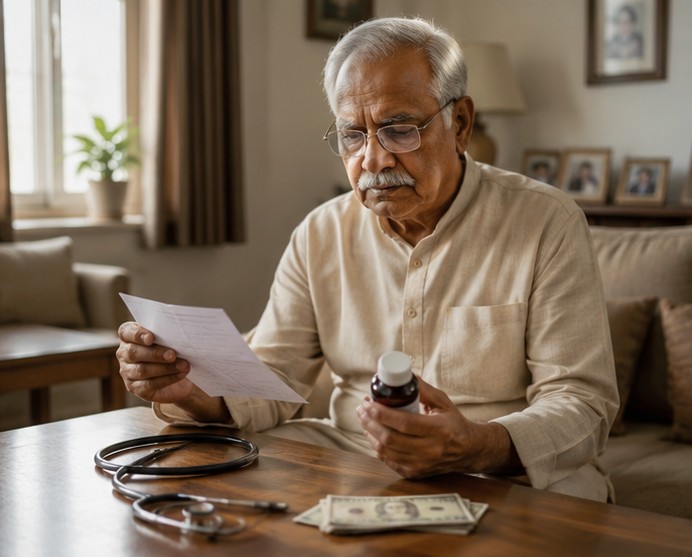
The introduction of FMA was an important welfare measure intended to provide relief to pensioners who could not avail CGHS outpatient facilities. However, over the years, the allowance has remained extremely inadequate in comparison to rising healthcare costs. The issue has now become a matter of serious concern for lakhs of pensioners across the country.
Origin of FMA and Recommendations of the 5th Central Pay Commission
The Fixed Medical Allowance was introduced on the basis of the recommendations of the 5th Central Pay Commission. The objective was to provide monthly financial assistance to pensioners residing in non-CGHS areas for meeting routine medical expenses.
The scheme recognized that many pensioners settle in villages, small towns, and semi-urban areas after retirement where CGHS dispensaries and wellness centres are not available. Therefore, instead of OPD facilities, such pensioners were allowed a monthly medical allowance.

This was a progressive and humanitarian decision aimed at ensuring minimum healthcare support for elderly pensioners.
Present FMA Amount and Its Inadequacy
At present, the Fixed Medical Allowance is only ₹1,000 per month. In the present economic and healthcare situation, this amount has become grossly inadequate and unrealistic.
Today, even a single visit to a doctor, along with purchase of medicines and routine diagnostic tests, may cost more than the entire monthly FMA amount. Senior citizens suffering from chronic diseases such as:
- Diabetes
- Hypertension
- Heart disease
- Kidney disorders
- Arthritis
- Respiratory illness
- Neurological disorders
often spend several thousand rupees every month merely on medicines.
Medical inflation in India has increased sharply over the years. Medicine prices, consultation charges, diagnostic expenses, transportation costs, and hospitalization-related expenditure have risen enormously. In such circumstances, ₹1,000 per month cannot provide meaningful relief to pensioners.
Eligibility for FMA
The Fixed Medical Allowance is generally admissible to central government pensioners and family pensioners who:
- Reside in areas not covered under CGHS
- Do not avail CGHS OPD facilities
- Opt for FMA in lieu of outpatient medical facilities
These pensioners are entitled to receive monthly FMA to meet routine medical expenditure.
FMA Along with IPD Treatment Facilities
An important welfare provision is that pensioners receiving FMA may still avail inpatient hospitalization (IPD) treatment in empanelled CGHS hospitals under prescribed conditions.
This arrangement is especially beneficial for pensioners residing in non-CGHS areas because:
- They receive FMA for routine outpatient medical expenses, and
- They may obtain hospitalization treatment in empanelled CGHS hospitals during serious illness
This provision should not only continue but should be further simplified and liberalized.
Recommendations of Parliamentary Committees
Various Parliamentary Committees and pensioners’ organizations have repeatedly emphasized that the present amount of FMA is too small and unrealistic in present conditions. The Committees have reportedly recommended enhancement of FMA considering rising healthcare expenditure and the increasing needs of senior citizens.
However, despite these recommendations, the amount has not been revised adequately.
Demand for Enhancement of FMA to ₹10,000
The All India Pensioners Association of CBIC has been continuously demanding substantial enhancement of FMA considering present medical realities.
The Association has strongly represented that the forthcoming 8th Central Pay Commission should recommend increase of FMA from the present ₹1,000 per month to at least ₹10,000 per month.
This demand is fully justified because:
- Healthcare costs have increased manifold
- Senior citizens require continuous medicines and treatment
- Medical inflation is exceptionally high
- Pensioners living in non-CGHS areas face greater hardship
- Existing FMA has lost its practical value
A realistic enhancement alone can provide meaningful support to elderly pensioners.
Need for Automatic Revision Based on Medical Inflation
One major weakness of the present system is that FMA has no automatic revision mechanism linked to inflation or healthcare costs.
The 8th Central Pay Commission should therefore recommend:
- Automatic periodic revision of FMA
- Linkage with medical price index and healthcare inflation
- Revision at fixed intervals similar to Dearness Allowance
Without such a mechanism, the value of FMA will continue to decline over time.
Need for Government-Funded Insurance Scheme
Another important demand raised by the All India Pensioners Association of CBIC is the introduction of a fully government-funded health insurance scheme for pensioners receiving FMA.
Pensioners residing in non-CGHS areas often face difficulties during major illness and hospitalization. Therefore, the government should introduce a comprehensive insurance scheme without collecting any premium from beneficiaries.
Such a government-funded insurance scheme should cover:
- Treatments not covered under CGHS
- Treatment in non-empanelled hospitals during emergencies
- Critical illnesses and advanced surgeries
- Expensive diagnostic procedures
- Long-term treatment and post-hospitalization care
- Specialized treatment in reputed private hospitals
- Medical treatment abroad in exceptional cases
This insurance protection would provide enormous relief and security to pensioners and family pensioners.
What the 8th Central Pay Commission Should Consider
The 8th Central Pay Commission should sympathetically and comprehensively examine the healthcare problems of pensioners and make the following recommendations:
- Increase FMA to ₹10,000 Per Month
The present amount of ₹1,000 is grossly insufficient. FMA should be increased to at least ₹10,000 per month.
- Link FMA with Medical Inflation
Automatic revision should be introduced based on healthcare price index.
- Continue IPD Facilities Along with FMA
Pensioners receiving FMA should continue to enjoy IPD treatment facilities in empanelled CGHS hospitals.
- Introduce Government-Funded Insurance Scheme
A comprehensive insurance scheme fully funded by the government should be introduced for FMA beneficiaries.
- Simplify Medical Procedures
Procedures relating to hospitalization, referrals, and reimbursements should be simplified for elderly pensioners.
- Expand Healthcare Protection to Rural Areas
Pensioners living in villages and remote areas should receive equal healthcare support.

Conclusion
The Fixed Medical Allowance was introduced as a welfare measure following the recommendations of the 5th Central Pay Commission. However, with rising medical inflation and increasing healthcare expenditure, the present amount of ₹1,000 per month has become wholly inadequate.
The demand of the All India Pensioners Association of CBIC for enhancement of FMA to ₹10,000 per month, continuation of IPD facilities, and introduction of a fully government-funded insurance scheme is both reasonable and justified.
The 8th Central Pay Commission now has a historic opportunity to provide meaningful healthcare relief to millions of elderly pensioners who dedicated their lives to public service. Ensuring dignified healthcare support for pensioners is not merely a financial matter but also a moral and social obligation of a welfare State.