
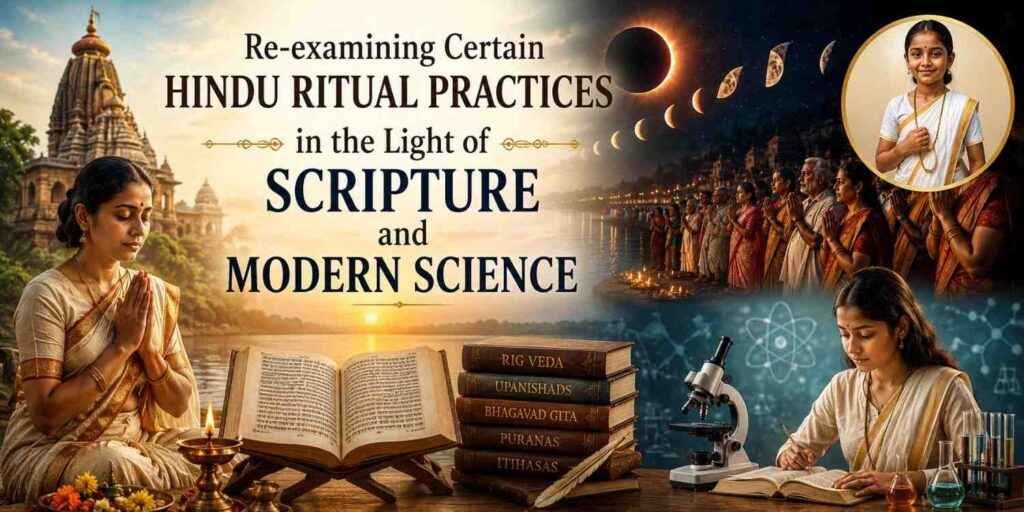
Re-examining Certain Hindu Ritual Practices in the Light of Scripture and Modern Science
By Lokanath Mishra
Abstract
Hinduism has always been regarded as a dynamic civilization rather than a rigid religious system. Throughout history, Hindu sages reinterpreted social customs according to time (yuga), place (deśa), and circumstances (kāla). Many practices that became part of popular Hindu tradition originated from social customs and ritual manuals rather than from the Vedas or the principal Itihasas. This paper examines two widely observed customs—restrictions on menstruating women and fasting during solar and lunar eclipses—from the perspectives of scriptural evidence and modern scientific understanding. It argues that traditions unsupported either by the principal scriptures or by scientific evidence deserve thoughtful re-examination. The paper also advocates extending the sacred thread (Upanayana) ceremony to girls, supported by early Vedic tradition.
Introduction
One of the remarkable characteristics of Hindu philosophy is its openness to inquiry. The Vedic seers encouraged questioning rather than blind acceptance. The Rig Veda proclaims:
“Let noble thoughts come to us from every side.”
(Rig Veda 1.89.1)
Similarly, the Bhagavad Gita encourages the pursuit of knowledge through inquiry:
“Approach the wise with humility, inquiry and service.”
(Bhagavad Gita 4.34)
Therefore, every religious practice should be examined in the light of reason, scripture and contemporary knowledge.
Menstruation and Religious Restrictions
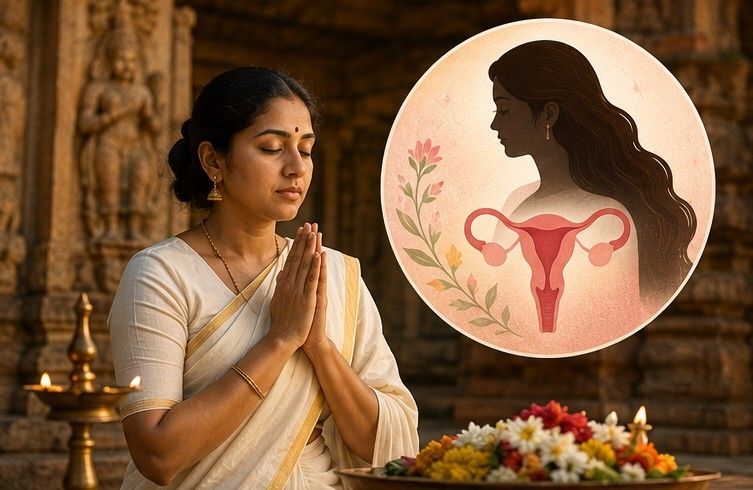
Across many Hindu communities, menstruating women are discouraged from performing daily worship, entering temples, cooking offerings, or even touching others. Some temples maintain these restrictions today. For example, the Skanda Vale Hindu monastery in the United Kingdom states that menstruating women should not enter the temple.
However, modern medical science considers menstruation a completely natural physiological process. There is no scientific evidence that menstruating women become spiritually impure or that their presence affects religious worship.
The principal narrative scriptures also provide little support for absolute religious prohibition.
Neither the Ramayana nor the Mahabharata prescribes a universal prohibition preventing menstruating women from worshipping God.
Likewise, the major Puranas primarily emphasize devotion (bhakti), righteousness (dharma) and moral conduct rather than menstrual exclusion.
Certain later Smriti texts, including portions attributed to Manusmriti and Yajnavalkya Smriti, prescribe temporary ritual restrictions. These, however, belong to ritual law (ācāra) rather than eternal spiritual principles (sanātana dharma). Hindu scholars have long recognized that Smriti injunctions are historically conditioned and may change according to time and society.
Indeed, the Bhagavad Gita repeatedly teaches that devotion is based on inner purity rather than physical condition.
“Whoever offers Me with devotion a leaf, a flower, a fruit or water, I accept that offering made with devotion.”
(Bhagavad Gita 9.26)
No distinction is made regarding gender or physiological state.
Consequently, it may be argued that excluding women from worship during menstruation reflects historical social customs rather than an essential teaching of Hindu spirituality.
Food Restrictions During Solar and Lunar Eclipses
Another widespread belief is that food should not be eaten during solar or lunar eclipses.
Many Hindu households fast before and during eclipses, and cooked food is often discarded afterward.
Ancient India understandably regarded eclipses with awe because their astronomical causes were not fully understood by ordinary people.
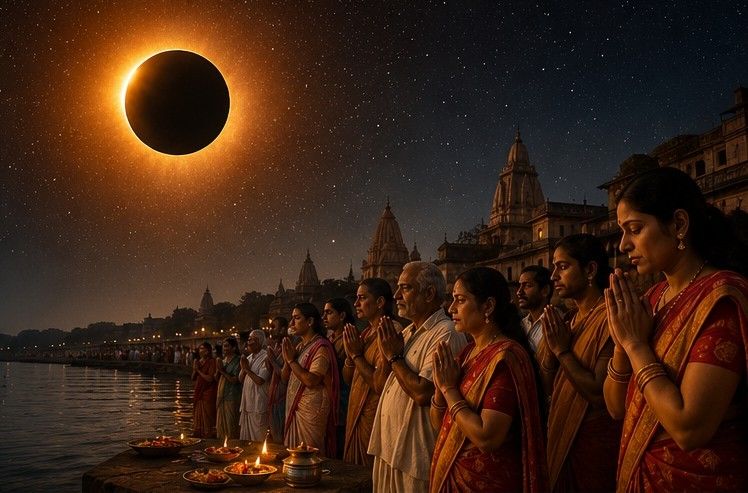
The Puranas describe eclipses symbolically through the story of Rahu and Ketu, who periodically swallow the Sun or Moon after the Samudra Manthana episode. This narrative serves theological and symbolic purposes rather than providing scientific astronomy.
Modern astronomy explains eclipses as predictable alignments of the Earth, Moon and Sun.
No known biological evidence suggests that food becomes harmful merely because an eclipse occurs.
The Mahabharata mentions a remarkable solar eclipse during the Kurukshetra war when Krishna created the illusion of sunset before the killing of Jayadratha (Mahabharata, Drona Parva). However, the epic does not prescribe fasting or avoidance of meals during the eclipse.
Similarly, while Puranic literature recommends charity, prayer and bathing during eclipses as spiritually meritorious acts, the practice of compulsory fasting appears to have developed primarily within later ritual traditions rather than from universal scriptural injunction.
If fasting is voluntarily observed as a form of spiritual discipline, it remains a matter of personal devotion. However, presenting it as scientifically necessary is difficult to justify.
The Need for Scientific Temper in Hindu Practice
The Constitution of India encourages citizens to develop scientific temper while respecting cultural traditions.
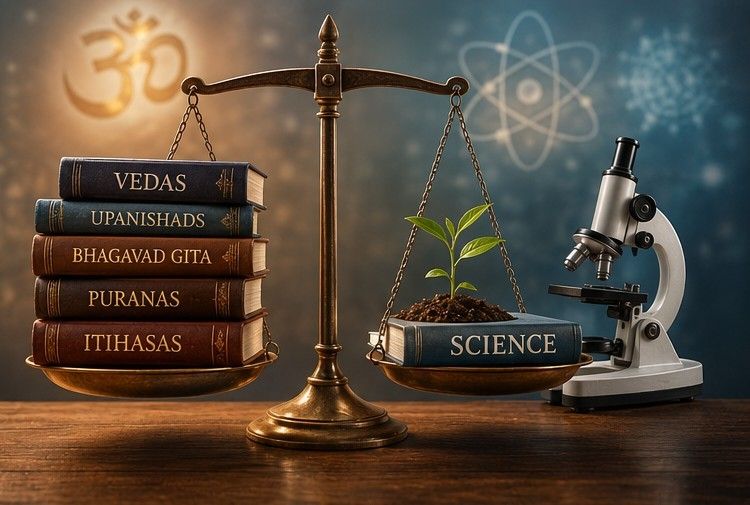
Hindu philosophy itself is compatible with rational inquiry.
The Nyaya school emphasizes logic.
The Mimamsa school emphasizes textual analysis.
Vedanta encourages philosophical investigation.
Therefore, customs that arose under historical circumstances should be periodically re-evaluated.
When a practice lacks both clear scriptural authority and scientific justification, religious leaders may consider whether it continues to serve society positively.
Upanayana for Girls
The sacred thread ceremony (Upanayana) has traditionally been reserved for boys in many communities.
Historical evidence suggests that this was not always the case.
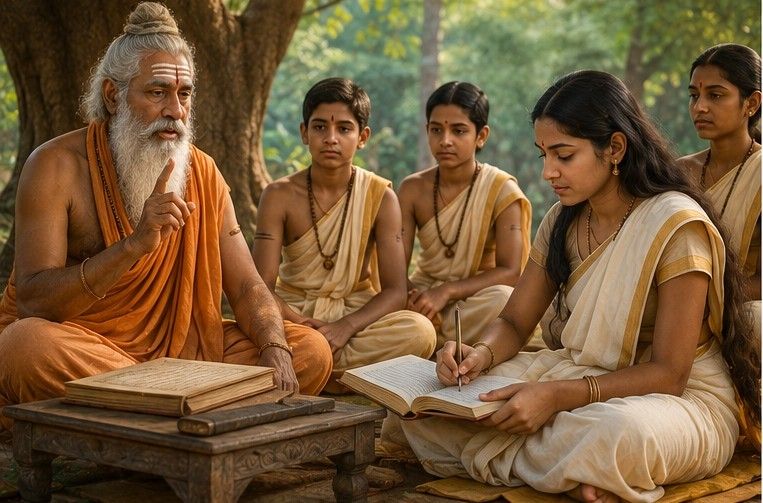
Several Vedic and later sources mention learned women such as Gargi Vachaknavi, Maitreyi, Lopamudra and Ghosha, who studied the Vedas and participated in philosophical discussions.
Scholars have pointed out that girls who pursued Vedic education were known as Brahmavadinis and underwent educational initiation similar to boys.
If the sacred thread symbolizes commitment to learning, discipline and spiritual pursuit, there is little philosophical reason to deny it to girls today.
Extending Upanayana to girls would revive an older Vedic tradition rather than create a new innovation.
Conclusion
Hinduism has survived for thousands of years because it possesses an extraordinary capacity for self-renewal. Its greatest strength lies not in preserving every inherited custom unchanged but in preserving eternal principles while adapting social practices to changing knowledge and human welfare.
Restrictions on menstruating women and compulsory fasting during eclipses appear to derive largely from later ritual traditions and historical customs. While individuals may continue these observances voluntarily out of faith, they should not be imposed as universal religious obligations in the absence of compelling scriptural authority or scientific evidence.
Similarly, extending the Upanayana ceremony to girls would be consistent with the inclusive educational ideals reflected in early Vedic literature.
The true spirit of Sanātana Dharma is not fear but knowledge; not exclusion but wisdom; not rigid custom but the continuous search for truth.
References
- Rig Veda 1.89.1.
- Bhagavad Gita 4.34; 9.26.
- Mahabharata, Drona Parva (episode of Jayadratha).
- Ramayana.
- Skanda Purana (sections describing eclipses and pilgrimage merits).
- Matsya Purana (eclipse observances).
- Manusmriti (ritual purity regulations).
- Yajnavalkya Smriti.