
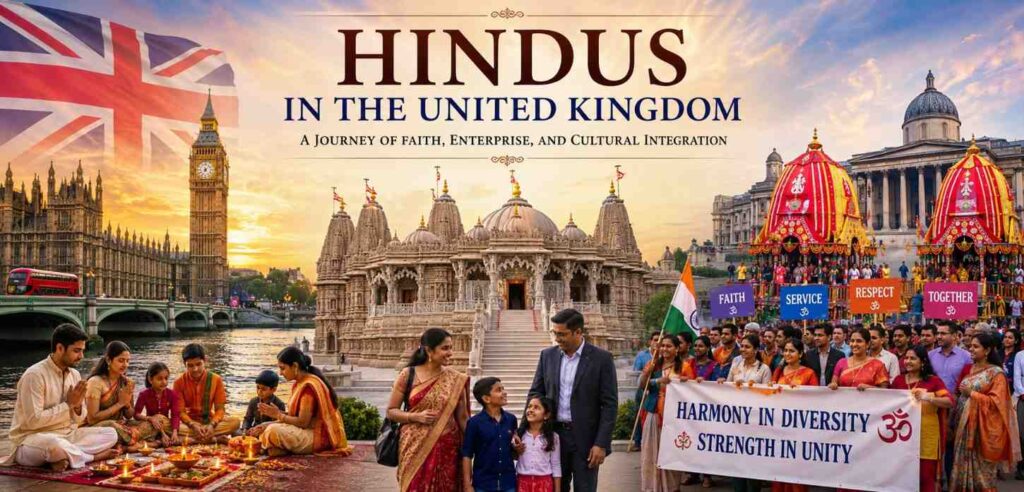
Hindus in the United Kingdom : A Journey of Faith, Enterprise, and Cultural Integration
By Lokanath Mishra
Introduction
The history of Hindus in the United Kingdom is a remarkable story of migration, resilience, cultural preservation, and successful integration into British society. Over nearly two centuries, the Hindu community has evolved from a small group of sailors, students, and merchants into one of the country’s most respected and prosperous religious communities. Today, Hindus contribute significantly to the United Kingdom’s economy, education, healthcare, science, politics, arts, and public service while preserving the timeless traditions of Sanatana Dharma.
With a population exceeding one million people, Hinduism has become the third-largest religion in the United Kingdom, enriching Britain’s multicultural identity through its spiritual philosophy, festivals, charitable work, and commitment to family values.
Early Arrival of Hindus in Britain
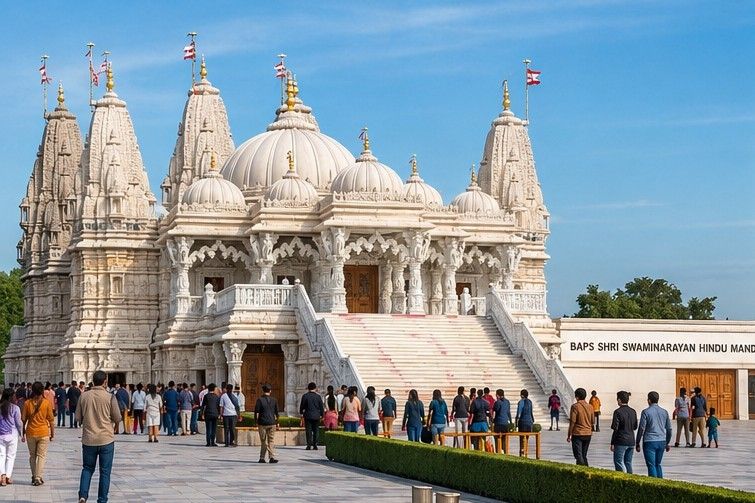
The earliest Hindu presence in Britain dates back to the nineteenth century during the period of the British Empire. At that time, Indian sailors, popularly known as lascars, arrived in British ports while serving on merchant vessels. Alongside them came Indian ayahs (nannies), servants accompanying British families, scholars, diplomats, merchants, and students seeking higher education.
London gradually became an intellectual centre for Indian thinkers and freedom fighters. Many distinguished Indians, including students, lawyers, and political activists, spent time in Britain. These early migrants maintained their religious traditions privately, as formal Hindu temples had not yet been established.
Although their numbers remained small, they laid the foundations for the larger Hindu community that would emerge after the Second World War.
Post-War Migration and Community Building
Following the Second World War, Britain faced severe labour shortages. During the 1950s and 1960s, the British Government encouraged migration from Commonwealth countries, including India.
Thousands of Hindus migrated from Gujarat, Punjab, Maharashtra, Tamil Nadu, Bengal, Odisha, and other parts of India. Many accepted employment in manufacturing industries, transport services, engineering, textile mills, hospitals, and public services. They settled primarily in London, Leicester, Birmingham, Coventry, Manchester, and the West Midlands.
Despite the challenges of adapting to a new country, these immigrants worked tirelessly while preserving their language, culture, customs, and religious beliefs. Community halls were gradually transformed into places of worship, eventually leading to the establishment of permanent Hindu temples.
The Arrival of East African Asians
One of the most significant chapters in the history of British Hinduism occurred during the early 1970s.
Thousands of Hindus whose families had lived for generations in Uganda, Kenya, and Tanzania were forced to leave following political changes in East Africa. In 1972, Uganda’s ruler, Idi Amin, expelled the Asian population, many of whom held British passports.
Britain welcomed thousands of these displaced families. Most were of Gujarati origin and arrived with strong entrepreneurial skills, business experience, and educational qualifications.
Their arrival transformed the British Hindu community. Within a few decades they established successful businesses, supermarkets, hotels, pharmacies, manufacturing companies, and professional services. Their economic contribution greatly strengthened local and national economies.
Growth of Hindu Temples
As Hindu families became permanently settled, they invested generously in building temples that would serve as centres of worship, education, and community life.
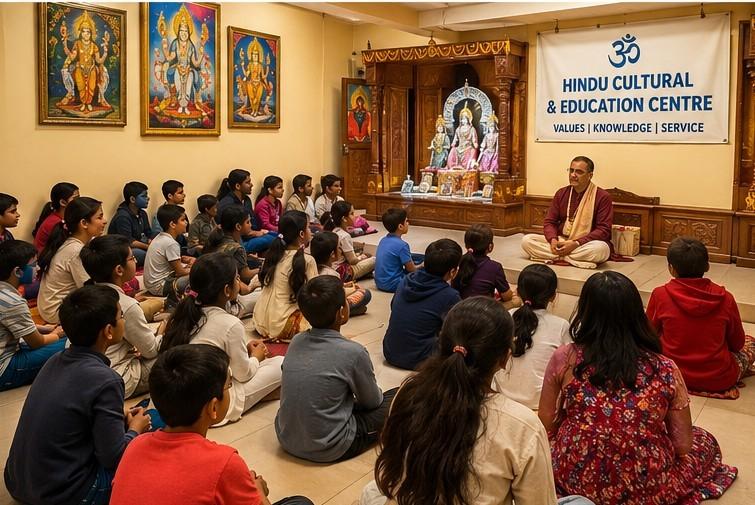
Today, London alone has well over 100 Hindu temples and Hindu places of worship, ranging from neighbourhood mandirs to internationally renowned temple complexes. Across the United Kingdom, there are several hundred Hindu temples representing different traditions, including Shaiva, Vaishnava, Shakta, Swaminarayan, ISKCON, and South Indian temple traditions.
Among the most famous are:
- The BAPS Shri Swaminarayan Mandir (Neasden Temple) in North London, inaugurated in 1995. Built using intricately carved stone imported from India and assembled by skilled artisans, it is regarded as one of the largest and most magnificent traditional Hindu temples outside India.
- Bhaktivedanta Manor in Hertfordshire, donated to the International Society for Krishna Consciousness (ISKCON) by the musician George Harrison in 1973. It has become one of Europe’s leading centres for Krishna devotion and spiritual education.
- Numerous temples dedicated to Lord Shiva, Lord Vishnu, Lord Krishna, Lord Ganesha, Goddess Durga, Lord Murugan, Lord Ayyappa, Hanuman, and Jagannath serve devotees throughout Greater London.
These temples are not merely places of worship. They provide Sanskrit classes, yoga, meditation, youth leadership programmes, charitable services, cultural education, and community support.
Contributions to British Society
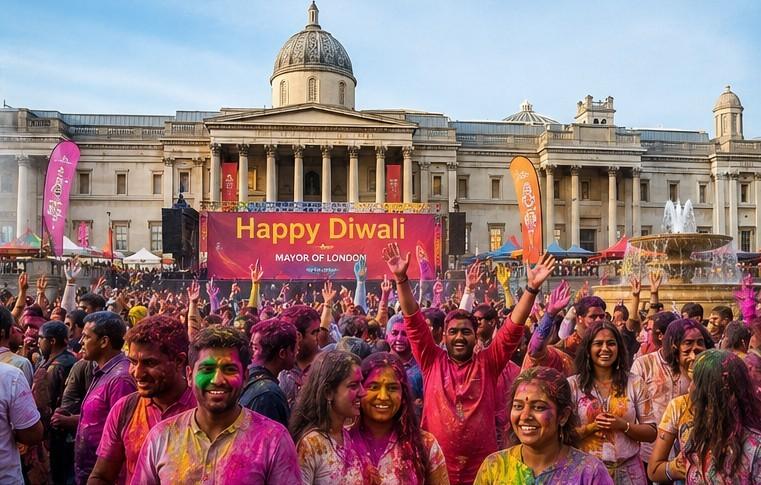
The Hindu community has earned widespread respect for its commitment to education, discipline, entrepreneurship, and public service.
British Hindus are prominently represented in medicine, engineering, law, finance, information technology, scientific research, higher education, and government.
Many own successful businesses ranging from family-run enterprises to multinational companies. Others serve as doctors, nurses, university professors, judges, Members of Parliament, councillors, researchers, and senior civil servants.
Hindu charities regularly organise blood donation drives, food distribution programmes, environmental campaigns, disaster relief efforts, and fundraising for hospitals and educational institutions.
The community’s emphasis on family values, education, respect for elders, and voluntary service has contributed positively to British social life.
Hindu Festivals in the United Kingdom
One of the most visible expressions of Hindu culture in Britain is the celebration of festivals.
Diwali
Diwali has become one of Britain’s largest multicultural celebrations. Every year thousands gather in London’s Trafalgar Square for the Mayor of London’s Diwali festivities featuring devotional music, classical dance, yoga demonstrations, vegetarian food, cultural exhibitions, and traditional arts.
Homes, temples, and businesses are decorated with lamps and colourful rangoli designs. Families perform Lakshmi Puja, exchange sweets, and celebrate the victory of light over darkness.
Holi
The festival of colours is celebrated enthusiastically in parks, temples, and community centres. People of different backgrounds participate by applying coloured powders, enjoying music, dance, and traditional Indian cuisine.
Janmashtami
Devotees observe the birth of Lord Krishna with fasting, devotional singing, scripture recitation, and midnight worship. Bhaktivedanta Manor attracts tens of thousands of pilgrims during this festival.
Navaratri
The nine nights dedicated to Goddess Durga are celebrated with Garba and Dandiya dances, devotional music, and community gatherings, especially among Gujarati Hindus.
Ganesh Chaturthi
Large public celebrations include the installation of Lord Ganesha idols, devotional singing, cultural programmes, and immersion ceremonies where permitted.
Rath Yatra
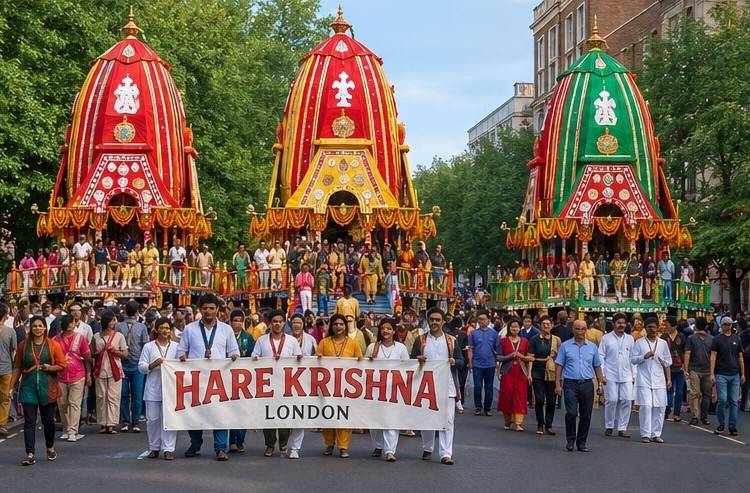
ISKCON organises colourful chariot festivals through the streets of London, bringing the message of devotion and universal brotherhood to the wider public.
These celebrations attract not only Hindus but also people from many different faiths and cultural backgrounds, strengthening interfaith understanding and social harmony.
Hindu Philosophy in Modern Britain
Beyond rituals and festivals, Hindu philosophy has found increasing appreciation among the British public.
Practices such as yoga, meditation, Ayurveda, vegetarianism, mindfulness, and environmental stewardship draw inspiration from ancient Hindu wisdom. Universities offer courses on Hindu philosophy, Sanskrit literature, Indian religions, and comparative theology.
The teachings of the Bhagavad Gita, the Upanishads, and the Ramayana continue to inspire scholars, students, and spiritual seekers throughout Britain.
Challenges and Opportunities
Like many immigrant communities, British Hindus have faced challenges of cultural adaptation, identity preservation, and intergenerational change.
Young British Hindus often balance their Indian heritage with modern British life. Community organisations address these challenges through language schools, cultural education, youth camps, and religious instruction.
Interfaith dialogue has also become an important aspect of Hindu participation in British public life, promoting mutual understanding and respect among diverse religious communities.
Conclusion
The story of Hindus in the United Kingdom is one of perseverance, faith, and remarkable achievement. From the earliest arrivals during the colonial era to today’s vibrant and successful community, British Hindus have enriched the nation through hard work, education, entrepreneurship, spirituality, and service.
Their temples stand not only as architectural landmarks but also as symbols of peace, compassion, and cultural continuity. Their festivals have become cherished events within Britain’s multicultural calendar, welcoming people of every faith and background.
As Britain continues to evolve as a diverse and inclusive society, the Hindu community remains an inspiring example of how ancient spiritual traditions can flourish while contributing positively to modern national life. The enduring principles of Dharma, compassion, tolerance, and selfless service continue to guide British Hindus, ensuring that their contribution to the United Kingdom will remain significant for generations to come.
— Lokanath Mishra