

Exploring the Timeless Heritage of the United Kingdom: Ten Destinations That Every Traveller Should Visit
By Lokanath Mishra
Introduction
The United Kingdom is a remarkable blend of history, culture, architectural brilliance, natural beauty, and academic excellence. From prehistoric monuments that continue to puzzle archaeologists to world-famous museums preserving the story of human civilization, from majestic castles and cathedrals to breathtaking landscapes, every corner of the UK reflects centuries of human achievement.
A journey across the United Kingdom is not merely a holiday—it is an educational and cultural pilgrimage through thousands of years of history. Every monument, city, and landscape tells a story of civilizations, monarchs, scholars, artists, scientists, and ordinary people whose contributions have shaped not only Britain but the modern world.
Among the countless attractions in England, Scotland, Wales, and Northern Ireland, ten destinations stand out as essential places that every visitor should experience. Their historical importance, architectural magnificence, cultural richness, and educational value make them indispensable stops on any UK itinerary.
⸻
Stonehenge – Britain’s Prehistoric Mystery
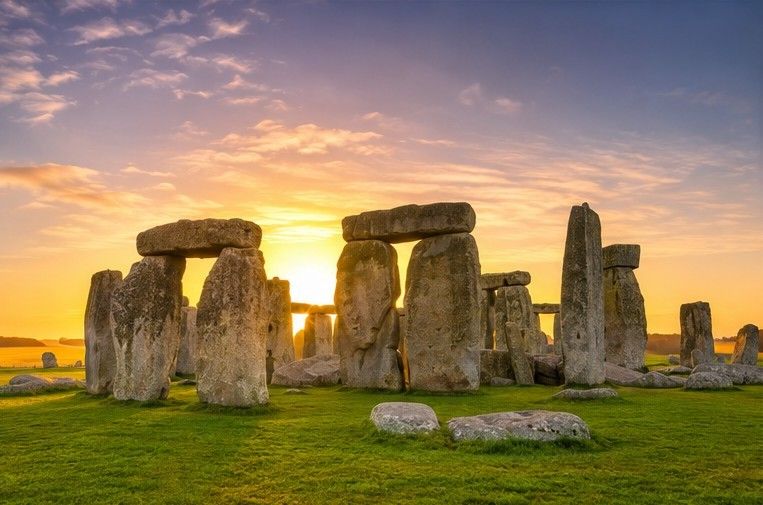
Standing proudly on Salisbury Plain in Wiltshire, Stonehenge is one of humanity’s greatest prehistoric achievements and a UNESCO World Heritage Site. Constructed approximately between 3000 BC and 2000 BC, this mysterious stone circle continues to fascinate archaeologists, historians, and scientists.
The enormous sandstone blocks, some weighing over 25 tons, were transported from distant locations using methods still debated today. Various theories suggest Stonehenge served as an astronomical observatory, a religious temple, a ceremonial burial ground, or a place of healing.
Visiting Stonehenge allows one to appreciate the extraordinary engineering skills of prehistoric communities. The nearby visitor centre provides archaeological discoveries, interactive exhibits, and reconstructed Neolithic houses that vividly illustrate life thousands of years ago.
The annual sunrise during the summer solstice draws thousands of visitors who witness the remarkable alignment between the monument and the rising sun—a testament to the advanced astronomical knowledge of its builders.
Stonehenge reminds us that human curiosity, faith, and scientific observation have existed since the earliest civilizations.
The British Museum – A Journey Through Human Civilization
Located in the heart of London, the British Museum is among the world’s greatest museums and one of Britain’s most treasured cultural institutions. Established in 1753, it houses millions of objects representing the history of human civilization across every continent.
Visitors encounter priceless treasures including the Rosetta Stone, which enabled scholars to decipher Egyptian hieroglyphics, ancient Egyptian mummies, Assyrian sculptures, Greek masterpieces, Roman antiquities, Chinese ceramics, Indian sculptures, and countless historical manuscripts.
Unlike many museums around the world, permanent admission is free, making knowledge accessible to everyone regardless of financial background.
Each gallery presents a chapter in the story of humanity, allowing visitors to understand how different civilizations developed, interacted, and influenced one another. Temporary exhibitions ensure that every visit offers fresh discoveries.
The British Museum serves as a bridge connecting cultures, reminding visitors that human history belongs to all mankind.
Edinburgh Castle – Scotland’s Proud Guardian
Towering over Scotland’s capital from the summit of Castle Rock, Edinburgh Castle is the nation’s most celebrated fortress. Its strategic location made it one of Britain’s strongest military strongholds for centuries.
Throughout its long history, the castle has witnessed royal coronations, political conflicts, military sieges, and significant moments in Scottish independence. Within its walls are preserved the Honours of Scotland—the Scottish Crown Jewels—and the Stone of Destiny, an ancient symbol used in the coronation of Scottish monarchs.
Visitors also explore St Margaret’s Chapel, the oldest surviving building in Edinburgh, dating back to the twelfth century.
Beyond its historical treasures, the castle offers breathtaking panoramic views across Edinburgh, allowing visitors to appreciate both medieval and modern Scotland.
Edinburgh Castle embodies Scotland’s resilience, identity, and enduring national pride.
The Roman Baths – Echoes of Roman Britain
The city of Bath preserves one of the finest examples of Roman engineering anywhere in Europe. The Roman Baths, built nearly two thousand years ago, reveal how Roman civilization transformed Britain after their conquest in AD 43.
Natural hot springs continuously feed the Great Bath, whose remarkably preserved architecture allows visitors to imagine life during Roman occupation. Walking upon original Roman pavements creates a direct connection with ancient history.
The accompanying museum displays coins, jewellery, inscriptions, sculptures, religious offerings, and everyday objects recovered during excavations. Audio guides vividly recreate the bustling atmosphere of Roman society.
The Roman Baths illustrate the remarkable engineering abilities, public health systems, religious practices, and social customs of one of history’s greatest empires.
The Lake District – Nature’s Masterpiece
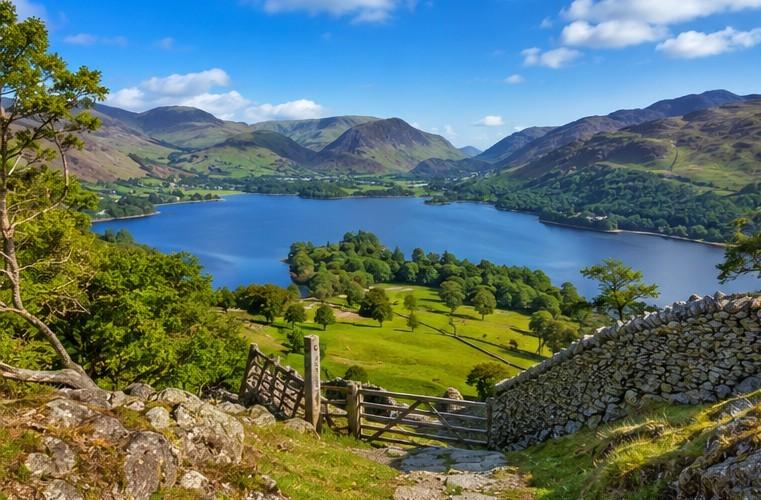
The Lake District in Cumbria represents the natural beauty of England at its finest. Designated as a UNESCO World Heritage Site, the region captivates visitors with tranquil lakes, majestic mountains, verdant valleys, waterfalls, and picturesque villages.
The landscape inspired many of Britain’s greatest writers, particularly William Wordsworth, Samuel Taylor Coleridge, and Beatrix Potter. Their literary works immortalized the area’s serene beauty and encouraged generations to appreciate nature.
Outdoor enthusiasts can climb Scafell Pike, England’s highest mountain, enjoy boating on Windermere, cycle through scenic routes, or simply relax beside peaceful lakes.
The Lake District demonstrates the harmonious relationship between people and nature, encouraging environmental conservation while offering visitors physical recreation and spiritual renewal.
Big Ben and the Houses of Parliament – The Heart of British Democracy
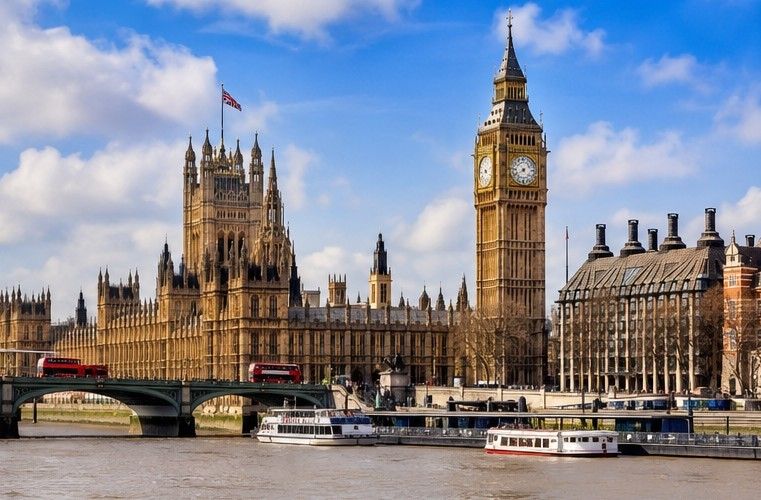
Few landmarks symbolize Britain more powerfully than Big Ben and the Palace of Westminster. Rising beside the River Thames in London, this magnificent Gothic Revival complex serves as the seat of the United Kingdom’s Parliament.
Although “Big Ben” technically refers to the Great Bell inside the Elizabeth Tower, the name has become synonymous with the entire clock tower itself.
The Palace of Westminster has witnessed centuries of political debate, constitutional reform, and legislative decision-making that have influenced democratic governance around the world.
Visitors admire its intricate architecture, historic chambers, and magnificent riverside setting. Guided tours explain the development of British parliamentary democracy and constitutional monarchy.
A visit here offers invaluable insight into one of the world’s oldest continuously functioning democratic systems.
York Minster – A Monument of Faith and Architecture
York Minster ranks among Europe’s greatest Gothic cathedrals and stands as one of England’s finest architectural achievements.
Construction extended over several centuries, resulting in a magnificent structure adorned with soaring arches, elaborate stone carvings, and some of the world’s finest medieval stained-glass windows. The Great East Window remains one of the largest surviving medieval stained-glass masterpieces.
Visitors may climb the Central Tower to enjoy panoramic views of the ancient city of York, whose Roman, Viking, and medieval heritage adds further historical significance.
York Minster illustrates the extraordinary craftsmanship, religious devotion, and artistic excellence of medieval Britain.
Giant’s Causeway – Nature’s Geological Wonder
Situated along the spectacular coast of Northern Ireland, the Giant’s Causeway is one of Europe’s most extraordinary natural landscapes and a UNESCO World Heritage Site.
Around forty thousand hexagonal basalt columns were formed by volcanic eruptions approximately sixty million years ago. Their striking geometric appearance inspired local legends describing the giant Finn McCool building a pathway to Scotland.
Walking among these unique rock formations offers visitors an unforgettable geological experience. The visitor centre explains the volcanic processes responsible for their formation while also exploring the rich folklore surrounding the site.
The Giant’s Causeway beautifully demonstrates how scientific understanding and cultural storytelling can coexist, enriching human appreciation of the natural world.
St Paul’s Cathedral – London’s Spiritual Landmark
Designed by Sir Christopher Wren after the Great Fire of London in 1666, St Paul’s Cathedral has become one of Britain’s greatest architectural masterpieces.
Its magnificent dome dominates London’s skyline and has served as the setting for numerous national occasions, including royal weddings, thanksgiving services, state funerals, and commemorations.
Inside, visitors admire the Whispering Gallery, renowned for its remarkable acoustic properties, and the crypt containing the tombs of distinguished Britons, including Admiral Nelson and the Duke of Wellington.
The cathedral symbolizes resilience, particularly during the Second World War when it survived the Blitz and became a powerful emblem of national courage.
Oxford University – Eight Centuries of Learning
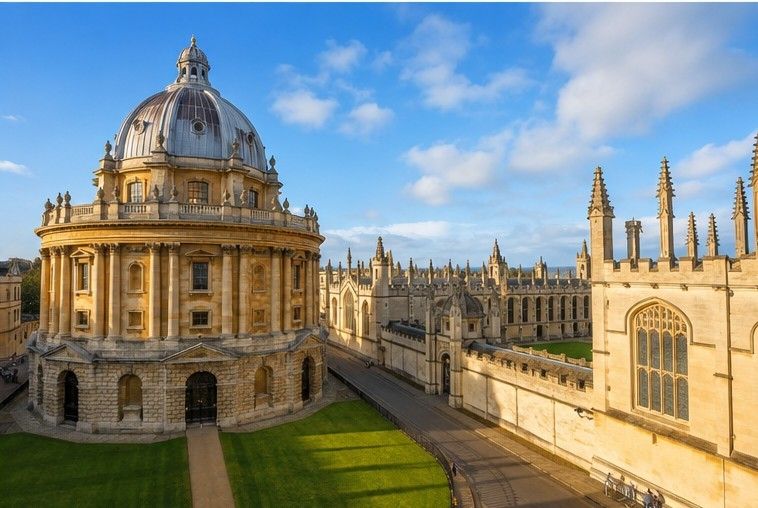
Founded in the twelfth century, the University of Oxford is the oldest university in the English-speaking world and one of the most prestigious centres of higher education globally.
Its historic colleges, libraries, chapels, gardens, and museums have educated generations of scholars, scientists, writers, political leaders, and Nobel Prize winners.
The Bodleian Library, Ashmolean Museum, and beautiful college quadrangles reflect centuries of academic excellence. Oxford has also inspired countless literary works and served as a filming location for many internationally acclaimed productions.
Walking through Oxford is like stepping into the living history of education, where tradition and innovation continue to flourish together.
Why Every Visitor Should Experience These Destinations
These ten destinations collectively represent the very essence of the United Kingdom.
They span over five thousand years of history—from prehistoric engineering at Stonehenge to the democratic traditions of Westminster; from Roman civilization in Bath to medieval cathedrals and castles; from world-class scholarship at Oxford to the geological wonders of Northern Ireland; from artistic inspiration in the Lake District to humanity’s shared heritage preserved in the British Museum.
Visiting these places offers numerous benefits:
- A deeper understanding of British history and its influence on world civilization.
- Appreciation of remarkable achievements in architecture, engineering, education, literature, politics, and science.
- Exposure to UNESCO World Heritage Sites that preserve humanity’s collective heritage.
- Opportunities to experience the cultural diversity of England, Scotland, and Northern Ireland.
- Inspiration drawn from landscapes, monuments, and institutions that have shaped generations of artists, writers, scientists, and leaders.
Each destination provides valuable lessons about perseverance, creativity, innovation, governance, faith, and humanity’s enduring quest for knowledge.
⸻
Other Important Places in London Every Visitor Should Experience
London, the capital of the United Kingdom, is one of the world’s greatest historical and cultural cities. With a history stretching back nearly two thousand years to the Roman settlement of Londinium, it has grown into a global centre of politics, finance, education, literature, science, and the arts. Every street, square, and monument reflects a remarkable chapter in British history. While Big Ben, the Houses of Parliament, St Paul’s Cathedral, and the British Museum are among its best-known attractions, many other landmarks are equally worthy of exploration.
Buckingham Palace – The Residence of the British Monarch
No visit to London is complete without seeing Buckingham Palace, the official London residence of the British Monarch. Originally built in 1703 as Buckingham House, it became the principal royal residence during the reign of Queen Victoria in 1837.
The palace has witnessed numerous historic occasions, including royal ceremonies, state banquets, investitures, and celebrations of national importance. During the summer months, selected State Rooms are open to visitors, allowing them to admire priceless works of art, magnificent chandeliers, exquisite furnishings, and royal collections.
The Changing of the Guard ceremony remains one of London’s most popular attractions, showcasing British military tradition, precision, and pageantry.
The Tower of London – A Fortress of Nine Hundred Years
Standing proudly beside the River Thames, the Tower of London has served as a royal palace, fortress, prison, armoury, mint, observatory, and treasury since it was founded by William the Conqueror in 1066.
The Tower has witnessed some of Britain’s most dramatic historical events, including royal imprisonments, famous executions, political conspiracies, and the safeguarding of the Crown Jewels.
Visitors can view the magnificent Crown Jewels, explore the medieval White Tower, walk along the ancient defensive walls, and hear fascinating stories narrated by the famous Yeoman Warders, popularly known as the Beefeaters.
The Tower offers an unforgettable journey through nearly one thousand years of British history.
Tower Bridge – London’s Engineering Marvel
Often mistaken for London Bridge, Tower Bridge is one of the world’s most recognisable bridges. Completed in 1894, it combines Victorian engineering with elegant Gothic architecture.
Visitors may walk across its spectacular high-level glass walkways, offering impressive views of the River Thames and London’s skyline. The bridge’s original steam-powered engine rooms demonstrate the engineering brilliance of the Victorian era.
Tower Bridge beautifully illustrates Britain’s industrial innovation and architectural excellence.
Westminster Abbey – Britain’s Coronation Church
Westminster Abbey has been the site of British coronations since 1066 and has hosted numerous royal weddings, funerals, and national thanksgiving services.
The abbey contains the tombs and memorials of kings, queens, poets, scientists, philosophers, military leaders, and statesmen. The famous Poets’ Corner honours literary giants such as Geoffrey Chaucer, William Shakespeare, Charles Dickens, Alfred Tennyson, Thomas Hardy, and many others.
For nearly one thousand years, Westminster Abbey has stood as the spiritual heart of the British nation.
The National Gallery
Located in Trafalgar Square, the National Gallery houses one of the world’s finest collections of European paintings. Visitors can admire masterpieces created by Leonardo da Vinci, Raphael, Michelangelo, Rembrandt, Turner, Constable, Monet, Van Gogh, Renoir, and many other celebrated artists.
The Gallery enables visitors to appreciate over seven centuries of European artistic development, making it an essential destination for lovers of art and culture.
Trafalgar Square
Trafalgar Square commemorates Britain’s naval victory at the Battle of Trafalgar in 1805 under Admiral Lord Nelson. Nelson’s Column dominates the square, surrounded by magnificent bronze lions and elegant fountains.
The square serves as one of London’s principal gathering places for national celebrations, public events, cultural festivals, and civic demonstrations. It is also surrounded by important cultural institutions, including the National Gallery.
The Victoria and Albert Museum
The Victoria and Albert Museum is the world’s largest museum dedicated to decorative arts, design, fashion, sculpture, furniture, ceramics, jewellery, textiles, and photography.
Its collections span more than five thousand years of human creativity, representing cultures from Europe, Asia, Africa, and the Americas. The museum demonstrates how art, craftsmanship, and innovation have evolved throughout history.
The Natural History Museum
The Natural History Museum is among the world’s finest scientific museums. Its spectacular exhibitions include dinosaur skeletons, fossils, gemstones, meteorites, minerals, rare animals, and displays explaining the evolution of life on Earth.
The museum inspires visitors of all ages to appreciate biology, geology, environmental conservation, and scientific discovery.
The Science Museum
Adjacent to the Natural History Museum, the Science Museum celebrates Britain’s contributions to scientific and technological advancement. Exhibits include the Industrial Revolution, early steam engines, aviation, space exploration, computing, medical science, and modern engineering.
The museum demonstrates how British scientists and inventors have profoundly influenced global technological progress.
Greenwich – Where Time Begins
Greenwich occupies a unique position in world geography. The Royal Observatory marks the Prime Meridian (0° longitude), from which world time and global navigation are measured.
Visitors may stand simultaneously in the Eastern and Western Hemispheres while learning about astronomy, navigation, and Britain’s maritime achievements.
Nearby attractions include the National Maritime Museum and the historic sailing ship Cutty Sark, reflecting Britain’s long naval tradition and global maritime influence.
Kensington Palace and Hyde Park
Kensington Palace has long served as a royal residence and is associated with several generations of the Royal Family. Its elegant State Apartments and beautifully maintained gardens attract visitors from around the world.
Adjacent Hyde Park, one of London’s largest Royal Parks, provides a peaceful retreat amid the bustling city. Its Speaker’s Corner symbolises Britain’s long tradition of freedom of expression and public debate.
Shakespeare’s Globe Theatre
A faithful reconstruction of the original Elizabethan theatre, Shakespeare’s Globe celebrates the life and works of William Shakespeare. Visitors can experience performances much as audiences did over four centuries ago while learning about England’s greatest playwright and the flourishing theatrical culture of the Renaissance.
Why These Places Matter
Together, these remarkable landmarks illustrate London’s extraordinary contribution to world history. They represent monarchy, democracy, religion, literature, science, art, engineering, maritime exploration, and education. Every museum preserves priceless knowledge, every palace narrates royal traditions, every cathedral reflects spiritual heritage, and every monument commemorates events that have shaped not only Britain but also global civilisation.
A visit to London is therefore far more than sightseeing. It is an educational journey through two thousand years of history, enabling visitors to understand how one city has influenced politics, commerce, science, literature, and culture across the world.
Conclusion
The United Kingdom is far more than a collection of famous tourist attractions. It is a living museum where every monument, landscape, and institution contributes to the continuing story of civilization.
Stonehenge reveals humanity’s earliest engineering genius; the British Museum preserves the achievements of countless cultures; Edinburgh Castle and York Minster embody Britain’s medieval heritage; the Roman Baths recall the influence of the Roman Empire; the Lake District celebrates nature’s grandeur; Westminster reflects democratic governance; the Giant’s Causeway showcases Earth’s geological history; St Paul’s Cathedral symbolizes national resilience; and Oxford University continues to illuminate the world through education and research.
Together, these remarkable destinations offer an unforgettable journey through history, culture, science, religion, politics, literature, and natural beauty. Anyone seeking to understand the United Kingdom—and indeed an important part of human civilization—should make every effort to visit these extraordinary places at least once in a lifetime.