
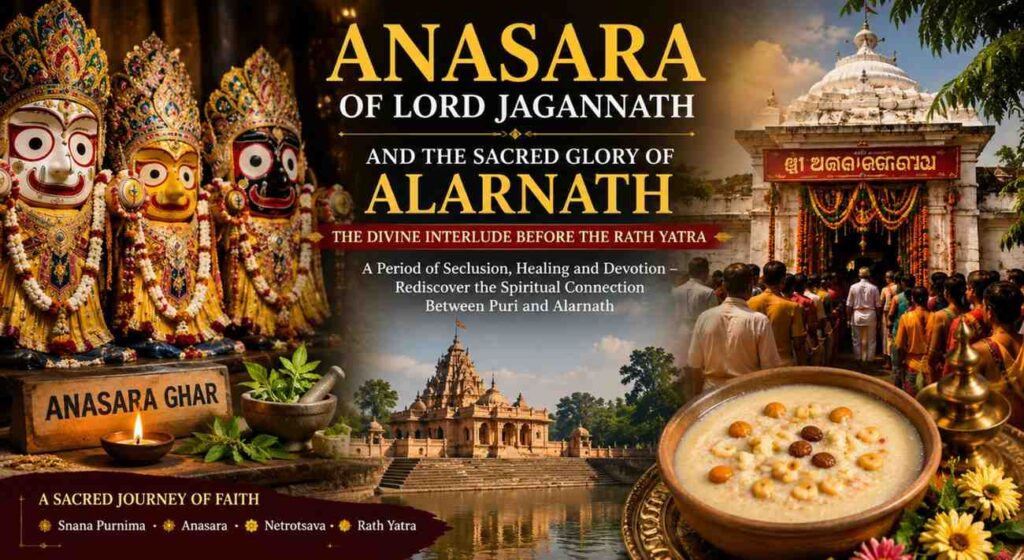
Anasara of Lord Jagannath and the Sacred Glory of Alarnath: The Divine Interlude Before the Rath Yatra
By Lokanath Mishra
Introduction
Among the innumerable festivals associated with Lord Jagannath of Puri, the sacred period known as Anasara (Anavasara) occupies a unique and deeply philosophical place. It is a period when the Supreme Lord, who is otherwise accessible to millions of devotees throughout the year, withdraws Himself from public view and assumes the role of an ordinary human being suffering from fever. This divine withdrawal demonstrates one of the most beautiful aspects of Jagannath culture—that the Lord willingly shares the joys, sorrows, and limitations of human life.
The Anasara period begins immediately after Snana Purnima (the Great Bathing Festival) and continues until Netrotsava, the ceremonial reopening of the Lord’s eyes before the world-famous Rath Yatra. During these fifteen days, Lord Jagannath, Lord Balabhadra, and Devi Subhadra remain inside the Anasara Ghar (the secluded chamber), receiving traditional herbal treatment and are not available for public darshan.
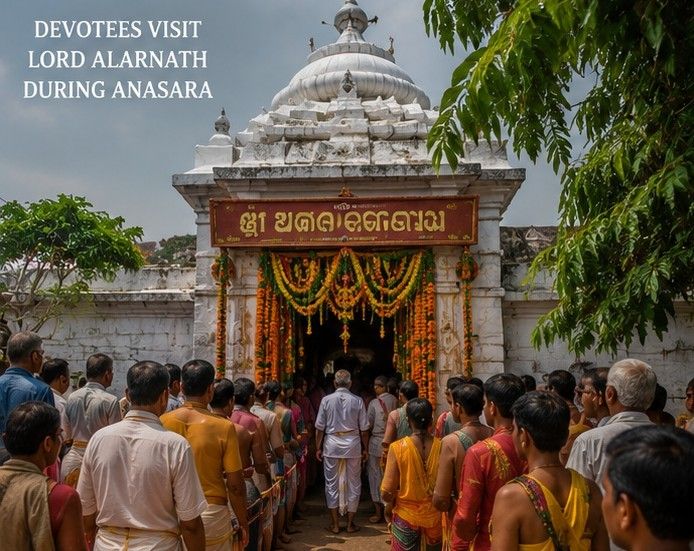
For devotees, this is not merely a period of separation but one of spiritual longing, reflection, and deeper devotion. During this sacred interval, they visit the ancient shrine of Lord Alarnath at Brahmagiri, believing that the same spiritual merit obtained by seeing Lord Jagannath in the Ratna Singhasana can be attained through the darshan of Lord Alarnath.
The Six Sacred Stages of the Jagannath Tradition (Shadanga Sanskara)
According to the traditional rituals of the Jagannath Temple, the annual festival surrounding the Rath Yatra is divided into six sacred stages, collectively known as the Shadanga Sanskara:
- Snana Yatra (Ceremonial Bathing Festival)
- Anasara (Period of Seclusion and Healing)
- Sri Gundicha Yatra (Journey to Gundicha Temple)
- Adapa Darshan
- Bahuda Yatra (Return Journey)
- Niladri Bije (Return to the Sanctum)
These six stages are not merely ceremonial events but symbolize the complete spiritual journey of the human soul—from purification and withdrawal to reunion with the Divine.
The Spiritual Symbolism of the Number Six
Jagannath philosophy beautifully relates these six rituals to the six divine virtues present within every human being:
- Beauty (Saundarya)
- Strength (Virya)
- Generosity (Audarya)
- Gravity (Gambhirya)
- Sweetness (Madhurya)
- Sovereignty (Aishwarya)
At the same time, every individual also struggles with six internal enemies:
- Lust (Kama)
- Anger (Krodha)
- Greed (Lobha)
- Attachment (Moha)
- Pride (Mada)
- Jealousy (Matsarya)
Human life is a constant battle between these two sets of six qualities.
Even at the end of earthly life, this symbolism continues. According to ancient Hindu funeral customs, the body is traditionally carried upon six wooden logs—neither five nor seven—symbolizing the completion of life’s journey through the six divine virtues and six worldly weaknesses.
The Beginning of Anasara
After the ceremonial bathing with 108 pitchers of sanctified water on Snana Purnima, the deities are believed to develop high fever. During the night, the Daita Sevakas, regarded as descendants of the tribal devotee Visvavasu, ceremonially transfer the deities from the Snana Mandapa to the Anasara Ghar.
The sacred marks known as Rahu Rekha and Chita are removed from the divine faces and handed over to the temple officials known as the Bhandara Mekapa.
The Koitha Suansia servitors then surround the Anasara chamber with bamboo screens, completely isolating the deities from public view. The Jagamohana is divided into two sections—one reserved exclusively for the wooden deities and another for ritual activities.
This sacred privacy emphasizes that even the Supreme Lord deserves rest, healing, and recovery.
The Worship of the Pati Dian (Painted Deities)
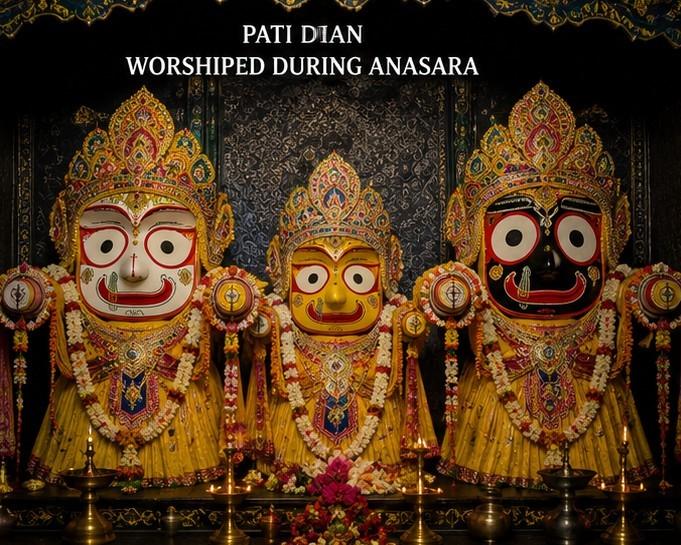
During the Anasara period, the wooden deities are hidden from public view. Therefore, beautifully painted images known as Pati Dian are installed inside the sanctum and receive regular worship.
These sacred substitutes represent:
- Lord Balabhadra as Vasudeva
- Devi Subhadra as Bhuvaneswari or Yajnaseni
- Lord Jagannath as Narayana
Unlike the famous wooden forms of the Jagannath Trinity, these painted forms depict the deities with four arms and two legs, seated gracefully in Padmasana.
Lord Balabhadra appears white, holding the conch, discus, mace, and plough.
Devi Subhadra is painted in golden yellow, holding lotus flowers while displaying the boon-giving gesture.
Lord Jagannath appears in black, holding the conch, discus, mace, and lotus.
Each deity is painted against a rich crimson background, symbolizing divine radiance.
Traditional Preparation of Sacred Colours
The Pattachitra artists prepare every colour using natural substances:
- White from powdered conch shell
- Black from lamp soot
- Red from Hingula (cinnabar)
- Yellow from Haritala (orpiment)
- Blue from natural mineral pigments
These colours have been prepared traditionally for centuries without synthetic materials, preserving Odisha’s remarkable artistic heritage.
Daily Rituals During Anasara
Beginning from the first day of the dark fortnight of Ashadha until Amavasya, the Pati Dian receive complete daily worship.
While the wooden deities inside the Anasara chamber receive light medicinal offerings such as herbal drinks (Pana) and Chakata Bhoga, the painted deities receive regular cooked food offerings.
Seven movable idols are also brought outside the Anasara chamber and placed upon a ceremonial cot:
- Lord Rama
- Lord Narasimha
- Dolagobinda
- Goddess Lakshmi
- Goddess Saraswati
- Madanamohana
- Lord Krishna
The priests perform Panchamrita Abhisheka, Ballava Bhoga, and all daily rituals exactly as they would throughout the year, except that certain ceremonial decorations are suspended during this period.
Before the nightly Pahuda (retiring ceremony), Chakata Bhoga is specially offered to the recovering wooden deities.
The Healing of the Lord
The Anasara rituals beautifully portray the Lord as a member of the human family.
Traditional herbal medicines consisting of:
- Camphor
- Sandalwood paste
- Musk
- Chua fragrance
- Medicinal herbs
are applied to the divine bodies.
Only the Daita Sevakas are permitted to serve the Lord during this period.
For eleven months of the year, Brahmin servitors conduct the temple rituals. During Anasara, however, the Daitas assume exclusive responsibility, reflecting the tribal origins of Jagannath worship and the inclusiveness of Jagannath culture.
Sri Anga Phita and Karala Ritual
One of the most confidential ceremonies of Anasara is known as Sri Anga Phita.
The wet garments used during Snana Yatra are removed.
The medicinal paste consisting of sandalwood, musk, resin, and herbal ingredients is carefully separated.
This removed medicinal mixture is known as Karala.
The purpose of the ritual is both symbolic and practical—it protects the sacred wooden bodies of the deities from moisture and deterioration while also representing the Lord’s recovery from illness.
Lord Alarnath: The Refuge During Anasara
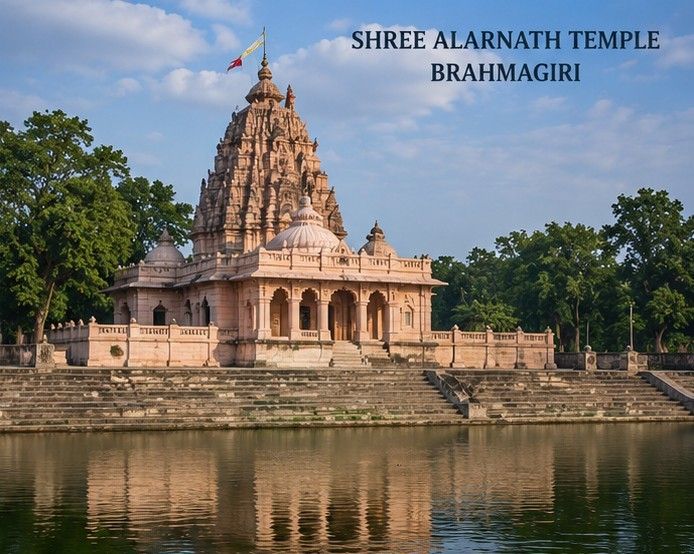
Since devotees cannot have darshan of Lord Jagannath during Anasara, they proceed to the ancient temple of Lord Alarnath at Brahmagiri, about twenty-five kilometres from Puri.
According to long-standing tradition, Lord Alarnath is worshipped as Lord Vishnu Himself during this period.
A popular belief says:
“The spiritual merit obtained by seeing Lord Jagannath on the Ratna Singhasana is equally obtained by seeing Lord Alarnath during Anasara.”
Thus, thousands of pilgrims visit Brahmagiri during these fifteen days.
The Legend of Alabandacharya
Ancient texts such as Purushottama Chandrika narrate the fascinating legend of the great Tantric saint Alabandacharya.
Unable to bear separation from Lord Jagannath during Anasara, he transformed himself into a bee through yogic powers and secretly entered the Anasara chamber.
Inside, he witnessed a mystical eight-petalled lotus.
As he attempted to sit upon it, each lotus petal transformed into a celestial maiden who laughed at his arrogance.
Humiliated, Alabandacharya left the temple and decided to end his life in the sea.
Suddenly, a gigantic monkey appeared and guided him southward.
Understanding it as divine instruction, he travelled to Brahmagiri, where he beheld Lord Vishnu in the form of Alarnath and attained profound spiritual bliss.
Some traditions believe that the name “Alarnath” evolved from “Alabandanath,” while linguistic scholars suggest it derives from the Dravidian word Alvar, meaning “devoted saint.”
The Antiquity of Alarnath
According to ancient tradition, Brahma performed severe penance at Brahmagiri during Satya Yuga to obtain the vision of Lord Vishnu.
Pleased by his devotion, Lord Vishnu appeared in His four-armed form and instructed Brahma to establish His image there.
Brahma carved the deity from black stone and began worshipping Him.
That sacred image continues to be worshipped today as Lord Alarnath.
The deity stands approximately five and a half feet tall, accompanied by Sri Devi and Bhu Devi, with Garuda kneeling in prayer below His feet.
The Lord holds the conch, discus, mace, and lotus—the classic emblems of Narayana.
The Famous Kshira (Sweet Milk Pudding) Offering
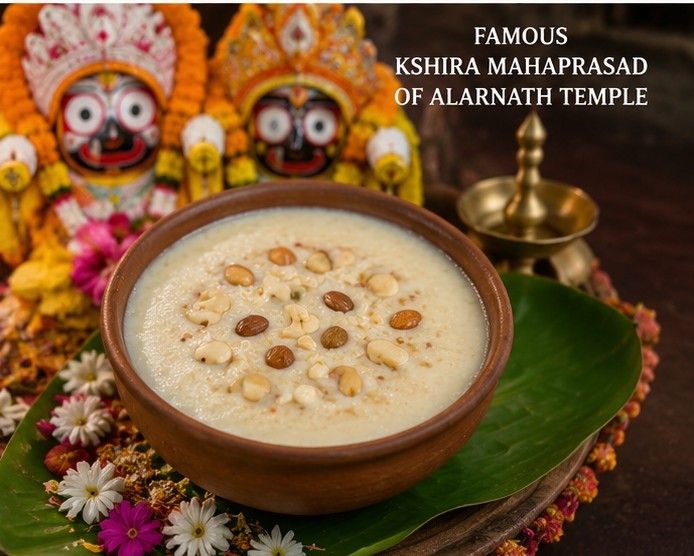
One of the most beloved legends associated with Lord Alarnath concerns His famous Kshira Bhoga.
A priest named Ketan once left his young son in charge of offering sweet rice to the Lord.
The innocent child simply prayed:
“Come, O Alar, please eat the Kshira; my father has gone on pilgrimage.”
To everyone’s amazement, the Lord personally consumed the offering.
When the child’s mother secretly witnessed the miracle the next day, she cried aloud in astonishment.
The hot Kshira splashed upon the Lord’s face and hands, leaving blister-like marks.
Even today, devotees are shown these marks on the deity’s face.
The famous Alarnath Kshira is regarded as one of Odisha’s holiest and most delicious Mahaprasada offerings.
Sri Chaitanya Mahaprabhu and Alarnath
The fame of Alarnath spread throughout India during the time of Sri Chaitanya Mahaprabhu.
Whenever Lord Jagannath remained in Anasara, Chaitanya Mahaprabhu became overwhelmed with divine separation.
Unable to endure the absence of Jagannath’s darshan, he travelled to Brahmagiri.
Upon seeing Lord Alarnath, he became immersed in ecstatic devotion.
Tradition narrates that while offering full prostration before the deity, the intense heat of divine love melted a large stone beneath his body.
This sacred stone, known as the Sarvanga Shila, is preserved and worshipped even today.
Thousands of Gaudiya Vaishnava pilgrims visit Alarnath specifically to offer obeisance before this miraculous stone.
⸻
Daily Worship and Festivals at Alarnath
The worship at Alarnath closely follows the ritual system of the Jagannath Temple.
Daily offerings include:
- Mangala Arati
- Abakasha
- Ballava Bhoga
- Morning Dhupa
- Midday Kshira Bhoga
- Sandhya Arati
- Chandana Lagi
- Badasinghara Besha
- Pahuda
During Anasara, special Anasara Besha is observed, drawing thousands of pilgrims.
Throughout the year, the temple also celebrates numerous festivals, including:
- Chandan Yatra
- Chitalagi Amavasya
- Janmashtami
- Kumar Purnima
- Vijayadashami
- Kartika Festivals
- Dola Purnima
- Pana Sankranti
- Pushyabhisheka
- Makara Sankranti
- Deva Deepavali
- Dhanu Sankranti
Among all offerings, the sacred Kshira Prasada remains the most celebrated.
⸻
Conclusion
The Anasara of Lord Jagannath is far more than a temporary closure of the temple doors. It is a profound theological expression that reveals the Lord’s compassion and intimacy with humanity. By assuming illness, accepting treatment, and withdrawing into seclusion, Lord Jagannath reminds His devotees that divinity embraces every aspect of human existence.
Simultaneously, the sacred pilgrimage to Alarnath transforms the devotees’ temporary separation into an opportunity for deeper spiritual realization. The legends of Brahma, Alabandacharya, the innocent child offering Kshira, and Sri Chaitanya Mahaprabhu together enrich the spiritual heritage of Odisha and illustrate the timeless relationship between the Lord and His devotees.
Thus, Anasara is not merely an interval before the Rath Yatra; it is a sacred period of longing, healing, devotion, and inner transformation. It teaches that even when the Lord appears hidden from our eyes, He is never absent from our hearts. The journey from the closed doors of the Jagannath Temple to the open embrace of Lord Alarnath ultimately reminds every devotee that sincere faith always finds the Divine, regardless of where He chooses to reveal Himself.