
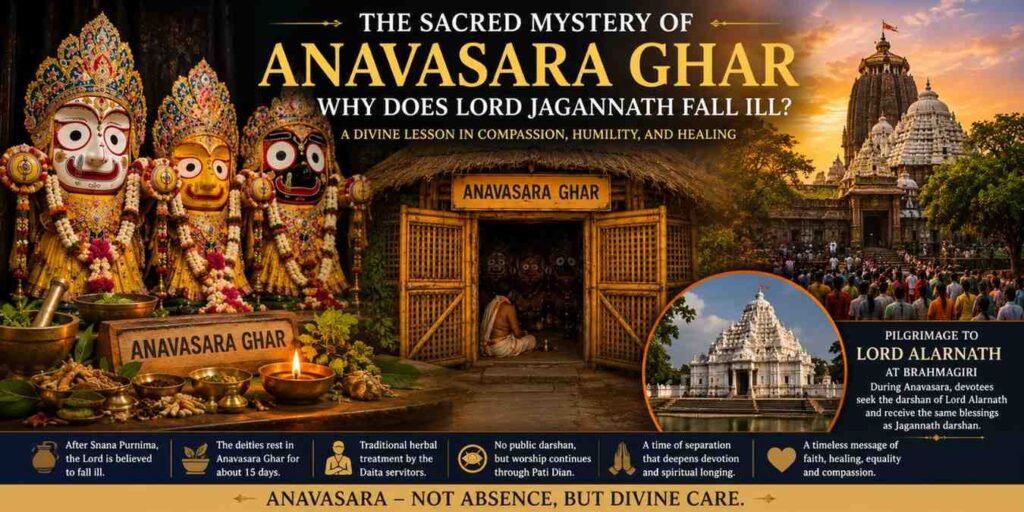
The Sacred Mystery of Anavasara Ghar: Why Does Lord Jagannath Fall Ill?
By Lokanath Mishra
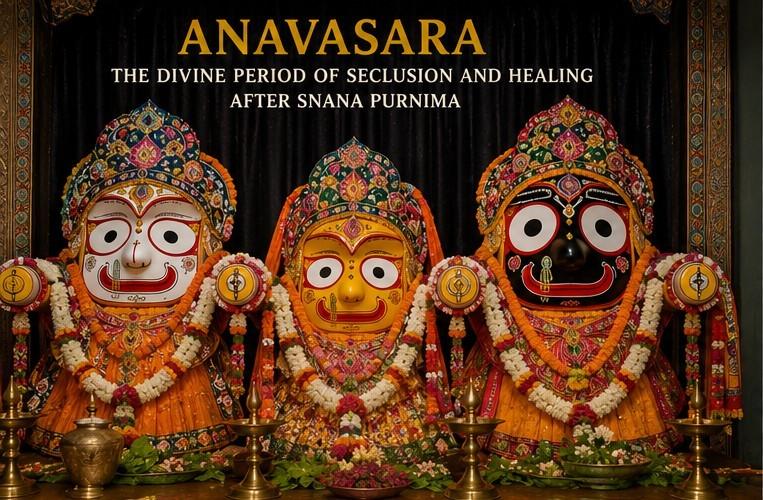
Every year, immediately after the grand Snana Purnima (Deva Snana Purnima), an extraordinary event unfolds in the sacred traditions of the Jagannath Temple at Puri. The Supreme Lord, Shri Jagannath, along with His elder brother Lord Balabhadra and sister Devi Subhadra, is believed to fall seriously ill after receiving the ceremonial bath with 108 pitchers of sanctified water. Consequently, the deities withdraw from public view for nearly fifteen days and remain inside the Anavasara Ghar (Anasara Ghar), where they receive traditional treatment from the Daita servitors. During this period, devotees are unable to have their customary darshan of the deities.
To an ordinary observer, this may appear to be merely a ritual. In reality, however, it embodies one of the deepest spiritual teachings of the Jagannath tradition. The Anavasara period is a profound expression of divine compassion, humility, and the intimate relationship between God and humanity.
God Shares the Human Experience
Hindu philosophy proclaims that although the Supreme Lord is eternal, omnipotent, and beyond disease, He voluntarily assumes human emotions and experiences for the welfare of the world. This divine principle is known as Nara Lila—the Lord’s human-like pastime.
By accepting illness after the ceremonial bath, Lord Jagannath demonstrates that He is not a distant deity who remains detached from human life. Rather, He willingly experiences what every human being undergoes—fatigue, illness, rest, recovery, and healing. The Lord teaches that sickness is not a sign of weakness or divine displeasure but a natural aspect of embodied existence.
In doing so, He consoles millions who suffer from illness and adversity, assuring them that even in times of physical weakness, they remain under His compassionate care.
The Spiritual Purpose of Anavasara Ghar
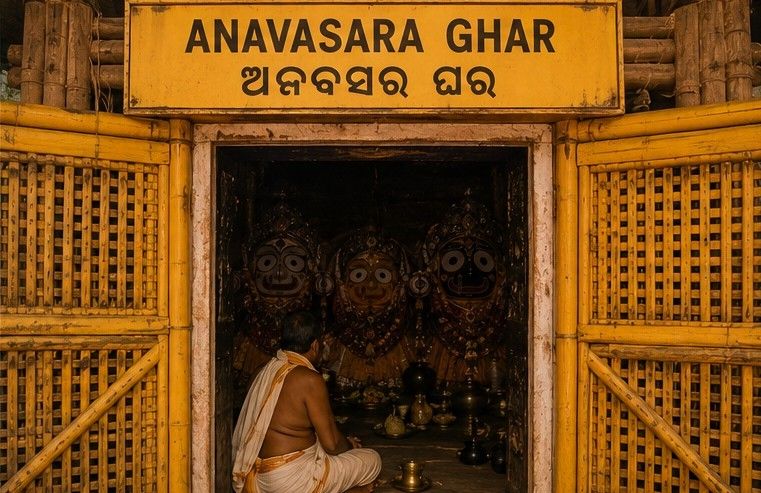
The Anavasara Ghar is far more than a secluded chamber inside the Jagannath Temple. It symbolizes a sacred space of healing, renewal, introspection, and transformation.
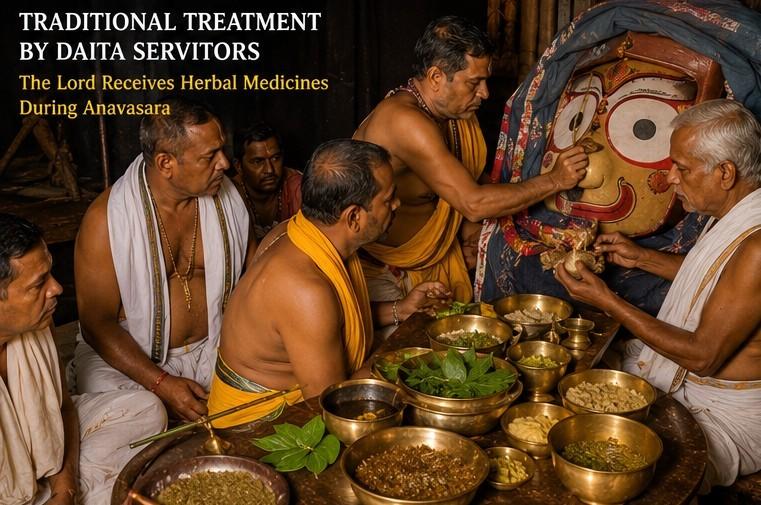
Following the elaborate Snana Yatra, the divine wooden forms receive traditional herbal treatment. Medicinal substances such as sandalwood paste, camphor, musk, aromatic herbs, and natural cooling preparations are applied to the deities. The Daita servitors, regarded as descendants of the tribal devotee Visvavasu, perform these confidential services with the same affection and dedication that family members show toward an ailing relative.
The rituals affirm that service to God is not limited to worship alone. Caring for the Lord during His illness becomes an expression of the highest devotion. The relationship between the devotee and the Divine is transformed into one of love, responsibility, and intimate service.
The Philosophy of Separation
One of the most significant spiritual lessons of Anavasara is the experience of viraha, or loving separation.
For fifteen days, the doors of the sanctum remain closed, and devotees are deprived of the Lord’s darshan. This temporary separation intensifies their longing and deepens their devotion. Just as the absence of a loved one increases affection, the inability to behold Lord Jagannath strengthens the devotee’s spiritual yearning.
The saints of the Bhakti tradition have long taught that separation from God often awakens a deeper love than uninterrupted physical presence. When the Lord is not visible, He becomes even more present in the heart.
Thus, Anavasara teaches that true devotion transcends physical sight. Genuine faith continues even when the Divine appears hidden.
Equality Before the Supreme Lord
The Anavasara rituals also carry an important social message.
For eleven months of the year, the temple rituals are primarily conducted by Brahmin servitors. During the Anavasara period, however, the exclusive responsibility for serving the Lord rests with the Daita servitors, descendants of the tribal community associated with the earliest worship of Jagannath.
This tradition beautifully illustrates the inclusive philosophy of Jagannath culture. Before the Lord, distinctions of caste, birth, and social status disappear. Devotion, sincerity, and loving service become the only qualifications.
The Anavasara period is therefore a living symbol of social harmony and spiritual equality.
Worship Continues Through the Pati Dian
Although the wooden deities remain in seclusion, worship in the temple never ceases. Beautiful painted representations known as Pati Dian are installed within the sanctum and receive the daily rituals and offerings.
This practice conveys another profound lesson: the Divine is not confined to a single visible form. Whether worshipped through the wooden images, painted representations, or remembered within the heart, the presence of the Lord remains eternal and uninterrupted.
God may conceal His outward form, but His grace continues to flow without interruption.
The Pilgrimage to Lord Alarnath
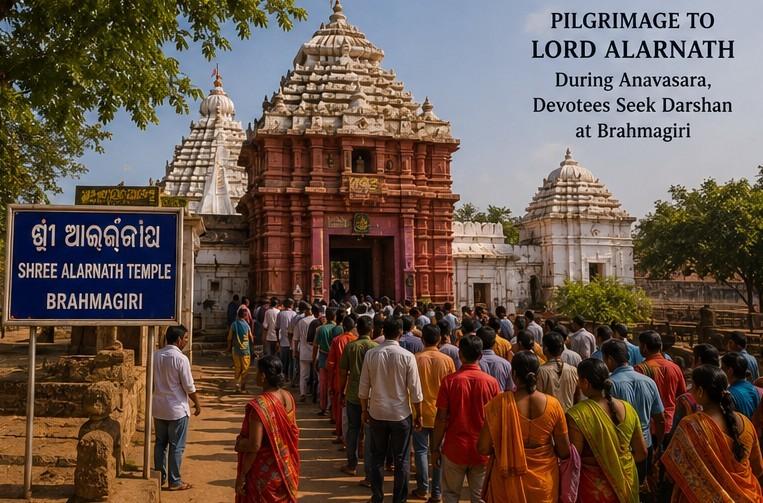
During Anavasara, devotees traditionally undertake a pilgrimage to the ancient shrine of Lord Alarnath at Brahmagiri.
According to long-standing belief, Lord Vishnu manifests there during the period when Lord Jagannath remains secluded. It is said that the spiritual merit gained by beholding Lord Jagannath in the Ratna Singhasana is equally attained through the darshan of Lord Alarnath during Anavasara.
This sacred pilgrimage reminds devotees that God is never absent. When one door closes, another opens. The Divine always provides a path for sincere seekers.
Lessons for Modern Society
The philosophy of Anavasara remains remarkably relevant today.
In an age characterised by relentless activity and constant pressure, the Lord Himself demonstrates the necessity of rest and recovery. Even the Supreme Being symbolically withdraws from public appearance to regain strength. The message is clear: physical health, mental peace, and spiritual renewal require periods of quiet reflection.
Anavasara also teaches patience. Healing cannot be hurried. Whether recovering from illness, emotional distress, or personal setbacks, every individual needs time to restore body, mind, and spirit.
Above all, the festival reminds us that compassion toward the sick, respect for caregivers, and concern for the suffering are sacred responsibilities.
A Festival of Faith and Inner Renewal
The reopening of the temple doors on Netrotsava is more than the conclusion of a ritual. It symbolizes renewed vision, restored health, and the joyful reunion between the Lord and His devotees. The subsequent Rath Yatra becomes a celebration of that reunion, expressing the triumph of love after separation.
The Anavasara Ghar therefore represents not darkness but hope; not absence but preparation; not weakness but divine compassion. Through His self-imposed illness, Lord Jagannath teaches humanity that suffering can become a means of spiritual growth, that separation can deepen love, and that healing—whether physical or spiritual—is a sacred journey guided by divine grace.
The enduring message of Anavasara is timeless: the Lord who governs the universe willingly shares the experiences of ordinary people so that no devotee may ever feel alone in moments of pain. Hidden behind the bamboo screens of the Anavasara Ghar is not merely an ailing deity, but the compassionate Lord of the Universe, who transforms human suffering into an opportunity for faith, humility, service, and spiritual awakening.