
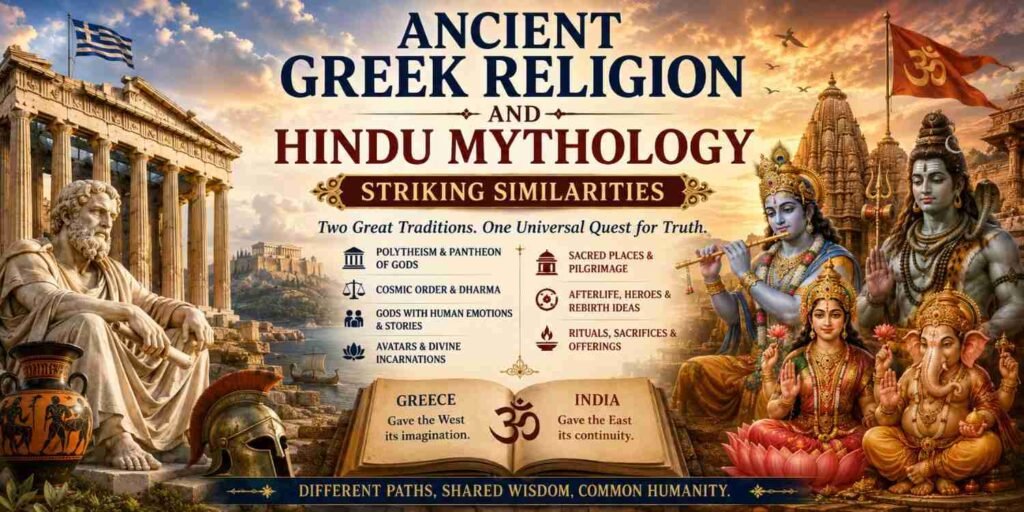
Ancient Greek Religion and Hindu Mythology: Striking Similarities
By: Lokanath Mishra
Both Ancient Greek religion and Hinduism are among the oldest living spiritual traditions of the world.
Though separated by geography. they share deep structural. philosophical. and cultural similarities.
Both systems see the universe as governed by divine forces. heroes. and cosmic laws.
Here is a critical analysis of the key parallels:
- Polytheism and a Pantheon of Gods:
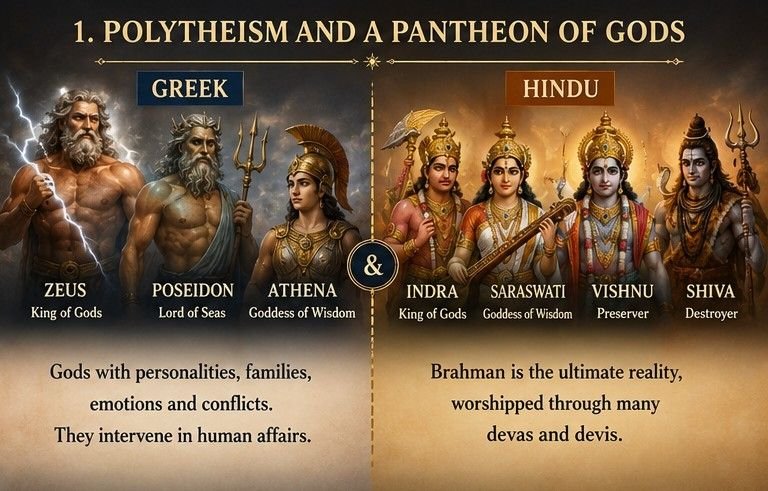
Similarity: Both traditions are polytheistic. with one supreme cosmic order but many deities handling different aspects of life.
Greek: Zeus is the king of gods. like Indra in Hinduism. Other gods: Poseidon = Varuna, Athena = Saraswati, Aphrodite = Lakshmi, Ares = Kartikeya, Hermes = Narada.
Hindu: Brahman is the ultimate reality. but worship happens through Brahma. Vishnu. Shiva. Devi. and countless devas and devis.
In both systems. gods have personalities. families. conflicts. and intervene in human affairs. - Concept of Cosmic Order and Dharma:
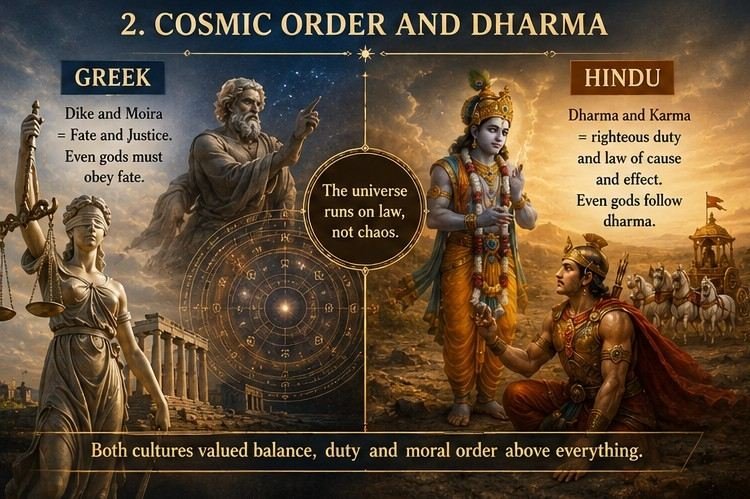
Similarity: Both believe the universe runs on law. not chaos.
Greek: The concept of Dike and Moira = Fate and Justice. Even gods must obey fate.
Hindu: The concept of Dharma and Karma = righteous duty and law of cause and effect. Even gods follow dharma. as seen in the Ramayana and Mahabharata.
This shows both cultures valued balance. duty. and moral order above everything. - Gods with Human Emotions and Stories:
Similarity: Gods in both traditions are not distant. They love. fight. marry. get angry. and take human forms.
Greek: Zeus’s affairs. Hera’s jealousy. and the Trojan War with gods taking sides.
Hindu: Krishna’s leelas. Shiva’s tandava. and the wars of Devas vs Asuras.
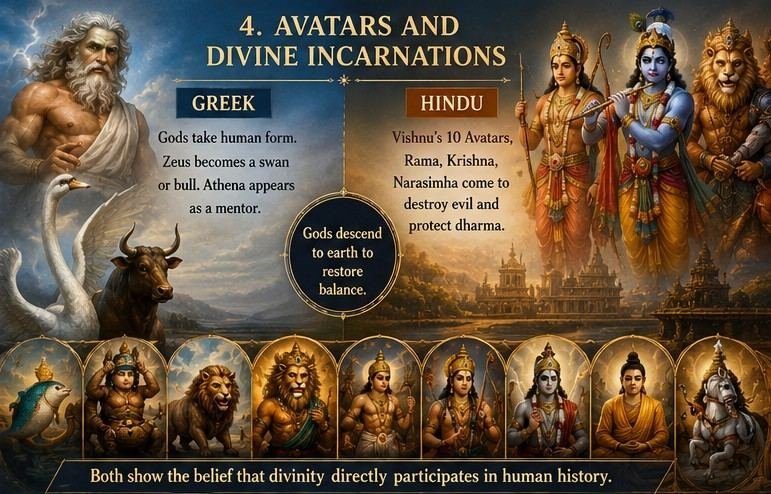
This makes religion very relatable. It teaches morality through stories. not just commandments. - Avatars and Divine Incarnations:
Similarity: The idea that gods descend to earth to restore balance.
Greek: Gods take human form. Zeus becomes a swan or bull. Athena appears as a mentor.
Hindu: Vishnu’s 10 Avatars. Rama. Krishna. and Narasimha come to destroy evil and protect dharma.
Both show the belief that divinity directly participates in human history. - Sacred Places. Pilgrimage. and Temples:
Similarity: Both gave immense importance to sacred geography.
Greek: Delphi = seat of Apollo’s oracle. Olympia = games for Zeus. Acropolis = home of Athena.
Hindu: Varanasi. Rameswaram. Tirupati. and Char Dham.
Temples in both were centers of art. learning. music. and community life. not just prayer. - Afterlife. Heroes. and Rebirth Ideas:
Similarity: Both believed in life after death and the importance of heroic conduct.
Greek: Hades for the dead. Elysium for heroes. and the idea of kleos = eternal fame through great deeds.
Hindu: Swarga. Naraka. and rebirth based on karma. Moksha through great deeds and devotion.
Both honored ancestors and performed rituals for the dead. - Rituals. Sacrifices. and Offerings:
Similarity: Elaborate rituals were central.
Greek: Animal sacrifices. libations of wine. and offerings at temples.
Hindu: Yajnas. homas. offerings of fruits. flowers. and ghee.
Both saw rituals as a way to maintain harmony between humans and gods.
Why These Similarities Exist:
Scholars trace this to the Indo-European roots. Both Greek and Sanskrit languages. and their mythologies. came from a common ancestral culture thousands of years ago.
Later. during Alexander’s invasion of India in 326 BC. there was direct cultural exchange. The Greeks called Krishna as “Heracles” and Buddha as a wise god.
Key Difference to Note:
Greek religion largely declined after Christianity. while Hinduism evolved and continues as a living tradition.
Hinduism also developed strong philosophical schools like Vedanta. Yoga. and Bhakti. which gave it deeper metaphysical depth over time.
Final Thoughts:
The similarities between Greek and Hindu mythology show that humanity asks the same questions everywhere:
Who are we ? Why is there suffering ? What is our duty ?
Both traditions answered with stories of gods. heroes. and cosmic law.
For a modern traveler or student. visiting Greece is like seeing a sister civilization of India.
The temples of Delphi feel like our tirthas. The stories of the Mahabharata echo in the tales of Troy.
In short:
Greek mythology gave the West its imagination. Hindu mythology gave the East its continuity. Together they show the universal human search for meaning.