My visit to Sri Lanka ( part-11)
By Lokanath Mishra
My purpose of visit to Sri Lanka was to collect certain information to establish that the Ramayana was written basing upon facts. While collecting the information by visiting the entire country of Sri Lanka, I found that the state of Odisha is having a relationship with the country Sri Lanka.
As regards evidences on Ramayana, I found the following information:
Sri Lanka, being a key location in the Ramayana epic, has numerous sites and artifacts that are believed to be connected to the story. While these cannot be considered conclusive evidence, they do contribute to the rich cultural heritage and folklore surrounding the Ramayana. Here are some of the notable evidences:
Ravana’s Palace : Located in the Ella region, this site is believed to be the remains of Ravana’s palace. Excavations have uncovered ancient stone structures, pottery, and other artifacts.
Sita Eliya : This site, near Nuwara Eliya, where Sita was held captive by Ravana. A temple dedicated to Sita is located here.
There is also another temple of Mata Sita in that area, in that place Mata Sita entered into fire 🔥 for Agni parikhya in Sri Lanka.
Ravana’s Cave : Situated near Ella, this cave where Ravana hid Sita.
Adam’s Peak (Sri Pada) : This mountain is considered sacred by Buddhists, Hindus, and Muslims. According to legend, it’s the place where Ravana’s brother, Vibhishana, met Rama.
Ravana Falls : Located near Ella, these waterfalls where Ravana and his queen Mondadori bathed.
Koneswaram Temple : This ancient Hindu temple in Trincomalee is dedicated to Lord Shiva and is believed to be one of the five sacred sites of Lord Shiva in Sri Lanka.
Munneswaram Temple : Located in Chilaw, this temple is dedicated to Lord Shiva and is said to be where Rama worshiped Lord Shiva.
Ravana’s Chariot : A ancient chariot, believed to be Ravana’s, is on display at the National Museum of Colombo.
Inscriptions : Various inscriptions, including the Mahavamsa, an ancient Sri Lankan chronicle, mention the story of Rama and Ravana.
Local Folklore : Many local legends and stories in Sri Lanka are connected to the Ramayana, demonstrating the epic’s enduring influence on the island’s culture.
Geographical Names : Many places in Sri Lanka, such as Ravana Ella, Sita Eliya, and Rama’s Bridge (Adam’s Bridge), are named after characters and events from the Ramayana.
Sigiriya, also known as the “Lion’s Rock,” is indeed a fascinating archaeological site in Sri Lanka. While it’s often associated with the legend of Ravana, its connection to the Ramayana epic .
Sigiriya is considered one of the most important archaeological sites in Sri Lanka . The site consists of a massive rock formation, about 200 meters (660 feet) high, surrounded by a moat, gardens, and other structures.
Ravana’s Palace : Sigiriya was the palace of Ravana, the king of Lanka in the Ramayana epic. There are many concrete archaeological evidence to support this claim.
Basing on the above evidence, I can say there is concrete evidence to prove that Ramayana was based upon real facts.
As regards the relationship between Sri Lanka and Odisha, I found that the historical connection between Odisha and Sri Lanka is a rich and fascinating one, spanning over two millennia. The two regions have been linked through trade, cultural exchange, and even royal alliances.
Odisha, particularly the ancient kingdom of Kalinga, emerged as a prominent maritime power by the 5th century BCE. Its strategic location on the eastern coast of India made it a natural hub for trade with Southeast Asia and Sri Lanka. Archaeological evidence, including ship anchors and brick kilns, points to a thriving maritime trade.
The Mahavamsa, a Sri Lankan chronicle, narrates the story of Prince Vijaya, who arrived in Sri Lanka from Kalinga around 543 BCE and founded the Sinhalese dynasty. This legend highlights the cultural and ethnic ties between the two regions.
Buddhism, which took root in Kalinga by the 3rd century BCE, also found its way to Sri Lanka. Emperor Ashoka’s daughter, Sanghamitra, is said to have brought a sapling of the sacred Bodhi tree from Bodh Gaya to Sri Lanka through the port of Tamralipta in Kalinga.
In the 11th and 12th centuries CE, there were matrimonial alliances between Odia royalty and Sri Lankan kings. Queens like Trilokasundari and Sundari, both from Kalinga, married into Sri Lankan royalty, highlighting the political dimension of the connection.
The village of Narendrapur in Odisha offers a glimpse into the everyday realities of this connection. The village, with its scattered Shiva Lingas and fragments of temple architecture, is believed to have been an ancient maritime trade center.
The tradition of making Shiva Lingas for export may have originated in Odisha during the ancient period. The village also houses the Maa Patana Mangala temple, dedicated to Goddess Lankeshwari, whose name signifies a connection to Sri Lanka.
Odia literary works, such as the Lavanyavati and Tapoi, reference trade relations between Odisha and Sri Lanka. Additionally, 16th and 17th-century Odia literary works frequently mention Sri Lanka, suggesting a fascination with its beauty and wealth.
The Odisha-Sri Lanka connection is a testament to the rich cultural heritage and historical ties between the two regions. This shared history continues to be a subject of both academic interest and cultural exchange.
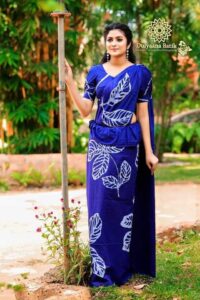
Further I found during my visit to Sri Lanka that the distinctive Osariya sari, worn by Sinhalese women in Sri Lanka, has its roots in Odisha, India. The Osariya style is characterized by a frill along the midriff, setting it apart from the more common Nivi style. Here are some key aspects of the Osariya sari:
Frill along the midriff : The Osariya sari features a distinctive frill along the midriff, which is not found in the Nivi style.
Puffed sleeves : The blouse worn with the Osariya sari often has elaborate puffed sleeves.
Formal occasions : Sinhalese women typically wear the Osariya sari to formal events like weddings, patriotic celebrations, or religious festivities.
Sinhalese identity : The Osariya sari serves as a visible identity of Sinhalese culture, distinguishing them from Tamil and Muslim women.
Traditional professions : Women in traditional professions like air hostesses, teaching and newscasting may wear the Osariya sari to work.
Cultural heritage : The Osariya sari is a testament to the cultural exchange between Odisha and Sri Lanka.
Nivi style : The Nivi style is more common and does not feature the frill along the midriff.
Sambalpuri sari : The style of the Sambalpuri sari from Odisha is similar to the Osariya sari.
Tamil and Muslim women : Tamil and Muslim women in Sri Lanka wear the Nivi style sari and distinguish themselves through other means, such as headscarves by Muslim women and pottu (bindi) by Tamil women.