
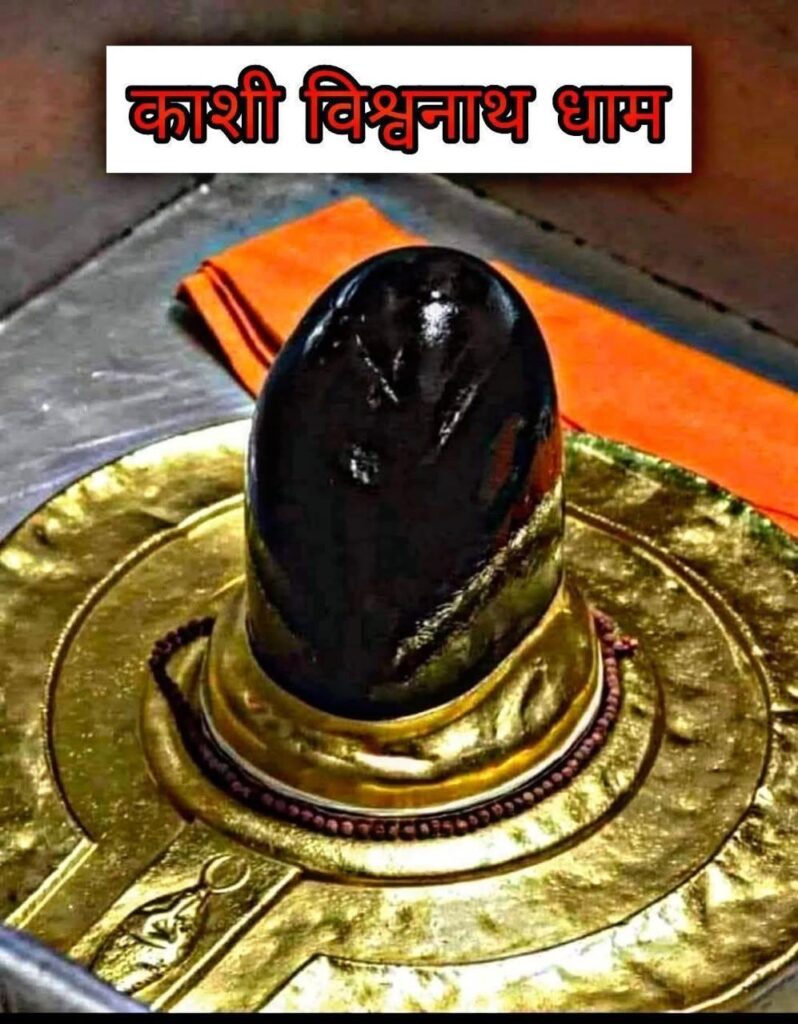
Hinduism in America: The Eternal Dharma Across the Ocean
By Lokanath Mishra
Hinduism, often called Sanātana Dharma—the eternal way of life—is more than a religion; it is a philosophy that contemplates the infinite, the cycle of existence, and the presence of divinity in all beings. Though its origins lie deep in the soil of India, Hinduism has flowed far beyond its birthplace, carried by devotees to every corner of the globe. In America, it has blossomed into a spiritual and cultural force, bringing with it the timeless teachings of the Vedas, the stories of the Puranas, and the living traditions of puja, yoga, and festivals.
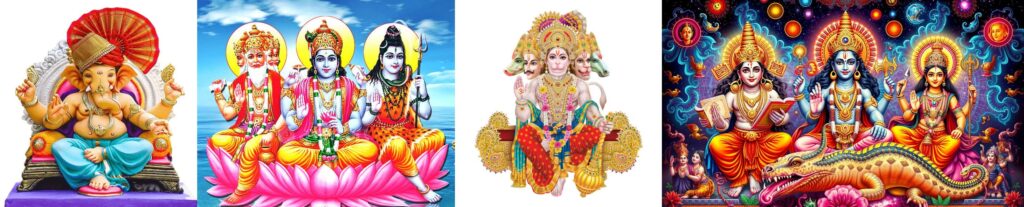
At the heart of Hindu philosophy is the idea of the divine unity behind diversity. Nearly all Hindus affirm belief in God, but that divinity is not confined to one form. The Vedas speak of the ineffable Brahman, the unchanging reality that manifests through countless deities. Thus, whether one turns to Vishnu in his avatars of Ram, Krishna, Narasimha, or Jagannath; to Shiva, the yogi who dances the cosmos into creation and dissolution; to Ganesha, the remover of obstacles; to the fierce yet compassionate Goddess Durga in her many aspects as Kali, Parvati, or Lakshmi—the worshipper is always in search of the same eternal truth. In America, where Hindus live amid a mosaic of faiths, this vision of oneness expressed through many forms resonates deeply.
In practice, Hindu devotion in the United States mirrors the ancient rhythm of Indian homes and temples. Many families perform puja each morning before an altar adorned with deities, incense, flowers, and lamps, offering prayers to their chosen ishta devata—their personal god. Women especially sustain this tradition of daily worship in households, while temples across the country provide sacred spaces where entire communities gather to celebrate festivals and rites of passage. Reincarnation, the belief that life is an eternal cycle of birth, death, and rebirth governed by karma, remains central, shaping how American Hindus understand existence in a fast-moving, materialistic society.
But Hinduism is not only a private faith; it is a public celebration of divine play, or lila. The great festivals of the Hindu calendar have crossed the ocean and taken root in American soil. Diwali, the festival of lights, symbolizes the victory of light over darkness, knowledge over ignorance, good over evil. In Indian mythology, Diwali is linked to the return of Lord Ram to Ayodhya after defeating Ravana, and to the worship of Goddess Lakshmi, who brings prosperity. In America, Diwali lights up not only homes but entire cities—New York’s Times Square, San Francisco’s Civic Center, and Dallas’s Cotton Bowl Stadium are transformed into radiant spaces where thousands gather. Families clean and decorate their homes, light oil lamps, and watch fireworks, while children learn through these rituals that light must always overcome darkness, both in the world and within the heart.
Holi, the festival of colors, is another joyful expression of devotion that has captivated not just Hindus but the wider American public. Rooted in the legends of Krishna and Radha, Holi celebrates divine love and the arrival of spring. In parks across the Bay Area, in Los Angeles, in Dallas, and even in Midwestern college towns, clouds of red, yellow, blue, and green powder fill the air as people laugh, sing, and embrace. Holi in America has become both a spiritual celebration and a bridge of cultural unity, where the philosophy of oneness—Vasudhaiva Kutumbakam, “the world is one family”—comes alive in vivid color.
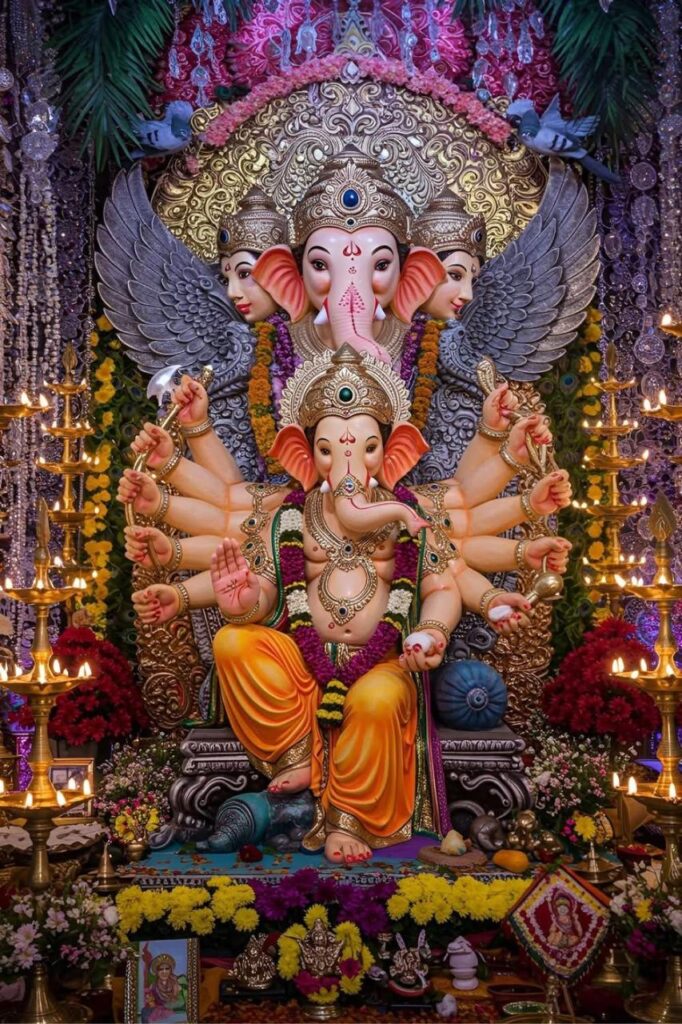
Ganesh Chaturthi, honoring the birth of Lord Ganesha, is celebrated in cities like Houston, Chicago, and New Jersey with elaborate clay idols of the elephant-headed god, adorned with flowers, sweets, and prayers. Just as in Mumbai, the idols are immersed in water at the end of the festival, reminding devotees that all forms return to the formless, that the visible world is but a passing manifestation of the eternal. Navaratri, the nine nights of worship dedicated to Goddess Durga, transforms American cities each autumn. In New Jersey, Chicago, Dallas, and Atlanta, immense halls and arenas come alive with Garba and Dandiya dances, symbolic of the cosmic dance of Shakti, the primordial energy that sustains the universe.
Every major American city where Hindus have settled has become a center of dharmic life. In the New York and New Jersey area, Edison, Iselin, and Jersey City echo with the rhythms of bhajans, Garbas, and temple bells. Diwali at Times Square draws thousands, blending Bollywood performances with spiritual prayers, while Navaratri celebrations spill over into convention centers. Chicago hosts some of the largest Navaratri events in the country, with tens of thousands dancing in unison, while its great temples like the BAPS Shri Swaminarayan Mandir and the Hindu Temple of Greater Chicago anchor community life. Houston, often called the Hindu hub of the South, is home to the Sri Meenakshi Temple, modeled after the great temple of Madurai, and The Woodlands Hindu Temple, both of which host massive Diwali celebrations. In Dallas, the annual Diwali Mela at Cotton Bowl Stadium draws over 50,000 people, one of the largest Hindu gatherings outside India.
The San Francisco Bay Area, with its thriving Indian tech community, has become another stronghold of Hindu culture. Fremont, Sunnyvale, and San Jose are home to temples and cultural associations, while San Francisco itself hosts a grand Diwali festival at Civic Center Plaza. Holi, celebrated in Bay Area parks, attracts thousands, transforming urban spaces into playgrounds of divine love. Atlanta, with its majestic BAPS Swaminarayan Mandir in Lilburn, offers spectacular Diwali fireworks, while Navaratri dances bring together people from across Georgia. Los Angeles, with its diverse Indian community, celebrates Holi in public parks and Diwali in temples, blending devotion with performance and art.
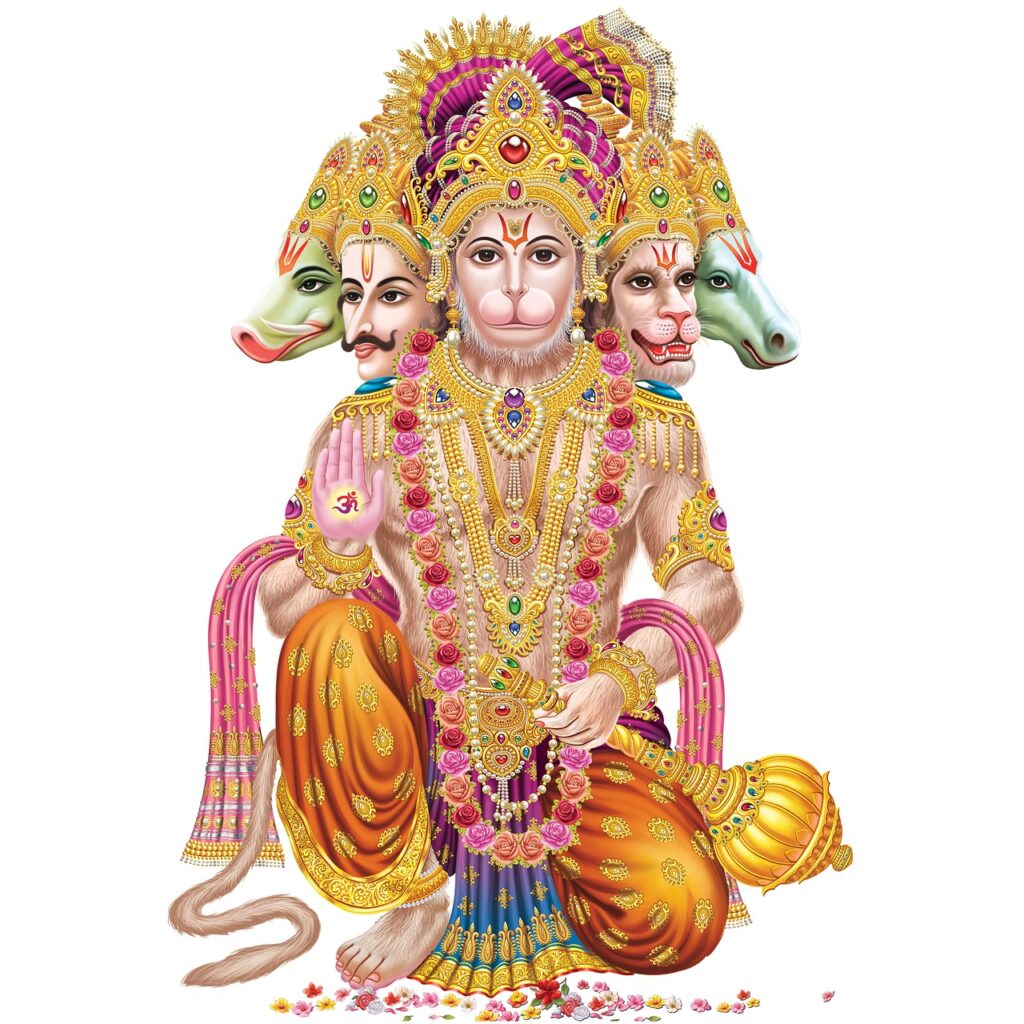
Even smaller communities—from Columbus, Ohio, to Phoenix, Arizona, to Raleigh, North Carolina—host Durga Pujas, Rath Yatras, Janmashtami plays, and Saraswati Pujas, preserving regional traditions from Bengal, Odisha, Gujarat, and Tamil Nadu. Each festival becomes a reminder of the rich tapestry of Hindu mythology: the story of Krishna lifting Govardhan Hill to protect villagers, the victory of Goddess Durga over the demon Mahishasura, the churning of the cosmic ocean that brought forth Lakshmi, and the devotion of Hanuman who leaped across the sea for Lord Ram.
In every city, the festivals are not only religious events but also cultural gatherings that bind together generations. For the older generation, they are a link to the homeland; for the younger, they are living classrooms where mythology and philosophy come alive in music, dance, theater, and ritual.
Thus, Hinduism in America is not an isolated tradition but a flourishing river of wisdom and celebration. It carries with it the eternal truths of the Upanishads—that the soul is eternal, that divinity dwells in all beings, that life is a journey toward self-realization—and expresses them in lights, colors, chants, and dances. From New York to California, from Texas to Illinois, Hindu temples and festivals stand as beacons of Sanātana Dharma, affirming that across oceans and continents, the eternal way of life continues, vibrant and unbroken.