
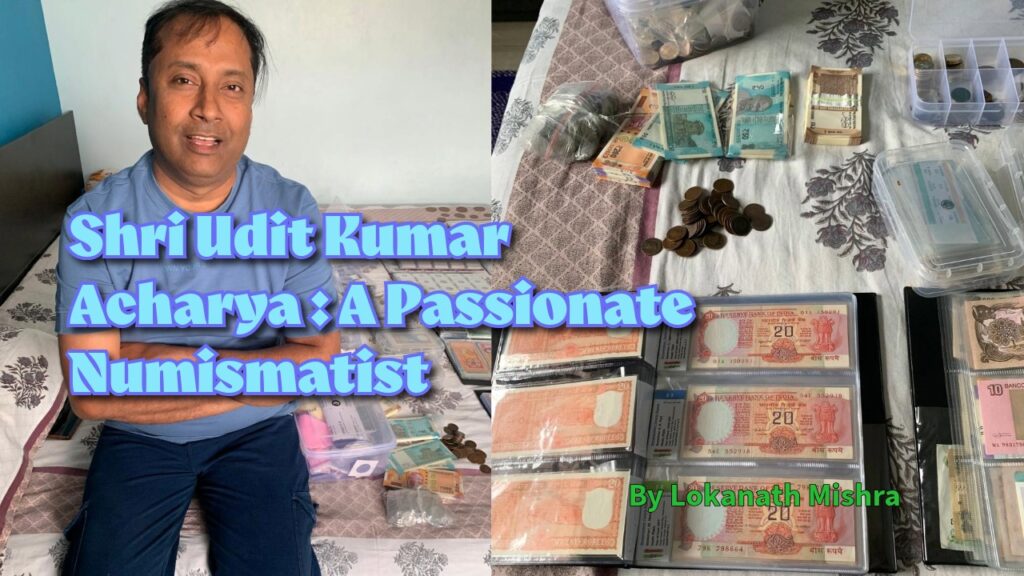
Shri Udit Kumar Acharya: A Passionate Numismatist
By Lokanath Mishra
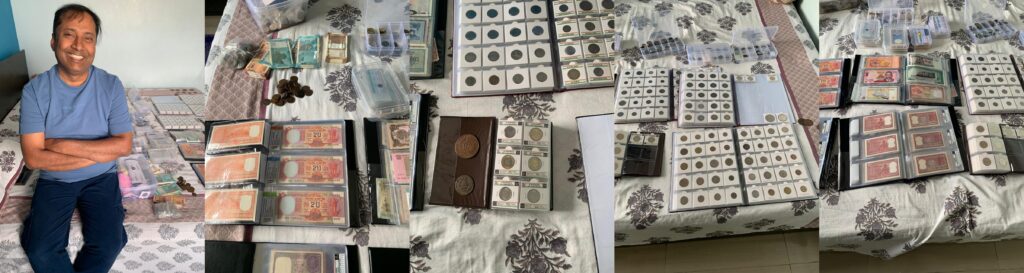
On 15 March 2026, I had the privilege of visiting the residence of Shri Udit Kumar Acharya in the industrial city of Jamshedpur. During this visit, I was astonished to witness the remarkable collection of coins that he has carefully preserved over many years. The collection consists of a vast number of coins of different periods, countries, and designs, reflecting not only dedication but also a deep appreciation for history and culture. His home, in many ways, resembles a small museum of monetary heritage.
Coin collecting, known as numismatics, is one of the most fascinating hobbies in the world. It involves the acquisition, preservation, and study of coins, medals, and paper currency. More than merely gathering coins, numismatics connects the collector with the political, cultural, and economic history of civilizations. Each coin tells a story of the era in which it was minted—about rulers, empires, trade, art, and technological progress.
A Hobby Rooted in History
The tradition of coin collecting dates back thousands of years. Even in ancient times, rulers and scholars took interest in preserving coins. The Roman leader Julius Caesar is often mentioned among early collectors of coins and historical artifacts. Later, during the Renaissance period, scholars like Francesco Petrarca (commonly known as Petrarch) revived the interest in classical coins as part of the intellectual movement that rediscovered ancient civilizations.
Today, numismatics has evolved into both a scholarly discipline and a popular hobby supported by organizations such as the American Numismatic Association, which promotes research, exhibitions, and education in the field of currency studies.
The Collection of Shri Udit Kumar Acharya
During my visit, I found that Shri Acharya has collected coins from different periods and regions. His collection includes coins that vary in design, metal composition, size, and historical significance. Some coins bear portraits of rulers, others depict national symbols, animals, temples, or important events.
Such a diverse collection reflects the patience and dedication required in numismatics. For collectors like Shri Acharya, each coin is not merely a piece of metal but a historical document representing a specific time and place. Coins often carry inscriptions, mint marks, and artistic designs that provide valuable insights into the culture and governance of their issuing authorities.
Types of Coin Collectors
Coin collectors generally fall into different categories depending on their interests and approach.
General Collectors:
Some collectors enjoy gathering coins from various countries and periods without focusing on a specific theme. Their collections represent a broad overview of world currency.
Specialized Collectors:
Many enthusiasts prefer to focus on particular themes such as:
• Coins from a specific historical period
• Coins issued by a particular country
• Coins with certain mint marks
• Rare or error coins
• Commemorative coins issued to celebrate important events
Specialization allows collectors to develop deeper expertise in a particular field.
Numismatics vs. Coin Collecting
Although the terms coin collecting and numismatics are often used interchangeably, there is a subtle difference between the two.
Coin collecting primarily refers to acquiring and preserving coins as a hobby or investment. Numismatics, on the other hand, involves the systematic study of coins and currency, including their historical background, metallurgy, design, and economic significance.
A true numismatist not only gathers coins but also studies their origins, minting techniques, and the socio-economic conditions of the time in which they were produced.
Why People Collect Coins
People engage in coin collecting for various reasons:
Historical Connection:
Coins provide a tangible link to the past. Holding a centuries-old coin allows one to imagine the people and events associated with that era.
Educational Value:
Numismatics helps individuals learn about geography, economics, politics, and art through the study of currency.
Artistic Appreciation:
Many coins feature intricate designs and craftsmanship, making them miniature works of art.
Investment Potential:
Rare coins, especially those in excellent condition, can increase significantly in value over time, making coin collecting a potentially profitable investment.
Factors Determining the Value of Coins
The value of a coin depends on several important factors:
Condition (Grade):
Coins in excellent or mint condition are highly valued because they show minimal signs of wear.
Rarity:
Coins that were minted in small numbers or have survived in limited quantities are more valuable.
Aesthetic Appeal:
Coins with attractive designs, clear inscriptions, and well-preserved surfaces tend to command higher prices.
Getting Started in Coin Collecting
For beginners interested in entering this fascinating hobby, several simple steps can help.
Start Small:
One can begin by collecting unusual coins found in everyday transactions or by focusing on coins from a specific country or theme.
Proper Storage:
Coins should be kept in protective envelopes, capsules, or albums to prevent scratches, corrosion, and environmental damage.
Avoid Cleaning Coins:
Cleaning coins can damage their surface and significantly reduce their value. Collectors generally prefer coins in their natural state.
Educate Yourself:
Modern collectors often rely on online databases such as Numista or reference catalogs like A Guide Book of United States Coins, popularly known as the Red Book, to identify coins and understand their rarity.
Understand Grading:
Learning basic grading terms such as uncirculated, proof, and circulated helps collectors evaluate the condition and value of coins.
A Hobby That Preserves Heritage
Collectors like Shri Udit Kumar Acharya play an important role in preserving fragments of history through their dedication. Their collections safeguard artifacts that might otherwise be lost or forgotten. Each coin preserved today serves as a historical witness, connecting present generations with the civilizations of the past.
My visit to Shri Acharya’s residence in Jamshedpur was truly enlightening. His impressive collection and deep interest in numismatics demonstrate how a simple hobby can transform into a meaningful pursuit of knowledge and heritage preservation. Through patience, curiosity, and dedication, he has built a collection that reflects both the history of currency and the passion of a true numismatist.
In a world increasingly dominated by digital transactions, such collections remind us of the rich legacy of physical currency and the stories engraved on every coin.