
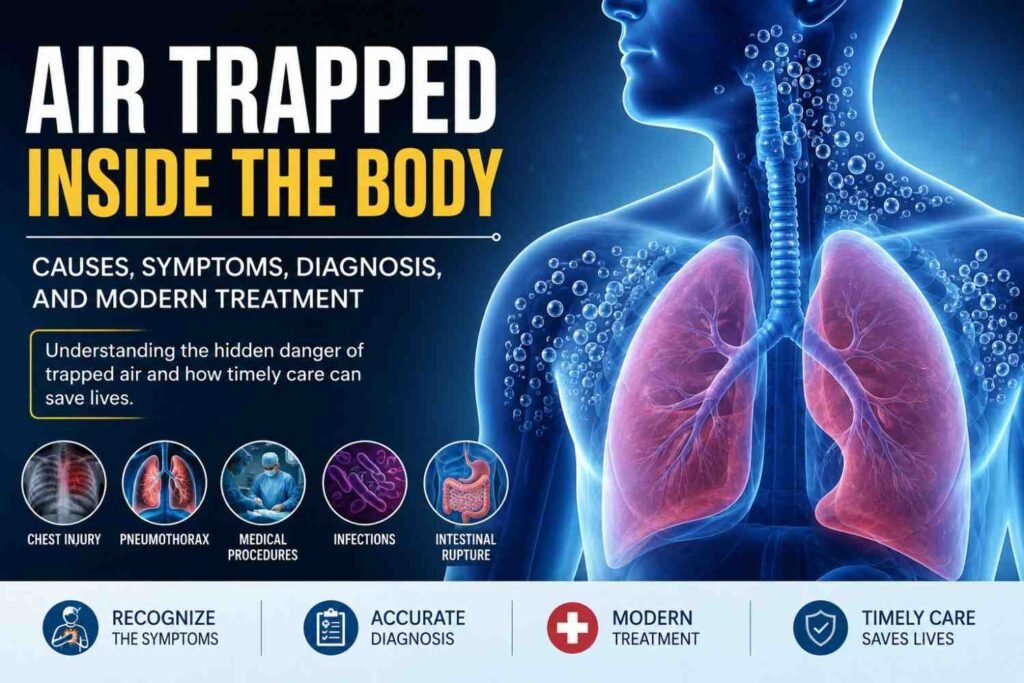
Air Trapped Inside the Body: Causes, Symptoms, Diagnosis, and Modern Treatment:
Introduction
The human body is designed in such a way that air normally remains confined to specific organs, mainly the lungs and the digestive tract. The lungs exchange oxygen and carbon dioxide through millions of tiny air sacs called alveoli, while the digestive system contains gases produced during digestion. Under normal circumstances, these gases remain within their respective organs and do not escape into surrounding tissues.
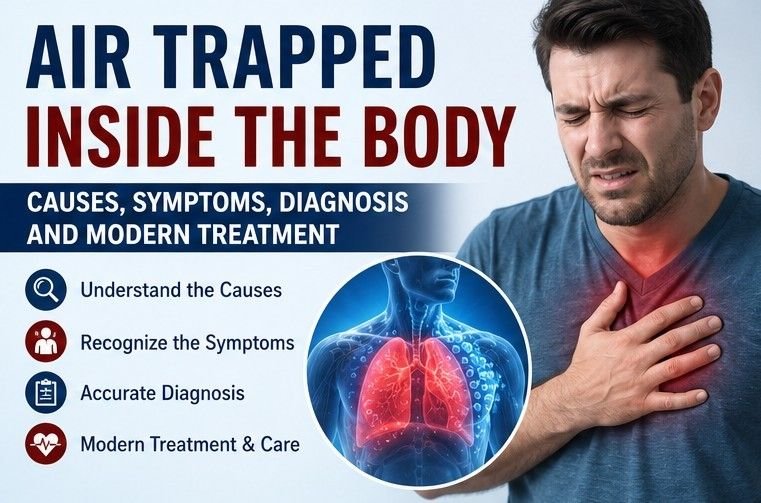
However, certain diseases, injuries, surgical procedures, or infections may allow air to leak into places where it does not belong. When this occurs, the air becomes trapped within tissues and body cavities, producing swelling, pain, and in some cases life-threatening complications. One of the most common conditions is subcutaneous emphysema, in which air accumulates beneath the skin. Although it may initially appear as simple swelling, it often signals an underlying injury that requires urgent medical evaluation.
Understanding how air becomes trapped inside the body helps patients recognize warning signs and seek timely treatment.
How Does Air Escape into Body Tissues?
The body contains several natural barriers that separate the lungs, airways, digestive tract, and surrounding tissues. When one of these barriers is damaged, air can leak through the defect and travel into nearby structures.
Air may spread beneath the skin, around the lungs, into the chest cavity, or even around the heart. Since air naturally follows the path of least resistance, it can move surprisingly far from the original site of injury. For example, a small injury inside the chest may eventually produce swelling in the neck or face.
The body gradually absorbs small amounts of trapped air. However, if the leak continues or a large quantity of air escapes rapidly, serious complications may develop.
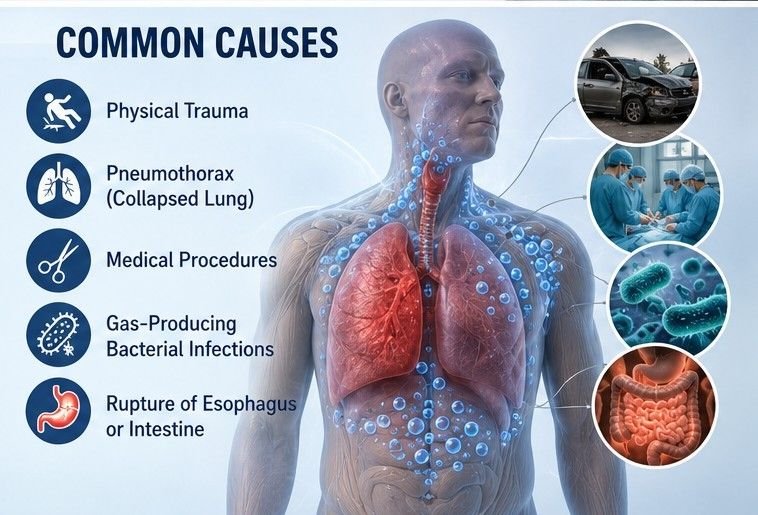
Common Causes
- Physical Trauma
Road traffic accidents, falls, sports injuries, stab wounds, gunshot injuries, or fractured ribs may puncture the lungs or major airways.
Broken ribs are particularly dangerous because their sharp edges can tear lung tissue. Escaping air then enters the chest cavity and may spread beneath the skin of the chest, neck, and face.
- Pneumothorax (Collapsed Lung)
A pneumothorax occurs when air escapes from the lung into the pleural cavity surrounding it. This causes the lung to partially or completely collapse.
Sometimes the leaking air also travels into the tissues beneath the skin, producing subcutaneous emphysema. A severe form, known as tension pneumothorax, is a medical emergency because the increasing pressure can compress the heart and the opposite lung.
- Medical Procedures
Modern medical care occasionally carries the risk of accidental air leakage.
Examples include:
- Chest surgery
- Lung operations
- Endoscopy
- Tracheostomy
- Mechanical ventilation
- Central venous catheter insertion
- Bronchoscopy
Most such complications are uncommon and are recognized promptly by healthcare professionals.
- Gas-Producing Bacterial Infections
Certain bacteria, particularly species of Clostridium, produce gas while growing inside tissues.
The gas accumulates beneath the skin and within muscles, producing swelling, severe pain, and tissue destruction. Conditions such as gas gangrene require immediate emergency treatment because they can spread rapidly and become life-threatening.
- Rupture of the Food Pipe (Esophagus)
A tear in the esophagus allows swallowed air and digestive contents to escape into the chest.
This may occur after severe vomiting, trauma, or certain medical procedures. Because digestive bacteria can enter the chest cavity, the condition is extremely serious and requires urgent surgery in many patients.
- Rupture of the Intestine
Perforation of the stomach or intestines due to ulcers, inflammatory bowel disease, injury, or cancer allows gas and intestinal contents to leak into surrounding tissues.
Without prompt treatment, severe infection and sepsis may develop.
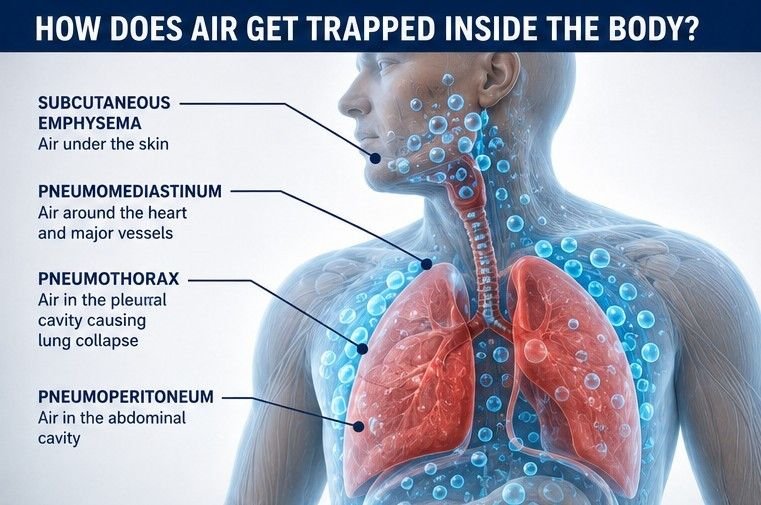
Types of Air Leakage
Depending on where the air collects, physicians describe different conditions.
Subcutaneous emphysema: Air beneath the skin.
Pneumothorax: Air inside the pleural cavity surrounding the lungs.
Pneumomediastinum: Air around the heart, windpipe, and major blood vessels.
Pneumoperitoneum: Air within the abdominal cavity.
Each condition requires careful evaluation to identify the underlying source.
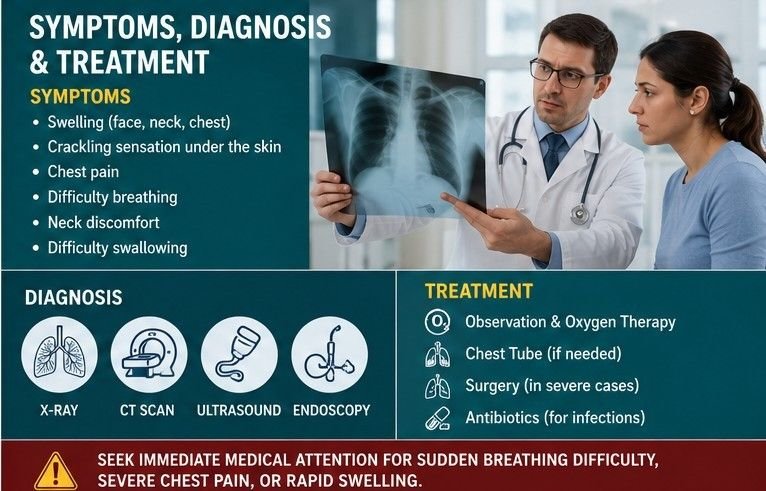
Signs and Symptoms
The symptoms depend upon both the amount of trapped air and its location.
Common symptoms include:
- Swelling of the face, neck, chest, or limbs
- Puffiness beneath the skin
- Crackling sensation (crepitus) when the swollen area is gently pressed
- Chest pain
- Difficulty breathing
- Neck discomfort
- Difficulty swallowing
- Hoarseness of voice
- Persistent cough
- Feeling of pressure beneath the skin
Patients often describe the crackling sensation as similar to pressing bubble wrap or fresh snow.
How Doctors Diagnose the Condition
Diagnosis begins with a careful medical history and physical examination.
Doctors ask about:
- Recent accidents
- Surgery
- Medical procedures
- Severe coughing
- Vomiting
- Lung disease
- Previous pneumothorax
During examination, the physician gently feels the swollen skin for crepitus.
Investigations may include:
- Chest X-ray
- CT scan
- Ultrasound
- Blood tests
- Bronchoscopy
- Endoscopy (when esophageal injury is suspected)
CT scanning is especially valuable because it can detect even small collections of air and identify their source.
Treatment
Treatment depends upon the underlying cause rather than the trapped air itself.
Observation
Small collections of air without ongoing leakage often disappear naturally over several days as the body gradually absorbs the gas.
Oxygen Therapy
Breathing high-concentration oxygen may accelerate the absorption of trapped air in selected patients.
Chest Tube
If pneumothorax is present, doctors may insert a chest drain to remove air from around the lung and allow it to re-expand.
Surgery
Major injuries involving the lungs, esophagus, trachea, or intestines often require surgical repair.
Antibiotics
When infection is responsible, powerful antibiotics are essential. Severe gas-forming infections may also require emergency surgery to remove infected tissue.
Possible Complications
If untreated, trapped air may lead to:
- Progressive breathing difficulty
- Lung collapse
- Compression of the heart and major blood vessels
- Severe infection
- Septic shock
- Multi-organ failure
- Death in severe untreated cases
Fortunately, prompt diagnosis and appropriate treatment usually result in an excellent recovery.
Prevention
Many cases cannot be prevented completely, but the risk can be reduced by:
- Wearing seat belts while travelling
- Using protective equipment during sports
- Seeking prompt medical care after chest injuries
- Following medical advice after surgery
- Proper management of chronic lung diseases
- Early treatment of severe infections
- Avoiding smoking, which increases the risk of spontaneous pneumothorax
When Should Immediate Medical Attention Be Sought?
Anyone experiencing the following symptoms should seek emergency medical care immediately:
- Sudden difficulty breathing
- Severe chest pain
- Rapidly increasing swelling of the neck or face
- Bluish discoloration of lips or fingers
- Loss of consciousness
- Swelling following chest injury or surgery
- High fever with rapidly spreading swelling and severe pain
Early treatment can prevent serious complications and may save life.
Conclusion
Air trapped within body tissues is not a disease in itself but a warning sign of an underlying medical problem. It may result from trauma, lung disease, surgical procedures, ruptured internal organs, or serious bacterial infections. While small amounts of trapped air may resolve spontaneously, extensive air leakage can rapidly become life-threatening.
Public awareness of this condition is important because early recognition, timely medical evaluation, accurate diagnosis, and appropriate treatment greatly improve outcomes. Modern imaging techniques, emergency medicine, surgery, and intensive care have significantly increased survival rates for patients with these potentially dangerous conditions.
Understanding the warning signs and seeking prompt medical attention remain the most effective ways to prevent complications and ensure a successful recovery.