
Amsterdam’s Red Light District – A Night of Curiosity, Contradictions, and Reflection:
By Lokanath Mishra, MA, LLB, IRS (Retired)
The evening sky over Amsterdam slowly turned crimson as our coach rolled into the heart of one of Europe’s most famous cities. Throughout our European tour, we had admired snow-covered mountains in Switzerland, medieval castles in Germany, and magnificent churches in Italy. Yet everyone in the coach seemed unusually curious about one destination—the world-famous Red Light District of Amsterdam.
For decades I had read about this mysterious place in newspapers, magazines, and travel books. Some described it as a symbol of personal freedom; others criticized it as evidence of moral decline. As our guide announced that we were approaching the district, silence spread through the bus. Every traveller wanted to witness with their own eyes what they had only imagined before.
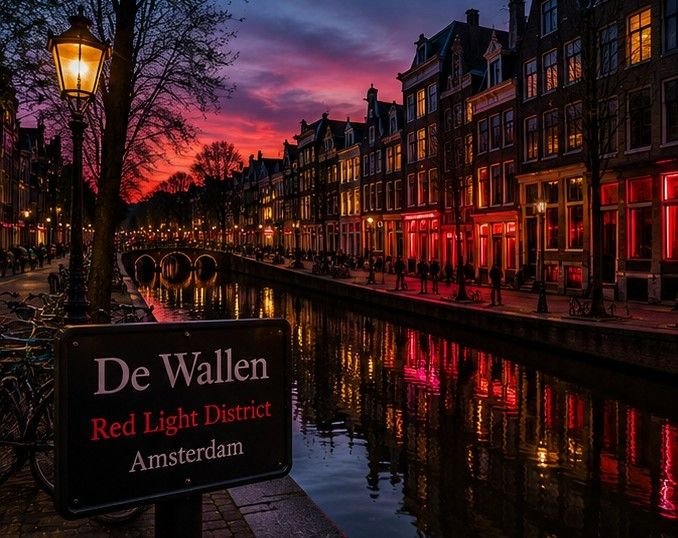
The Red Light District, known locally as De Wallen, lies in the oldest part of Amsterdam. Surprisingly, it is not merely a place associated with prostitution. The narrow streets are surrounded by centuries-old buildings, peaceful canals, historic bridges, restaurants, cafés, souvenir shops, museums, churches, and residential houses. It is a strange combination of medieval heritage and modern commerce.
Walking through the district during daylight gave us a completely different impression from what we had expected. The canals reflected the old Dutch houses standing shoulder to shoulder. Tourists quietly crossed the bridges while bicycles moved effortlessly through the narrow streets. Shopkeepers arranged their merchandise, and local residents carried on with their everyday routines.
The atmosphere felt almost ordinary.
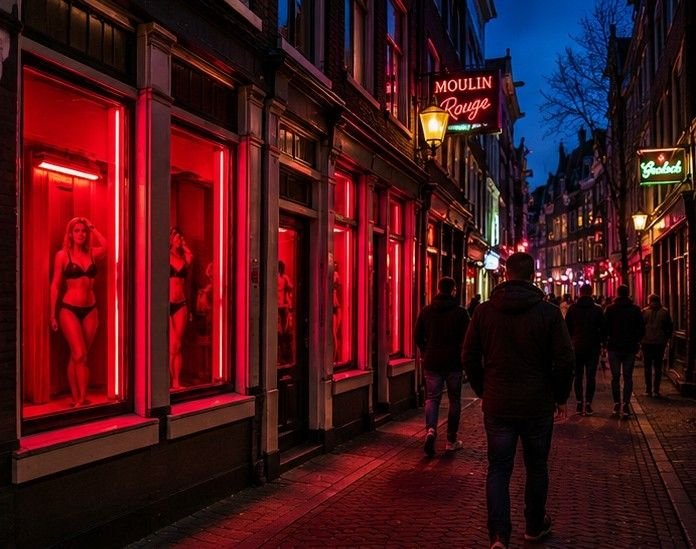
Only occasionally would one notice illuminated windows with red curtains where women quietly waited behind the glass. Sometimes a woman would gently tap on the window or smile at passers-by who paused for a moment. There was no loud advertising, shouting, or aggressive behaviour. Everything appeared surprisingly calm and controlled.
Our guide explained that the district has developed over several centuries. Amsterdam was one of Europe’s busiest ports during the seventeenth century, known as the Dutch Golden Age. Sailors from every corner of the world arrived after spending months at sea. As commerce expanded, businesses catering to sailors also emerged nearby. Gradually, authorities chose to regulate rather than completely prohibit prostitution, believing that legal oversight could provide better protection for workers, reduce criminal influence, and improve public safety.
Today the district functions under strict Dutch laws. Many activities are regulated, health standards are monitored, taxes are collected, and police regularly patrol the area. Contrary to popular imagination, the Red Light District is generally considered safe for visitors. Uniformed police officers and private security personnel remain visible throughout the evening, ensuring that tourists and residents can move freely.
As daylight faded, the transformation began.
One by one, the famous red neon lights illuminated the windows. Their reflections danced across the calm canal waters, giving the ancient streets an almost theatrical appearance. Crowds steadily increased. Visitors speaking dozens of different languages wandered through the narrow lanes, cameras in hand—although photography of the workers behind the windows is strictly prohibited out of respect for their privacy.
The district reached its liveliest atmosphere around eleven o’clock at night. Music floated from nearby cafés. Restaurants remained crowded. Canal boats silently passed beneath old stone bridges while thousands of visitors explored the neighbourhood. The activity continued until around two or three in the morning before gradually fading into silence.
As we walked, our guide explained how interactions generally begin. If a visitor shows interest, a worker may make eye contact, smile, or lightly tap on the window. Should someone approach the door, she may open it slightly and ask a simple question to determine whether the visitor is genuinely interested. Conversations remain brief, and any services, prices, or conditions are discussed privately. Everything operates within a regulated framework intended to maintain order and safety.
Our group consisted of travellers from several countries. Some observed quietly, others discussed social issues, while a few simply admired the unique urban landscape. Nobody behaved disrespectfully. It was evident that this place attracted people not only because of curiosity but also because it represented a social system very different from that of many other nations.
As an Indian visitor, I found myself comparing two very different philosophies.
In India, prostitution exists but generally remains hidden, often accompanied by exploitation, poverty, social stigma, and criminal activity. In the Netherlands, the government has chosen regulation rather than concealment, arguing that legal oversight offers greater protection for workers and improves public health and public order. Whether this approach is morally preferable remains a matter of debate, but understanding it requires looking beyond stereotypes.
The district also reminded me that no society is entirely perfect. Every nation develops solutions based on its own history, culture, and legal traditions. What appears acceptable in one country may be unacceptable in another. A traveller should therefore observe with an open mind while remaining respectful of local customs and laws.
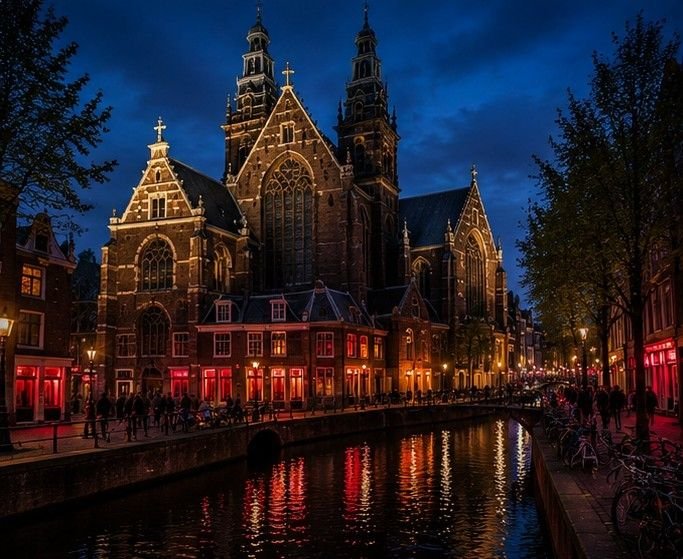
Beyond its famous reputation, Amsterdam’s Red Light District is also a remarkable historical neighbourhood. Ancient churches stand only a short distance from the illuminated windows. Museums preserve the city’s maritime history. Elegant canals, recognised as a UNESCO World Heritage Site, continue to define Amsterdam’s beauty. This coexistence of sacred buildings, historical architecture, commercial activity, and modern tourism creates one of the most unusual urban landscapes in the world.
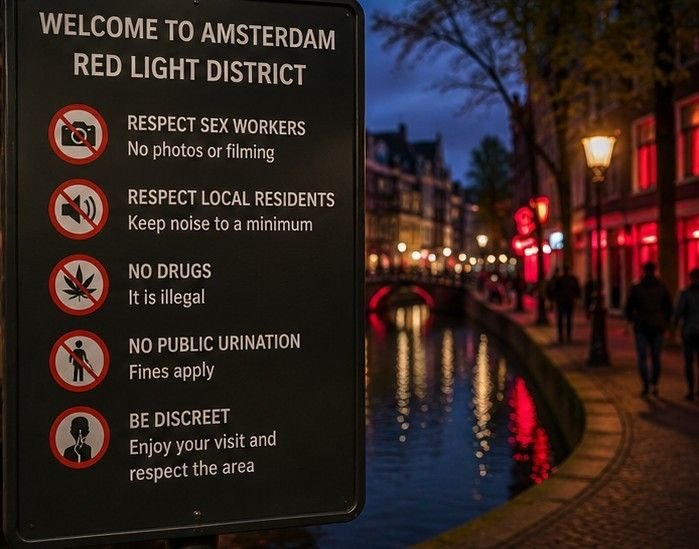
As midnight approached, we slowly returned towards our coach. The reflections of red lights shimmered across the canals while the bells of an old church echoed through the night. The contrast was unforgettable—a city where centuries of history, commerce, liberty, and controversy coexist within just a few narrow streets.
Travelling through Europe had shown us magnificent mountains, castles, museums, and cathedrals. Yet Amsterdam’s Red Light District offered a different lesson. It challenged assumptions, encouraged thoughtful observation, and reminded us that understanding another society often begins not with judgment, but with curiosity.
Long after we left Amsterdam behind, the image of those glowing canals and ancient streets remained vivid in my memory—not merely because of their reputation, but because they revealed how history, law, culture, and human nature can intersect in ways both fascinating and complex.