

Ashes of Illusion: ( Part-1)
By Lokanath Mishra
Rajesh had always been the kind of man people admired quietly. Not because he sought attention, but because his life itself was a reflection of discipline, intellect, and simplicity. At thirty-two, he was already an assistant professor at a reputed university. His lectures were clear, his demeanor humble, and his life—at least on the surface—perfectly aligned with the ideals he had grown up with.
He came from a family where education was not just a means to success but a way of life. His mother, a highly accomplished academic, had served as the principal of a respected junior college. She was known not only for her intelligence but for her integrity. His father, a Sanskrit scholar of rare depth, had once been a vice chancellor. Even in retirement, he immersed himself in ancient texts—Sanskrit, Greek, Latin—finding joy in wisdom rather than wealth. Rajesh’s uncle taught at Oxford, adding another layer of prestige to the family.
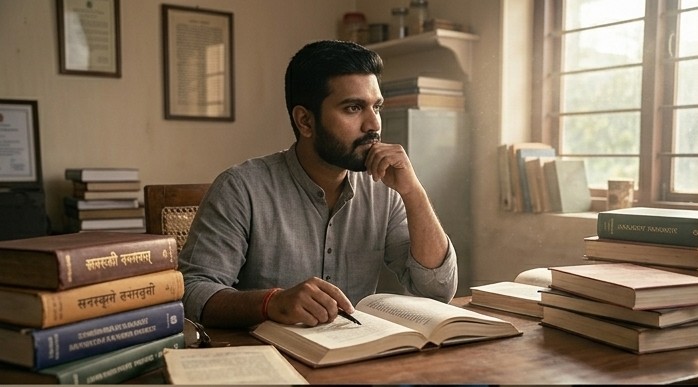
In such an environment, Rajesh had grown into a man of thought. He believed in ideas, in philosophy, in meaning. He believed that life was meant to be understood, not merely consumed.
So when he fell in love, he did so completely.
She was his colleague—another assistant professor, articulate, confident, and seemingly aligned with his intellectual world. She had studied abroad and carried with her a certain sophistication that Rajesh found intriguing. Their conversations began with academic discussions but slowly turned personal. She spoke of traveling the world, of museums, of experiences that shape the mind. Rajesh admired that.
Her family echoed similar values. They spoke eloquently about how truly educated people rise above materialism. They emphasized that money should never dominate life, that experiences, knowledge, and exposure define a person.
Rajesh believed them.
Against mild hesitation from his own family, he went ahead with the marriage. It was grand—far grander than what his parents would have preferred. He spent his savings, borrowed from friends, and even took loans. To him, it wasn’t an expense—it was an investment in love, in a shared future.
The first few months were filled with adjustment, as all marriages are. But beneath the surface, differences began to emerge.
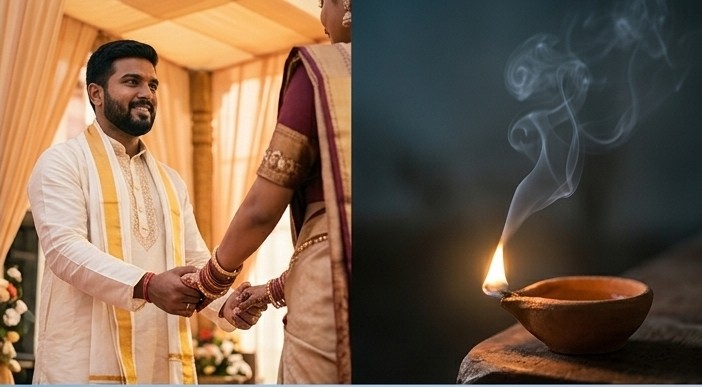
She loved travel—especially international travel. Even short holidays, she insisted, should be abroad. Europe, London, new cultures, luxury experiences. Rajesh, on the other hand, found peace in spiritual journeys—temples, pilgrimage sites, quiet places where the mind could rest.
At first, they tried to accommodate each other. But gradually, accommodation turned into silent disagreement, and disagreement into emotional distance.
Six months and ten days after their wedding, she left for her parental home.
At first, Rajesh thought it was temporary. He called her repeatedly. He tried to reason, to understand what had gone wrong. His parents reached out respectfully. But she did not return.
Days turned into weeks.
Weeks into months.
Left with no clarity, Rajesh eventually sent a legal notice, requesting her to return and resume marital life. It was not an act of aggression—it was an act of desperation.
What followed shattered him.
Instead of reconciliation, a police complaint was filed against him and his family. Allegations—serious ones—were made. Threats of a dowry case loomed over them, despite there being no such demand or exchange.
Rajesh’s family, once respected and dignified, now found themselves entangled in legal fear and social stigma.
Her father’s words were harsher than the accusations. He openly challenged them, threatening further legal action if they pushed for reconciliation. It wasn’t just conflict anymore—it had become intimidation.
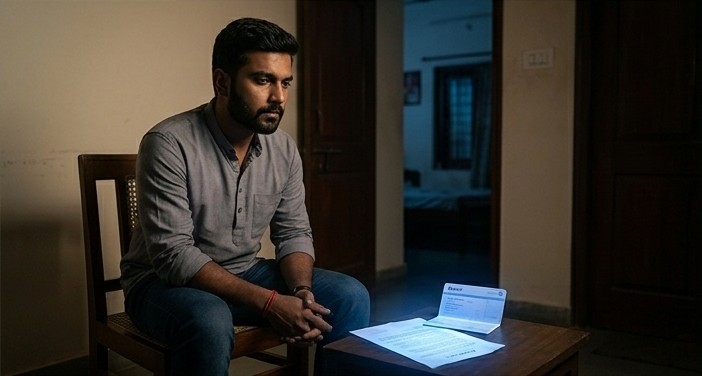
Two years passed.
She never returned.
She never filed for divorce either.
In that suspended state, Rajesh lived a life that felt neither married nor free.
Financially, he struggled. The loans from the wedding remained. The EMIs continued—for items she had taken with her: jewelry, expensive gadgets, luxuries that now felt like symbols of betrayal.
Emotionally, he withdrew.
The vibrant professor became quieter. He fulfilled his duties at the university, but beyond that, he turned inward. Spirituality, once a personal interest, became his refuge. He spent time reading scriptures, meditating, seeking answers not from people, but from within.
Meanwhile, news reached him indirectly.
She had traveled abroad multiple times—especially to the UK. The same person who had once spoken of intellectual values seemed now immersed in a different life altogether. Rumors of a relationship began to circulate—stories Rajesh neither wanted to believe nor investigate.
He had stopped chasing truth.
Because truth, he realized, does not always bring peace.
One evening, sitting alone in his modest home—the same home he had moved into after distancing himself from the chaos—Rajesh reflected on everything.
Was it love?
Or was it illusion?
He remembered her words—about educated people valuing experiences over money. But what he had witnessed felt different. It wasn’t about rejecting materialism—it was about prioritizing a lifestyle that he could neither sustain nor believe in.

And perhaps, he thought, the difference wasn’t education.
It was values.
Education had brought them together.
Values had torn them apart.
Rajesh closed his eyes.
For the first time in years, he felt something unfamiliar—not anger, not sorrow, but clarity.
Some relationships are not meant to last.
Some lessons are not meant to be gentle.
And some illusions must burn completely…
…before a person can rise from their ashes.
( to be continued in part-2)
