
By Lokanath Mishra, MA, LLB, IRS ( Rtd.)
In London, during this year 2024,
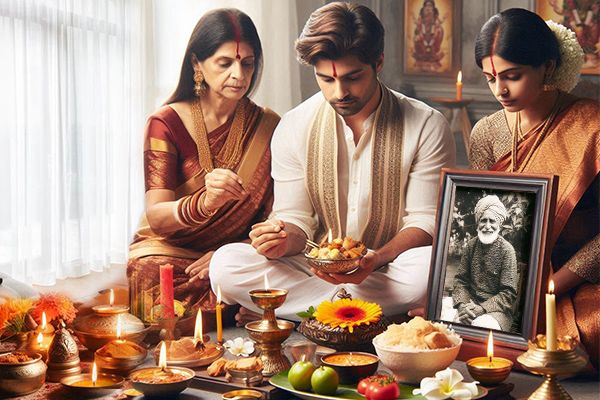
Pitru Paksha will commence on September 18 and conclude on October 2. As the month of September approaches, Hindu families across United Kingdom prepare for the annual observance of Mahalya Shradh or Pitru Paksha, Shraddha. For Hindus residing in London, this is a significant ritual period dedicated to honouring and paying homage to one’s ancestors.: For them Shraddha is a mandatory post ritual performed to pay homage and offer oblations to one’s ancestors, particularly parents and forefathers. Mahalya shraddha is performed during Pitru Paksha, a 16-day period in the Hindu calendar.
Mahalya Shraddha and also annual shraddha on the days of death anniversary of parents typically involves:
Pind Daan: Offering rice balls (pind) to ancestors.
Tarpan: Offering water and sesame seeds to ancestors.
Brahmin Bhojan: Feeding Brahmins and poor people.
Mantra recitation: Chanting sacred mantras to invoke ancestors
Puja: Performing worship and offering flowers, fruits, and other items.
Shraddha is performed to:
Show respect and gratitude to ancestors. Offer solace and peace to their souls . Seek their blessings and guidance . Ensure the well-being and prosperity of the family.
There are different types of Shraddha, including:
- Annual Shraddha: Performed on the day of death anniversary of parents. ( both father and mother)
- Mahalya Shraddha: Performed during Pitru Paksha.
- Papaya Shraddha: Performed on the day of Diwali.
- Patha / Preta Shraddha: Performed in cremation ground at the time of funeral on death of parents. ( father and mother)
( there are also several other shraddha such as Dasah shraddha, ghat shraddha, bara shraddha, asti bisrjan shraddha, Gaya shraddha etc)
For Hindus residing in London,
Shraddha is an essential aspect of Hindu culture, emphasizing the importance of honoring one’s heritage and ancestors.According to them, Shards in Pitru Paksha, is a 16 -day period in the Hindu lunar calendar during which people pay tribute to their departed ancestors. This period typically falls in the lunar month of Bhadrapada, starting from the Purnima (full moon) day and ending on the Amavasya (new moon) day.
Pitru Paksha holds immense significance in Hindu culture as it is believed that during this period, the souls of the ancestors come down to the earthly realm and accept offerings from their descendants. The ritual of Shradh is performed to express gratitude and seek the blessings of the deceased ancestors, ensuring their peace in the afterlife. It is also believed that performing Shradh rites during this period brings prosperity, good health, and peace to the family.
The rituals of Shradh in London generally include the following:
A. Tarpan: This is the offering of water mixed with black sesame seeds, barley, and flowers to the ancestors.
B. Pinda Daan: A ritual where offerings of rice, barley flour, and black sesame seeds are made in the form of round balls (pindas) to the ancestors.
C. Basudeba Puja, also known as Vasudeva Puja, is a significant ritual performed during Shraddha ceremonies in Hindu tradition. Basudeba is another name for Lord Krishna, who is considered the ultimate reality and the ancestor of all beings.
During Shraddha, Basudeba Puja is performed to:
Honor Lord Krishna as the supreme ancestor. Seek His blessings and guidance . Offer oblations to ancestors through Him . The ritual typically involves:
Worshiping Lord Krishna with flowers, fruits, and other offerings . Reciting mantras and chanting His names .Offering Tarpan (water and sesame seeds) to ancestors through Lord Krishna . Performing Pind Daan (offering rice balls) and other Shraddha rituals . Basudeba Puja is believed to:
Please ancestors and help them attain peace . Ensure the well-being and prosperity of the family . Strengthen the bond between ancestors, Lord Krishna, and the performers. By performing Basudeba Puja during Shraddha, individuals honor their ancestors, seek divine blessings, and connect with the ultimate reality.
D. Feeding Brahmins: It is considered auspicious to feed Brahmins and the poor during this period as a way to honor the ancestors.
R. Observing Fasts: Many devotees in London observe a fast on the day they perform the Shradh ritual to show respect and devotion to ancestors .
Important dates of Pitru Paksha 2024 in 🏴 United Kingdom: Pitru Paksha will commence on September 18 and conclude on October 2.
Here are the key dates for Shradh in 2024:
Pratipada Shradh: September 18
Panchami Shradh: September 22
Ashtami Shradh: September 25
Mahalaya Amavasya: October 2
Mahalaya Amavasya is considered the most significant day of Pitru Paksha, marking the end of the period. Many people believe that on this day, their ancestors leave the earthly realm and return to the afterlife, having accepted the offerings. According to Hindus residing in London:
While Shradh rituals are traditionally performed at pilgrimage sites like Gaya, Puri, Jajpur,near Godavari, Allahabad, Haridwar, and Varanasi, all most all Hindus families of London conduct these rites at temples of United Kingdom. Some of them perform in their 🏠 home . To perform Shradh at home, one should:
Prepare a clean space for the rituals, ideally in the southern part of the house.
Perform Tarpan and Pind Daan as per the guidance of a knowledgeable priest.
Offer food, especially kheer, puris, and seasonal fruits, to Brahmins or the needy.
Conclude the ritual by praying for the peace of the ancestors’ souls.
Shradh or Pitru Paksha is a deeply spiritual time for Hindu families, offering an opportunity to connect with their heritage and seek the blessings of their ancestors. As the 2024 Shradh period approaches, devotees across the world are gearing up to perform these sacred rites with devotion and reverence. According to the Hindus residing in United Kingdom, Tarpan (तार्पण) is a ritual offering made to ancestors, particularly during Shraddha ceremonies. The term “Tarpan” comes from the Sanskrit words “tār” meaning “to cross” and “pan” meaning “to satisfy”.
Tarpan involves offering water, sesame seeds, and sometimes milk, honey, or ghee (clarified butter) to ancestors. The offerings are usually made with the following intentions:
- To quench the thirst of ancestors
- To satisfy their hunger
- To provide them with nourishment for their journey
The ritual of Tarpan typically involves:
- Filling a cup or vessel with water
- Adding sesame seeds and other offerings
- Reciting mantras and invoking ancestors
- Pouring the offering onto the ground or into a sacred fire
Tarpan is believed to:
- Help ancestors attain peace and liberation
- Ensure their blessings and guidance for the family
- Strengthen the bond between ancestors and descendants
Tarpan is an essential part of Hindu rituals, especially during Pitru Paksha, Diwali, and other ancestor-related ceremonies. According to the Hindus of United Kingdom, On the day of Diwali, Shraddha is known as “Papaya Shraddha” or ” Bad Badia Shraddha”. It is a special ritual performed to honor and pay homage to one’s ancestors .
During Diwali, Shraddha is performed to:
- Welcome ancestors: It is believed that during Diwali, the gates of heaven and hell are open, and ancestors return to earth to bless their descendants.
- Offer food and light: Shraddha involves offering food, water, and light (diyas) to ancestors, symbolizing the lighting of their path and providing nourishment for their journey.
- Seek blessings: Performing Shraddha on Diwali is believed to invoke the blessings and guidance of ancestors, ensuring the well-being and prosperity of the family.
The rituals performed during Shraddha on Diwali include:
- Offering Tarpan (water and sesame seeds)
- Performing Pind Daan (offering rice balls)
- Lighting diyas (earthen lamps)
- Offering food and water to ancestors
- Reciting mantras and performing puja (worship)
By performing Shraddha on Diwali, individuals honor their ancestors, seek their blessings, and ensure their own spiritual growth and well-being.
According to the Hindus of UK , In Hindu tradition, the last rites, also known as Antyesti or Antim Sanskar, are performed on the day of death to ensure the deceased person’s soul attains peace and liberation. Here’s an overview of the rituals:
- Preparing the body:
- Washing and dressing the body in clean clothes
- Applying vibhuti (sacred ash) or sandalwood paste
- Performing rituals:
- Reciting mantras and chanting sacred verses
- Offering tarpan (water and sesame seeds) to ancestors
- Performing pind daan (offering rice balls) for the deceased
- Cremation:
- Taking the body to the cremation ground
- Lighting the funeral pyre
- Offering ghee (clarified butter) and samidha (wood) to the fire.
- Post-cremation rituals:
- Collecting ashes and bones (asthi) from the cremation ground.
- Preta Agni to be lightened and Preta bhoja to be offered to the dead person from first day to 10.day – On fourth day, seventh day and ninth day offer preta tarpan along with Preta pinda dan in a pool or riverside. On tenth day offer last Preta tarpan and Preta pinda dan in a pool or riverside . Take bath in river or pool along with relatives and friends and all are to wear new clothes. Offer foods to friends , relatives and Brahmins. On eleventh day puskar puja is to be conducted along with Kirtan. Foods are to be served to Brahmins, friends and relatives. On 12th day, tarpan and bara shraddha are to be conducted.
Finally Immers the asthi in a sacred river or sea duly
Performing shraddha rituals for the deceased .
- Final rites: Generally final rites for the deceased is to be completed on 12th day duly
- Offering food and water to the deceased
- Reciting mantras and performing puja (worship)
- Seeking blessings from elders and priests . But some people are completing the last ( final) rites on the day of first death anniversary duly conducting tarpan and first anniversary shraddha.
These rituals vary slightly depending on regional traditions and community customs. The primary goal is to ensure the deceased person’s soul transitions peacefully and attains liberation (moksha).
According to Hindus of London,
Shraddha (श्राद्ध) is a Sanskrit word that means:
- Faith
- Devotion
- Loyalty
- Respect
- Homage
In the context of Hindu rituals, Shraddha refers to the act of paying homage and offering oblations to one’s ancestors, particularly parents and forefathers.
Performing Shraddha is considered necessary for several reasons:
- Honoring ancestors: Shraddha shows respect and gratitude towards ancestors for their contributions to the family lineage.
- Seeking blessings: Shraddha is believed to invoke the blessings and guidance of ancestors, ensuring the well-being and prosperity of the family.
- Liberating ancestors: Shraddha helps the souls of ancestors attain peace and liberation, allowing them to move forward in their spiritual journey.
- Maintaining family lineage: Shraddha helps maintain the continuity of the family lineage and ensures the well-being of future generations.
- Spiritual growth: Performing Shraddha is believed to bring spiritual growth and self-purification to the performer.
While performing Shraddha is considered important in Hindu tradition, it is a mandatory ritual. It is highly recommended as a way to show respect and gratitude towards one’s ancestors and to seek their blessings.