
My Fifteen-Day Grand Tour of Europe
Chapter 30: Reflections and Conclusions – Lessons from My Fifteen-Day Journey Across Europe
By Lokanath Mishra, M.A., LL.B., IRS (Retired)
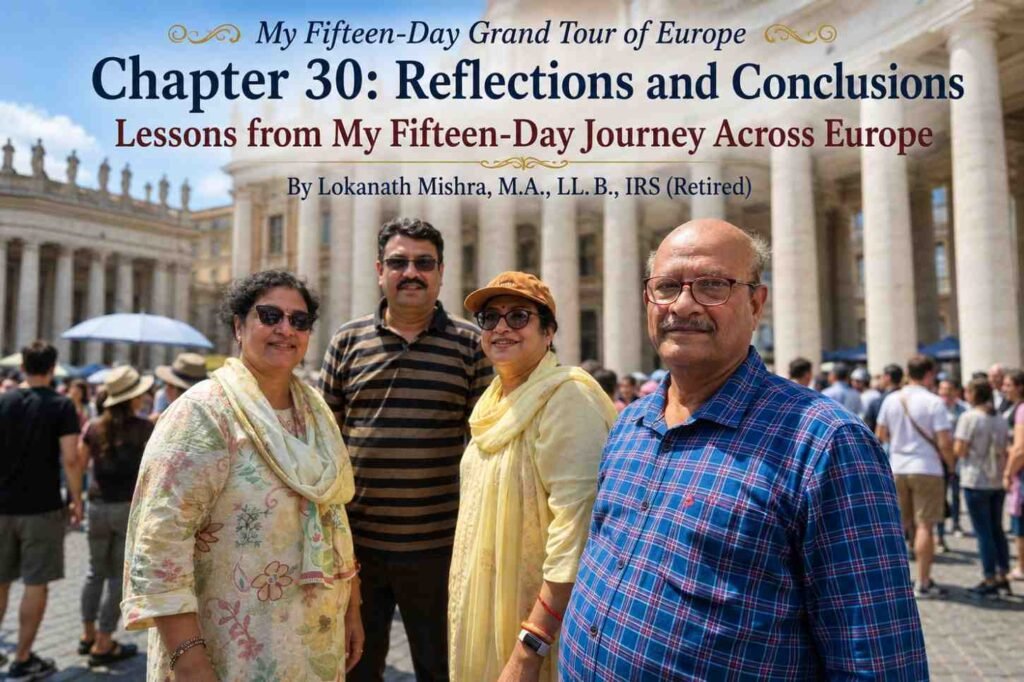
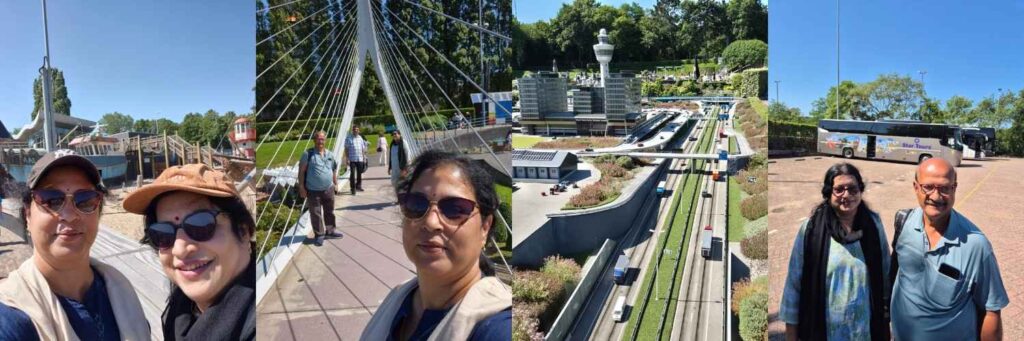
My fifteen-day tour of Europe, beginning from London and covering Belgium, the Netherlands, Germany, Switzerland, Liechtenstein, Austria, Italy, France and Vatican City, was one of the most enriching experiences of my life. Accompanied by my wife Basanti Mishra, my brother-in-law Basant Mishra and his wife Puspita Mishra, I had the opportunity to witness some of the greatest achievements of human civilisation. Before beginning the tour, we had also stayed in London with our daughter and niece and visited many important places in the United Kingdom.
This journey was not merely a sightseeing tour. It became a valuable lesson in history, geography, science, engineering, agriculture, culture, governance and international cooperation. Every country we visited had its own unique identity, yet together they reflected the remarkable development of Europe over many centuries.
Europe – A Continent of Diversity
Europe is one of the world’s seven continents. It consists of about 44 sovereign countries (the exact number varies depending on how transcontinental states are counted).
Its total population is approximately 750 million people.
Although Europe occupies a relatively small geographical area compared with Asia or Africa, it has played an extraordinary role in shaping modern civilisation.
Many important developments originated in Europe, including:
- Modern science.
- The Industrial Revolution.
- Representative democracy in many countries.
- Modern banking.
- Constitutional government.
- International law.
- Modern universities.
- Numerous artistic and literary movements.
⸻
Why Have Many European Countries Become Prosperous?
During our journey, one question repeatedly came to my mind: Why have many European countries become so prosperous?
The answer lies in a combination of historical and modern factors.
- Education
European countries have invested heavily in education for centuries.
Universal schooling, technical education, universities and scientific research have created highly skilled populations.
Knowledge has been transformed into economic development.
- Scientific Research
Governments, universities and industries cooperate closely in scientific innovation.
Research leads to new technologies, which in turn improve industries, healthcare, agriculture and transportation.
- Rule of Law
Most European countries maintain stable legal systems.
Businesses and citizens generally have confidence that laws will be fairly enforced.
This encourages investment and long-term planning.
- Skilled Workforce
Workers receive professional training and use advanced machinery and technology.
Higher productivity enables industries to remain globally competitive.
- Infrastructure
Throughout our tour, we observed:
- Excellent highways.
- High-speed railways.
- Modern airports.
- Long tunnels.
- Strong bridges.
- Efficient public transport.
Such infrastructure supports both industry and tourism.
- Environmental Protection
European nations generally enforce environmental regulations while continuing economic development.
Beautiful forests, rivers and lakes are carefully protected.
⸻
Agriculture in Europe
One of the most impressive aspects of Europe was its highly organised agriculture.
Even comparatively small farms produce large quantities of crops because farmers employ:
- Scientific cultivation.
- Mechanised farming.
- Modern irrigation.
- Improved seeds.
- Soil testing.
- Fertilisers used according to scientific recommendations.
- Cold storage.
- Efficient transport.
Major agricultural products include:
- Wheat.
- Barley.
- Corn.
- Potatoes.
- Sugar beet.
- Grapes.
- Apples.
- Pears.
- Olives.
- Tomatoes.
- Dairy products.
- Cheese.
In Switzerland, Germany and Austria we also observed beautiful grasslands supporting dairy farming.
Industrial Development
Europe became the birthplace of the Industrial Revolution during the eighteenth century.
Mechanisation transformed production from manual labour to factory manufacturing.
Today European industries include:
- Automobiles.
- Aircraft.
- Pharmaceuticals.
- Machinery.
- Chemicals.
- Electronics.
- Precision instruments.
- Food processing.
- Luxury goods.
- Renewable energy technologies.
Close cooperation between industry, research institutions and governments has contributed significantly to economic growth.
⸻
Comparison with India
As an Indian traveller, I naturally compared Europe with my own country.
India and Europe each possess remarkable strengths.
India is one of the world’s oldest civilisations with an extraordinary cultural heritage, rich traditions, spiritual philosophy, democratic institutions and a large, youthful population. India has achieved impressive progress in areas such as information technology, pharmaceuticals, space research, digital payments and infrastructure.
Many European countries, by contrast, have smaller populations and, in general, higher per-capita incomes. Their public services, transport systems and urban planning are often highly developed. Their long investment in education, public health and industrialisation has contributed to high living standards.
India’s diversity, scale and development challenges are very different from those of most European nations. As India continues to invest in education, infrastructure, manufacturing and innovation, it is steadily strengthening its position as one of the world’s leading economies.
Rather than viewing the two regions as competitors, I believe each can continue to learn from the other’s experiences.
⸻
Why Is Europe Advanced?
Europe’s advancement did not happen overnight.
It resulted from centuries of:
- Scientific discoveries.
- Industrial development.
- Educational reforms.
- Political evolution.
- International trade.
- Technological innovation.
- Investment in research.
- Skilled labour.
Modern Europe continues to invest heavily in innovation while preserving its historical and cultural heritage.
⸻
The European Union
During our journey, we crossed several national borders with remarkable ease.
This is possible because many European countries belong to the European Union (EU), an economic and political partnership established to promote:
- Peace.
- Free movement.
- Trade.
- Economic cooperation.
- Common standards.
Today, the European Union consists of 27 member countries.
⸻
Why Is the United Kingdom Not in the European Union?
Although the United Kingdom is geographically part of Europe, it left the European Union on 31 January 2020, following a public referendum held in 2016.
The UK’s withdrawal, commonly known as Brexit, reflected a range of views among voters. Supporters of leaving argued for greater national control over areas such as immigration, law-making and trade policy. Those who preferred to remain emphasised the benefits of close economic integration and cooperation with other European countries.
Following Brexit, the UK and the EU continue to cooperate in many areas while operating under new agreements governing trade, travel and other matters.
European Art and the Human Figure
Throughout our journey we observed numerous sculptures depicting both men and women, some of them unclothed.
These statues are not primarily intended to promote immorality.
Most belong to artistic traditions that originated in ancient Greece and Rome, where artists studied the human body as an expression of beauty, strength, dignity and harmony.
Later Renaissance artists continued this tradition.
Similarly, India possesses magnificent temple sculptures at places such as Konark, Khajuraho and Belur, where the human form is also represented within artistic and cultural contexts.
Such works should therefore be understood within their historical, religious or artistic traditions.
⸻
Changing Social Attitudes
During our travels, we noticed that attitudes toward relationships, dress and personal behaviour are often different from those commonly seen in India.
Many European societies place a strong emphasis on individual freedom and personal autonomy, provided people’s actions respect the rights of others and comply with the law. Views on relationships and sexuality have changed over many decades because of social, legal and cultural developments. However, Europe is not culturally uniform: attitudes vary widely between countries, communities, religions and individuals.
Every society continues to debate questions relating to family life, ethics and personal values. Visitors should therefore avoid assuming that one viewpoint represents all Europeans.
⸻
Public Administration
Another aspect that impressed me was the efficiency of public administration.
Government offices generally function through:
- Digital technology.
- Transparency.
- Professional management.
- Clear procedures.
- Accountability.
Roads, railways, airports and public services are generally maintained to a high standard.
⸻
Tourism and Heritage Conservation
Europe has carefully preserved its historical monuments.
Ancient castles, churches, museums, palaces and archaeological sites are protected through conservation programmes.
Tourism generates employment while helping finance the preservation of cultural heritage.
Every monument reminded us that preserving history strengthens national identity.
⸻
Lessons from the Journey
During these fifteen days, I learned that the strength of a nation depends not only upon natural resources but also upon:
- Quality education.
- Scientific research.
- Honest administration.
- Respect for law.
- Hard work.
- Innovation.
- Environmental conservation.
- Preservation of cultural heritage.
Every country has both achievements and challenges, and no nation is perfect. Yet there is much that countries can learn from one another through cooperation and the exchange of ideas.
Final Reflections
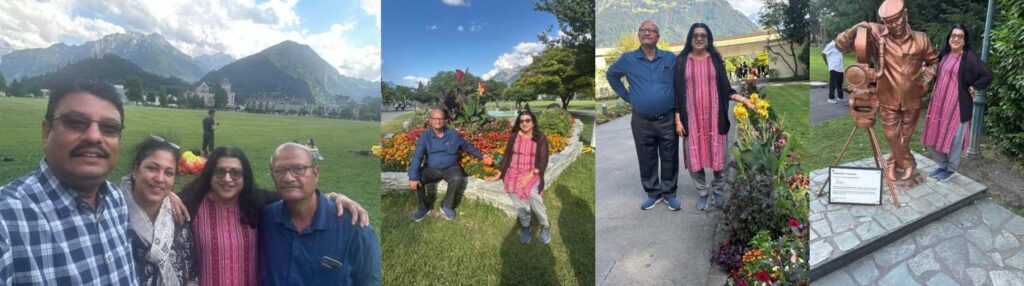
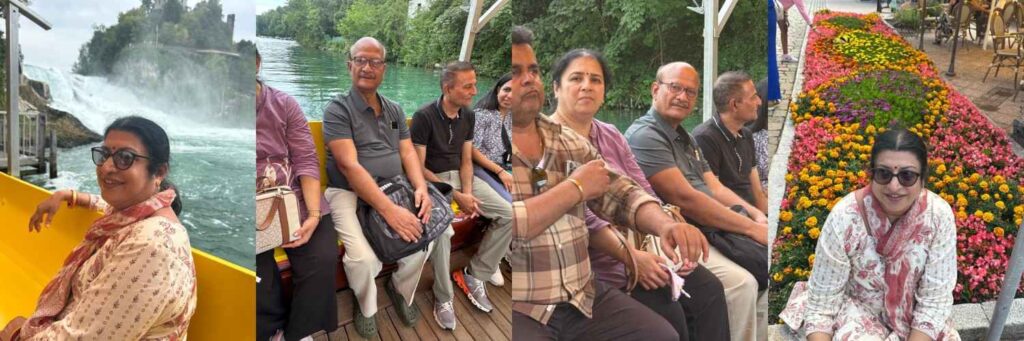
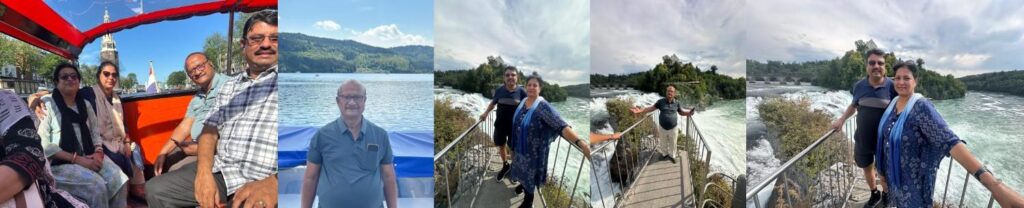
Our journey through Europe was not merely a holiday but a profound educational experience. From the medieval castles of Germany to the snow-covered Alps of Switzerland; from the canals of Amsterdam and Venice to the grandeur of Rome and Paris; from the humanitarian institutions of Geneva to the engineering marvel of the Eiffel Tower, every destination broadened our understanding of history, culture and human achievement.
As an Indian, I returned home with even greater appreciation for both Europe’s accomplishments and India’s own rich civilisation. I believe that India’s ancient wisdom, democratic values and growing scientific and economic strength, together with continued investment in education, research and infrastructure, will enable it to play an increasingly important role in the world.
Travel teaches us that while nations differ in language, customs and traditions, people everywhere aspire to peace, prosperity, dignity and a better future for the next generation. My fifteen-day journey across Europe strengthened my conviction that mutual respect, cultural understanding and international cooperation are among the greatest foundations for lasting progress.
End of the Europe Travel Series.