
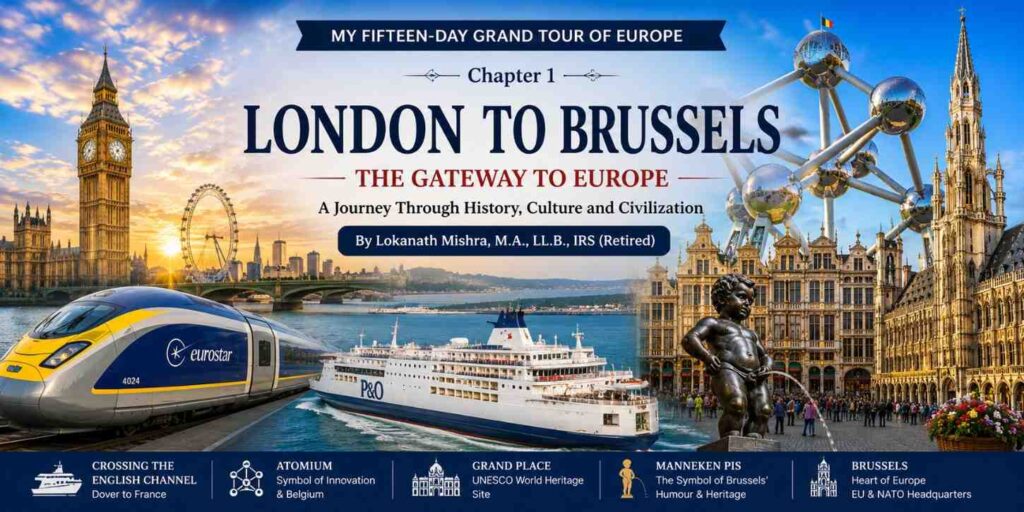
My Fifteen-Day Grand Tour of Europe
Chapter 1 : The Gateway to Europe – From London to Brussels , A Journey Through History, Culture and Civilization
By Lokanath Mishra, M.A., LL.B., IRS (Retired)
Europe has always occupied a unique place in the history of human civilization. Although it is the second smallest continent after Australia, its influence on world history, politics, science, philosophy, literature, architecture, commerce and culture has been extraordinary. For centuries, Europe has been the birthplace of great empires, renowned philosophers, artists, scientists, explorers and revolutionaries whose ideas have transformed the modern world.
From the magnificent Greek civilization to the mighty Roman Empire, from the Renaissance that revived art and learning to the Industrial Revolution that changed human society forever, Europe has been at the centre of countless historical developments. It has witnessed both the glory of human achievement and the tragedy of devastating wars. After the destruction caused by the First and Second World Wars, the European nations chose cooperation over conflict, eventually forming the European Union—one of the greatest examples of peace, unity and economic partnership in modern history.
Europe is equally celebrated for its rich cultural heritage. Every nation has its own language, traditions, architecture, cuisine, music and festivals, yet all contribute to a common European identity. Medieval castles, Gothic cathedrals, Renaissance museums, royal palaces, charming villages and modern metropolitan cities together create an unforgettable experience for every traveller.
Millions of tourists from every corner of the globe visit Europe every year. The Eiffel Tower of Paris, the Colosseum of Rome, the canals of Venice, the Swiss Alps, the Rhine Valley of Germany, the windmills of the Netherlands, the medieval squares of Belgium, the beautiful churches of Austria, and the historical monuments of Eastern Europe are among the world’s most admired tourist attractions. Visiting these places is not merely sightseeing; it is a journey through thousands of years of human history and civilization.
As an Indian, I have always believed that travelling broadens one’s knowledge beyond books and classrooms. It enables us to understand different cultures, appreciate human achievements, and learn valuable lessons from history. With these thoughts in mind, my wife and I, accompanied by my brother-in-law and his wife, decided to undertake a fifteen-day coach tour across several European countries.
This memorable journey commenced on 13th July 2026, beginning from London.
Departure from London
The excitement of the long-awaited journey began before sunrise. Our luggage had already been packed the previous night, and after offering prayers to the Almighty for a safe journey, we left our residence in London early in the morning. The weather was pleasant, with cool winds and a clear sky—a perfect beginning for our European adventure.
Our luxury Star Tour coach was comfortable and well-equipped for long-distance travel. The passengers represented different countries and backgrounds, creating a cheerful international atmosphere. Our experienced tour manager welcomed everyone and explained the itinerary, safety instructions and daily schedule. As the coach moved smoothly through the English countryside, everyone looked forward to the fascinating experiences awaiting us.
Crossing the English Channel
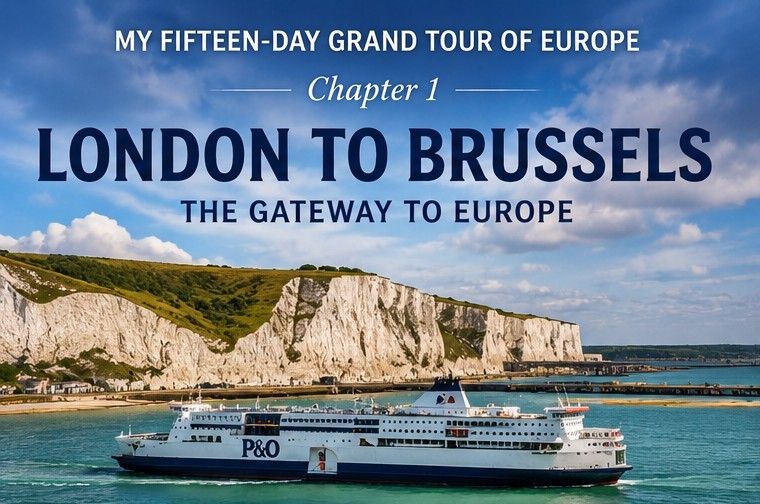
By noon we reached Dover, the famous English port overlooking the English Channel. After completing immigration and customs formalities, our coach was driven onto a large ferry.
The crossing of the English Channel itself was a memorable experience. The English Channel, nearly 560 kilometres long, separates Great Britain from mainland Europe. For centuries it served both as a natural barrier protecting Britain from invasions and as one of the world’s busiest maritime routes connecting Europe with the rest of the world.
Standing on the deck of the ferry, we watched the endless blue waters stretching towards the horizon. Sea birds gracefully followed the vessel while cool sea breezes refreshed every traveller. The white cliffs of Dover gradually disappeared from view as our ferry steadily approached continental Europe.
After approximately ninety minutes of sailing, we arrived on the French coast.
Through France into Belgium
Although we had entered France, our itinerary required us to continue directly towards Belgium. Our coach travelled through the picturesque French countryside, where neatly cultivated farms, colourful villages and modern highways reflected the beauty and prosperity of Western Europe.
Soon we crossed the international border into Belgium without elaborate immigration procedures, thanks to the Schengen Agreement facilitating free movement among many European countries.
Belgium, though geographically small, occupies a highly significant position in Europe. It is known for its medieval towns, magnificent architecture, chocolates, waffles, diamonds and international diplomacy. More importantly, Brussels, its capital, serves as the administrative heart of the European Union and NATO.
The Magnificent Atomium:
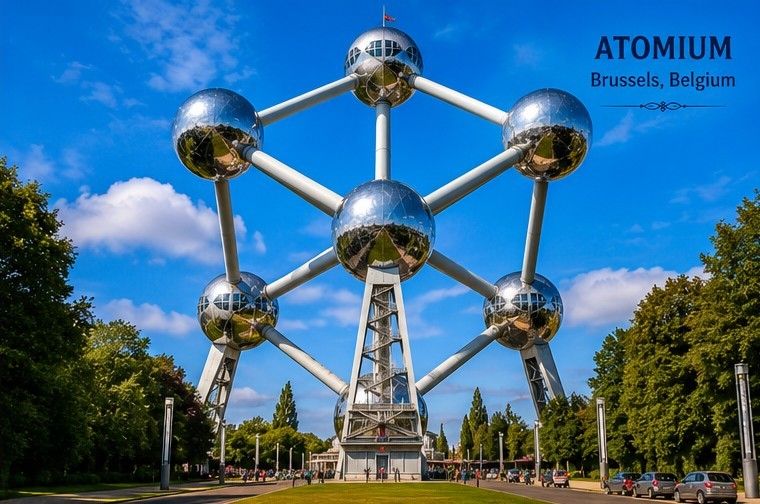
Before entering Brussels city, our first stop was the world-famous Atomium.
The Atomium was constructed for the 1958 Brussels World’s Fair (Expo 58), the first major international exhibition held after the Second World War. Designed by Belgian engineer André Waterkeyn, the structure represents an iron crystal magnified approximately 165 billion times.
Standing about 102 metres (335 feet) high, the Atomium consists of nine giant stainless-steel spheres connected by tubes containing escalators and staircases. Originally intended as a temporary exhibition structure, its immense popularity led to its preservation as Belgium’s most recognisable modern landmark.
The Atomium symbolises scientific progress, peaceful cooperation among nations and humanity’s optimism during the post-war era. Visitors can enjoy panoramic views of Brussels from its upper sphere while exhibitions inside explain science, architecture and Belgium’s cultural history.
Standing beneath this remarkable structure, I marvelled at the imagination and engineering brilliance that transformed a microscopic atomic model into one of Europe’s greatest architectural icons. We captured several photographs to preserve this memorable moment.
Arrival at Brussels
Our coach then entered Brussels, the vibrant capital city of Belgium.
Brussels beautifully combines medieval heritage with modern governance. Wide boulevards, elegant public squares, artistic buildings and beautiful gardens create an atmosphere where history and modernity coexist harmoniously.
Since it was lunchtime, our group proceeded to an Indian restaurant. After enjoying a delicious Indian meal, which reminded us of home despite being thousands of kilometres away, we resumed our sightseeing programme.
The Famous Manneken Pis:
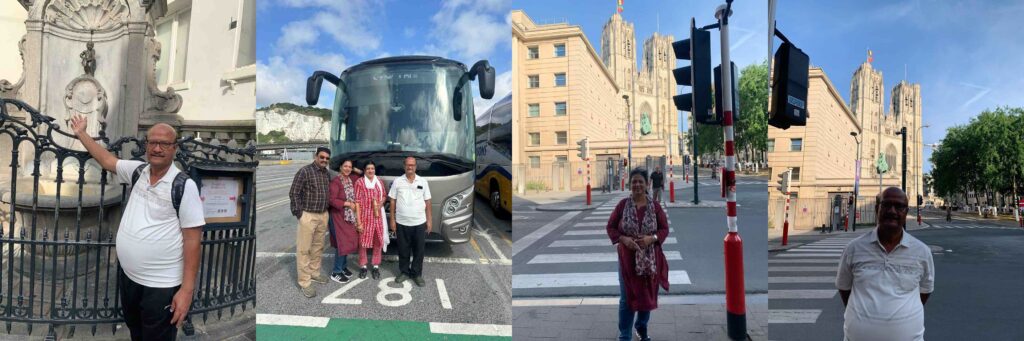
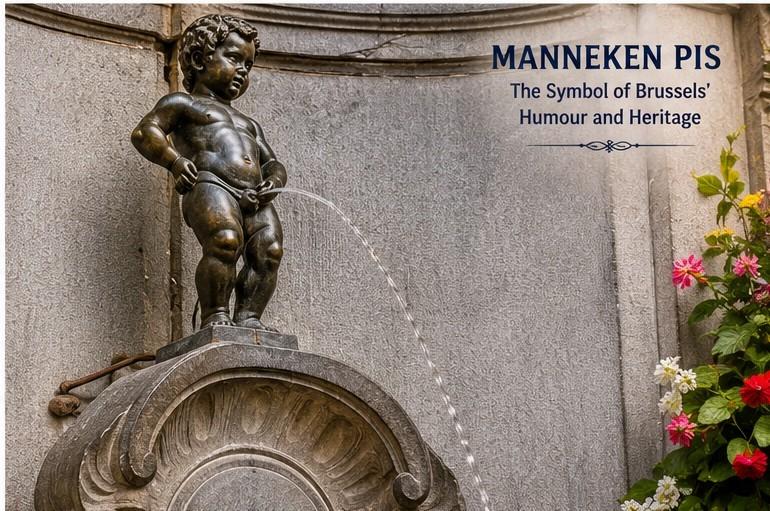
One of the most famous attractions of Brussels is the tiny bronze statue called Manneken Pis, popularly known as the “Peeing Boy.”
Created by sculptor Jérôme Duquesnoy in 1619, the statue depicts a little boy urinating into a fountain basin. Although only about 61 centimetres tall, it has become one of Belgium’s best-known cultural symbols.
Several fascinating legends explain its origin. One popular story tells of a young boy who courageously extinguished the burning fuse of an enemy bomb by urinating on it, thereby saving Brussels from destruction. Another legend describes a wealthy merchant whose missing son was eventually found joyfully relieving himself, prompting the grateful father to commission the statue.
Over the centuries, Manneken Pis has become a symbol of Brussels’ humour, independence and free spirit. It possesses an extraordinary wardrobe containing more than a thousand costumes donated by various countries and organisations. On special occasions, the statue is ceremonially dressed in different national costumes, attracting thousands of visitors.
Although modest in size, the statue demonstrates how tradition and folklore can transform an ordinary sculpture into an internationally recognised cultural icon.
The Historic Grand Place
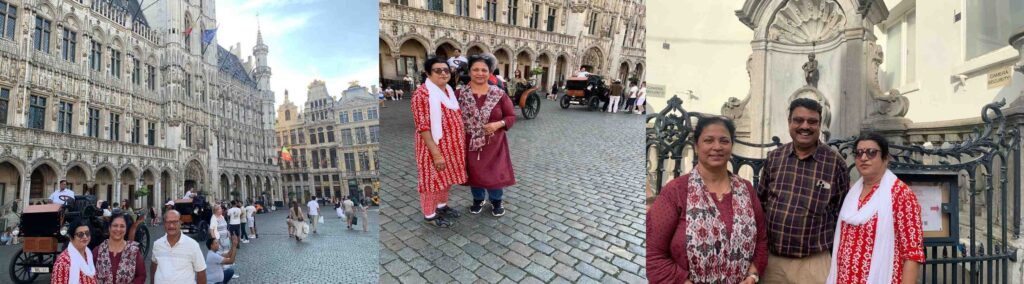
Our next destination was the magnificent Grand Place, often described as one of the most beautiful public squares in the world.
Surrounded by richly decorated guild houses, magnificent Gothic architecture and historic civic buildings, the square reflects the prosperity enjoyed by Brussels during the Middle Ages. In recognition of its outstanding historical and architectural significance, UNESCO designated Grand Place as a World Heritage Site.
The square has witnessed royal ceremonies, public celebrations, political events and important moments in Belgian history for several centuries.
Brussels Town Hall and the Historic Buildings
Dominating the Grand Place stands the magnificent Brussels Town Hall, often referred to as the Mayor’s House. Constructed between 1402 and 1455, it is regarded as one of the finest examples of Gothic civic architecture in Europe.
Its elegant tower rises nearly one hundred metres into the sky and is crowned by the statue of Saint Michael, the patron saint of Brussels, triumphing over evil.
Surrounding the square are beautifully restored guild houses representing the medieval trade organisations of bakers, brewers, merchants and craftsmen whose commercial activities made Brussels prosperous. Every building tells a story of the city’s economic growth and artistic excellence.
During our city tour, we also observed the modern office complexes that house important international institutions, including the European Union and the North Atlantic Treaty Organization (NATO). Brussels has therefore earned the title of the “Capital of Europe,” where many important international policies affecting millions of people are discussed and formulated.
The coexistence of magnificent medieval monuments with modern international institutions perfectly illustrates Europe’s remarkable journey from centuries of conflict to an era of cooperation, democracy and peace.
Reflections at the End of the First Day
As evening approached, Brussels was illuminated with thousands of sparkling lights, making its historic buildings even more enchanting. Walking through its lively streets, I reflected upon how history, culture, architecture and modern governance have blended beautifully in this remarkable city.
Our first day had been both educational and inspiring. From crossing the English Channel to witnessing Belgium’s architectural marvels and historical treasures, every moment enriched our understanding of European civilization.
We retired for the night at our hotel in Brussels, eagerly anticipating the exciting destinations that awaited us in the coming days of our unforgettable fifteen-day European journey.
(To be continued in Chapter 2…)
Beautifully narrated taking readers to visual panorama … Please continue .
Thank you sir very much.
Thank you sir very much. 🙏
Very Nicely Depicted.
Feel as if we are seeing it.
I have traveled Slovenia, Italy and Switzerland in one official trip in 2018.
Thanks 😊
🙏