
My Fifteen-Day Grand Tour of Europe
Chapter 15: Lucerne – The Historic Heart of Switzerland
By Lokanath Mishra, M.A., LL.B., IRS (Retired)
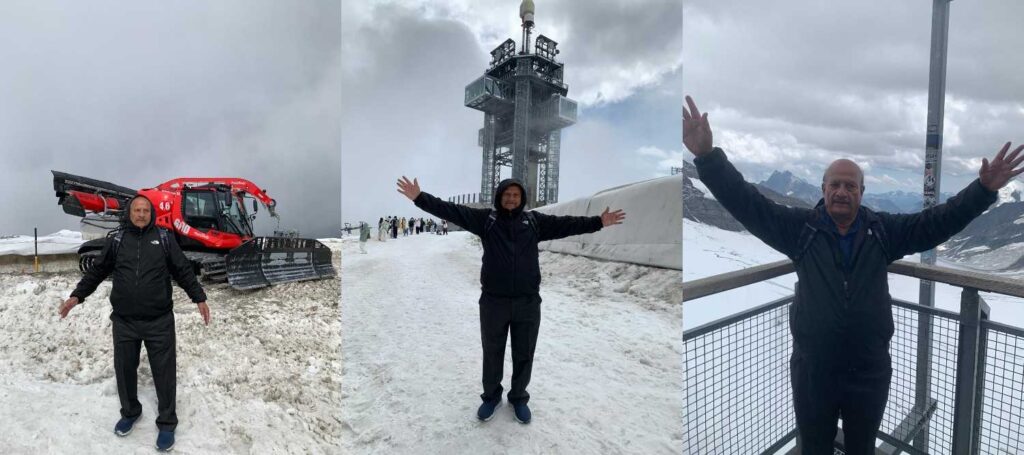
After spending a wonderful and unforgettable morning on the snow-covered Mount Titlis on 18th July 2026, our Star Tour coach descended from Engelberg through the beautiful Alpine valleys and proceeded towards the historic city of Lucerne (Luzern). The journey itself was delightful. Green meadows, crystal-clear streams, grazing cows with their traditional bells, flower-decorated wooden houses and magnificent mountain scenery accompanied us throughout the drive.
Lucerne is one of the oldest, most beautiful and most visited cities in Switzerland. Situated on the shores of Lake Lucerne (Vierwaldstättersee) and surrounded by the snow-covered Alps, it has long been regarded as the cultural heart of central Switzerland. Every street, square and historic building reflects the city’s rich history, while its lakeside setting creates an atmosphere of extraordinary beauty.
As our coach entered the city, we immediately noticed its well-preserved medieval architecture, narrow cobbled streets, colourful buildings and lively public squares. Despite welcoming millions of tourists every year, Lucerne has carefully preserved its historical identity.
Lucerne – A Brief History
The history of Lucerne dates back to the eighth century, when a Benedictine monastery dedicated to Saint Leodegar was established near the present city. The settlement gradually expanded because of its favourable position on important trade routes connecting northern and southern Europe.
During the Middle Ages, Lucerne prospered through commerce, transport and agriculture. In 1332, it became one of the earliest members of the Swiss Confederation, strengthening the movement that eventually led to the formation of modern Switzerland.
Because of its strategic location beside Lake Lucerne and at the northern approach to the St. Gotthard Pass, Lucerne became an important commercial gateway between Italy and northern Europe.
Today, it is famous not only for its historical monuments but also for tourism, education, culture and hospitality.
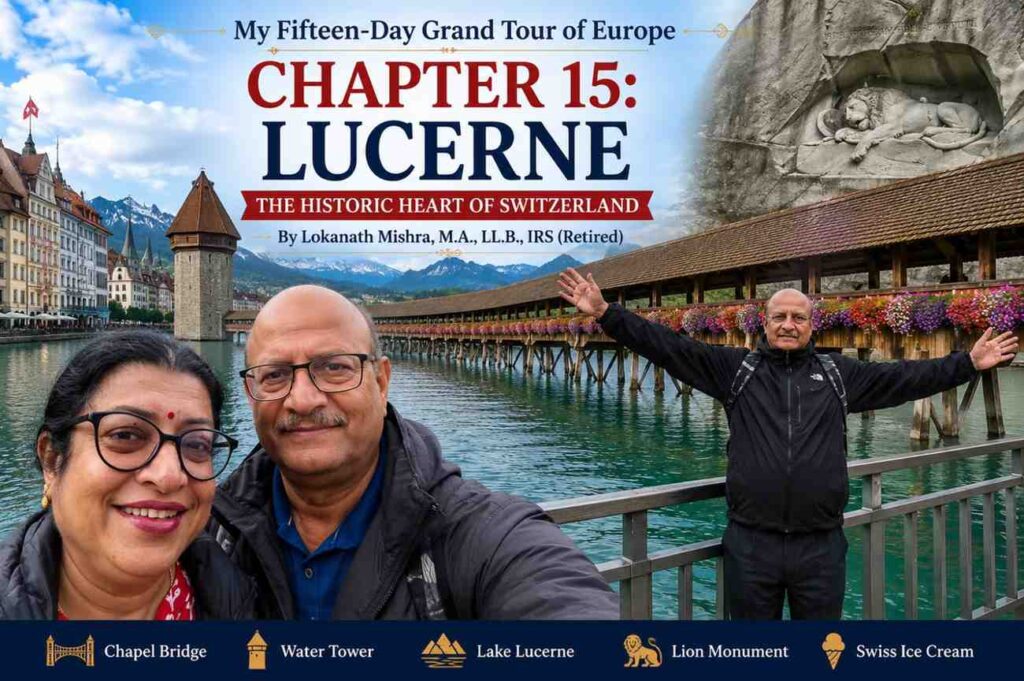
The Chapel Bridge (Kapellbrücke)
The most famous landmark of Lucerne is the historic Chapel Bridge, known in German as Kapellbrücke.
As we approached the bridge, we were immediately captivated by its beauty.
Constructed around 1333, it is one of the oldest surviving covered wooden bridges in Europe and has become the symbol of Lucerne.
The bridge stretches diagonally across the Reuss River, connecting the old and new parts of the city. It measures approximately 204 metres in length and is built almost entirely of timber.
The roof of the bridge protects visitors from rain and snow, while the interior contains a remarkable collection of triangular paintings dating from the seventeenth century. These paintings depict important events in Swiss history, scenes from the lives of local saints and stories illustrating the cultural heritage of Lucerne.
Walking across the bridge felt like travelling back several centuries.
The fragrance of the aged timber, the gentle sound of flowing water beneath the bridge and the colourful flower boxes decorating its sides created a unique atmosphere.
The Water Tower
Beside the Chapel Bridge stands the famous Water Tower (Wasserturm).
This octagonal stone tower was constructed around the thirteenth century and is even older than the bridge itself.
Throughout history, it has served various purposes, including:
- A defensive watchtower.
- A treasury.
- A prison.
- A military archive.
Today it remains one of Switzerland’s most photographed monuments and an enduring symbol of Lucerne’s medieval past.
Restoration After the Fire
One of the most remarkable chapters in the history of the Chapel Bridge occurred in 1993, when a devastating fire destroyed a large section of the bridge and many of its historic paintings.
The tragedy deeply saddened both the Swiss people and admirers around the world.
However, through careful restoration and the dedication of conservation experts, the bridge was reconstructed within a short period using traditional methods.
Today it once again stands proudly, demonstrating Switzerland’s commitment to preserving its cultural heritage for future generations.
Lake Lucerne
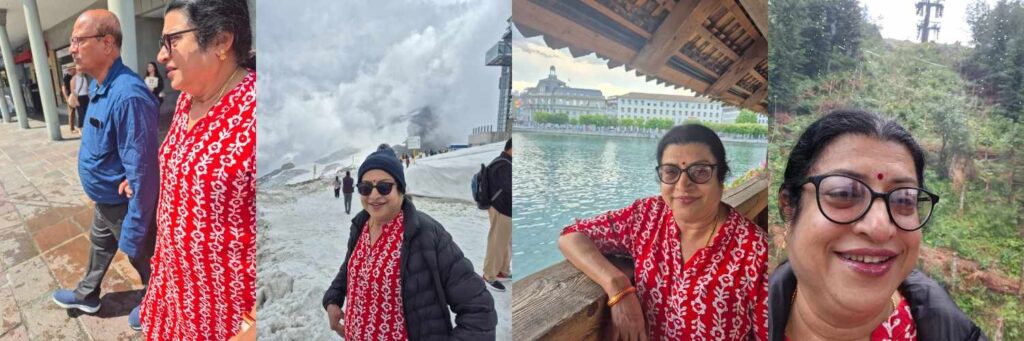
After crossing the historic bridge, we spent considerable time beside the magnificent Lake Lucerne.
This lake is among the most beautiful in Europe.
Fed by crystal-clear mountain streams and glaciers, its waters are exceptionally pure and reflect the surrounding snow-covered peaks with astonishing clarity.
The lake covers approximately 114 square kilometres and extends through several winding arms into the surrounding valleys.
Passenger steamers, sightseeing boats and private yachts glide gracefully across its calm waters throughout the day.
The lakeside promenade is beautifully landscaped with gardens, benches, flower displays and walking paths.
Swans floated elegantly upon the water while visitors from many countries relaxed along the shore, enjoying the peaceful atmosphere.
The lake has played an important role in Swiss history for centuries.
Before modern roads were built, it served as one of the principal transportation routes linking the original cantons of the Swiss Confederation.
Even today, regular passenger boat services connect many picturesque towns and villages around the lake.
The breathtaking combination of mountains, water and historic buildings makes Lake Lucerne one of Switzerland’s most treasured natural assets.
The Lion Monument (Löwendenkmal)
One of the most moving experiences of our visit was seeing the famous Lion Monument, known in German as Löwendenkmal.
Carved directly into a sandstone cliff in 1821, the monument commemorates the heroic Swiss Guards who lost their lives while defending King Louis XVI and the French royal family during the French Revolution in 1792.
The sculpture portrays a dying lion pierced by a spear while courageously protecting the royal shield.
The expression on the lion’s face conveys deep sorrow, loyalty and sacrifice.
The monument was designed by the renowned Danish sculptor Bertel Thorvaldsen and carved by Lukas Ahorn.
The celebrated American writer Mark Twain described it as:
“The most mournful and moving piece of stone in the world.”
Standing before the monument, we were deeply touched by its emotional power.
The surrounding park, with its quiet pond and shaded trees, creates an atmosphere of peace and solemn remembrance.
The Lion Monument reminds visitors that courage, loyalty and sacrifice remain timeless human virtues.
Enjoying Swiss Ice Cream
After our sightseeing, we relaxed near the lakeside and enjoyed delicious Swiss ice cream.
The pleasant summer weather, the cool breeze from the lake and the magnificent Alpine scenery made this simple moment particularly memorable.
Watching tourists from every part of the world enjoying the beauty of Lucerne while children played near the lake created a joyful and peaceful atmosphere.
Sometimes the simplest pleasures become the most cherished memories of travel.
Shopping and Evening Walk
Before leaving the city, we walked through Lucerne’s charming streets.
The shops displayed world-famous Swiss products, including:
- Precision watches.
- Swiss chocolates.
- Handcrafted souvenirs.
- Music boxes.
- Pocket knives.
- Wooden handicrafts.
- Traditional Swiss clothing.
The old buildings, decorated balconies and colourful flower arrangements enhanced the city’s timeless charm.
Street musicians performed classical music, adding a festive atmosphere to the evening.
Return to Engelberg
As sunset approached, our coach departed from Lucerne and returned to the peaceful mountain town of Engelberg.
The drive through the Alpine countryside during the evening was peaceful and relaxing.
Upon reaching Hotel Central, we enjoyed another delicious dinner before retiring for the night.
Looking out from our hotel window, the quiet mountains stood under the evening sky, reminding us of the extraordinary beauty we had witnessed throughout the day.
Reflections
Our visit to Lucerne beautifully combined history, culture and natural beauty.
The medieval Chapel Bridge reminded us of Switzerland’s long and glorious past. The tranquil waters of Lake Lucerne reflected the country’s extraordinary natural wealth, while the Lion Monument inspired us with its timeless message of courage, loyalty and sacrifice.
As travellers from India, we admired not only Switzerland’s scenic beauty but also its dedication to preserving historical monuments, maintaining public cleanliness and protecting its natural environment.
That evening, as we rested once again at Hotel Central in Engelberg, I reflected that every day of our European journey had offered new lessons—not only about geography and history, but also about human civilisation, cultural heritage and the importance of preserving our shared legacy for future generations.
Our memorable visit to Lucerne became one of the brightest highlights of our unforgettable fifteen-day European tour.
(To be continued in Chapter 16…)