

Maheshwar
By Lokanath Mishra
Maheshwari Handloom Sarees : The Woven Heritage of Maheshwar
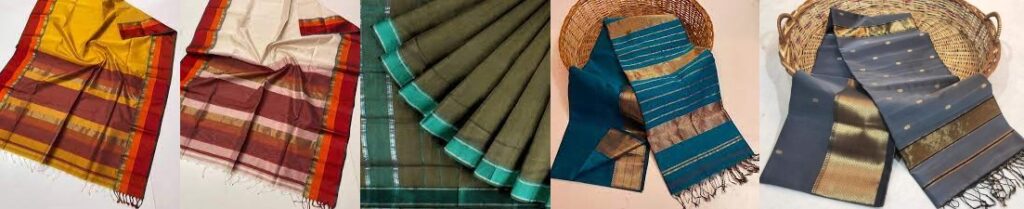
Nestled on the serene banks of the sacred Narmada River in Madhya Pradesh, Maheshwar is a town that exudes timeless charm, spiritual depth, and artistic brilliance. Famed for its Maheshwari handloom sarees, the town stands as a living testament to India’s rich textile traditions and royal legacy. Beyond its looms, Maheshwar is equally revered for its temples, ghats, and the majestic Maheshwar Fort, each narrating tales of devotion, artistry, and history.
Cultural and Historical Significance
The Legacy of Maheshwari Sarees

The pride of Maheshwar, the Maheshwari saree, is a handwoven marvel known for its elegance, lightness, and intricate designs. The origin of these sarees dates back to the 18th century, when Queen Ahilyabai Holkar, the benevolent ruler of the Holkar dynasty, invited skilled weavers from across India to her capital to produce fine fabrics for the royal household. Over time, these weaves gained fame beyond the palace walls, becoming an enduring symbol of refined craftsmanship.
The beauty of Maheshwari sarees lies in their geometric patterns, inspired by the architecture of Maheshwar Fort, the temples, and the flowing Narmada River. Motifs like chatai (mat pattern), linth (brick pattern), and bugdi (earring pattern) mirror the heritage and aesthetics of the town. Traditionally made of silk and cotton blends, these sarees are known for their reversible borders (bugdi) and vibrant color combinations that give them a distinctive grace suitable for both festive and formal occasions.
Maheshwar Fort: The Loom of History
Dominating the riverfront, the Maheshwar Fort stands as both a historical monument and a center of art revival. Built by the Holkar dynasty, it became the seat of Queen Ahilyabai’s administration and artistic patronage. The fort’s grandeur, with its intricate carvings and commanding view of the Narmada, continues to attract visitors from across the world. Within its precincts lies the Rehwa Society, a weaving center established to preserve and promote the traditional art of Maheshwari weaving, ensuring that the legacy of the saree continues to thrive in modern times.
Mahishmati: An Ancient Identity
Maheshwar’s historical roots run deep—it is believed to be the ancient city of Mahishmati, mentioned in the Mahabharata and Ramayana. This connection gives the town not just historical prestige but also a mythical aura, bridging the gap between India’s ancient civilization and its living traditions.
Spiritual and Religious Importance
The Temple Town of the Narmada
Maheshwar is often described as a temple town, where spirituality flows as deeply as the Narmada herself. The town is dotted with numerous temples dedicated to Lord Shiva and other deities, the most notable being the Raj Rajeshwar Temple. The sound of bells, the fragrance of incense, and the rhythmic chants create an atmosphere of divine peace.
The town also holds philosophical importance as the site associated with the spiritual discourse between Adi Shankaracharya and Pandit Mandan Mishra, marking it as a cradle of Vedic learning and debate.
The Sacred Ghats of the Narmada
The Narmada River, revered as one of the holiest rivers in India, shapes Maheshwar’s identity. Its ghats—such as Ahilya Ghat and Peshwa Ghat—are not just places of worship but also vibrant social spaces where spirituality, culture, and daily life intertwine. Pilgrims, artisans, and travelers gather here to perform rituals, admire the sunrise, and witness the tranquil flow of the river that sustains both faith and livelihood.
A Living Tradition
Today, Maheshwar continues to blend its sacred spirit with creative vitality. The Maheshwari handloom sarees symbolize more than just fabric—they represent heritage, resilience, and the craftsmanship of generations. Whether draped by a queen centuries ago or cherished by a modern woman today, each saree carries the soul of Maheshwar: its temples, its river, and its eternal rhythm of the loom.
⸻