
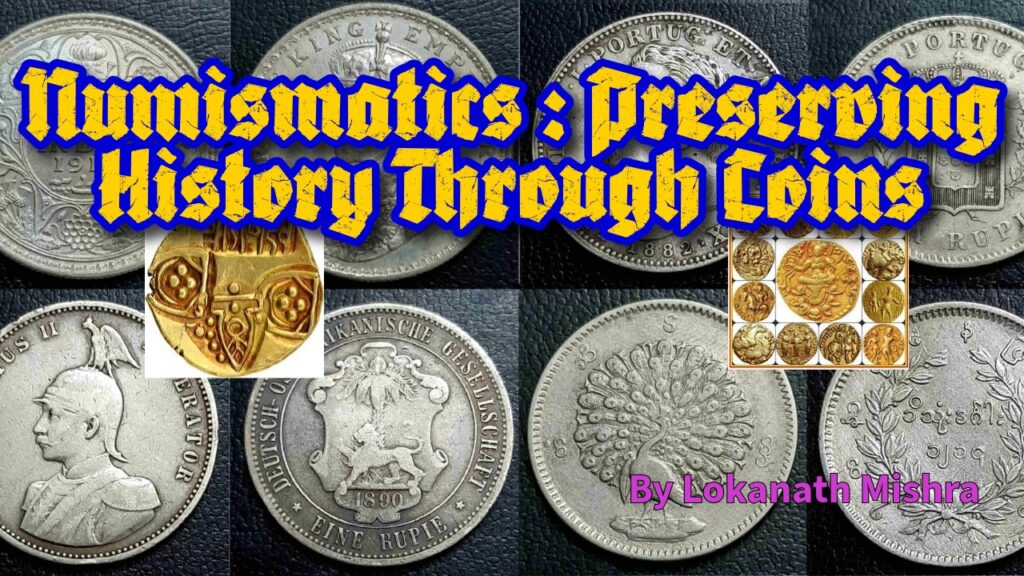
Numismatics : Preserving History Through Coins
By Lokanath Mishra
Numismatics is the study and collection of money, such as coins, paper currency, and tokens. A person who studies or collects these is called a numismatist. But a numismatist is not just a collector—they are a protector of history, culture, and knowledge. Through their work, they help society understand its past and preserve it for the future.
What is Numismatics?

The word “numismatics” comes from the Greek word nomisma, meaning “coin” or “custom.” The study of coins began many centuries ago, especially during the Renaissance period, when kings and scholars started collecting ancient coins to learn about earlier civilizations.
Over time, numismatics became a serious field of study. Today, it connects history, economics, art, and archaeology.
Role of a Numismatist
A numismatist studies, collects, and preserves different types of currency. Their work includes:
• Researching old coins and notes
• Identifying rare and valuable items
• Protecting historical currency from damage
• Helping museums and collectors understand their collections
They turn simple coins into “windows to the past.”
Benefits of Numismatics to Society
- Preservation of History and Heritage
Numismatists protect rare and ancient coins from being lost or destroyed. These coins tell us stories about past kings, kingdoms, and societies. Without them, much of history would be forgotten.
- Support to History and Archaeology
Coins are often the only proof that certain rulers or civilizations existed. Historians and archaeologists depend on numismatists to:
• Date ancient discoveries
• Understand timelines
• Identify unknown rulers

- Understanding Economics
Coins show how money has changed over time. Numismatists study:
• Trade between regions
• Rise and fall of economies
• Inflation and currency changes
This helps us understand how ancient economies worked.
- Art and Culture Study
Coins are not just money—they are pieces of art. They often show:
• Kings and rulers
• Religious symbols
• Animals, trees, and important events
By studying these designs, numismatists learn about the culture, beliefs, and artistic skills of ancient people.
- Detecting Fake Coins
Numismatists help identify counterfeit or fake coins. This protects collectors, museums, and investors, and maintains trust in the market.
- Education and Awareness
Numismatists share knowledge through:
• Museums
• Exhibitions
• Research papers and books
Organizations like the Mumbai Coin Society help spread awareness and educate people about coins and history.
Historical Importance of Coins
Early Forms of Money
The earliest money included cowry shells. Later, people used metal pieces of fixed weight, like those found in the Indus Valley Civilization.
Punch-Marked Coins
The first Indian coins (around 6th century BCE) had symbols like the sun, trees, and animals. These coins help historians understand times where written records are missing.

Coins as Historical Records
Coins often show:
• Portraits of kings
• Religious symbols
• Important events
For example, coins from the Gupta period show royal rituals like the Ashvamedha sacrifice.
Technology and Trade
Coins also tell us about ancient technology. Some coins show ships, proving that people had strong knowledge of sea travel and trade.
Connection with Monuments and Museums
Coins are often found near ancient monuments, making them very important for understanding history.
In India, the government started a mission in 2007 to document coin collections in museums. Important places like the Red Fort and Sheesh Mahal preserve such collections.
Institutions like the Indira Gandhi National Centre for the Arts also work to study and protect numismatic heritage.
Development of Numismatics
The “Hobby of Kings”
During the Renaissance, famous figures like Petrarch and rulers like Maximilian I collected coins to learn about ancient rulers.
Modern Development
By the 1800s, numismatics became more organized. Societies were formed, and museums began cataloging coins from different periods like:
• Mughal coins
• Sikh coins
• British-era coins
Today, numismatics is both a hobby and a professional field.
Conclusion
Numismatics is much more than collecting coins. It is a bridge between the past and the present. Numismatists help us understand history, protect culture, and learn about the lives of people who lived thousands of years ago.
A simple coin in your hand may look small, but it carries a big story. Thanks to numismatists, these stories are preserved and shared with the world.

🌼 Simple Message
• Every coin has a story.
• Protecting history helps us learn from the past.
• Even small things can have great value.