
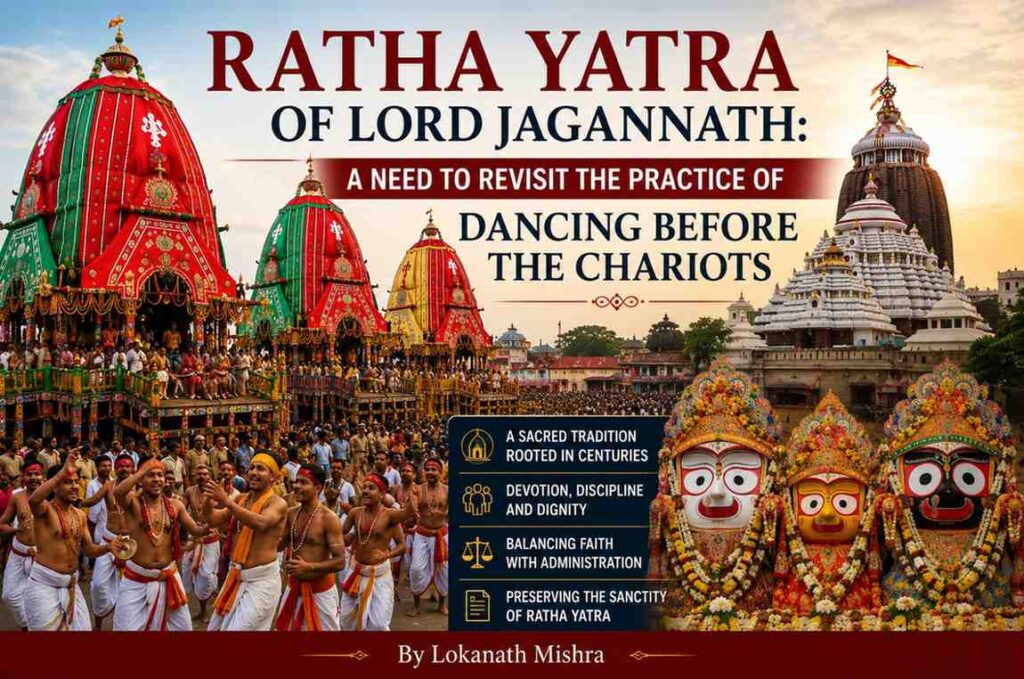
Ratha Yatra of Lord Jagannath: A Need to Revisit the Practice of Dancing Before the Chariots
By Lokanath Mishra
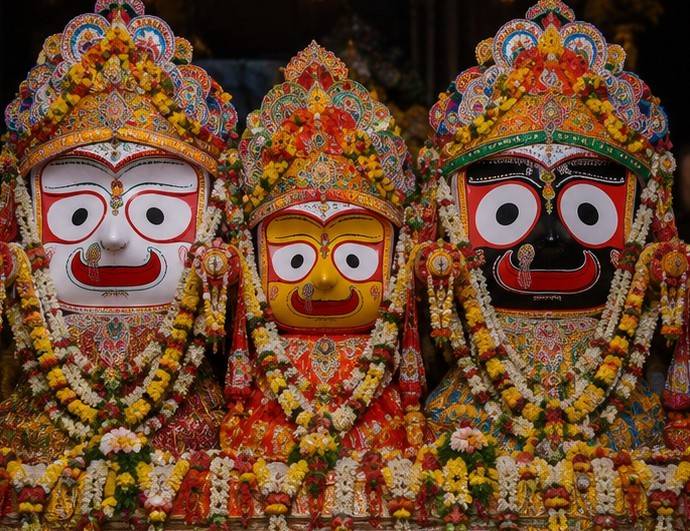
The annual Ratha Yatra of Lord Jagannath at Puri is one of the oldest and most revered religious festivals in the world. For millions of devotees, the festival is not merely a cultural event but a sacred occasion that provides an opportunity to obtain the darshan of Lord Jagannath, Lord Balabhadra, and Devi Subhadra as they travel from the main temple to the Gundicha Temple. The scriptures, traditions, and collective faith of devotees regard this darshan as spiritually uplifting and highly meritorious.
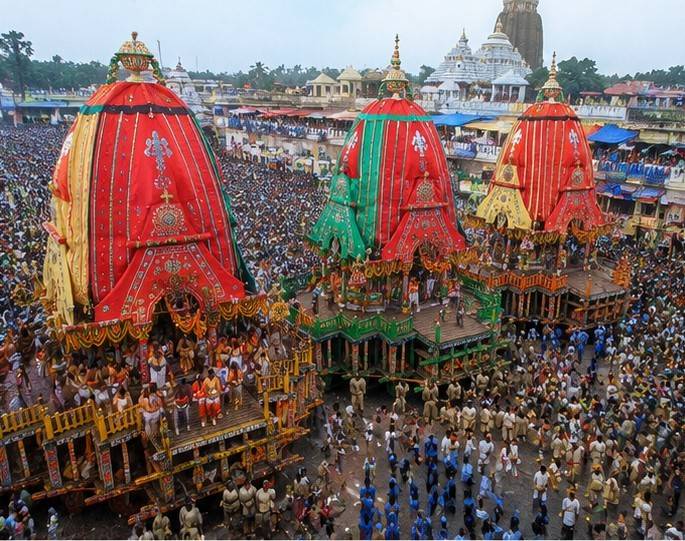
The central purpose of the Ratha Yatra is the public manifestation of the deities and the opportunity for devotees from all sections of society to have their darshan. Historically, the festival has been characterized by devotion, discipline, elaborate rituals, and strict adherence to traditional procedures that have been preserved for centuries.
In recent decades, however, a noticeable practice has emerged during the procession. Various groups, including artists, cultural performers, kirtan parties, and occasionally ascetics and sadhus, can be seen dancing before the chariots. While many devotees view such activities as expressions of devotion, others have begun to question whether these practices form part of the original and established traditions of the Ratha Yatra.
A careful examination of historical sources raises important questions. The Madala Panji, the traditional chronicle associated with the Jagannath Temple, records numerous rituals, customs, royal duties, and ceremonial observances connected with the temple and the Ratha Yatra. Likewise, temple records, historical accounts, and scholarly works on the Jagannath cult provide detailed descriptions of the festival’s rituals and administrative arrangements. However, the extent to which organized dancing by performers or ascetics before the moving chariots formed an integral part of the traditional procession deserves further scholarly investigation.
It is important to emphasize that the issue is not one of opposing devotion or expressions of religious enthusiasm. Dancing and singing have long been associated with various devotional traditions in India. The question, however, is whether such activities, when conducted immediately before the chariots, are supported by historical precedent and whether they contribute positively to the smooth conduct of the festival.
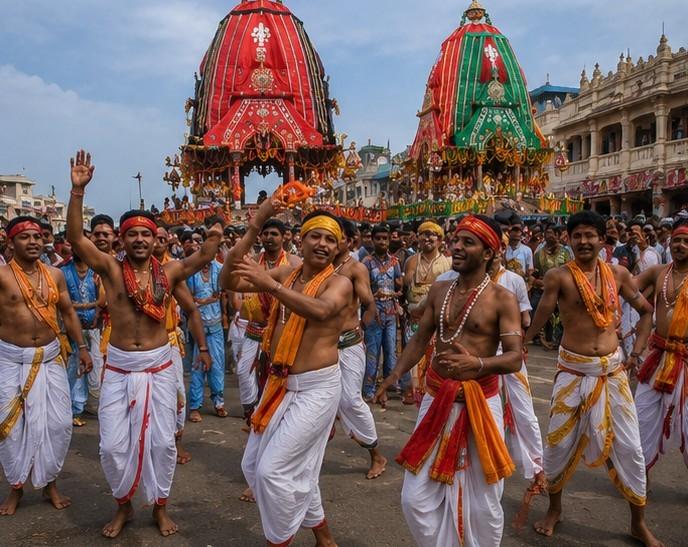
The Ratha Yatra attracts enormous crowds, often numbering in the hundreds of thousands and sometimes millions of devotees. Any delay in the movement of the chariots can create congestion and inconvenience for pilgrims waiting for darshan. Prolonged performances or large gatherings before the chariots may, intentionally or unintentionally, slow the progress of the procession and complicate crowd-management efforts. From the perspective of public safety and efficient administration, this issue deserves serious consideration.
The Gajapati Maharaja of Puri, revered as the foremost servitor of Lord Jagannath, occupies a unique position in the religious traditions associated with the temple. Throughout history, the Gajapati institution has played a vital role in preserving the sanctity and continuity of Jagannath traditions. Therefore, any practice that has been introduced, modified, or expanded over time should be carefully evaluated in light of historical evidence, religious authenticity, and administrative necessity.
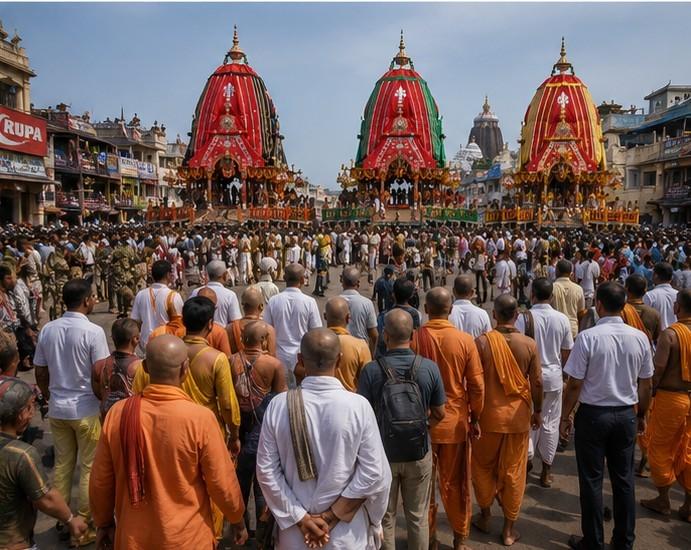
The preservation of the Jagannath tradition requires a balance between devotion and discipline. If dancing before the chariots is supported by authentic historical records and forms part of a recognized traditional practice, such evidence should be clearly documented and made available to the public. On the other hand, if the practice is a relatively recent addition and is found to hinder the smooth conduct of the Ratha Yatra, the concerned authorities may consider appropriate measures to regulate or discontinue it in the interest of maintaining the festival’s sanctity and efficiency.
Public discussion on this matter should not be viewed as criticism of faith but as an effort to understand and preserve the authentic traditions of one of the world’s greatest religious festivals. Scholarly research, historical documentation, and informed dialogue can help ensure that the Ratha Yatra continues to reflect the spirit, dignity, and discipline that have defined it for centuries.
References
- Madala Panji (various published editions and translations).
- Eschmann, Anncharlott; Kulke, Hermann; and Tripathi, Gaya Charan (eds.), The Cult of Jagannath and the Regional Tradition of Orissa.
- Kulke, Hermann, Jagannath Cult and Gajapati Kingship.
- Publications and archival records of the Shri Jagannath Temple Administration (SJTA), Puri.
- Historical studies on the rituals and traditions of the Jagannath Temple and Ratha Yatra.