
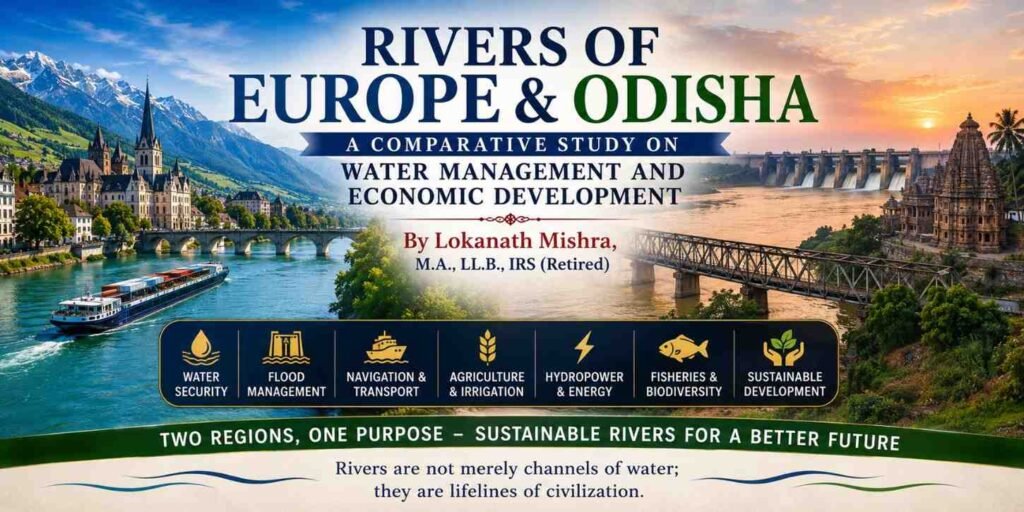
Rivers of Europe and Odisha: A Comparative Study on Water Management and Economic Development:
By Lokanath Mishra, M.A., LL.B., IRS (Retired)
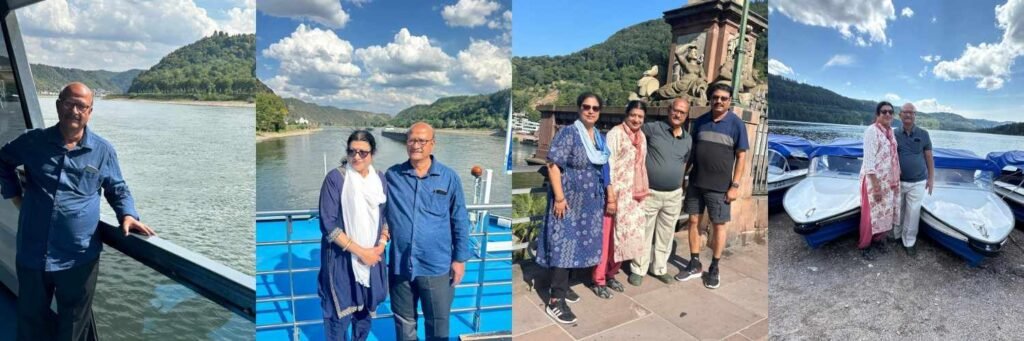
Rivers have been the cradle of civilization since ancient times. They provide drinking water, support agriculture, generate electricity, facilitate transportation, sustain biodiversity and shape the economic prosperity of nations. During my recent visit to several European countries, I closely observed some of Europe’s famous rivers, including the Rhine, Rhône, Seine, Limmat and the canals of the Netherlands. Comparing them with the great rivers of Odisha, such as the Mahanadi, Brahmani, Baitarani, Subarnarekha, Rushikulya and Vansadhara, I found both similarities and significant differences.
It would be incorrect to conclude that one region is simply “better” than the other. Europe and Odisha have very different climates, geography and development histories. Nevertheless, there are useful lessons that each can learn from the other.
Climate and Water Flow
One of the principal differences lies in climate.
Much of Europe experiences a temperate climate with rainfall distributed more evenly throughout the year. In addition, rivers originating in the Alps receive a gradual supply of water from melting snow. This generally produces more predictable river flows, although Europe also experiences floods and droughts.
Odisha, on the other hand, has a tropical monsoon climate. During the southwest monsoon, very heavy rainfall can occur within a short period. Cyclones from the Bay of Bengal may further increase rainfall and river discharge. As a result, rivers such as the Mahanadi and Brahmani can rise rapidly, causing floods in low-lying delta areas.
Thus, while European rivers often have relatively stable water levels, Odisha’s rivers experience much greater seasonal variation.
Engineering and River Management
During my European journey, I observed how engineering has been used to manage rivers effectively.
Many European countries have constructed dams, barrages, reservoirs, locks, embankments and flood-control structures. Riverbanks in urban areas are often reinforced, and sophisticated monitoring systems help authorities forecast floods and manage water resources.
The River Rhine is an excellent example. It has been developed not only for navigation but also for flood management, hydropower generation and industrial water supply.
Odisha has also undertaken major river projects, including the Hirakud Dam, one of the world’s longest earthen dams, which provides irrigation, flood moderation and hydroelectric power. However, managing Odisha’s rivers is particularly challenging because of extensive delta systems, heavy silt deposition, rapidly changing river channels and intense monsoon rainfall.
Riverbank erosion remains a serious concern in several districts, requiring continuous investment in protective works.
Navigation and Transportation
Europe has successfully integrated many rivers into its transport network.
The Rhine, Danube and other navigable rivers carry enormous quantities of goods each year. Modern ports, locks and canals enable cargo vessels to travel efficiently between inland industrial centres and major seaports. Inland water transport reduces fuel consumption and helps lower transport costs.
In Odisha, river transport has historically been important in certain areas, but large-scale commercial navigation is more limited. Seasonal fluctuations in water levels, sedimentation and the absence of continuous navigable channels restrict inland shipping on many rivers.
Expanding environmentally sustainable inland water transport where feasible could complement road and rail infrastructure.
Agriculture
Both Europe and Odisha depend heavily on rivers for agriculture.
European farmers often benefit from regulated irrigation systems, scientific water management and modern agricultural technology. Controlled river flows help reduce crop losses caused by floods or droughts.
Odisha’s fertile river valleys produce rice, pulses, oilseeds, vegetables and other crops. However, excessive floods during the monsoon can damage standing crops, while insufficient rainfall in some seasons may create water shortages.
Strengthening irrigation efficiency, watershed management and flood forecasting can help improve agricultural resilience.
Hydroelectric Power:
European rivers contribute substantially to renewable energy production, particularly in mountainous regions such as Switzerland, Austria and France, where dams harness river flows for hydroelectric generation.
Odisha also generates hydroelectricity, particularly through projects such as Hirakud, Upper Kolab and Balimela. Continued investment in renewable energy, while balancing environmental considerations, can contribute to sustainable development.
Environmental Protection:
Many European countries have invested heavily in restoring river ecosystems, improving water quality and treating industrial and municipal wastewater. These efforts have significantly improved the ecological health of several rivers that were once heavily polluted.
Odisha has also made progress in environmental conservation, but rapid urbanisation, industrial growth and changing climate patterns present ongoing challenges. Protecting rivers from pollution, conserving wetlands and maintaining ecological flows are increasingly important.
Lessons for the Future:
Europe demonstrates how long-term planning, scientific management and sustained investment can enhance the economic value of rivers while reducing flood risks.
Odisha possesses abundant water resources, fertile river valleys and enormous development potential. Continued improvements in flood forecasting, embankment maintenance, river training, irrigation efficiency, sediment management and environmental protection can further strengthen the state’s water resource management.
At the same time, Europe’s experience also reminds us that river management requires continuous adaptation. Recent years have shown that European rivers, too, are vulnerable to climate change, including severe floods and prolonged droughts.
Fisheries and Aquatic Biodiversity
Another important aspect in which Odisha’s rivers possess considerable strength is freshwater fisheries. Rivers such as the Mahanadi, Brahmani, Baitarani, Subarnarekha, Rushikulya and Vansadhara, together with their reservoirs, wetlands and delta systems, support thousands of fishermen and contribute significantly to rural livelihoods, food security and the state’s economy. Freshwater fish such as rohu, catla, mrigal, bata, freshwater prawns and several indigenous species are important sources of nutrition and income for local communities. The extensive river network, floodplains and estuarine ecosystems also provide favourable breeding and nursery habitats for many fish species.
Europe has achieved remarkable success in river engineering, navigation and flood control. However, these achievements have also brought ecological challenges. According to global assessments, monitored populations of migratory freshwater fish declined by an average of 76% between 1970 and 2016, with particularly severe declines in Europe (about 93%) and Latin America and the Caribbean (about 84%). By comparison, North America recorded a smaller average decline (about 28%), suggesting that effective fisheries management and conservation measures can help reduce biodiversity loss.
Scientists identify the principal causes of these declines as habitat degradation, river modification, dams and barriers that obstruct fish migration, pollution, over-exploitation of fisheries and other human pressures. These factors have contributed to the widespread decline of freshwater biodiversity worldwide. The reduction in migratory fish populations broadly reflects the decline seen among many other freshwater vertebrates, highlighting the need for stronger conservation efforts.
For Odisha, this comparison offers an important lesson. While continued investment in flood control, irrigation and navigation is essential, future river development should also seek to conserve fish habitats, maintain ecological river flows where feasible, improve water quality and promote sustainable fisheries management. Balancing economic development with ecological conservation will help ensure that Odisha’s rivers continue to provide food, livelihoods and biodiversity for future generations.
Conclusion
The rivers of Europe and Odisha reflect two different natural environments. Europe’s generally more regulated river systems have supported navigation, industry and urban development over many centuries. Odisha’s rivers sustain millions of people through agriculture, fisheries and water supply but must contend with intense monsoon rainfall, cyclones and dynamic delta landscapes.
Rather than concluding that one system is superior to the other, it is more constructive to recognise that each operates under different natural conditions. By combining scientific planning, modern engineering, environmental stewardship and community participation, Odisha can continue to strengthen the management of its rivers while preserving their ecological and cultural significance.
Rivers are not merely channels of water; they are lifelines of civilization. Their wise management will remain essential for economic prosperity, environmental sustainability and the well-being of future generations