
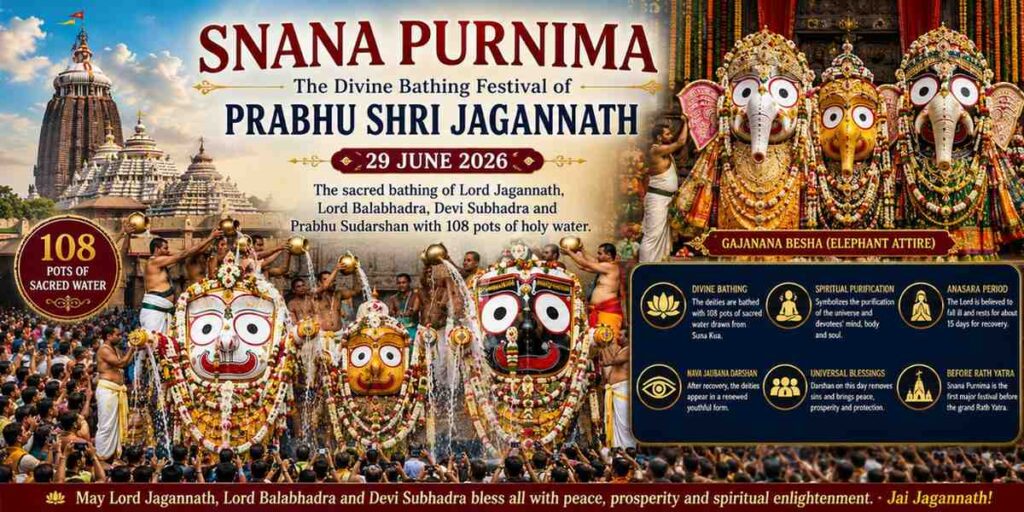
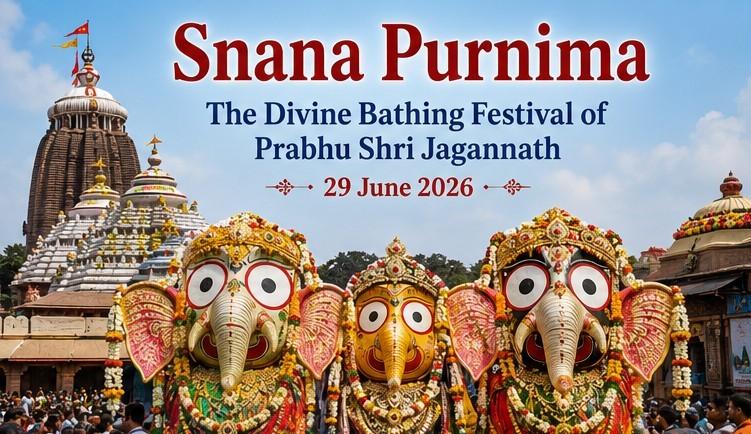
Snana Purnima – The Divine Bathing Festival of Prabhu Shri Jagannath
By Lokanath Mishra, Jenamath Lane, Kundheibenta Sahi, Puri.
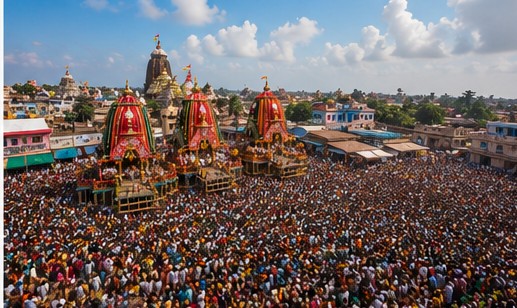
Snana Purnima, also known as Deba Snana Purnima, is one of the most sacred festivals associated with the worship of Lord Jagannath. In 2026, this auspicious festival will be celebrated on 29 June, marking the first public appearance of Lord Jagannath, Lord Balabhadra, Devi Subhadra and Prabhu Sudarshan before the grand Rath Yatra. On this holy day, thousands of devotees gather at the sacred temple town of Puri to witness the divine bathing ceremony of the deities, believing that a single darshan on this occasion bestows immense spiritual merit and divine blessings.
Historical and Scriptural Background
The tradition of Snana Purnima dates back several centuries and is deeply rooted in the Jagannath culture of Odisha. References to the bathing ceremony are found in ancient Vaishnava traditions and local temple chronicles. According to temple records, the festival commemorates the appearance day of Lord Jagannath.
Legend narrates that King Indradyumna, the founder of the Jagannath Temple, was instructed by divine revelation to ceremonially bathe the deities on the full moon day of the month of Jyeshtha. Since then, the ritual has become an integral part of the annual cycle of Jagannath worship.
The festival symbolizes purification, renewal, and the Lord’s affectionate relationship with His devotees. Unlike most days when the deities remain within the sanctum, Snana Purnima allows devotees from all sections of society to have a clear and close view of the divine siblings.
The Sacred Bathing Ritual
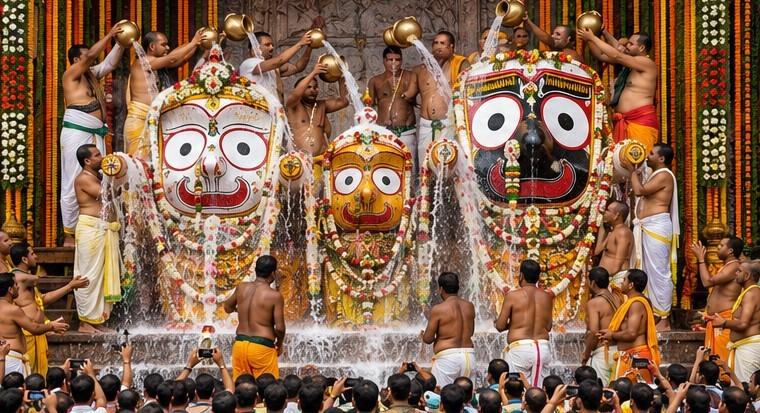
In the early hours of Snana Purnima, Lord Jagannath, Lord Balabhadra, Devi Subhadra, and Sudarshana are ceremonially brought out from the sanctum sanctorum in a grand procession called “Pahandi” to the Snana Mandap (bathing platform).
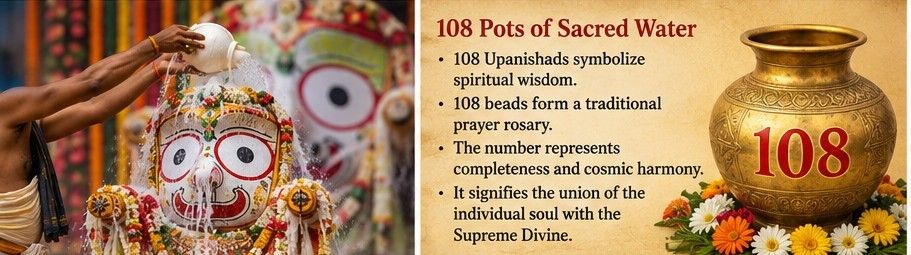
The deities are then bathed with 108 pots of sacred water drawn from the temple’s holy well, known as Suna Kua. The water is sanctified with Vedic mantras, fragrant herbs, sandalwood, flowers, and sacred ingredients.
The number 108 holds profound spiritual significance in Hindu philosophy:
- 108 Upanishads represent spiritual wisdom.
- 108 beads form a traditional prayer rosary.
- The number symbolizes completeness and cosmic harmony.
- It represents the union of the individual soul with the Supreme Divine.
The bathing ceremony is accompanied by the chanting of Vedic hymns, blowing of conches, beating of drums, and devotional singing, creating an atmosphere of divine ecstasy.
The Unique Gajanana Besha (Elephant Attire)
Following the bathing ceremony, the deities are adorned in the famous Gajanana Besha or Hati Besha (Elephant Costume).
In this special attire:
- Lord Jagannath appears as Lord Ganesha.
- Lord Balabhadra and Devi Subhadra are also decorated in elephant-like forms.
- Elaborate ornaments, colorful decorations, and artistic craftsmanship transform the appearance of the deities.
The origin of this attire is linked to a traditional belief that a devotee from Western India wished to worship Lord Ganesha but was unable to do so. To fulfill the devotee’s desire, Lord Jagannath manifested Himself in an elephant form. Since then, the Gajanana Besha has become an inseparable part of Snana Purnima celebrations.
Why Are the Deities Bathed?
The ritual carries deep symbolic meaning.
Purification of the Universe
Lord Jagannath is regarded as the Lord of the Universe. Bathing the Lord symbolizes the purification of all creation and the removal of impurities from human life.
Expression of Devotion
Just as parents lovingly bathe their children, devotees ceremonially bathe the Lord as an expression of affection and surrender.
Spiritual Renewal
The bathing ritual signifies cleansing of the mind, body, and soul. It reminds devotees to purify their thoughts and actions through devotion.
Divine Accessibility
On this day, the Lord comes out of the sanctum and grants darshan to all without distinction, demonstrating His universal compassion.
The Anasara Period: The Lord Falls Ill
A unique belief follows the bathing ceremony. After receiving the sacred bath with 108 pots of water, the deities are believed to develop a fever.
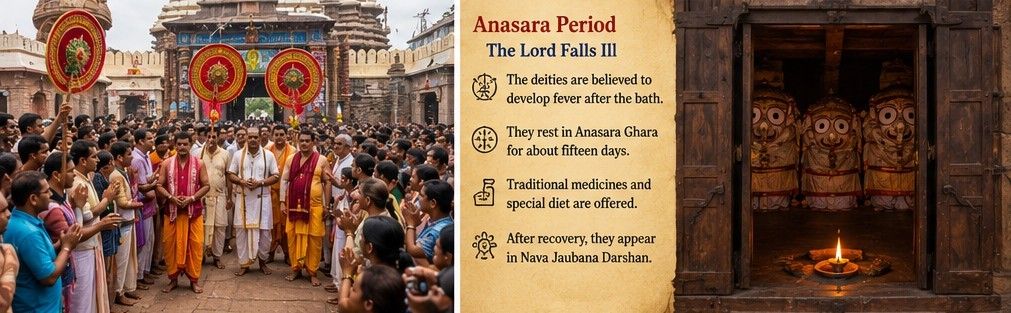
Consequently, Lord Jagannath, Lord Balabhadra, and Devi Subhadra retire to a special chamber known as the Anasara Ghara for approximately fifteen days. During this period:
- Public darshan remains suspended.
- Traditional herbal medicines are offered.
- Temple physicians symbolically treat the deities.
- Special fruit juices and medicinal preparations are served.
This ritual beautifully portrays the Lord’s human-like affection and closeness to His devotees.
After recovery, the deities reappear in the magnificent Nava Jaubana Darshan (renewed youthful form), shortly before the annual Rath Yatra.
Spiritual Benefits of Snana Purnima Darshan
The scriptures and Jagannath tradition attribute immense merit to witnessing the Snana Purnima rituals.
Devotees believe that darshan on this day:
- Removes accumulated sins and negative karma.
- Purifies the mind and heart.
- Brings peace, prosperity, and good health.
- Grants divine protection from obstacles and suffering.
- Strengthens devotion and spiritual consciousness.
- Bestows the blessings of Lord Jagannath, Lord Balabhadra, and Devi Subhadra for the entire year.
Many devotees consider Snana Purnima darshan equivalent to performing numerous religious observances and pilgrimages.
Universal Message of the Festival
Snana Purnima conveys a profound spiritual message. The Lord of the Universe comes out from His sanctum, receives a ceremonial bath, falls ill, recovers, and again appears before His devotees. Through these divine pastimes, Lord Jagannath teaches that the Supreme Being lovingly participates in the joys and sorrows of creation.
The festival also emphasizes equality, humility, service, and devotion. Rich and poor, learned and unlettered, all stand together before the Lord, receiving His grace without distinction.
Conclusion
Snana Purnima is not merely a ritualistic bathing ceremony; it is a celebration of divine compassion and universal brotherhood. The sacred bath with 108 pots of holy water, the enchanting Gajanana Besha, and the rare public darshan make this festival one of the most cherished events in the Jagannath tradition.
As devotees gather on 29 June 2026 to witness this grand spectacle, they will once again experience the timeless message of Lord Jagannath—that the Divine is ever accessible, ever compassionate, and ever ready to shower blessings upon all who seek Him with faith and devotion. May Lord Jagannath, Lord Balabhadra, and Devi Subhadra bless humanity with peace, prosperity, and spiritual enlightenment. Jai Jagannath!