
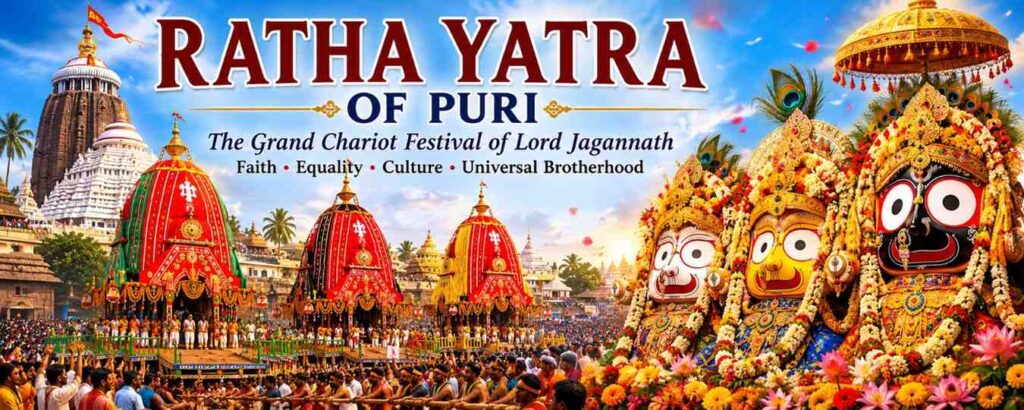
Ratha Yatra of Puri: The Grand Chariot Festival of Lord Jagannath—A Celebration of Mahā Viṣṇu, Faith, Equality, Culture, and Universal Brotherhood
By Lokanath Mishra.
Abstract
The Ratha Yatra (Chariot Festival) of Puri, Odisha, is among the oldest continuously celebrated religious festivals in the world. More than a magnificent public procession, it is a profound spiritual event that embodies the philosophy of Sanātana Dharma, the ideals of social equality, communal harmony, environmental consciousness, and universal brotherhood. Every year, Lord Jagannath, Lord Balabhadra, Goddess Subhadra, and Lord Sudarshana emerge from the sanctum of the Śrī Jagannath Temple to bless humanity without distinction of caste, creed, nationality, or social status. The festival integrates ancient theology, tribal traditions, Vedic philosophy, temple architecture, craftsmanship, Ayurveda, music, dance, and community participation into a living cultural heritage. This article explores the historical, theological, philosophical, scientific, cultural, and socio-economic dimensions of the Ratha Yatra, demonstrating why it remains one of humanity’s greatest spiritual celebrations.
Introduction
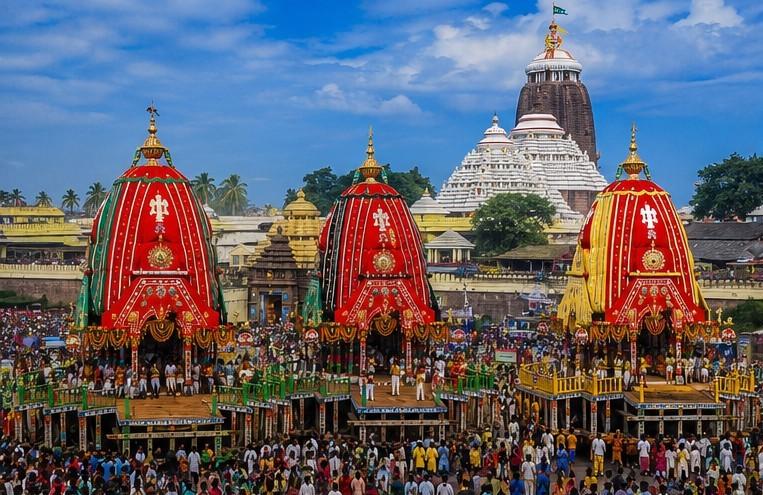
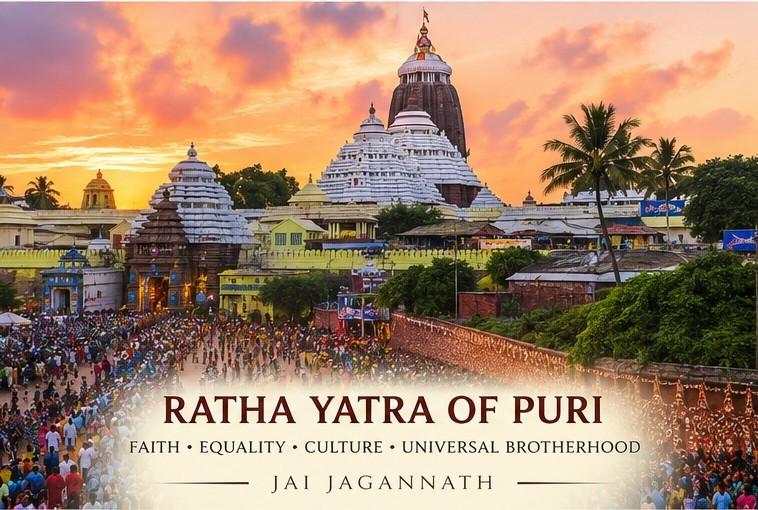
The sacred city of Puri, situated on the eastern coast of India in Odisha, is one of Hinduism’s four principal pilgrimage centres (Char Dham). At its heart stands the magnificent Śrī Jagannath Temple, where Lord Jagannath is worshipped as Mahā Viṣṇu, identical with Śrī Kṛṣṇa, the Avatārī—the Supreme Personality of Godhead from whom all divine incarnations (Avataras) emanate.
Unlike the common belief that Lord Jagannath is merely an incarnation of Lord Kṛṣṇa, the Jagannath tradition and several Vaiṣṇava schools regard Him as the Supreme Lord Himself. The famous declaration of the Bhāgavata Purāṇa (1.3.28), “Kṛṣṇas tu Bhagavān Svayam” (“Śrī Kṛṣṇa is the Supreme Lord Himself”), beautifully reflects this understanding. Thus, Lord Jagannath is worshipped not simply as an avatar but as the Avatārī, the eternal source of all divine manifestations.
Every year, during the bright fortnight of the month of Āṣāḍha (June–July), Lord Jagannath, accompanied by His elder brother Lord Balabhadra, His divine sister Goddess Subhadra, and Lord Sudarshana—the personified Sudarshana Chakra and embodiment of the Lord’s divine will—undertakes the world-famous Ratha Yatra to the Śrī Gundicha Temple. The journey symbolizes the Lord’s boundless compassion as He leaves His sanctum to bless all people, irrespective of caste, religion, ethnicity, gender, or nationality.
Historical Origins
The origins of Lord Jagannath worship extend far beyond recorded history. The Jagannath tradition represents a remarkable synthesis of indigenous tribal worship, Vedic philosophy, Purāṇic traditions, and Vaiṣṇava devotion. Historical evidence suggests that the present temple was built in the twelfth century by King Anantavarman Chodaganga Deva of the Eastern Ganga dynasty, although worship at Purushottama Kṣetra existed long before the construction of the present shrine.
The Skanda Purāṇa (Purushottama Kṣetra Māhātmya), Brahma Purāṇa, Padma Purāṇa, and other sacred texts glorify Lord Jagannath and describe the sanctity of Puri. Saints including Śrī Chaitanya Mahāprabhu, Ādi Śaṅkarācārya, Rāmānujācārya, Guru Nānak, and numerous other spiritual masters visited Puri and praised the glory of Lord Jagannath.
The Divine Family
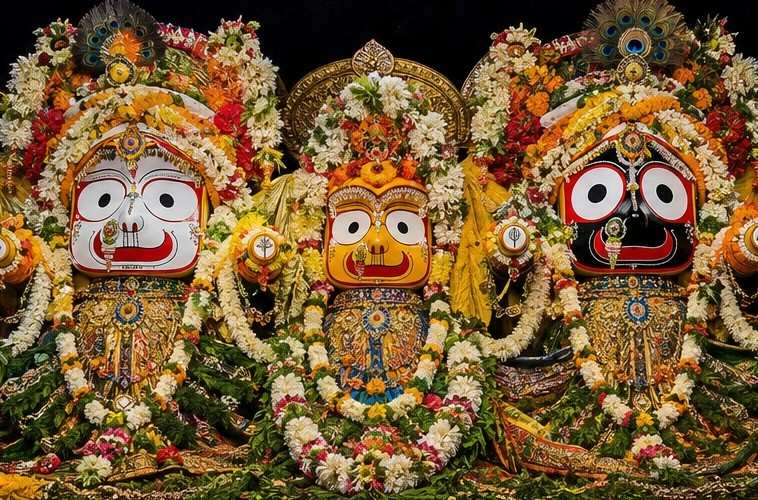
The Ratha Yatra celebrates the annual journey of four sacred manifestations:
- Lord Jagannath – Mahā Viṣṇu, identical with Śrī Kṛṣṇa, the Avatārī.
- Lord Balabhadra – the elder brother of Lord Jagannath, symbolizing strength, righteousness, and agricultural prosperity.
- Goddess Subhadra – the divine sister, representing auspiciousness, compassion, and universal motherhood.
- Lord Sudarshana – the personified Sudarshana Chakra, representing divine protection, cosmic order, and the Lord’s supreme power.
During the procession, Lord Sudarshana accompanies the divine siblings and is placed on the chariot of Goddess Subhadra, emphasizing that the Lord’s divine energy and protective grace accompany His devotees wherever He travels.
Construction of the Sacred Chariots
One of the most remarkable features of the festival is the annual construction of three gigantic wooden chariots. Every year, entirely new chariots are built according to ancient canonical measurements using specially selected timber from designated forests.
The three chariots are:
- Nandighosha, the chariot of Lord Jagannath, with sixteen wheels.
- Taladhwaja, the chariot of Lord Balabhadra, with fourteen wheels.
- Darpadalana (Devadalana), the chariot of Goddess Subhadra, upon which Lord Sudarshana also accompanies the procession, with twelve wheels.
The construction involves hundreds of hereditary carpenters, blacksmiths, painters, sculptors, tailors, and craftsmen. Their work reflects centuries of uninterrupted traditional knowledge, engineering, and artistic excellence.
Snāna Pūrṇimā and Anavasara
The festivities begin with Snāna Pūrṇimā, during which the deities are ceremonially bathed with 108 pitchers of sanctified water.
Following this sacred bath, the deities are believed to fall ill and retire from public view for approximately fourteen days during the period known as Anavasara. During this time, the Daita servitors administer traditional herbal medicines prepared from indigenous medicinal plants and roots according to ancient Ayurvedic practices inherited through generations.
From a scientific perspective, this ritual may reflect early knowledge of seasonal health care, rest, immunity, and community precautions during the onset of the monsoon, when infectious diseases historically became more prevalent.
The Grand Procession
On the day of Ratha Yatra, the deities emerge from the temple in the spectacular Pahandi procession amidst the resounding sounds of conch shells, bells, cymbals, drums, Vedic chanting, and devotional singing.
After the deities are installed upon their respective chariots, the Gajapati Maharaja of Puri performs the famous Chhera Pahanra ceremony. Despite being the traditional sovereign, he humbly sweeps the chariots with a golden broom while sprinkling sandalwood-scented water. This unique ritual proclaims that before the Supreme Lord all human beings are equal and that true leadership is founded upon service rather than privilege.
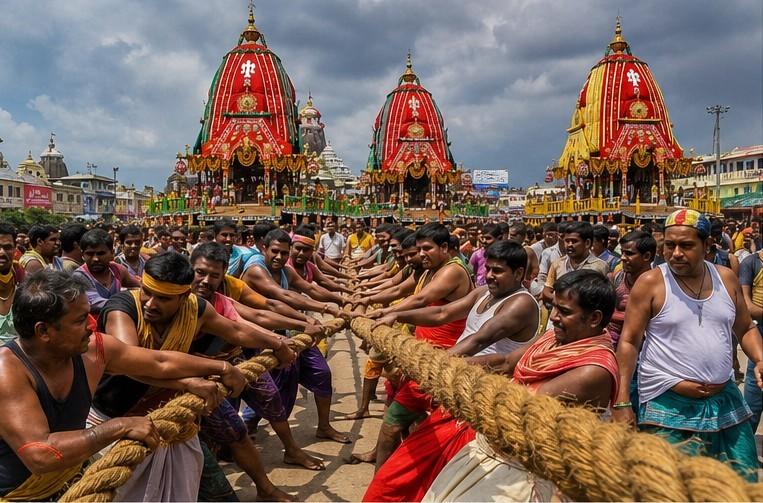
Thousands of devotees then grasp the massive ropes and pull the colossal chariots along the Bada Danda (Grand Road) towards the Gundicha Temple. The atmosphere reverberates with the chant of “Jai Jagannath,” transforming the city into a vibrant ocean of devotion.
Stay at the Gundicha Temple and Bahudā Yatra
The divine siblings remain at the Gundicha Temple for about seven to nine days. During this period, numerous rituals, devotional music, cultural performances, and community feasts are organized.
The return journey, known as Bahudā Yatra, is equally significant. It is followed by the spectacular Suna Besha, during which the deities are adorned with magnificent gold ornaments, and Nilādri Bije, marking their ceremonial return to the sanctum of the Jagannath Temple.
Philosophical Significance
The Ratha Yatra is not merely a religious procession but a profound spiritual allegory.
The Katha Upanishad compares the human body to a chariot, the senses to horses, the mind to the reins, the intellect to the charioteer, and the Self to the master seated within. The disciplined movement of the chariot symbolizes the soul’s journey towards self-realization and liberation (mokṣa).
When thousands of devotees unite to pull the Lord’s chariot, they symbolically dedicate their lives to guiding the human soul toward divine realization through devotion, self-control, wisdom, and righteous living.
A Festival of Equality and Universal Brotherhood
Perhaps no other religious festival demonstrates social equality as vividly as the Ratha Yatra.
The Lord comes out of His temple to meet everyone. There are no barriers of caste, wealth, education, race, nationality, or religion. Rich and poor, scholars and labourers, rulers and ordinary citizens all stand together to pull the same ropes.
The Chhera Pahanra ceremony further reinforces this timeless truth: before Mahā Viṣṇu, every individual is equal.
This spirit beautifully reflects the Indian ideal of “Vasudhaiva Kutumbakam”—the whole world is one family.
Scientific, Psychological, and Social Perspectives
Although rooted in profound spirituality, the Ratha Yatra also reveals remarkable practical wisdom.
The Anavasara period illustrates an early understanding of seasonal rest, quarantine-like isolation, herbal medicine, and recuperation.
The massive cooperative effort required to pull the chariots develops teamwork, physical coordination, collective responsibility, and emotional unity.
Modern psychology recognizes that large community festivals strengthen social bonds, reduce loneliness, enhance emotional resilience, and promote mental well-being.
The annual reconstruction of the chariots using renewable natural materials further demonstrates an enduring tradition of sustainability and ecological responsibility.
Economic and Cultural Importance
The Ratha Yatra significantly contributes to the economy and cultural identity of Odisha.
Millions of pilgrims support local livelihoods through tourism, hospitality, transport, handicrafts, textiles, food services, and religious offerings. Traditional art forms such as Pattachitra painting, Pipili appliqué, palm-leaf engraving, wood carving, and Odissi music and dance receive renewed appreciation during the festival.
Today, Ratha Yatra is celebrated in numerous countries across the world, making Lord Jagannath a global symbol of compassion, peace, and universal spirituality.
Conclusion
The Ratha Yatra of Puri is far more than an annual religious procession. It is a living expression of India’s timeless spiritual vision and cultural continuity. It celebrates Lord Jagannath as Mahā Viṣṇu, identical with Śrī Kṛṣṇa, the Avatārī, who, accompanied by Lord Balabhadra, Goddess Subhadra, and Lord Sudarshana, comes forth to bless all humanity.
The festival harmoniously unites ancient theology, philosophy, tribal traditions, Vedic wisdom, social equality, scientific insight, artistic excellence, environmental sustainability, and universal human values. It teaches that true greatness lies in humility, service, compassion, and collective harmony.
In a world often divided by social, political, and cultural differences, the Ratha Yatra continues to proclaim an eternal message: the Supreme Lord belongs to everyone. As countless hands join together to pull the sacred chariots, humanity is reminded that the journey toward righteousness, peace, and liberation is a shared journey. For this reason, the Ratha Yatra remains not only the spiritual heart of Odisha but also one of the greatest living celebrations of universal brotherhood in human civilization.