
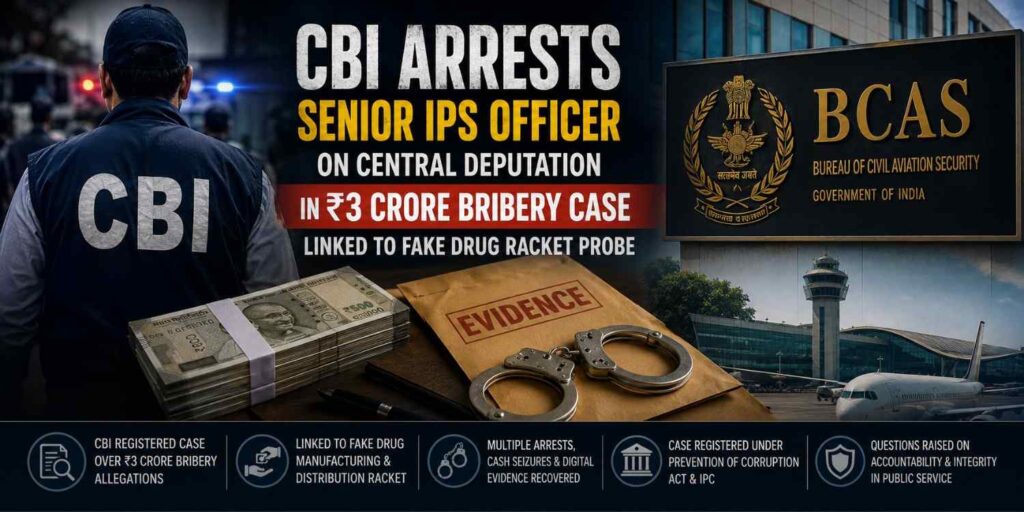
CBI Arrests Senior IPS Officer on Central Deputation in Rs 3 Crore Bribery Case Linked to Fake Drug Racket Probe
By Lokanath Mishra.
- Introduction
On June 10, 2026, the Central Bureau of Investigation (CBI) arrested a 2012-batch Haryana cadre Indian Police Service (IPS) officer currently posted on central deputation to the Bureau of Civil Aviation Security (BCAS), New Delhi. The arrest was made in connection with an alleged Rs 3 crore bribery case tied to an ongoing investigation into a fake drug manufacturing and distribution racket. The case highlights emerging concerns about attempts by public officials and private intermediaries to influence federal investigations through illegal means. - Background: The Bureau of Civil Aviation Security
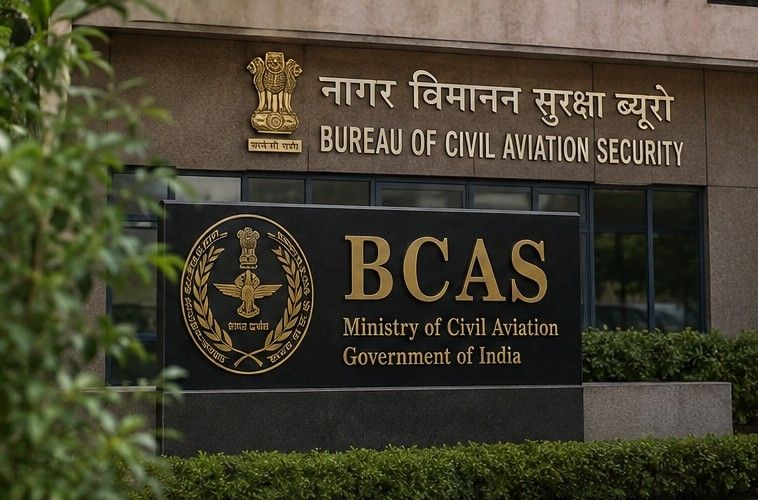
The Bureau of Civil Aviation Security functions as India’s apex regulatory body for civil aviation security. Operating under the Ministry of Civil Aviation, BCAS is responsible for laying down, monitoring, and enforcing security standards at all civilian airports and among aviation stakeholders, including airlines, ground handling agencies, and cargo operators. Officers on deputation to BCAS are typically drawn from IPS and other All India Services cadres due to the sensitive nature of aviation security. - Sequence of Events
3.1 Initial Case Registration
On June 8, 2026, CBI registered a case against a Delhi Police inspector and two private individuals. The case pertained to allegations of soliciting bribes to secure relief for an accused in a separate CBI probe linked to the sale of counterfeit drugs in Puducherry. The counterfeit drug case involves the manufacture and inter-state distribution of spurious pharmaceuticals, with public health implications.
3.2 Discovery of IPS Officer’s Alleged Role
During the June 8 investigation, CBI uncovered the alleged involvement of the Haryana cadre IPS officer posted with BCAS. According to the agency, the officer was suspected of acting as an intermediary to influence the Puducherry counterfeit drug probe in exchange for pecuniary advantage. The total bribe amount under negotiation was allegedly Rs 3 crore.
3.3 Arrests and Seizures
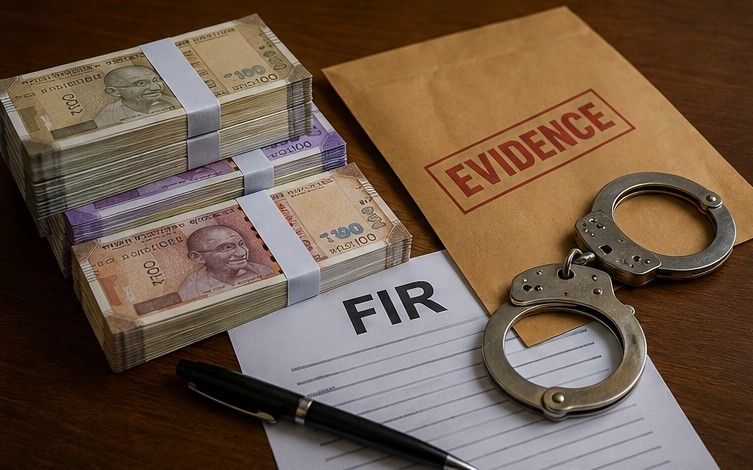
Prior to the IPS officer’s arrest, CBI had apprehended the Delhi Police inspector and six private individuals. The operation involved a trap where Rs 25 lakh was seized as bribe money. Subsequent searches at premises linked to the accused led to recovery of approximately Rs 90 lakh in cash.
Following the IPS officer’s arrest on June 10, CBI conducted searches at multiple premises linked to him in Delhi and Haryana. The agency reported seizure of digital devices, hard disks, and documents. These materials are being subjected to forensic analysis to establish the money trail and communication between the accused.
- Institutional Context and Related Developments
The arrest comes close on the heels of another high-profile CBI action in Haryana. The agency recently arrested Pardeep Kumar, former Member Secretary of the Haryana State Pollution Control Board and an IAS officer, in an alleged government funds misappropriation case linked to the IDFC First Bank account of the Board.
CBI has stated that it has intensified its probe into what it describes as a wider network involving public officials and private intermediaries attempting to influence investigations through illegal means. The agency’s focus includes mapping financial transactions, call records, and the use of shell entities to route bribe money.
- Legal Framework
The case has been registered under relevant sections of the Prevention of Corruption Act, 1988, and the Indian Penal Code relating to criminal conspiracy and destruction of evidence. If charges are framed, the matter will be tried in a Special CBI Court. Under service rules, a central government employee placed under arrest for over 48 hours is deemed to be under suspension. - Implications for Governance and Oversight
6.1 Deputation and Accountability
The arrest of an officer on central deputation raises questions about vetting and monitoring mechanisms for sensitive postings. BCAS roles require security clearance and involve access to critical infrastructure protocols. The case underscores the need for periodic integrity reviews of officers in regulatory agencies.
6.2 Impact on Anti-Counterfeit Drug Enforcement
The underlying Puducherry case involves counterfeit drugs, a serious public health offence. Alleged attempts to derail the probe through bribery indicate the financial stakes in the spurious drug market. This reinforces the need for inter-agency coordination between CBI, State Drug Controllers, and the Central Drugs Standard Control Organisation.
6.3 Systemic Deterrence
CBI’s sequential arrests in the bribery case and the Haryana funds case signal an enforcement posture against collusion between officials and private actors. The seizure of digital evidence points to increasing reliance on forensic accounting and data analytics in corruption investigations.
- Conclusion
The arrest of a senior IPS officer posted to BCAS in an alleged Rs 3 crore bribery case linked to a fake drug racket probe marks a significant development in CBI’s anti-corruption drive. The case remains under investigation, and the allegations are yet to be tested in court. Presumption of innocence applies until guilt is established through due process.
The episode highlights three broader issues: the vulnerability of regulatory probes to external influence, the importance of integrity safeguards for officers on deputation, and the complex nexus between economic crime and public health violations. Further outcomes will depend on CBI’s chargesheet, forensic findings, and judicial scrutiny.
Disclaimer: This article is based on information released by the Central Bureau of Investigation and public records as of June 2026. All persons are presumed innocent until proven guilty in a court of law.