
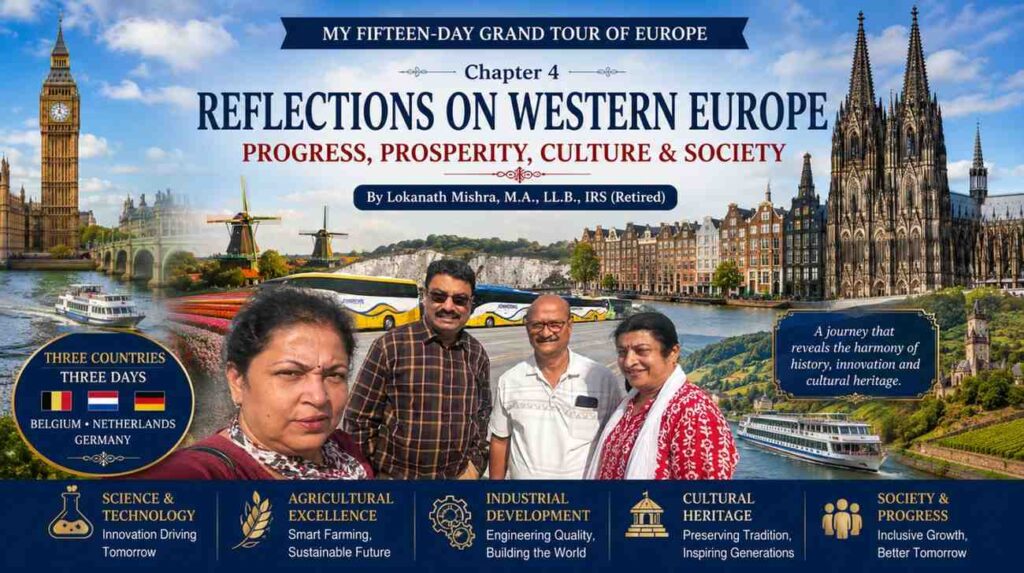
My Fifteen-Day Grand Tour of Europe
Chapter 4: Reflections on Western Europe – Progress, Prosperity, Culture and Society
By Lokanath Mishra, M.A., LL.B., IRS (Retired)
Before commencing our fifteen-day coach tour across continental Europe, it would be appropriate to briefly mention the beginning of our journey and the experiences that led us to this fascinating exploration.
Myself, Shri Lokanath Mishra, my wife Smt. Basanti Mishra, my brother-in-law Shri Basant Mishra, and his wife Smt. Puspita Mishra, travelled from India to the United Kingdom. We stayed for several days at the residence of our daughter and niece in London, which served as our base before embarking on our grand European tour.
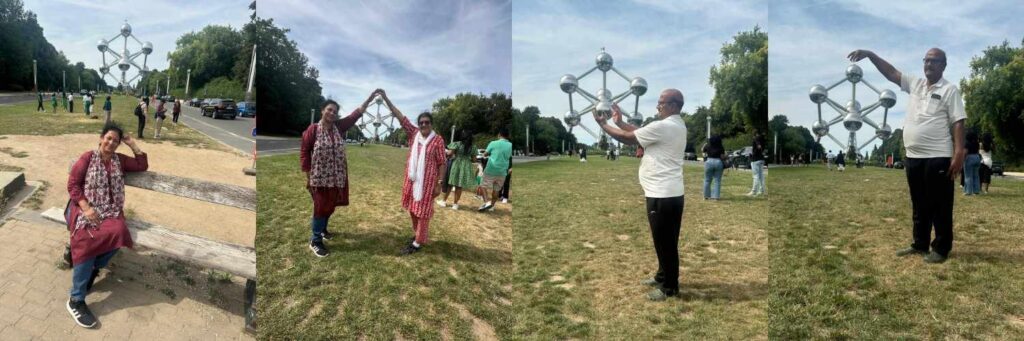
During our stay in London, we visited several world-famous landmarks that have shaped British and world history.
London – A City of History and Modernity:
London is one of the most influential cities in the world. For centuries it served as the capital of the British Empire, whose influence extended across continents. Today it remains a global centre of finance, education, culture, diplomacy and innovation.
Among the important places we visited were:
Buckingham Palace
The official residence of the British monarch, Buckingham Palace symbolizes the continuity of British constitutional monarchy. The magnificent building attracts millions of visitors every year.
Big Ben and the Houses of Parliament
The iconic clock tower, popularly known as Big Ben, stands beside the River Thames and represents British democracy and parliamentary traditions.
Tower Bridge
One of the most recognizable landmarks in the world, Tower Bridge is an engineering masterpiece completed in 1894.
The British Museum
The museum houses priceless treasures from civilizations across the world, including ancient Egypt, Greece, Rome, India and Mesopotamia.
River Thames
The Thames has played a crucial role in London’s development as a commercial and maritime centre. A cruise on the river provides excellent views of the city’s historical and modern landmarks.
After enjoying these attractions, we joined the Star Tour coach for our fifteen-day continental European journey.
Three Countries in Three Days
By the evening of 15th July 2026, we had already visited three important European nations:
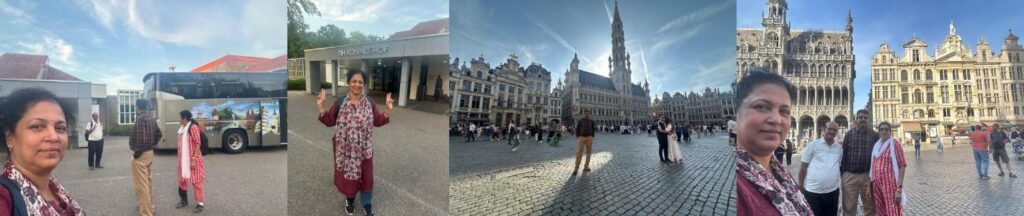
- Belgium
- The Netherlands
- Germany (partially, with further exploration still to come)
Although each country possesses its own identity, language and traditions, all three demonstrate remarkable achievements in economic development, scientific innovation, environmental management and social welfare.
⸻
Scientific and Technological Advancement
One of the most striking impressions we gained during our journey was the extraordinary level of scientific and technological development visible everywhere.
Belgium
Belgium has become a leader in:
- Chemical industries
- Pharmaceutical research
- Biotechnology
- Precision engineering
- Medical sciences
- Diamond processing technology
Belgian universities and research institutions contribute significantly to scientific innovation throughout Europe.
The country is also an important centre for international telecommunications and logistics due to its strategic location.
The Netherlands
The Netherlands is regarded as one of the world’s most technologically advanced nations.
Major achievements include:
- Water management engineering
- Land reclamation technology
- Flood control systems
- Smart transportation
- Agricultural technology
- Renewable energy development
- Robotics and automation
The Dutch have transformed vast areas below sea level into productive agricultural land through sophisticated engineering projects.
The famous Delta Works and modern dike systems are considered among the greatest engineering achievements of the modern world.
Germany
Germany is widely recognized as Europe’s industrial powerhouse.
Major fields of excellence include:
- Automobile manufacturing
- Mechanical engineering
- Aerospace technology
- Electronics
- Artificial intelligence
- Chemical industries
- Renewable energy
- Medical technology
German companies are renowned worldwide for quality, precision and innovation.
Agricultural Excellence
Agriculture in these countries differs greatly from traditional agriculture in many developing nations.
Because labour costs are high, farming depends heavily on:
- Mechanization
- Automation
- Scientific research
- Precision farming
- Water management
- High-quality seeds
- Controlled fertilizer use
Every acre of land is utilized efficiently.
Agriculture in Belgium
Major agricultural products include:
- Wheat
- Barley
- Sugar beet
- Potatoes
- Vegetables
- Fruits
- Dairy products
Belgium is particularly known for high-quality potatoes used in its famous fries.
Modern dairy farming contributes significantly to the economy.
Agriculture in the Netherlands
The Netherlands is one of the world’s largest exporters of agricultural products despite its small size.
Major products include:
- Dairy products
- Cheese
- Flowers
- Tulips
- Tomatoes
- Cucumbers
- Potatoes
- Onions
- Fruits
- Poultry products
The Dutch greenhouse system is famous worldwide.
Thousands of acres of crops are cultivated inside climate-controlled glasshouses where temperature, humidity, irrigation and nutrient supply are monitored by computers.
This allows year-round production with remarkable efficiency.
Agriculture in Germany
Major agricultural products include:
- Wheat
- Rye
- Barley
- Corn
- Potatoes
- Sugar beet
- Fruits
- Vegetables
- Milk
- Meat products
German farmers extensively use tractors, GPS-guided machinery and automated harvesting systems.
Agricultural cooperatives help farmers market their products efficiently.
⸻
Irrigation and Cultivation Systems
One of the most impressive aspects of agriculture in these countries is water management.
Netherlands
The Dutch have perfected water control over centuries.
Their system includes:
- Dikes
- Canals
- Pumping stations
- Reservoirs
- Water recycling facilities
Every drop of water is carefully managed.
Large areas that were once under the sea have been converted into fertile farmland.
Belgium
Belgian agriculture benefits from:
- Natural rainfall
- River systems
- Canal networks
- Scientific irrigation methods
Farmers carefully monitor soil quality and moisture levels.
Germany
German irrigation systems emphasize:
- Conservation of water
- Precision irrigation
- Sustainable groundwater use
- Environmental protection
The result is highly productive and environmentally friendly agriculture.
⸻
Industrial Development
Belgium
Important industries include:
- Chemicals
- Pharmaceuticals
- Food processing
- Steel
- Textiles
- Diamond cutting
Netherlands
Important industries include:
- Food processing
- Dairy products
- Shipping
- Petroleum refining
- Electronics
- Agricultural technology
Germany
Germany’s major industries include:
- Automobiles
- Engineering
- Machine tools
- Chemicals
- Electronics
- Aerospace
- Renewable energy
The success of German industry is based upon research, skilled labour and technical education.
⸻
Cultural Heritage
Despite their modern development, all three countries preserve their cultural traditions with remarkable dedication.
Belgium
Belgium is famous for:
- Medieval architecture
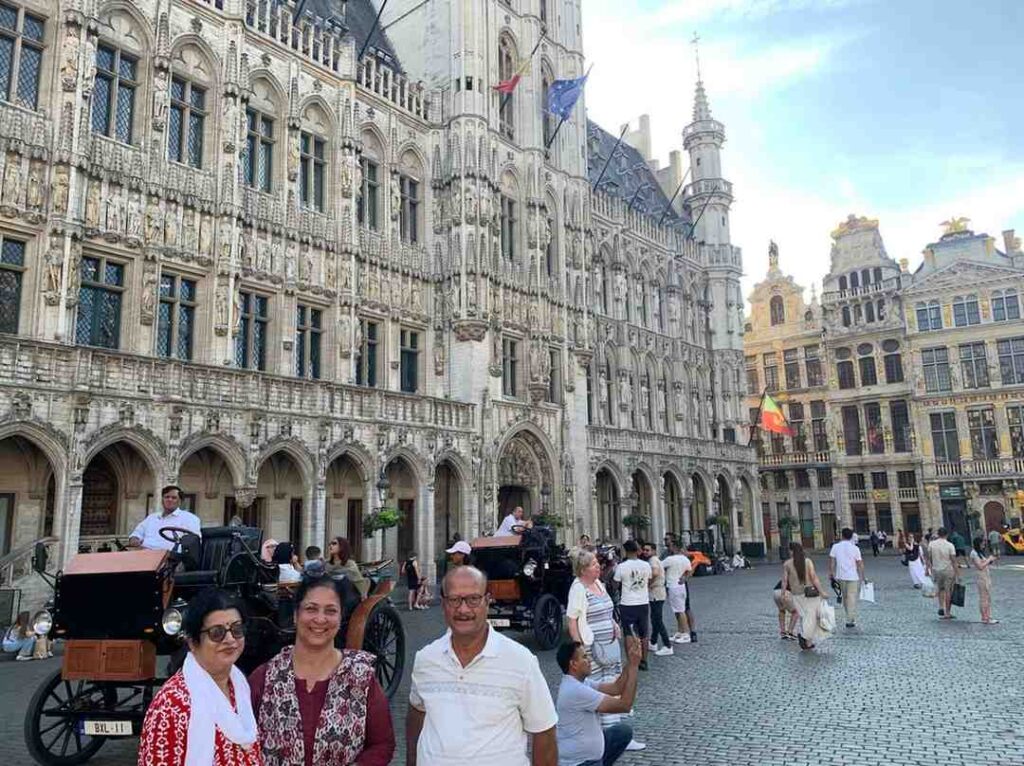
- Grand Place of Brussels
- Historic churches
- Fine arts
- Chocolates
- Festivals
Netherlands
The Netherlands is known for:
- Canals of Amsterdam
- Windmills
- Tulip gardens
- Dutch Golden Age art
- Rembrandt
- Van Gogh
Germany
Germany is renowned for:
- Gothic cathedrals
- Medieval castles
- Classical music
- Literature
- Philosophy
- Historic towns along the Rhine
The preservation of cultural heritage while embracing modernity is one of Europe’s greatest achievements.
⸻
Amsterdam’s Liberal Social System
One aspect of Amsterdam that often attracts international attention is its liberal approach to personal freedoms and adult activities.
The Netherlands has adopted policies that regulate certain adult industries rather than drive them underground. In designated areas of Amsterdam, particularly the famous Red Light District, adult services operate under legal regulations, health standards and government oversight.
Supporters argue that regulation provides:
- Better health protection
- Worker safety
- Legal oversight
- Reduction of criminal exploitation
Critics, however, continue to debate the social and ethical implications of such policies.
For visitors, the area is primarily a historic and tourist district containing canals, old buildings, restaurants, museums and entertainment venues. Tourists are expected to respect local laws, privacy and cultural norms.
Whether one agrees or disagrees with these policies, they reflect the Dutch tradition of individual freedom, social tolerance and pragmatic governance.
⸻
Reflections
As we reflected upon our first three days in continental Europe, we were deeply impressed by the remarkable achievements of Belgium, the Netherlands and Germany.
These countries demonstrate how scientific research, technological innovation, efficient governance, environmental consciousness and cultural preservation can work together to create prosperous societies.
Their success offers valuable lessons in education, infrastructure development, water management, agricultural modernization and industrial growth.
Our journey through Europe was still in its early stages, and Germany itself had many more treasures awaiting us. Yet the experiences of these first three nations had already enriched our understanding of modern civilization and human progress.
(To be continued in Chapter 5…)
Nicely explained