

My Fifteen-Day Grand Tour of Europe
Chapter 17: Government Servants in Europe and the United Kingdom – Their Status, Facilities, Salaries and Public Responsibility :
By Lokanath Mishra, M.A., LL.B., IRS (Retired)
During our fifteen-day tour through Europe, I was not only fascinated by the continent’s natural beauty, historical monuments and modern cities, but also deeply interested in understanding the functioning of its public administration. As a retired officer of the Indian Revenue Service (IRS), I naturally observed the discipline, efficiency and professionalism of government servants in the European countries we visited, including the United Kingdom, where we stayed before commencing our continental journey.
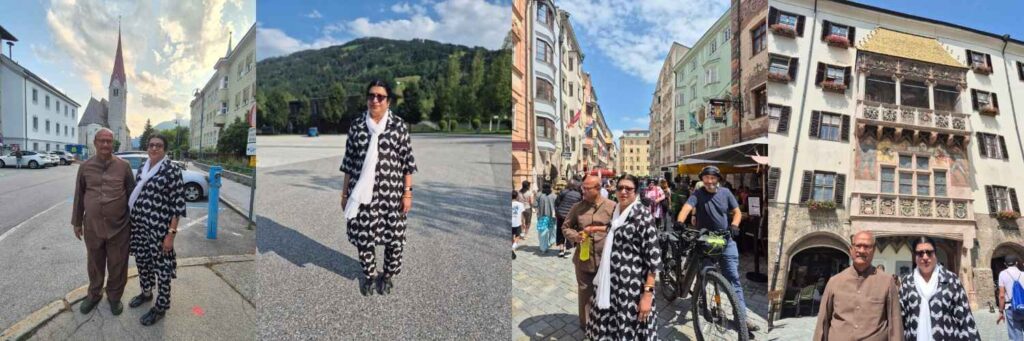
The United Kingdom, Belgium, the Netherlands, Germany and Switzerland have developed strong systems of public administration that contribute significantly to their prosperity, social welfare and high standard of living. Although each country has its own administrative structure, certain common features are visible throughout Europe: merit-based recruitment, professional training, accountability, reasonable salaries and a strong culture of public service.
The Position of Government Servants in Society
In most European countries and the United Kingdom, government servants are generally respected as professional public servants rather than as rulers or privileged elites. Their primary duty is to serve citizens efficiently, honestly and impartially.
The status of civil servants depends largely on their integrity, competence and contribution to public welfare. In countries such as Germany, Switzerland, the Netherlands and the UK, public officials are regarded as highly trained professionals who maintain the smooth functioning of the state.
Unlike in some developing countries where bureaucracy may sometimes appear distant from ordinary citizens, European administrations generally emphasise accessibility, transparency and citizen-friendly services.
Government offices are usually well-organised, digitalised and designed to minimise unnecessary delays. Citizens can complete many administrative procedures online, reducing direct contact with officials and thereby limiting opportunities for corruption.
The United Kingdom Civil Service
Since we first came from India and stayed in London before beginning our European tour, it is appropriate to mention the UK Civil Service separately.
The British Civil Service is one of the oldest and most respected administrative systems in the world. It serves the Government of the United Kingdom by providing impartial advice, implementing policies and delivering public services.
Recruitment and Training in the UK
Recruitment to the UK Civil Service is generally based on:
Competitive examinations
Interviews
Professional qualifications
Merit-based selection
Open competition
The UK places great emphasis on political neutrality. Civil servants are expected to serve the government of the day regardless of which political party is in power.
Position in Society
British civil servants enjoy a respectable position in society, particularly senior officials who are known for their expertise and administrative competence. However, they are expected to maintain humility and public accountability.
Salaries and Benefits
Salaries in the UK Civil Service vary according to grade, department and location. Employees generally receive:
Competitive pay
Paid annual leave
Maternity and paternity benefits
Sick leave
Pension contributions
Professional development opportunities
Pension System
The UK Civil Service Pension Scheme is a well-established system that provides retirement benefits based on salary and years of service. Recent reforms have made it more contributory and sustainable, but it remains one of the better pension schemes available in the UK.
Housing and Vehicles
Unlike India, government quarters are not commonly provided to UK civil servants. Employees usually arrange their own accommodation from their salaries.
Official vehicles are generally reserved for:
Ministers
Senior government officials
Diplomats
Security personnel
Most civil servants use public transport, personal vehicles or trains for commuting.
Recruitment and Professional Training in Europe
Most European countries recruit government servants through competitive examinations, academic qualifications, interviews and professional assessments.
Once selected, civil servants undergo specialised training in administration, law, finance, public policy, technology and ethics. Continuous professional development is encouraged throughout their careers.
For example:
Germany trains its civil servants through rigorous academic and practical programmes.
France has prestigious institutions for training senior administrators.
Switzerland emphasises decentralised administration, with many responsibilities handled at the cantonal and municipal levels.
The Netherlands focuses on innovation, digital governance and public participation.
Belgium combines federal and regional administrative systems with specialised training.
Countries Providing Better Facilities
Among the countries we visited and studied, the nations generally considered to provide the best facilities and welfare benefits to government servants include:
Switzerland
Norway
Sweden
Denmark
Finland
Germany
The Netherlands
United Kingdom
These countries offer high salaries, excellent healthcare, pension schemes, paid leave, parental benefits and opportunities for professional advancement.
However, it is important to note that these benefits are closely linked to the high cost of living and the high tax rates prevalent in many European countries.
Salaries of Government Servants
Government salaries in Europe and the UK vary widely depending on the country, rank, qualifications and years of service.
Switzerland
Swiss government employees are among the highest paid in Europe. Senior federal officials may earn salaries equivalent to several lakhs of Indian rupees per month. Even lower-level employees receive wages sufficient to maintain a decent standard of living, though Switzerland is also one of the most expensive countries in the world.
Germany
German civil servants, known as Beamte, enjoy stable salaries, job security and special legal protections. Their pay scales are determined according to rank and experience.
Netherlands
Dutch public servants receive competitive salaries along with allowances, pension contributions and social security benefits.
Belgium
Belgian government employees receive structured salaries, family allowances, healthcare benefits and pension schemes.
United Kingdom
UK civil servants receive salaries according to their grade and department. Senior officials in Whitehall departments receive substantial salaries, while junior officials receive moderate but secure incomes with pension and leave benefits.
In general, European and UK government salaries are periodically adjusted to account for inflation, economic conditions and collective bargaining agreements.
Pension Systems
Most European countries and the UK have well-developed pension systems for government servants.
Switzerland
Switzerland operates a three-pillar pension system consisting of:
State pension (AHV/AVS)
Occupational pension
Private voluntary savings
Germany
German civil servants receive pensions based on their final salary and years of service.
Netherlands
The Dutch pension system combines state pension with occupational pension schemes.
Belgium
Belgian public servants are entitled to pensions calculated according to their salary and length of service.
United Kingdom
The UK Civil Service Pension Scheme provides retirement benefits through contributory arrangements, ensuring financial security after retirement.
Unlike India, where the Old Pension Scheme (OPS) and National Pension System (NPS) are subjects of public debate, many European countries and the UK maintain a combination of state-supported and contributory pension arrangements.
Housing and Government Quarters
One noticeable difference between India and most European countries, including the UK, is the provision of government quarters.
In India, government accommodation is often provided to officers and employees, especially in major cities and administrative centres.
In Europe and the UK, however, government quarters are generally not provided to most civil servants. Instead, employees receive adequate salaries or housing allowances to arrange their own accommodation.
Only certain categories of officials, such as diplomats, military personnel, police officers or employees posted in remote areas, may receive official housing.
Official Vehicles
Official vehicles are not commonly provided to ordinary government employees in Europe or the UK.
In India, many senior officers are entitled to official vehicles with drivers.
In European countries and the UK, official vehicles are usually reserved for:
Ministers
Heads of state
Senior diplomats
High-ranking administrative officials
Emergency services
Police and military operations
Most government employees use public transport, personal vehicles or bicycles for commuting.
Corruption in European and UK Administration
A question that naturally arises is whether European and UK government servants are corrupt.
No country in the world is completely free from corruption. However, many European nations and the UK rank among the least corrupt countries in the world according to international transparency indices.
Countries such as Denmark, Finland, Sweden, Norway, Switzerland, the Netherlands and the UK consistently score very high in measures of transparency and good governance.
The reasons include:
Strong legal systems
Independent judiciary
Free media
Transparent procurement procedures
Digital governance
Strict anti-corruption laws
Public accountability
High ethical standards
Corruption cases do occur, but they are usually investigated seriously and punished strictly.
Pay Revision and Pay Commissions
In India, salaries of Central Government employees are periodically revised through Pay Commissions, such as the 7th Pay Commission.
European countries and the UK generally do not follow exactly the same system.
Instead, they use mechanisms such as:
Collective bargaining between governments and employee unions
Periodic salary negotiations
Inflation-based adjustments
Economic performance reviews
Sector-specific pay agreements
For example:
Germany negotiates public sector pay through collective agreements.
France periodically revises salaries based on government decisions and economic conditions.
The Netherlands uses collective labour agreements.
Switzerland adjusts salaries through federal and cantonal budgetary processes.
The UK uses independent Pay Review Bodies for several public sectors, such as teachers, doctors and armed forces personnel, while civil service pay is reviewed through government negotiations and annual budgetary decisions.
Thus, while India constitutes formal Pay Commissions at intervals, European countries and the UK often rely on more continuous and negotiated systems of salary revision.
Public Service Ethics
European and UK civil servants are expected to maintain high standards of ethics and professionalism.
They are generally prohibited from:
Accepting bribes
Misusing official power
Engaging in conflicts of interest
Discriminating against citizens
Using public resources for personal gain
Violation of these rules can result in disciplinary action, dismissal, fines or imprisonment.
Lessons for India
As a retired IRS officer, I believe India can learn several valuable lessons from European and UK public administration:
Greater digitalisation of government services
Reduction of unnecessary bureaucracy
Transparent recruitment and promotion
Performance-based evaluation
Stronger anti-corruption mechanisms
Better citizen-friendly services
Continuous professional training
Efficient use of public resources
At the same time, India has its own strengths, including a vast and diverse administrative system capable of serving more than 1.4 billion people under challenging conditions.
Reflections
Our journey through the United Kingdom and Europe taught me that the prosperity of a nation depends not only on natural resources or economic wealth, but also on the quality of its public administration.
Government servants in the UK and Europe generally enjoy respectable salaries, secure pensions, professional dignity and good working conditions. In return, society expects them to serve with honesty, efficiency and accountability.
The European and British models demonstrate that when public servants are well-trained, adequately compensated and held accountable, they can play a vital role in building peaceful, prosperous and well-governed societies.
As we continued our European tour, I carried with me not only memories of beautiful landscapes and historic monuments, but also valuable insights into how disciplined and transparent administration can contribute to national progress.
(To be continued in Chapter 18…)
Within 15 days of your European tour you covered seven to eight europian countries. Within such limited days how could you survey the status of government employees, Their pay structure, pension matter, service condition, recruitment procedure etc etc of all such countries. Or your write-up is based on your academic research. How many persons you contacted in these countries to collect first hand data. More importantly it is just impossible to make rapport with foreigners during such limited time to collect informatio. to build up data for systematic analysis to give comment. However academic research can make you aware of the system.
Ok thank you for your write-up
Thanks a lot for the comment. When ever I stay in London, I am usually visiting a famous library named Kingston Library and to a museum backside of the library named Kingston Museum, where I am getting lots of information about the Europe.