
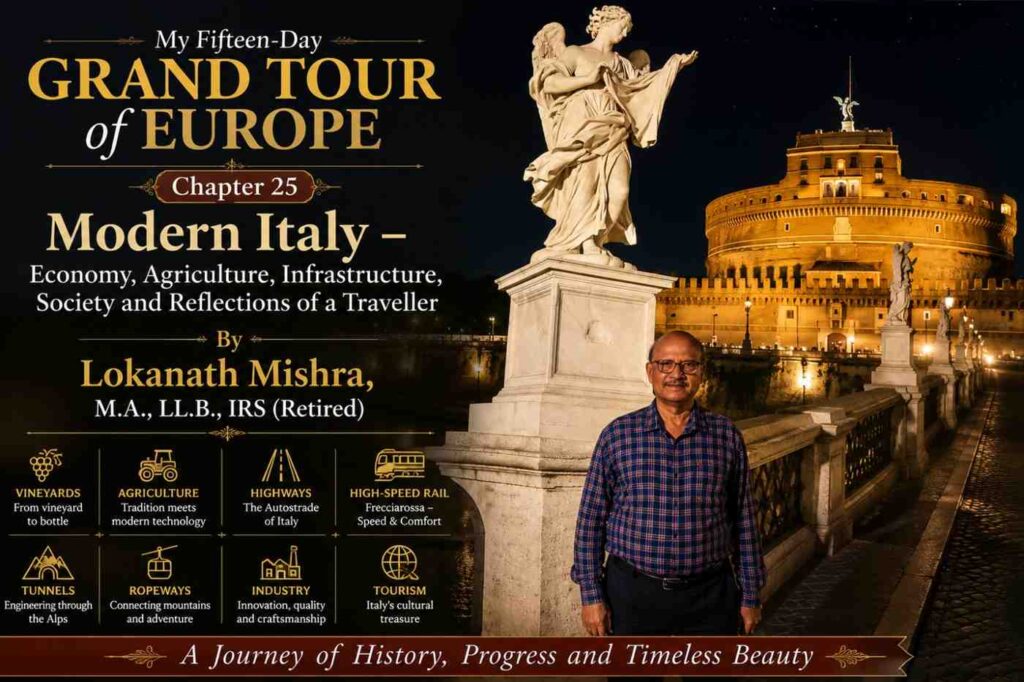
My Fifteen-Day Grand Tour of Europe
Chapter 25: Modern Italy – Economy, Agriculture, Infrastructure, Society and Reflections of a Traveller
By Lokanath Mishra, M.A., LL.B., IRS (Retired)
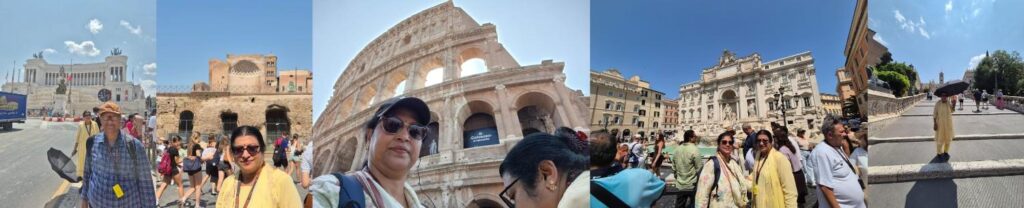
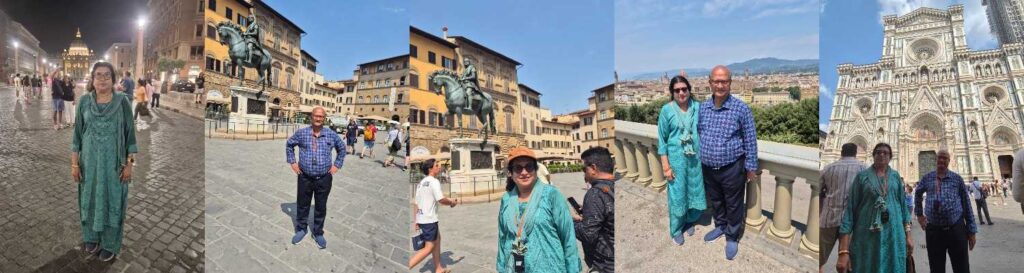
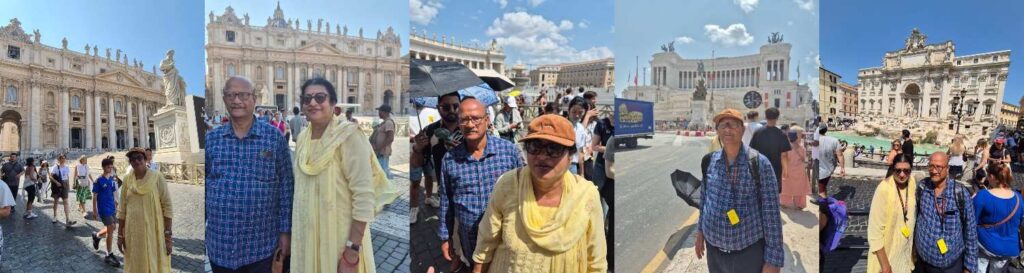
After visiting Venice, Florence, Vatican City and Rome, I developed a deeper appreciation for Italy. It is a country where the achievements of ancient civilization stand beside modern industries, advanced transportation and world-famous cultural traditions. Italy has given humanity remarkable contributions in architecture, art, literature, music, engineering and law. At the same time, like many modern nations, it also faces social and economic challenges.
For us—Lokanath Mishra, Basanti Mishra, Basant Mishra and Puspita Mishra—our stay in Italy was both educational and memorable.
Italy at a Glance
Italy occupies a strategic position in Southern Europe and extends into the Mediterranean Sea. It has a population of approximately 59 million people and is divided into 20 administrative regions.
Its major cities include:
- Rome
- Milan
- Venice
- Florence
- Turin
- Naples
- Bologna
- Genoa
The country is governed as a parliamentary democratic republic.
Although Italy has experienced periods of economic difficulty, it remains one of Europe’s largest economies and is a member of the European Union, the G7 and NATO.
Agriculture – A Traditional Strength
Agriculture continues to play an important role in the Italian economy.
Italy enjoys a Mediterranean climate that provides excellent conditions for farming.
Major agricultural products include:
- Grapes
- Olives
- Wheat
- Rice
- Corn (Maize)
- Tomatoes
- Potatoes
- Apples
- Pears
- Peaches
- Cherries
- Oranges
- Lemons
- Almonds
- Hazelnuts
- Vegetables
- Sunflowers
Italian farmers combine traditional knowledge with modern technology such as drip irrigation, mechanised harvesting and scientific crop management.
The fertile Po Valley in northern Italy is among Europe’s most productive agricultural regions.
Wine – From Vineyard to Bottle
One of the most impressive sights during our journey was the endless vineyards stretching across the countryside.
Wine production in Italy is both an agricultural activity and a major industry.
The process begins with carefully selecting suitable grape varieties. Farmers prepare the soil, plant vines and train them on trellises to ensure good sunlight and air circulation.
During late summer and early autumn, ripe grapes are harvested, either by hand or by machine.
The harvested grapes are transported to wineries, where they are:
- Cleaned and sorted.
- Crushed to extract juice.
- Fermented using natural or cultivated yeast.
- Stored in stainless steel tanks or wooden barrels.
- Matured for several months or years.
- Filtered and bottled.
Different production methods create red, white, sparkling and rosé wines.
Italy is among the world’s largest wine producers, exporting its products to almost every continent.
Wine is commonly served in Italian restaurants because it has been part of Italian food culture for centuries. Many Italians consume wine moderately during meals as a traditional accompaniment rather than as an intoxicating beverage. Excessive alcohol consumption, however, can lead to serious health and social problems, and public health authorities encourage responsible drinking.
Industrial Development
Italy possesses a highly diversified industrial economy.
Major industries include:
- Automobile manufacturing.
- Fashion and textiles.
- Leather goods.
- Machinery.
- Industrial equipment.
- Shipbuilding.
- Pharmaceuticals.
- Chemicals.
- Furniture.
- Food processing.
- Ceramics.
- Luxury products.
Italian brands are recognised worldwide for quality, craftsmanship and design.
Northern Italy, particularly Milan, Turin and Bologna, is the country’s principal industrial region.
Tourism – Italy’s Cultural Wealth
Tourism is one of Italy’s largest economic sectors.
Millions of visitors arrive annually to experience:
- Rome
- Venice
- Florence
- Milan
- Pisa
- Naples
- Sicily
- The Alps
- The Amalfi Coast
The country’s extraordinary historical monuments, museums, churches and natural beauty generate significant employment and foreign exchange.
Highways – The Autostrade
One aspect that impressed us greatly was Italy’s modern highway system.
The Autostrade connect major cities efficiently through wide multi-lane roads.
Features include:
- Excellent road surfaces.
- Clear traffic signs.
- Emergency services.
- Service stations.
- Rest areas.
- Electronic toll collection.
The highways pass through mountains, valleys and plains using tunnels and bridges built with remarkable engineering skill.
Railways
Italy has one of Europe’s most advanced railway networks.
Its high-speed trains, such as the Frecciarossa, connect major cities including Rome, Milan, Florence, Venice and Naples.
These trains travel at speeds of up to 300 km per hour, reducing travel time considerably.
Rail transport is widely used because it is comfortable, efficient and environmentally friendly.
Tunnels – Engineering Through Mountains
Italy’s mountainous terrain requires numerous tunnels for both highways and railways.
Engineers use modern techniques including tunnel-boring machines, controlled blasting and reinforced concrete lining to excavate safely through rock while protecting surrounding areas.
One of Europe’s most significant transport tunnels connected with Italy is the Mont Blanc Tunnel, linking Italy and France. It is about 11.6 kilometres long and was a remarkable engineering achievement when completed.
Italy is also connected to Switzerland and Austria through several important Alpine tunnels, facilitating trade and tourism throughout Europe.
Ropeways in the Alps
The Italian Alps contain many cable cars and ropeways that transport tourists to mountain peaks.
These ropeways are constructed using:
- Massive reinforced concrete foundations.
- Steel support towers.
- High-tensile steel cables.
- Advanced electric motors.
- Sophisticated safety systems.
They allow visitors to enjoy spectacular Alpine scenery while reducing the environmental impact that extensive road construction would have on fragile mountain ecosystems.
Italian Bathrooms
During our stay, we noticed that many hotels and homes had two porcelain fixtures in the bathroom.
One is the toilet (WC).
The second is a bidet, a fixture designed for washing the genital and anal areas after using the toilet. The bidet has been part of European hygiene practices for centuries and is common not only in Italy but also in several other European countries.
Its use reflects local customs regarding personal cleanliness rather than any legal requirement.
Society and Personal Freedom
Modern Italy is a democratic country where adults enjoy broad personal freedoms protected by law, provided they do not infringe upon the rights of others.
Attitudes toward relationships, dress, alcohol consumption and sexuality have changed over recent decades due to social change, urbanisation, education, media influence and broader cultural developments seen across many parts of Europe.
These changes are diverse, and Italians hold a wide range of personal, religious and moral views. It would not be accurate to say that there is a single attitude shared by all Italians.
Public debate in Italy continues on issues concerning family life, ethics, education and social values, just as it does in many democracies.
Crime and Pickpocketing
During my visit to Rome, I experienced two attempts at pickpocketing, when someone tried to steal from my back pocket in crowded tourist areas.
Fortunately, I remained alert and nothing was stolen.
Large international tourist destinations such as Rome, Paris, Barcelona and several other major cities unfortunately attract some pickpockets because crowded places provide opportunities for theft.
These crimes are usually committed by a small number of offenders and do not represent Italian society as a whole.
Travellers should therefore:
- Keep valuables in front pockets or money belts.
- Avoid displaying expensive jewellery or large amounts of cash.
- Remain alert in crowded buses, railway stations and tourist attractions.
- Use secure bags with zipped compartments.
- Carry photocopies of important documents.
With sensible precautions, most visitors enjoy safe and pleasant journeys.
Religion and Society
Italy has historically been a predominantly Christian, especially Roman Catholic, country. Although religious practice has declined in some areas and Italy has become more religiously diverse through immigration, Christianity continues to play an important role in the country’s history, festivals, art and cultural identity.
Like many societies, Italy includes people of different faiths and people with no religious affiliation. A small minority engage in criminal or antisocial behaviour, but such actions should not be attributed to any religion or to society as a whole.
Reflections
Italy impressed me with its extraordinary achievements in civilization, agriculture, engineering, transport, art and industry.
Its vineyards, highways, tunnels, railways and ropeways demonstrate how modern engineering can work together with nature. Its cities preserve thousands of years of history while embracing technological progress.
At the same time, my experience with attempted pickpocketing reminded me that travellers should remain cautious in crowded tourist areas, as they would in many major cities around the world.
Our visit strengthened my belief that every country possesses both admirable qualities and challenges. A traveller should appreciate the country’s history, culture and achievements while remaining aware of practical safety precautions.
Italy will always be remembered by us not only as the birthplace of the Roman Empire and the Renaissance but also as a nation whose remarkable contributions to art, science, engineering and human civilization continue to enrich the entire world.
(To be continued in Chapter 26…)