
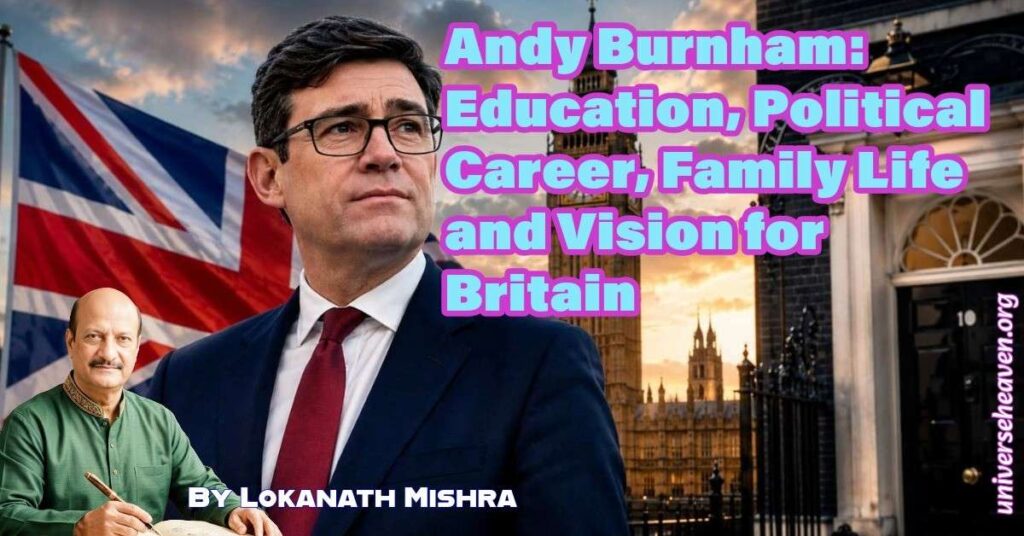
Andy Burnham:
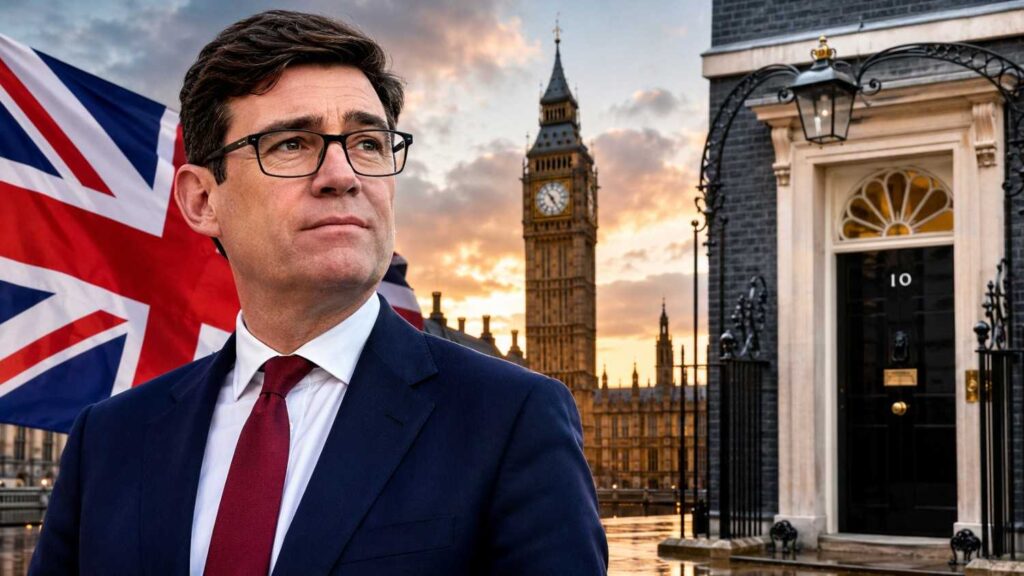
Following the resignation of Keir Starmer in June 2026, Andy Burnham has emerged as the front-runner and primary PM-designate to become the next Prime Minister of the United Kingdom.
Known widely across the UK as the “King of the North” for his high-profile tenure as the Mayor of Greater Manchester, Burnham recently won a Westminster seat in the Makerfield by-election, positioning him perfectly for the Labour leadership.
Qualifications and Education
Burnham’s background blends a working-class upbringing with elite academic credentials:
Early Education: Born in Aintree, Liverpool, and raised in Culcheth, Cheshire, he attended St Lewis Catholic Primary School and St Aelred’s Roman Catholic High School.
University Credentials: He attended Fitzwilliam College, University of Cambridge, where he read English. He graduated with an upper-second-class Bachelor of Arts (BA), which was later converted to a Master of Arts (MA) according to Cambridge tradition.
Ideological Foundation: He has frequently cited Catholic social teaching as the core philosophical anchor underpinning his political outlook, describing himself as “Catholic by upbringing” but not intensely religious.
Political and Professional Experience
Burnham possesses extensive experience in both central government (Westminster) and regional devolution:
Early Career: After university, he worked in the trade press before transitioning to politics at age 15 by joining the Labour Party. In the mid-1990s, he served as a key political researcher for influential Labour MP Tessa Jowell.
Parliamentary & Cabinet Career (2001–2017): First elected as the MP for Leigh in 2001, Burnham rose rapidly under New Labour. He held several prominent cabinet-level posts under Prime Minister Gordon Brown, including:
Chief Secretary to the Treasury (2007–2008)
Culture Secretary (2008–2009)
Health Secretary (2009–2010)
**The Mayoral Era (2017–2026): Seeking a break from Westminster politics after two unsuccessful Labour leadership bids (in 2010 and 2015), Burnham ran for and became the first Mayor of Greater Manchester. He served successfully from 2017 until June 2026, gaining immense national popularity for reforming public transport (the Bee Network), tackling homelessness, and standing up to central government during the COVID-19 pandemic.
The Return to Westminster (June 2026): Resigning his mayoral post to run in the Makerfield by-election, he secured a decisive victory to return as an MP, clearing his path to assume leadership of the governing Labour Party.
Married Life and Family
Despite his high-profile public life, Burnham has maintained a highly stable and private family life:
Marriage: Burnham has been married to Marie-France van Heel since 2000. The couple met while studying at Cambridge University and have been together throughout his entire political journey. Marie-France has worked in marketing and brand communications.
Children: Together, they have three children (one son and two daughters).
Upbringing & Parents: Burnham comes from a classic northern working-class family. His father, Kenneth Roy Burnham, worked as a telephone engineer for British Telecom, and his mother, Eileen Mary Burnham, worked as a GP receptionist.
What is “Manchesterism”?
As he prepares to potentially enter 10 Downing Street, Burnham has championed a political approach he calls “Manchesterism”—a philosophy focused on putting local communities, regional growth, and public services ahead of rigid party politics.
erspectives on India and the Hindu Community
As Andy Burnham transitions toward national leadership, his approach to foreign policy and minority communities is heavily informed by his nine years as Mayor of Greater Manchester—a region home to a thriving diaspora of over 55,000 British Indians.
Deepening Ties with India
Rather than viewing relations through a purely geopolitical lens, Burnham has approached India as a critical economic and innovation partner for the UK’s regional growth:
The Manchester India Partnership (MIP): Spearheaded under his mayoral tenure, Burnham launched a comprehensive strategic roadmap aligned with the wider UK-India 2030 bilateral goals. He has consistently advocated for direct collaboration between Indian cities and the North of England in key futuristic sectors like green mobility, digital tech, and health innovation.
Decentralized Diplomacy: Burnham has frequently met with Indian High Commissioners to push for post-Brexit trade advantages that benefit regional manufacturing and universities, famously noting that “India is a priority market… whose cultural and economic links enrich and enliven our communities.”
Engagement with Hinduism and the Diaspora
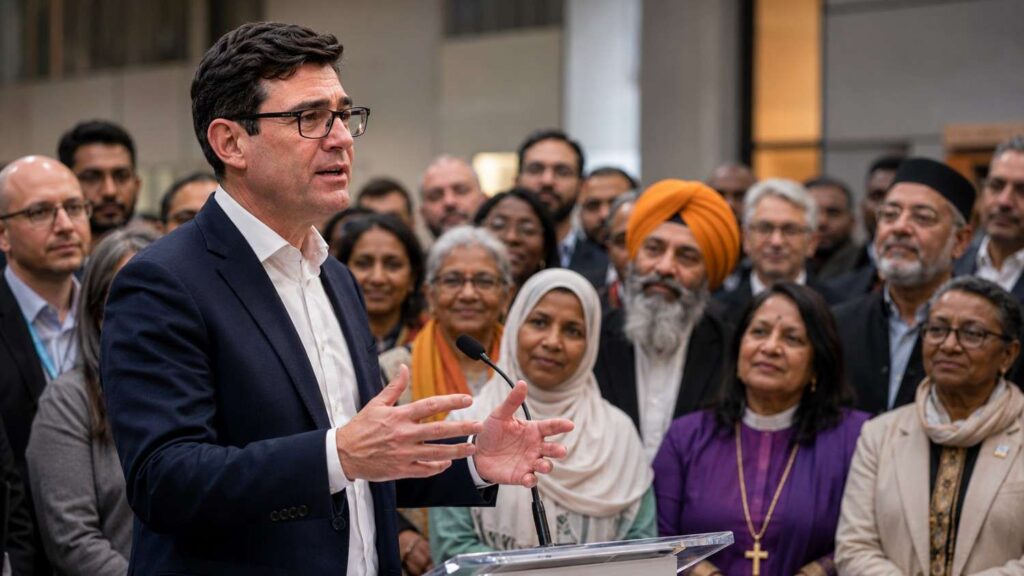
While Burnham is open about his own Catholic upbringing, his political philosophy emphasizes a highly inclusive, pluralistic multiculturalism:
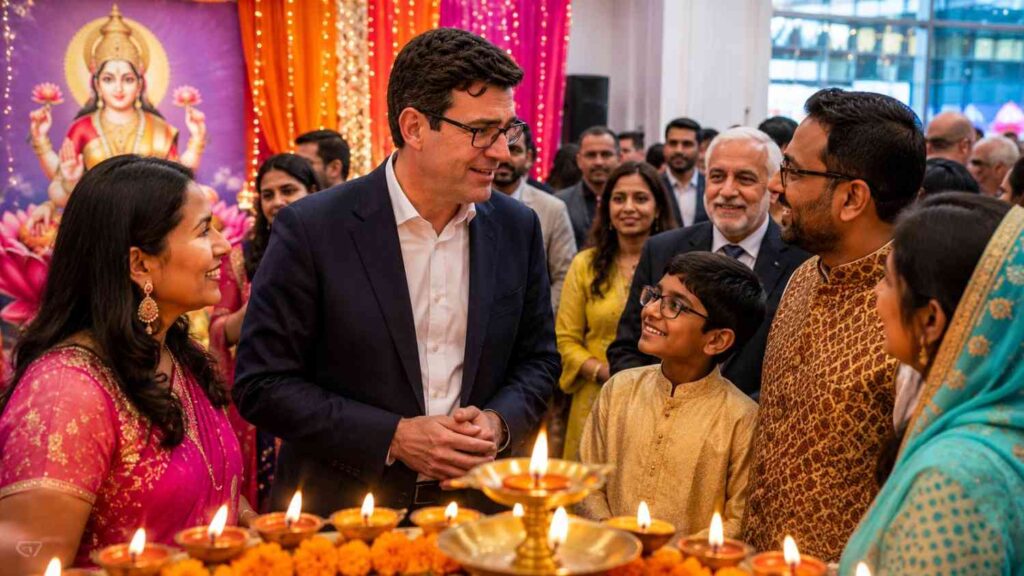
Community Integration: Burnham has been a regular fixture at major Hindu festivals across Greater Manchester, frequently attending local Diwali celebrations organized by British-Indian community networks and corporate Hindu forums.
Champion of Diversity: In contrast to political opponents who have occasionally warned that celebrating diverse religious holidays “robs Britain of its community,” Burnham explicitly champions the Hindu diaspora as a cornerstone of modern British identity. He has consistently praised the community’s entrepreneurial spirit and philanthropic contributions to the NHS and local infrastructure.
“Our cultural links with the Indian diaspora are not just a point of pride; they are a direct source of our shared economic prosperity.”
— Andy Burnham
There is no evidence or public record to suggest that Andy Burnham hates Muslim people. In fact, throughout his political career both in Westminster and as the Mayor of Greater Manchester, his track record shows a consistent history of defending and working closely with the British Muslim community.
His actual public record and policy stances regarding the Muslim community demonstrate the opposite:
Actively Campaigning Against Islamophobia
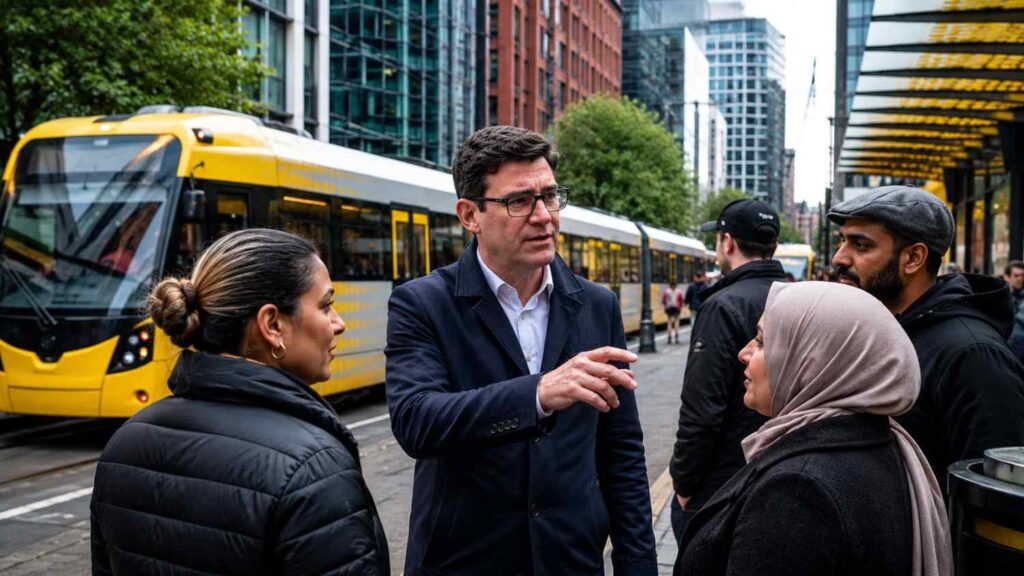
Burnham has been a prominent voice in calling out anti-Muslim prejudice in British politics. He has publicly criticized political opponents for failing to handle Islamophobia with the same urgency as other forms of racism, explicitly accusing political rivals of holding a “double standard” when it comes to protecting the Muslim community from vitriol and online hate.
Criticism of the “Prevent” Strategy
While serving as Labour’s Shadow Home Secretary, Burnham was one of the highest-profile critics of the government’s Prevent counter-terrorism duty. He argued against the policy precisely because he believed it unfairly targeted, stigmatized, and alienated British Muslims. He famously labeled aspects of the program “toxic,” arguing that building relationships and trust within Muslim communities was far more effective than state surveillance.
Unity After the Manchester Arena Attack
Following the tragic Manchester Arena bombing in 2017, Burnham’s leadership was widely praised for preventing community division. He worked directly with local mosques and Muslim community leaders to emphasize that the actions of a single extremist did not represent Islam. He actively campaigned against retaliatory hate crimes, pushing a message of civic unity (“Our Manchester”) that explicitly included and protected the city’s large Muslim population.
Summary: Rather than harboring animosity, Burnham’s political platform heavily relies on multicultural inclusion, and he has consistently positioned himself as an ally to the UK’s minority and faith communities.