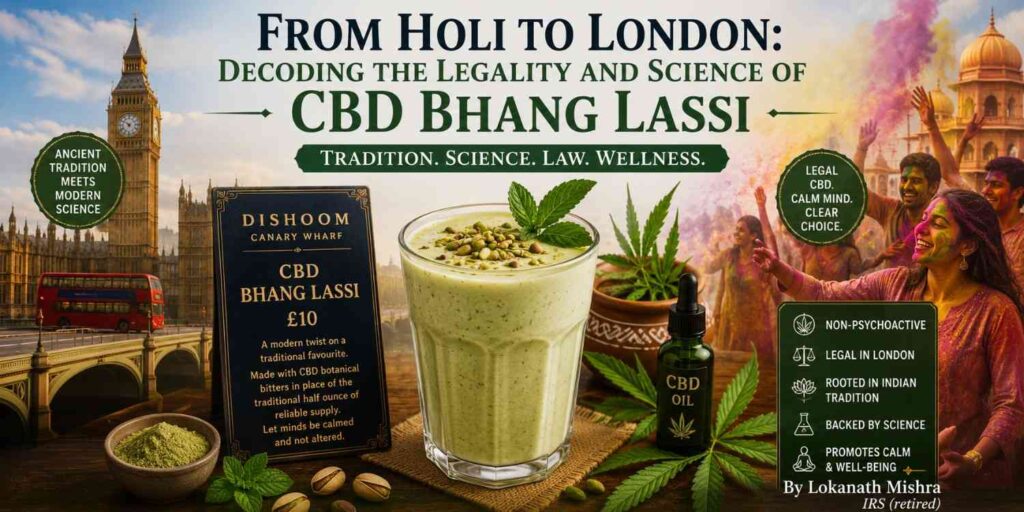
From Holi to London: Decoding the Legality and Science of the CBD Bhang Lassi
By Lokanath Mishra IRS ( retired)
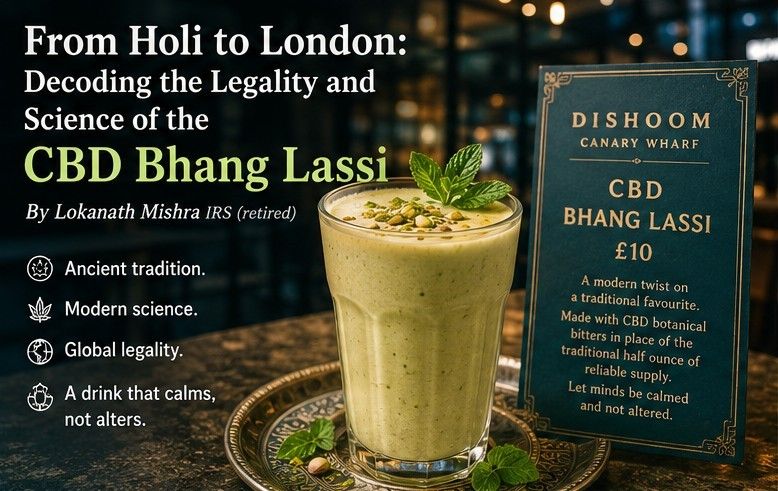
If you walk into the bustling, Irani-cafe-inspired surroundings of Dishoom on Water Street in London’s Canary Wharf, you might spot something unexpected on the menu: a CBD Bhang Lassi priced at £10. For anyone familiar with Indian culture, the word bhang evokes images of vibrant Holi festivals, religious devotion, and heavy psychoactive effects. Yet here it is, served legally in the heart of London’s financial district.
How does a drink deeply rooted in ancient Indian tradition find a lawful home on British high streets? The answer lies in a clever botanical substitution and a stark contrast in international law.
The Core Chemistry: Bhang vs. CBD
To understand why this beverage is legal in London, we have to look closely at the cannabis plant and its underlying compounds.
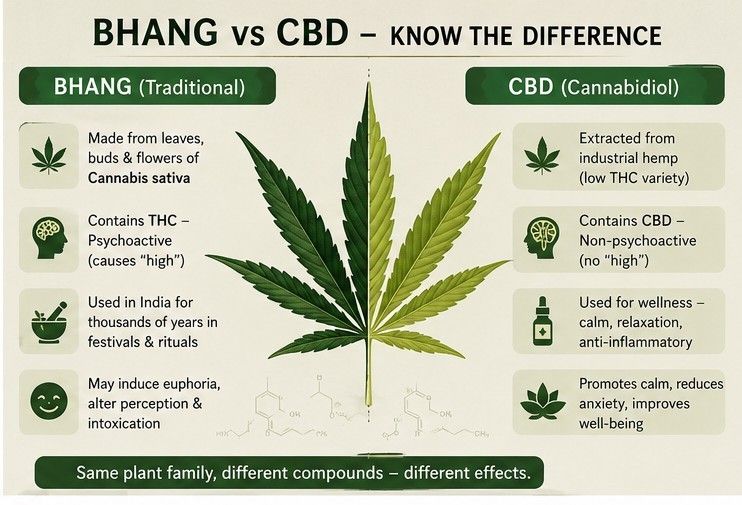
Bhang: This is a traditional paste made by grinding the fresh leaves, buds, and flowers of the Cannabis sativa plant. It naturally contains THC (tetrahydrocannabinol), the main psychoactive chemical responsible for the intoxicating “high.” In India, it has been used in food and drink for thousands of years, particularly to induce meditative states or celebrate religious festivals.
CBD (Cannabidiol): This is a non-intoxicating chemical compound extracted from industrial hemp plants. Unlike THC, CBD will not make you high. Instead, it is widely used to promote a sense of calm, reduce minor anxiety, and alleviate inflammation.
When a restaurant like Dishoom serves a “Bhang Lassi” in London, they aren’t importing psychoactive cannabis paste from India. Instead, they use a modern twist: they blend traditional lassi elements (like ginger, mint, and yogurt) with legal CBD botanical bitters. As the menu itself notes, it uses these bitters “in place of the traditional half ounce of reliable supply. Let minds be calmed and not altered.”
How is it Legal in London?
The UK regulates cannabis derivatives strictly under the Misuse of Drugs Act 1971 and the Food Standards Agency (FSA) Novel Foods guidelines.
While raw cannabis flower and high-THC oils are illegal recreational substances in the UK, CBD products are perfectly legal under very specific conditions:
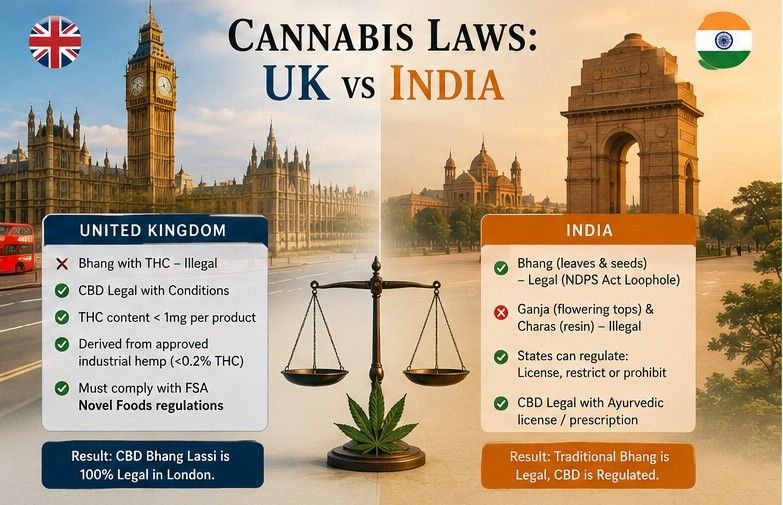
- THC Content: The finished product must contain no more than trace amounts of controlled cannabinoids (generally interpreted as less than 1 milligram of THC per container).
- Sourcing: The CBD must be derived from approved industrial hemp strains that contain less than 0.2% THC during cultivation.
- Novel Food Authorization: Because ingestible CBD has no history of widespread consumption in the UK prior to 1998, food and drink businesses can only use CBD extracts that are registered and undergo strict safety testing with the FSA.
Because the CBD bitters used in the drink contain zero psychoactive THC and comply with these safety metrics, the beverage can be sold perfectly legally at the bar.
The Legal Paradox: Cannabis Laws in India
Paradoxically, while the UK bans traditional psychoactive bhang but allows CBD, India operates under a completely different legal framework.
Under India’s Narcotic Drugs and Psychotropic Substances (NDPS) Act of 1985, cannabis is strictly regulated, but with a massive historical loophole:
The Bhang Loophole: The NDPS Act explicitly defines prohibited cannabis (hemp) as ganja (the flowering or fruiting tops) and charas (the separated resin). Crucially, the law excludes the leaves and seeds of the bhang plant when unaccompanied by the tops.
Because traditional bhang is made exclusively from the leaves and seeds, it does not fall under the definition of a banned narcotic. This keeps the cultural and religious consumption of bhang legal at a national level. However, individual states hold the power to regulate it; some states license official government bhang shops, while others have enacted total prohibitions.
What about CBD in India?
CBD is growing in popularity in India, primarily driven by the Ayurvedic medicine sector. Under the Ministry of Ayush, manufacturers can legally sell CBD-infused oils and tinctures as long as they are derived from cannabis leaves (bhang leaves) and carry an Ayurvedic prescription or license.
Making a Legal “Modified” Bhang Lassi at Home
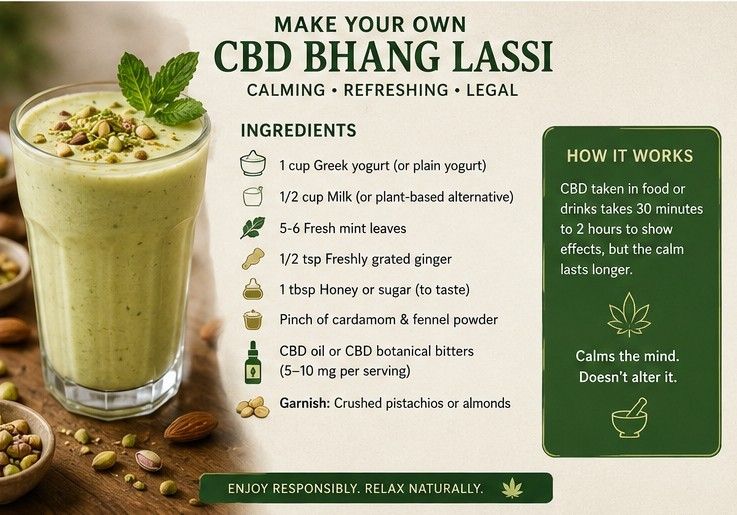
If you want to recreate the calming, refreshing experience of London’s legal twist without booking a restaurant table, you can easily blend a batch at home using over-the-counter CBD oil or bitters.
The Ingredients
1 cup Greek yogurt or plain whole-milk yogurt
1/2 cup Milk (or plant-based alternative)
5-6 Fresh mint leaves
1/2 tsp Freshly grated ginger
1 tbsp Honey or sugar (adjust to taste)
A pinch of ground cardamom and a pinch of fennel powder.
Your daily dose of high-quality, legal CBD oil or CBD botanical bitters (typically 5 to 10 mg per serving—always check your product label)
Garnish: Crushed pistachios or almonds
A Note on Consumption: When you ingest CBD through a liquid or food rather than taking it under the tongue, it passes through your digestive system. This means it can take anywhere from 30 minutes to 2 hours for you to feel the subtle, relaxing effects, but they will linger gently throughout your evening. Enjoy your home-brewed relaxation responsibly!