
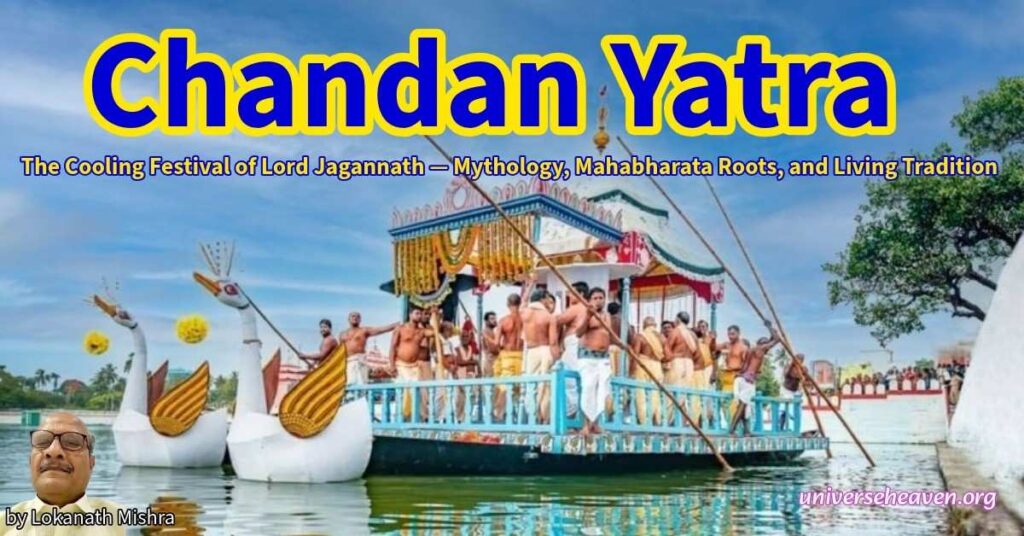
Chandan Yatra: The Cooling Festival of Lord Jagannath — Mythology, Mahabharata Roots, and Living Tradition
By Lokanath Mishra, Jenamath Lane, Puri.
Chandan Yatra is one of the most enchanting and symbolically rich festivals associated with Lord Jagannath in Puri. Celebrated during the peak of summer, it harmoniously blends ritual devotion, mythological memory, and community participation into a grand spiritual observance centered on love (bhakti) and service (seva).
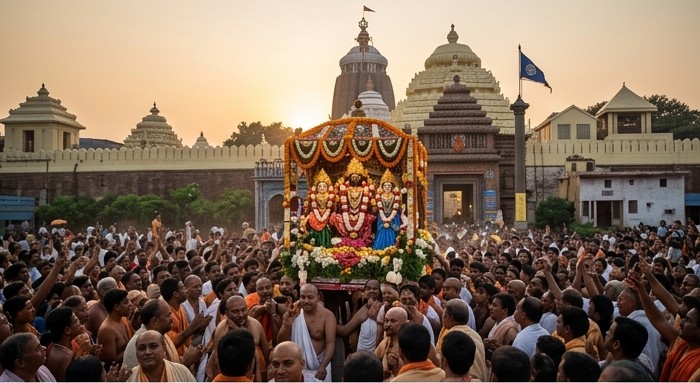
During Chandan Yatra, the Lord is worshipped as Madhusudana. In the Rath Yatra, He is revered as Vamana, and during Dolayatra, He is known as Govinda (Dola Govinda). It is believed that the darshan of Madhusudana during this festival grants devotees spiritual liberation (moksha or swarga prapti).
The chalanti pratima (processional deity) Madanmohan, along with Sridevi and Bhudevi, participates in the procession. Alongside them, Balabhadra (as BalaRama), Krishna, and the Pancha Mahadeva of Sri Kshetra—worshipped symbolically as the Pandavas—also take part in this sacred festival. Their participation strengthens the traditional belief that Chandan Yatra has roots tracing back to the era of the Mahabharata.
In 2026, Chandan Yatra commenced on April 20, coinciding with Akshaya Tritiya, marking the beginning of the 21-day Bahara Chandana (outer festival), followed by the 21-day Bhitara Chandana (inner observances), making it a complete 42-day sacred celebration.
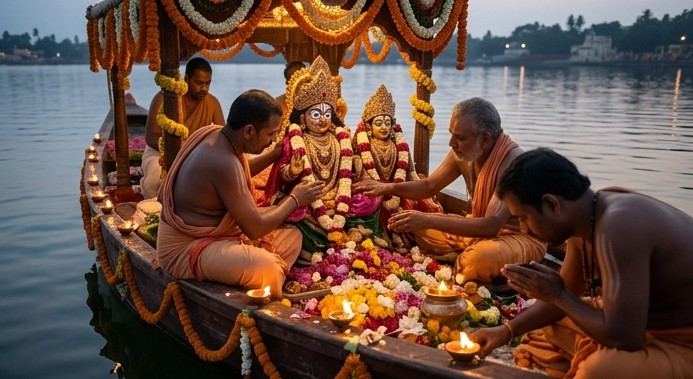
The Setting: Sacred Geography and Ritual Space
The heart of the festival lies in two key sacred locations:
- Sri Jagannath Temple
- Narendra Sarovar
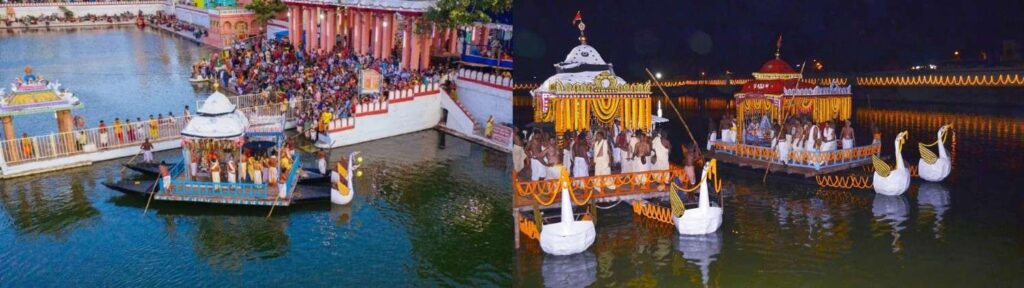
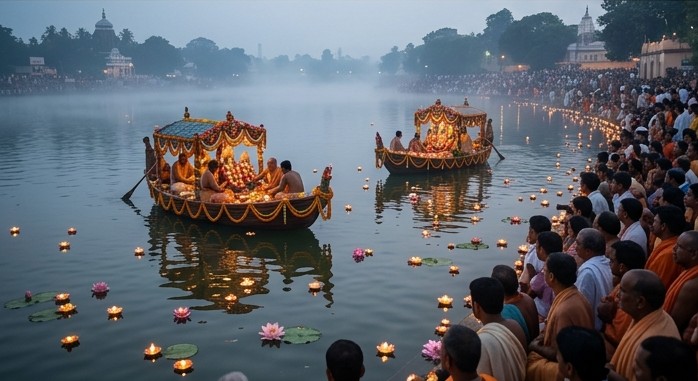
Each evening during the first 21 days, representative deities are taken in a grand procession from the temple to Narendra Sarovar, where they participate in Chapa Khela—a ceremonial boat festival symbolizing divine joy and leisure.
Ritual Highlights of Chandan Yatra
- Application of Sandalwood Paste
The central ritual involves applying fragrant sandalwood paste to the deities. This reflects the intimate belief that the Lord experiences human-like sensations and is lovingly cared for by devotees during the intense summer heat.
- Chapa Khela (Boat Festival)
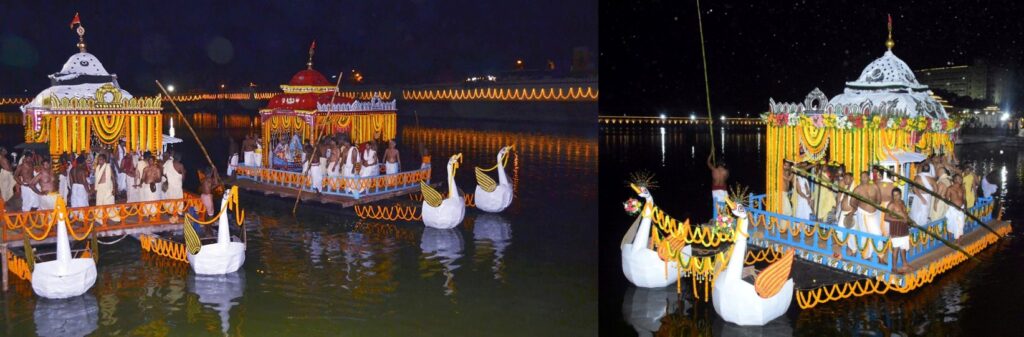
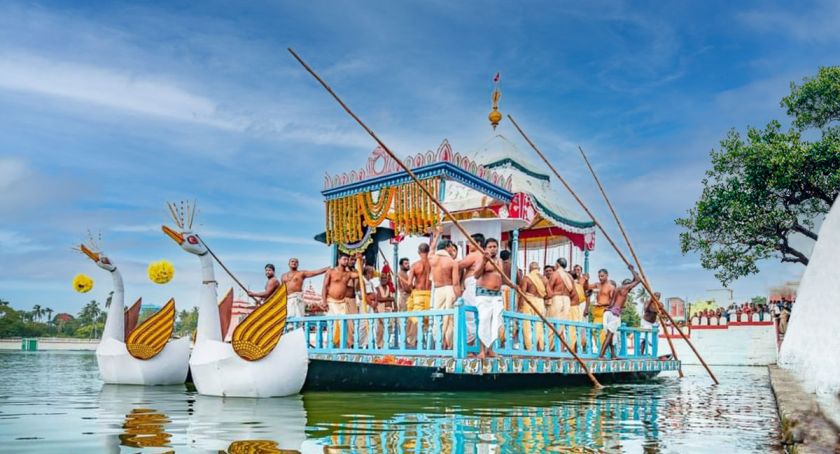
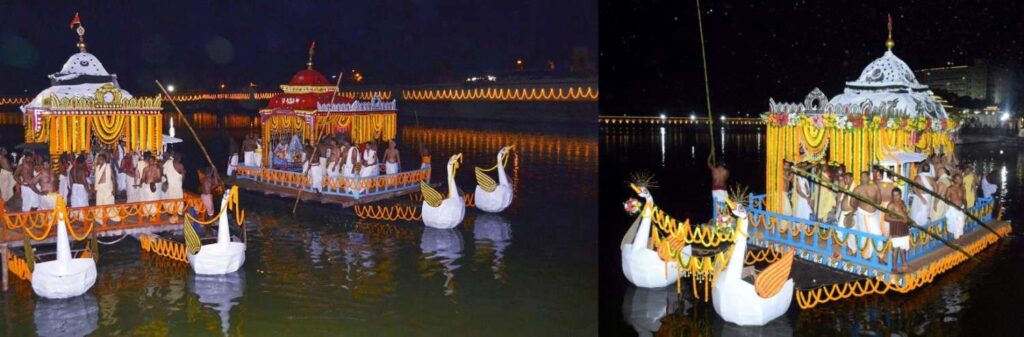
The deities—especially Madanmohan along with Sridevi and Bhudevi—are placed on beautifully decorated boats named Nanda and Bhadra, which glide across Narendra Sarovar, recreating the divine water pastimes of Lord Krishna.
- Beginning of Rath Construction
On this auspicious occasion, the construction of the grand chariots for the annual Rath Yatra begins, establishing a sacred continuity between these two major festivals.
Mythological Origins
The Command to King Indradyumna
According to sacred tradition, King Indradyumna received divine instruction from Lord Jagannath to initiate this festival. The Lord desired to be treated as a living being, requesting cooling rituals and leisurely outings during the scorching summer.
The Legend of Madhavendra Puri
A deeply revered account from the Gaudiya Vaishnava tradition centers on Madhavendra Puri. Around 700 years ago, the deity Gopal appeared to him in a dream, expressing distress due to intense heat and requesting sandalwood paste from the Malaya region.
This legend established the theological foundation of offering cooling substances as an act of loving devotion, reinforcing the spiritual essence of Chandan Yatra.
The Mahabharata Connection
One of the most fascinating dimensions of Chandan Yatra is its association with the Mahabharata.
The Pandavas and Agyat Vasa
During their final year of exile—known as Agyat Vasa—the Pandavas lived incognito in the kingdom of King Virata.
During this time:
- Lord Krishna visited the kingdom.
- A festive boat celebration was arranged in His honor.
- King Virata, filled with devotion, applied sandalwood paste to Krishna to provide relief from the summer heat.
This episode is regarded as a proto-form of Chandan Yatra, symbolizing both royal devotion and divine celebration.
Spiritual Significance
- Divine Love Through Service
Chandan Yatra emphasizes seva bhava—the spirit of loving service. Devotees prepare sandalwood paste with devotion, expressing care for the Lord as one would for a beloved family member.
- Cooling the Heat of Material Life
The cooling nature of sandalwood symbolizes spiritual relief. Just as it soothes the body, devotion calms the soul from the intense “heat” of worldly existence.
- Accessibility of the Divine
During Bahara Chandana, the Lord comes out of the sanctum to be among devotees, signifying divine humility and universal accessibility.
- Celebration of Krishna’s Water Pastimes
The boat rides evoke the playful water pastimes of Krishna in Vrindavan, transforming the festival into a joyful reenactment of divine līlā.
The Two Phases of the Festival
Bahara Chandana (Outer Festival)
- Duration: First 21 days
- Venue: Narendra Sarovar
- Activities: Processions, boat rides, sandalwood application
Bhitara Chandana (Inner Festival)
- Duration: Last 21 days
- Venue: Inside the temple
- Observed on auspicious days such as Amavasya, Purnima, Ekadashi, and Shashti
Chandan Yatra Beyond Puri
While Puri hosts the grandest celebrations, the festival is also observed in:
- Lingaraj Temple
- Brahmin Sasan villages associated with Mukti Mandapa traditions
At Lingaraj Temple, the festival continues for the full 42 days with equal devotion and grandeur.
Cultural and Ritual Continuity
Chandan Yatra stands as a remarkable example of the seamless blending of mythology, history, and ritual within Hindu tradition. It reflects:
- Continuity from the Mahabharata
- Influence of medieval devotional traditions like Gaudiya Vaishnavism
- The enduring vitality of Odisha’s living temple culture
Conclusion
Chandan Yatra is not merely a ritual—it is a living expression of devotion, mythology, and the intimate relationship between humanity and the Divine. From the loving application of sandalwood paste to the serene boat rides beneath the evening sky, every element reflects a deeply personal bond where the Lord is not distant, but lovingly present.
Rooted in the sacred narratives of the Mahabharata and enriched by centuries of tradition, this festival continues to inspire millions. It reminds us that the Divine accepts care, comfort, and affection—and in offering that care, devotees discover the highest joy: serving with love.