The Price of Luck
By Lokanath Mishra
Three years ago, in the quiet village of Chandipur, where mornings began with the sound of temple bells and evenings melted into soft golden sunsets, lived a young man named Raghav.
Raghav was not particularly wealthy, nor highly educated. He worked as a caretaker in a small holiday home near the outskirts of the village—welcoming guests, maintaining the rooms, watering the garden, and ensuring everything ran smoothly. His income was modest, but he was known for his simplicity and polite nature.
Into his life came Meera.
Meera was everything Chandipur admired and whispered about—educated, confident, and graceful. She worked as a software developer in a nearby city, commuting every week. Her sharp mind and soft-spoken demeanor made her stand out. The two met during a family function and gradually fell in love. Against some initial hesitation, their families agreed, and the marriage was celebrated with great enthusiasm.
But what truly caught everyone’s attention was not the love story—it was the dowry.
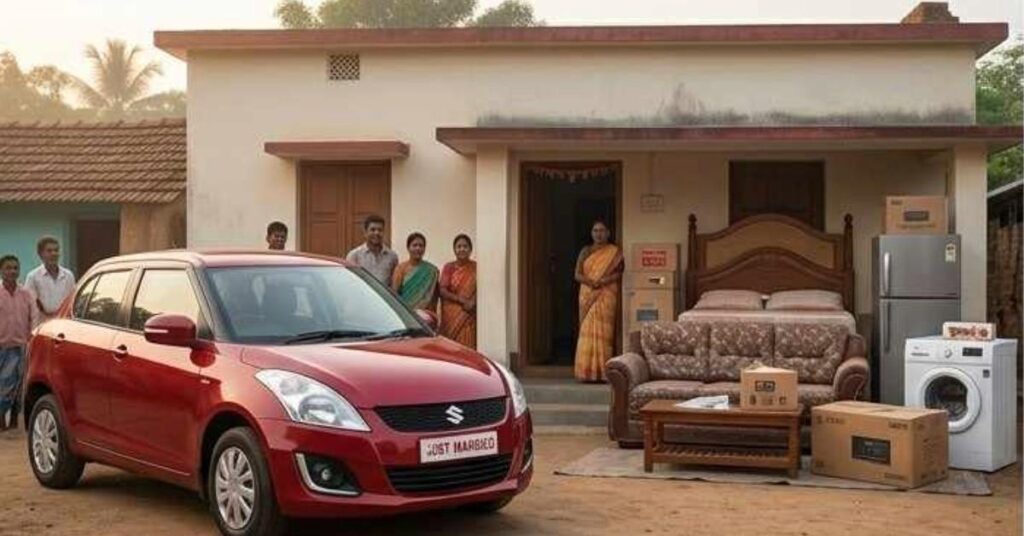
Meera’s father, a retired government officer, gave more than what most villagers had ever seen. A brand-new car stood shining outside Raghav’s modest house. Inside, there were a washing machine, a refrigerator, a television set, a sofa set, elegant furniture, and gold jewellery that gleamed in the light. On top of that, he handed over twenty lakh rupees to Raghav to build a proper house and start a business.
People couldn’t stop talking.
“Raghav has hit the jackpot,” one would say.
“Such luck doesn’t come twice in a lifetime,” another would add.
Raghav would smile awkwardly, but somewhere inside, these words began to settle—not as gratitude, but as expectation.
In the beginning, their married life seemed pleasant. Meera continued her job, balancing her work with household responsibilities. Raghav started constructing a new house using the money given by her father and even attempted to expand his role at the holiday home into a small business.
But slowly, cracks began to appear.
The first misunderstanding came quietly.
Meera wanted to continue working in the city and grow in her career. Raghav, influenced by villagers and his own insecurities, began to feel uncomfortable. “Why do you need to work so much?” he would ask. “We have enough now.”
Meera would respond calmly, “It’s not about money, Raghav. It’s my career, my identity.”
But to Raghav, her independence began to feel like distance.
Soon, small disagreements turned into frequent arguments.
Raghav started comparing himself with Meera—her salary, her lifestyle, her confidence. Instead of feeling proud, he felt diminished. And instead of expressing his insecurities, he masked them with control.
He questioned her late work calls.
He criticized her for not spending enough time at home.
He even began to remind her, subtly at first and later openly, of “everything her family had given.”
“You should adjust more,” he would say. “After all, this is your home now.”
Meera, who had entered the marriage with love and hope, began to feel suffocated.
One evening, after a particularly long day at work, she returned home tired. Raghav was waiting.
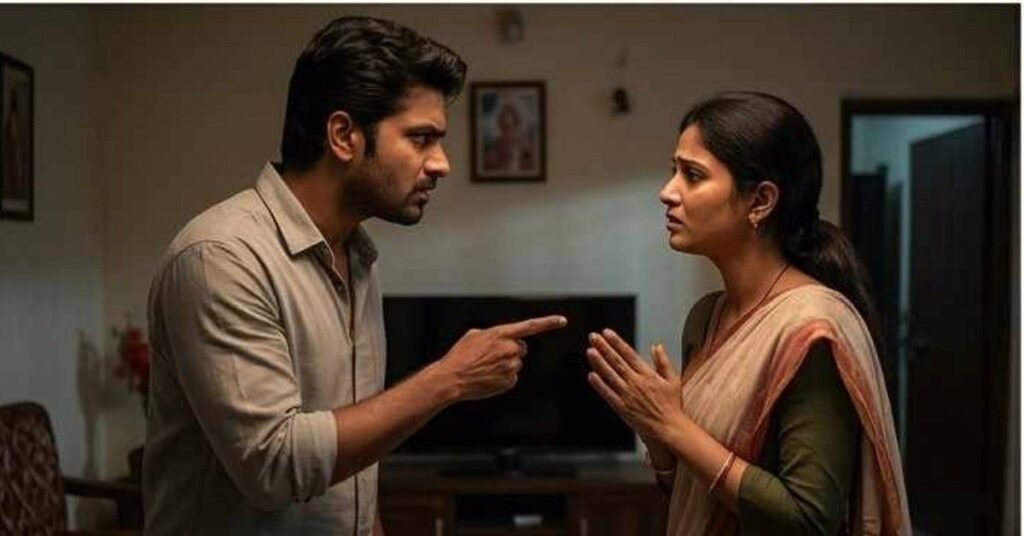
“Why were you late?” he demanded.
“I had a deadline,” she replied.
“There is always some excuse. You think your job is more important than this marriage?”
She paused, looking at him carefully. “No, Raghav. But I think respect is important.”

That word—respect—hung heavily in the air.
As months passed, the warmth between them faded. Conversations turned into accusations. Silence replaced laughter.
What made it worse was the constant commentary from society.
When things were good, people had praised Raghav’s luck.
Now, when cracks appeared, they blamed Meera.
“Working women don’t know how to run a home.”
“She brought so much, yet couldn’t keep the marriage.”
No one spoke about the pressure of dowry.
No one spoke about expectations tied to it.
No one spoke about how money had quietly poisoned the foundation of their relationship.
Finally, after two years of trying, arguing, adjusting, and breaking down, Meera made a decision.
She filed for divorce.
The news spread faster than their wedding invitations once had.
People shook their heads.
“What a waste.”
“So much dowry… all gone.”
But Meera didn’t see it as a loss.
For her, it was a reclaiming.
And Raghav?
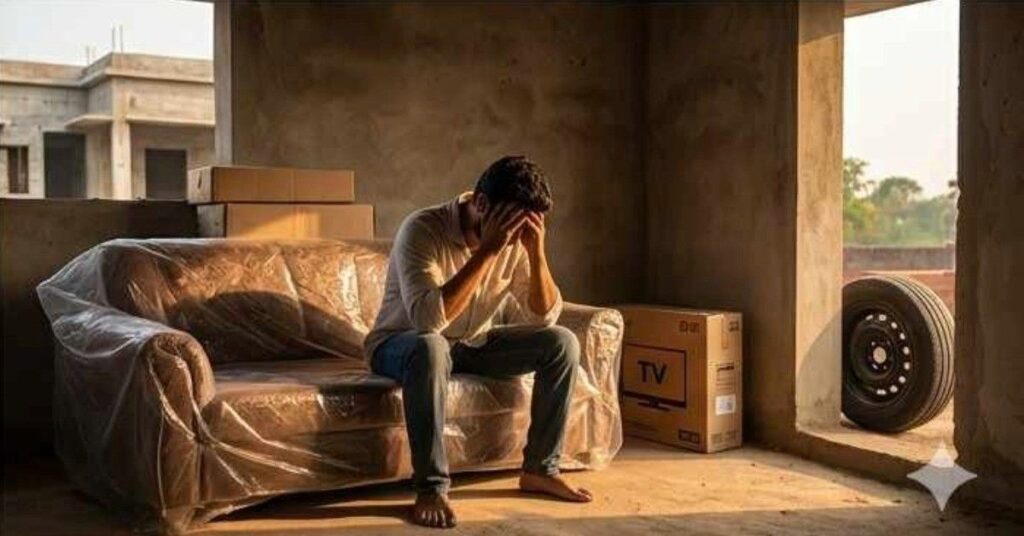
He sat alone one evening in the half-finished house built with someone else’s money, surrounded by things that once symbolized fortune—but now felt like reminders of something deeper he had lost.
Not the dowry.
Not the money.
But the ability to value a person beyond what they brought.
Chandipur eventually moved on, as villages always do.
New stories replaced old ones.
But somewhere, quietly, the truth remained—
What people called “luck” was never really luck.
And what was normalized as “tradition” had quietly turned into something toxic.
A price had been paid.
Not in rupees.
But in trust, dignity, and love.