
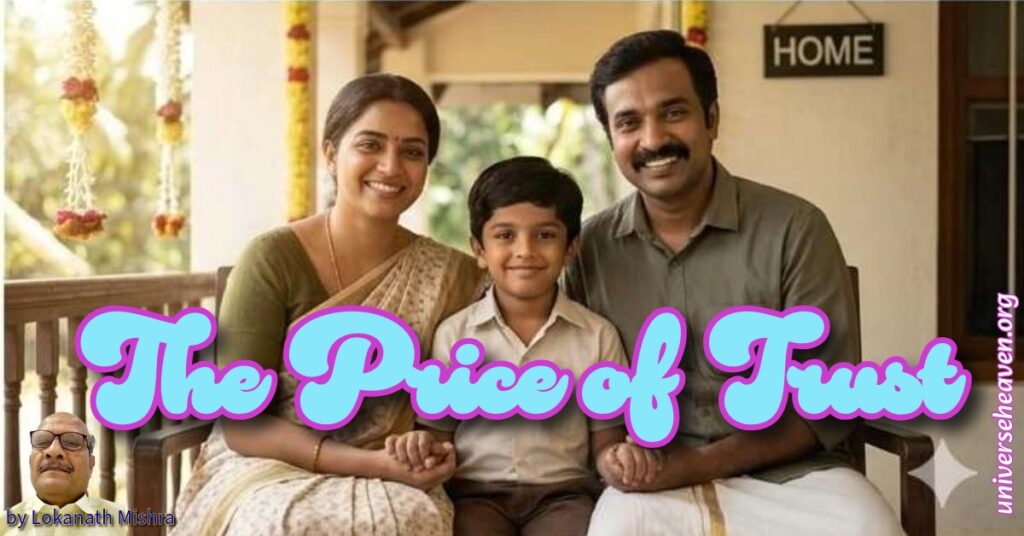
The Price of Trust
By Lokanath Mishra
Muni had always been the kind of girl people noticed without trying. It wasn’t just her beauty—though that alone was enough to turn heads in the corridors of her junior college—it was the quiet intensity in her eyes, the way she listened more than she spoke, and the sense that her life was moving toward something larger than the small town she lived in.

She was in her intermediate class when she first met him—a young lecturer, charming and confident, with a voice that made even the most tedious subjects seem meaningful. At first, their conversations were innocent: a question after class, a doubt clarified, a shared smile. But slowly, something deeper took root. He encouraged her, praised her intelligence, told her she was different from the others.
Muni believed him.
For a girl who had always lived within the boundaries set by family and society, his attention felt like freedom. Their conversations grew longer, more personal. Soon, she found herself waiting for his lectures, for his glance, for his approval. And before she realized it, she was in love.
But love, as she would learn, is not always what it seems.
The truth came to her not from him, but from whispers—soft at first, then undeniable. He was married. Not just married, but a father of two children. His wife lived in another city, working as a teacher.

The ground beneath Muni’s feet seemed to vanish.
When she confronted him, he did not deny it. Instead, he offered explanations—loneliness, distance, a marriage that had lost its meaning. But none of it mattered to her. The trust had been broken.
That night, Muni made a decision that would shape the rest of her life. She ended the relationship, cut off all contact, and turned inward. The girl who once laughed easily became quiet, reserved. She focused on her studies, determined to rebuild herself from the fragments of what she had lost.
Time moved forward, as it always does.
By the time she entered her graduation course, Muni had regained much of her strength. She was no longer the naive girl who had fallen blindly in love. She was more cautious now, more aware of the complexities of people and relationships.
It was during this phase that she met him—the junior engineer.
He was everything the lecturer was not: straightforward, sincere, and open about his life. There were no secrets, no hidden truths. Their friendship grew naturally, without the intensity or secrecy of her past. For the first time, Muni felt what it meant to be in a relationship built on honesty.

They spent two years together.
Those were perhaps the most peaceful years of her youth. They talked about the future, about careers, about building a life together. Muni began to believe that her past was behind her.
But the past has a way of returning.
When the engineer learned about her earlier relationship with the married lecturer, something changed in him. It wasn’t anger, but disappointment—deep and quiet. He struggled to reconcile the woman he loved with the story he had just heard.
Muni tried to explain, to make him understand that she had been young, that she had made a mistake and learned from it. But trust, once shaken, is not easily restored.
One day, he told her it was over.
There were no accusations, no harsh words—just a finality that left no room for hope.
Muni did not cry in front of him. She had learned that much. But when she was alone, the pain returned, sharper this time—not just from the loss, but from the realization that her past would always follow her.

Still, she did not let it break her.
She completed her graduation and made a bold decision: she would study law.
Law college was a turning point. It gave her a sense of purpose, a direction that was entirely her own. She immersed herself in her studies, learning not just the rules of law, but the complexities of human behavior—the lies, the truths, the grey areas in between.
When she completed her degree, Muni became a criminal lawyer and began practicing in the district court.
The courtroom became her new world.
Here, she saw stories far more complicated than her own—betrayals, crimes, misunderstandings, and the fragile nature of truth. Each case taught her something, not just about the law, but about life.
It was in this environment that she met him—a clerk in the district court.

He was simple, grounded, and kind. He did not see her as a past to be judged, but as a person in the present. Their connection grew slowly, without the rush or intensity of her earlier relationships.
This time, Muni was careful.
When they married, it was not just an emotional decision but a thoughtful one. They built their life together step by step, supporting each other through the challenges of work and family.
Years passed, and they were blessed with a son.
For eight years, their life was peaceful. Not perfect—no life ever is—but stable, warm, and filled with small moments of happiness. Muni balanced her demanding career with her role as a wife and mother, finding a rhythm that brought her contentment.
But even the strongest bonds can be tested.
It began with whispers—rumors spread by colleagues, careless words spoken without thought. They said her husband was involved with other women. At first, Muni dismissed them. She trusted him.

But the whispers grew louder.
Doubt, once planted, is difficult to remove. It crept into her mind, slowly eroding her confidence. She began to question his actions, his words, his absences.
Arguments followed.
What had once been a relationship built on trust began to crumble under suspicion. Her husband denied the rumors, insisted they were false. But Muni, shaped by her past, found it hard to believe completely.
The tension grew until it became unbearable.
Eventually, a divorce petition was filed.
The legal process, which she understood so well as a lawyer, now became painfully personal. Every document, every hearing felt like a wound being reopened.
In due course, the divorce was granted.
Muni returned to her work, her life seemingly intact, but something inside her had changed. The quiet strength she once had was now mixed with regret.
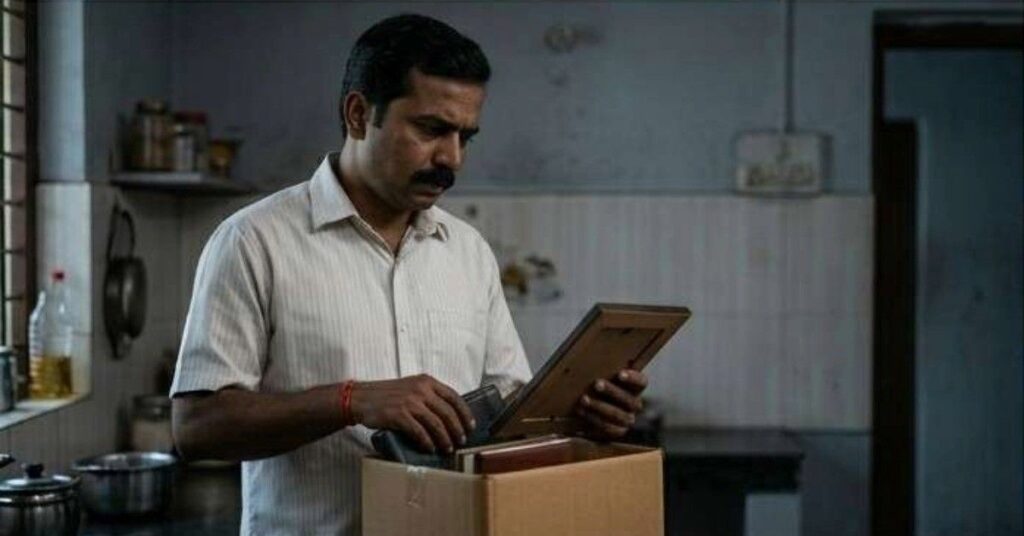
A year passed.
And then, the truth emerged.
The rumors had been false.
They were nothing more than malicious gossip, spread by colleagues with no regard for the damage they would cause. There had been no betrayal, no hidden relationships—only misunderstanding and mistrust.
When Muni realized this, the weight of her actions came crashing down on her.
For the first time in years, she allowed herself to break.
She went to him—not as a lawyer, not as a woman trying to defend herself, but simply as someone who had made a mistake. She apologized, not with pride or justification, but with genuine remorse.
“I should have trusted you,” she said.
There was silence between them, heavy with everything they had lost.
But love, when it is real, does not disappear easily.
He saw the truth in her eyes—the same honesty that had brought them together years ago. And slowly, carefully, he chose to forgive.

They married again.
This time, their relationship was different. It was no longer just about love, but about understanding—about knowing that trust must be protected, that words can destroy as easily as they can build.
Together, they rebuilt their life.
Their son, who had quietly watched the distance between them, once again found his parents together. The home that had felt incomplete was whole again.
Muni continued her work as a criminal lawyer, but now she carried with her a deeper awareness—not just of the law, but of human frailty.
She had lived through love, betrayal, judgment, loss, and redemption.
And in the end, she understood something that no book or courtroom could have taught her:
That truth is not just something to be proven—it is something to be trusted.