
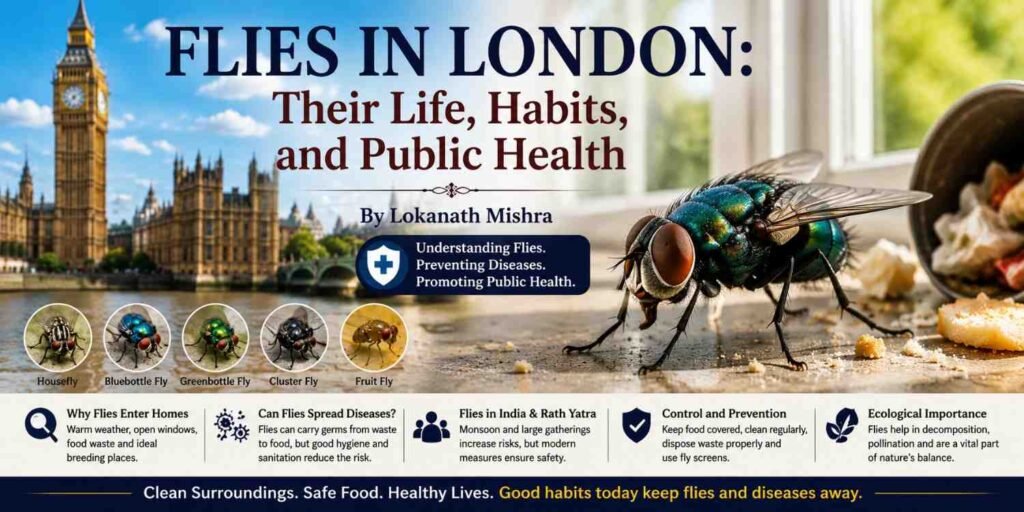
Flies in London: Their Life, Habits, and Public Health
By Lokanath Mishra
During my stay in London, I observed that large flies often entered houses, especially during the warm summer months. This reminded me of my experiences in India, where flies are common during the beginning of the rainy season. Although flies in India and the United Kingdom belong to many of the same insect families, the diseases they spread and the public health situations are quite different.
What Are Flies?
Flies belong to the insect order Diptera. Scientists have identified more than 120,000 species of flies worldwide, although many more are believed to exist. Only a small number of species regularly enter human homes. Common examples include the housefly, bluebottle fly, greenbottle fly, cluster fly, and fruit fly.
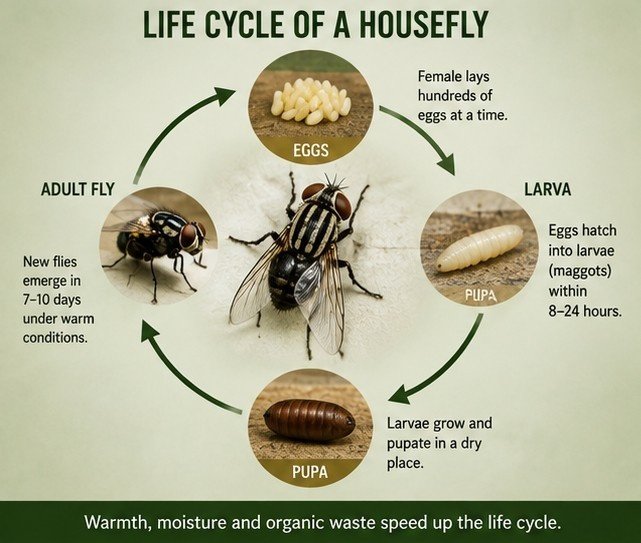
Flies have large compound eyes, two transparent wings, and six legs. Their sense of smell helps them locate food from considerable distances. They reproduce rapidly, and under favourable conditions a female can lay hundreds of eggs during her lifetime.
Why Do Large Flies Appear in London?
Many visitors are surprised to see large flies inside homes in London during summer. This usually happens because:
- Warm weather speeds up the breeding cycle of flies.
- Doors and windows remain open for ventilation.
- Food waste and household bins attract flies.
- Gardens, compost heaps, and parks provide ideal breeding places.
- Some large flies, such as bluebottle and greenbottle flies, naturally become more active during the warmer months.
These flies are a nuisance but their presence does not necessarily indicate poor hygiene.
Types of Flies Commonly Seen in London
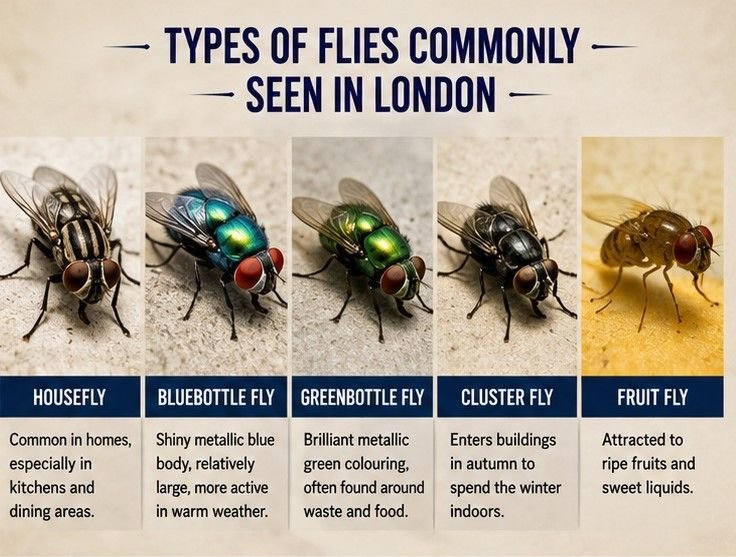
The most common flies found in London include:
- Houseflies, which frequently enter kitchens and dining areas.
- Bluebottle flies, recognised by their shiny metallic blue bodies and relatively large size.
- Greenbottle flies, which have brilliant metallic green colouring.
- Cluster flies, which often enter buildings in autumn to spend the winter indoors.
- Fruit flies, which gather around ripe fruits and sweet drinks.
Each species has different habits, but all are attracted by food and suitable breeding places.
Can Flies Spread Diseases?
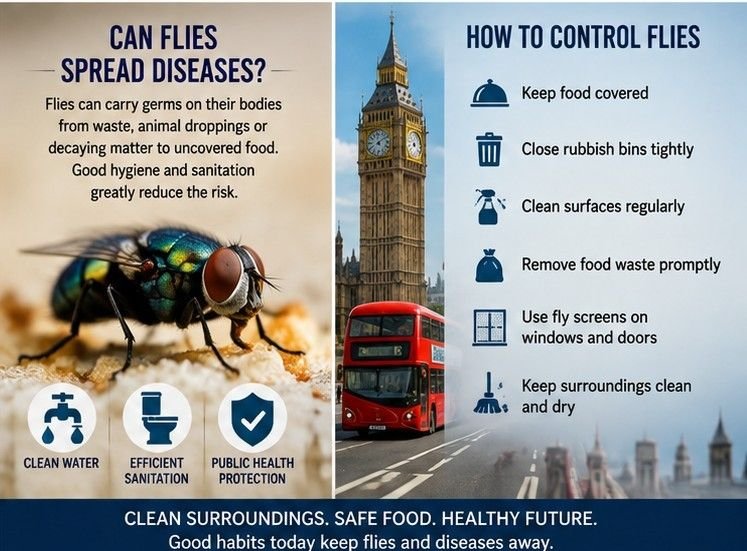
Flies can carry bacteria and other microorganisms on their bodies after visiting waste, animal droppings, or decaying material. If they later land on uncovered food, they may contaminate it.
In tropical countries, where sanitation may be inadequate, flies can contribute to the spread of diarrhoeal diseases. Historically, outbreaks of diseases such as cholera were associated mainly with contaminated drinking water and poor sanitation, while flies could play a supporting role by transferring germs to food.
In modern Britain, clean water supplies, efficient sewage systems, strict food safety regulations, and good public health practices have greatly reduced the risk of diseases spreading through flies. Although flies can still contaminate food, they are not considered a major cause of cholera outbreaks in London.
Flies During India’s Monsoon and Rath Yatra
In many parts of India, especially during the early monsoon, the number of flies increases rapidly because of moisture, open garbage, animal waste, and stagnant water. During large religious gatherings such as the Rath Yatra, millions of devotees gather in one place. In earlier times, before modern sanitation and safe drinking water became widespread, such conditions increased the risk of infectious diseases.
Today, government agencies take extensive preventive measures by supplying safe drinking water, improving sanitation, collecting waste regularly, and conducting health surveillance. These measures have greatly reduced the risk of major outbreaks.
Why Do Flies Enter Houses?
Flies enter homes in search of:
- Food.
- Sweet liquids.
- Meat and fish.
- Pet food.
- Warm shelter.
- Places to lay eggs.
Even a clean house may occasionally attract flies if doors or windows are left open.
How Can Flies Be Controlled?
Simple preventive measures include:
- Keeping food covered.
- Closing rubbish bins tightly.
- Cleaning kitchen surfaces regularly.
- Removing food waste promptly.
- Installing fly screens on windows and doors.
- Keeping compost bins away from entrances.
- Repairing damaged window seals.
These measures help reduce the number of flies entering homes.
Ecological Importance of Flies
Although flies are often regarded as pests, they also perform valuable ecological functions. Many species help decompose dead plants and animals, recycling nutrients back into the soil. Some flies pollinate flowers, while others serve as food for birds, frogs, spiders, and bats. Therefore, flies are an important part of nature’s balance.
Conclusion
Flies are found in almost every country, including India and the United Kingdom. Their numbers increase during warm and humid weather. While they can contaminate food and should not be ignored, modern sanitation and public health systems have greatly reduced the diseases associated with them in countries such as the United Kingdom.
Every family should practise good hygiene, proper waste disposal, and food safety to minimise the nuisance caused by flies. Clean surroundings, safe drinking water, and public awareness remain the most effective methods of preventing fly-related health problems. The story of the fly is therefore not merely one of annoyance but also a reminder of the importance of cleanliness, scientific sanitation, and responsible public health practices.