

The Hindu Diaspora in Europe: Demographics, Integration, and Cultural Preservation
By Lokanath Mishra, Jenamath Lane, Puri.
Abstract
The Hindu diaspora in Europe represents one of the continent’s most dynamic, economically successful, and culturally vibrant minority communities. Comprising approximately 2.2 million individuals, this population is characterized by its diverse geographic origins—predominantly South Asian and Indo-Caribbean—and its varied migration histories. This article examines the demographic distribution of Hindus across Western, Northern, and Southern Europe, analyzing the distinct socioeconomic patterns, integration strategies, and structural challenges faced by these communities as they balance cultural preservation with European citizenship.

Introduction
Over the past several decades, Europe has become home to a substantial and multi-faceted Hindu population. Numbering roughly 2.2 million, the vast majority of European Hindus are part of the South Asian (mainly Indian and Pakistani) and Sri Lankan Tamil diasporas. However, the community also features unique secondary migration pathways, notably Indo-Surinamese Hindus in the Netherlands and East African Asians in the United Kingdom.
While the diaspora is overwhelmingly concentrated in Western and Northern Europe due to historical colonial links and post-war labor demands, newer clusters have emerged in Southern Europe. This article outlines the contemporary demographic landscape of Hinduism in Europe and explores how these communities navigate institutional recognition, identity preservation, and social integration.
Demographic Overview and Regional Distribution
The distribution of Hindus in Europe is highly uneven, heavily reflecting historical colonial ties, modern labor migration policies, and asylum patterns.

The United Kingdom: The Focal Point of the Diaspora
The United Kingdom hosts the largest Hindu population in Europe by a significant margin, with estimates ranging between 1,000,000 and 1,500,000 individuals, representing approximately 1.5% to 2% of the total UK population. The roots of this community lie primarily in mid-20th-century migration from Punjab and Gujarat, supplemented significantly in the 1970s by East African Asian refugees fleeing expulsion from Uganda and Tanzania. British Hindus are highly urbanized, with major concentrations in Greater London (particularly Wembley, Harrow, and Brent), Leicester, and the West Midlands.
Continental Western Europe: France, Germany, and the Netherlands
Outside the UK, continental Western Europe features distinct Hindu enclaves with unique migratory narratives:
The Netherlands (~100,000 – 150,000): The Dutch Hindu community is uniquely defined by secondary migration. The vast majority are of Hindustani (Surinamese) descent—descendants of indentured laborers taken from Uttar Pradesh and Bihar to Suriname in the 19th century, who subsequently migrated to the Netherlands around Suriname’s independence in 1975.
France (~150,000): The French Hindu population is primarily composed of Sri Lankan Tamils fleeing the civil war (1983–2009), alongside smaller communities from Pondicherry (a former French colony in India), Madagascar, and Mauritius.
Germany (~130,000): Germany’s population is split between Sri Lankan Tamil refugees who arrived in the 1980s and 1990s and a rapidly growing demographic of highly skilled Indian IT professionals, engineers, and students who have arrived since the early 2000s.
Southern Europe and Scandinavia
In recent decades, new economic opportunities have drawn Hindus to regions without historical colonial links:
Spain (~75,000) & Italy (~30,000 – 40,000): These populations are largely driven by economic migration, with many individuals working in agriculture, hospitality, and entrepreneurship. Spain also features a long-standing Sindhi trading community in the Canary Islands and Ceuta.
Switzerland (~40,000 – 50,000): Dominated heavily by the Sri Lankan Tamil diaspora, which has achieved high levels of linguistic and socioeconomic integration.
Scandinavia (Denmark, Norway & Sweden: ~20,000 – 30,000 combined): These communities are characterized by a mix of Tamil refugees from the late 20th century and a contemporary influx of tech-sector professionals.
Gibraltar & Ireland: Though smaller in absolute numbers, these regions boast notable percentages relative to their populations, with Ireland seeing rapid growth due to the expansion of its technology and healthcare sectors.
Socioeconomic Integration and Cultural Adaptation
European Hindus are widely recognized in sociological literature for high levels of educational attainment, low crime rates, and strong entrepreneurial contributions. In the UK, for instance, British Hindus consistently rank among the highest-earning religious demographics and exhibit high rates of homeownership.
However, adaptation has required significant institutional negotiation. Unlike Islam or Judaism, Hinduism does not possess a singular centralized authority, which has occasionally complicated state-level interactions regarding legal recognition, chaplains in public institutions, and state-funded religious education.
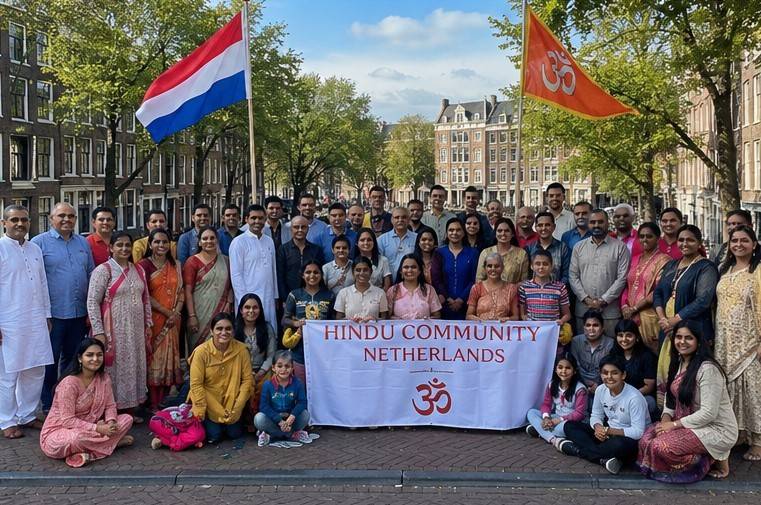
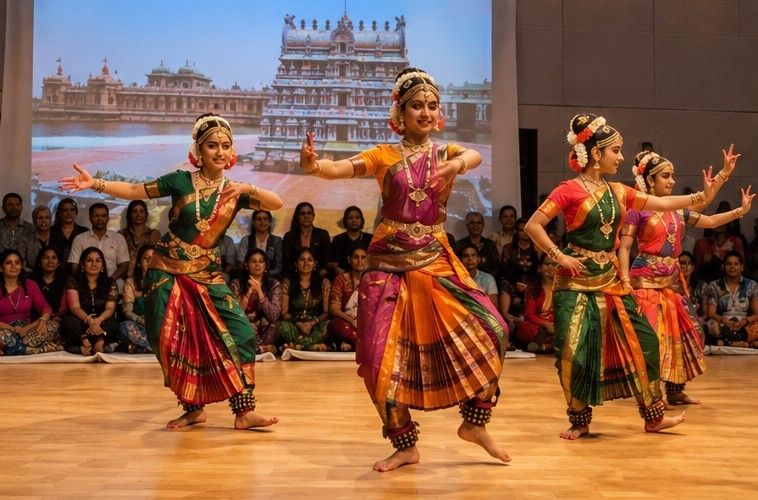
Despite these structural hurdles, the community has successfully institutionalized its presence through the construction of prominent cultural landmarks. Traditional stone-carved temples (such as the BAPS Shri Swaminarayan Mandir in Neasden, UK) and converted community spaces across Germany, France, and the Netherlands serve not only as places of worship but as vital hubs for language preservation (Hindi, Tamil, Gujarati), classical arts, and youth engagement.
Challenges: Secularism, Youth, and Legal Recognition
Despite widespread socioeconomic success, the diaspora faces ongoing challenges:
Institutional Recognition: In several continental European nations, Hinduism lacks official status as a recognized state religion, limiting access to public funding or the right to provide confessional religious education in state schools.
Generational Shifts: Second- and third-generation European Hindus often navigate a complex “hyphenated identity.” While retaining cultural markers, younger generations frequently interpret text and ritual through a Western, secular lens, leading to a shift toward philosophical alignment rather than strict ritual adherence.
Funerary Rites: Access to traditional open-air cremation or dedicated spaces for the dispersal of ashes in European rivers remains a legal and bureaucratic hurdle in multiple jurisdictions due to environmental and zoning regulations.
Conclusion
The 2.2 million Hindus residing in Europe constitute a resilient and highly integrated segment of the continent’s pluralistic fabric. From the Surinamese-Dutch of the Netherlands to the multi-generational British Indian community and the resilient Tamil diaspora, European Hinduism is far from monolithic. As the community continues to grow—bolstered by a steady influx of global tech and healthcare talent—its future will depend on its ability to maintain its rich cultural and philosophical heritage while navigating the secular, institutional frameworks of contemporary Europe